
Printable Verb Sentence Exercises for Grade 2 Kids
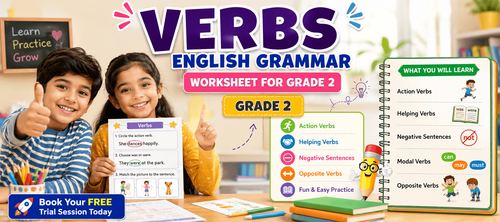

Practice Worksheet for Verbs English Grammar Worksheet for Grade 2 With Answers
Learning verbs becomes easier and more enjoyable when students practice action words and sentence formation through simple grammar exercises. This English grammar worksheet for Grade 2 on Verbs helps children understand action verbs, helping verbs, negative sentences, and opposite verbs through engaging and structured activities. By practicing these exercises regularly, students improve vocabulary, sentence-building confidence, grammar understanding, and communication skills in an enjoyable way.
In Grade 2, students begin learning how verbs help describe actions, feelings, and activities in sentences. This worksheet introduces learners to action verbs, helping verbs such as was and were, sentence rewriting using do not and does not, and opposite verbs through clear examples and easy practice questions. With regular grammar practice, children develop stronger reading, writing, and speaking skills while becoming more confident using verbs correctly in everyday communication.
Download these English grammar worksheets and practice regularly to strengthen your language skills and build a strong foundation. You can also book a free trial to get expert guidance and improve your reading, writing, and comprehension abilities. The worksheets are designed in a simple and structured way to help K–8 students learn grammar concepts easily and use them confidently in everyday communication.
What Is the Topic?
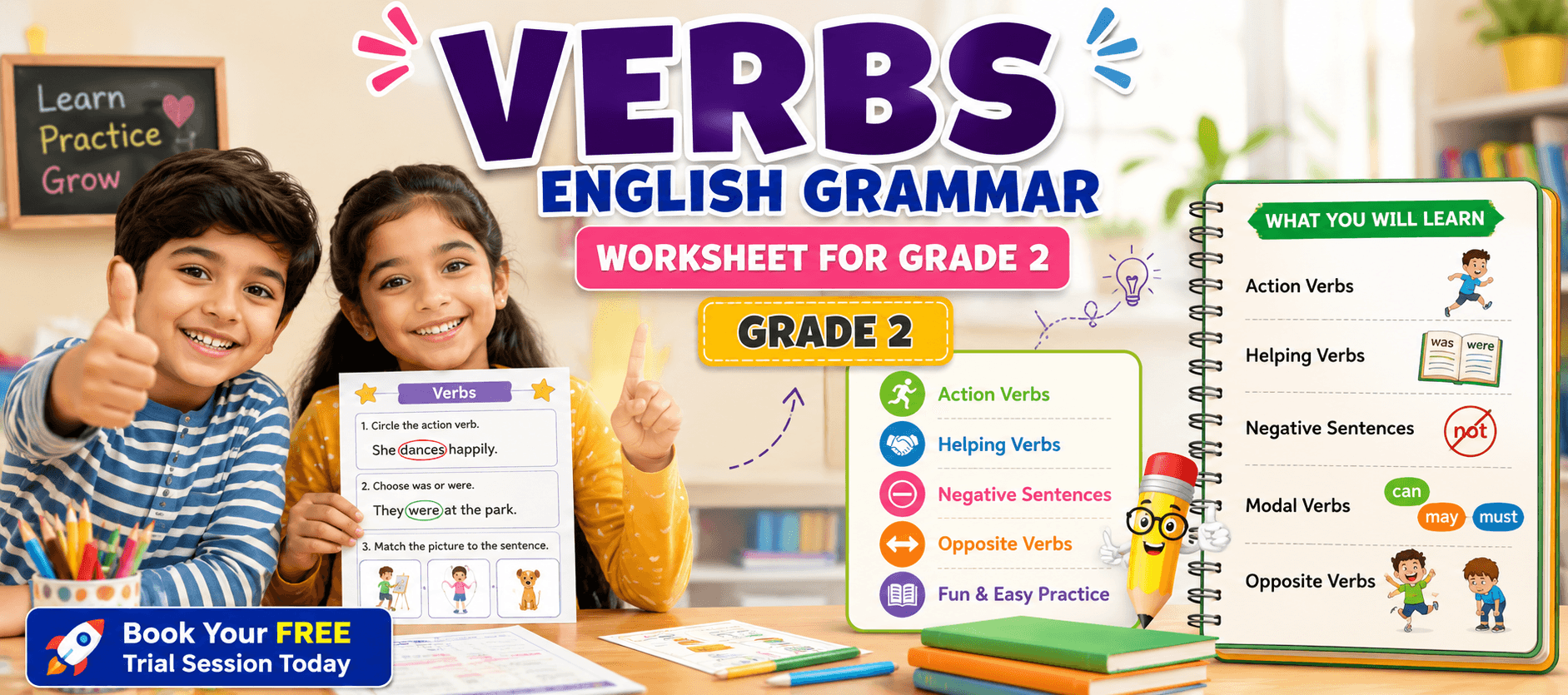
Verbs are action words that tell what someone or something is doing. This Grade 2 English grammar worksheet focuses on action verbs, helping verbs, negative sentences, and opposite verbs.
Students learn:
• Action verbs
• Helping verbs
• Negative sentence formation
• Opposite verbs
• Verb usage in sentences
The worksheet helps children understand how verbs are used correctly in different sentence structures.
What’s in This Worksheet?
1. Action Verb Identification
Students identify and circle action verbs used in complete sentences.
2. Helping Verb Exercises
Children practice using was and were correctly in sentences.
3. Sentence Matching Activities
Students match pictures with suitable sentences containing verbs.
4. Negative Sentence Practice
Learners rewrite sentences using do not and does not.
5. Modal Helping Verb Exercises
Students practice using can, may, and must correctly.
6. Opposite Verb Activities
Children learn opposite action words through vocabulary practice.
7. Structured Grammar Learning
The worksheet uses simple instructions and easy exercises suitable for Grade 2 students.
8. Exam Preparation Support
The exercises strengthen grammar understanding and improve classroom performance.
Definitions, Examples, Techniques, and Tips
Definition of Verbs
Verbs are action words that tell what someone or something is doing.
Examples From the Worksheet
• roars
• brush
• dance
• cooks
• claps
Helping Verb Examples
• was
• were
• can
• may
• must
Examples of Sentences With Verbs
• He is painting the wall.
• She is skipping with a rope.
• They are eating lunch together.
• It is barking loudly.
• She is writing on the blackboard.
Quick Learning Tips
• Read each sentence carefully before choosing the verb
• Identify the action happening in the sentence
• Match helping verbs correctly with the subject
• Practice negative sentence patterns regularly
• Learn opposite verbs through repetition
Why Is It Important to Learn This?
Learning verbs is important because verbs are needed in every sentence. They help students express actions and ideas clearly while speaking and writing.
This topic helps children:
• Build meaningful sentences
• Improve grammar accuracy
• Strengthen communication skills
• Develop vocabulary knowledge
• Improve reading and writing abilities
Understanding helping verbs and sentence structures also helps students perform better in grammar activities and school assignments.
Where Will This Knowledge Help You?
Students use verbs regularly in many classroom and daily communication activities.
• Grammar tests
• Sentence writing
• Reading exercises
• Homework assignments
• Classroom speaking activities
• Story writing
• English comprehension tasks
Learning correct verb usage helps students communicate clearly in both spoken and written English.
How to Use This Worksheet?
1. Read Every Sentence Carefully
Understand the meaning of the sentence before answering.
2. Identify the Verb Properly
Find the action word or helping verb in each sentence.
3. Attempt Every Exercise Independently
Try solving all questions on your own before checking answers.
4. Compare Answers Carefully
The solutions follow the exact worksheet order, so students should compare answers carefully.
5. Correct Mistakes Properly
Review incorrect answers and understand the correct sentence structure.
6. Practice Daily
Regular grammar practice improves confidence and sentence-building skills.
Important Tips and Tricks
1. Find the Action Word First
The action word usually helps identify the main verb in the sentence.
2. Read the Subject Carefully
Helping verbs depend on whether the subject is singular or plural.
3. Practice Negative Sentences Often
Learn where to use do not and does not correctly.
4. Learn Opposite Verbs Through Repetition
Repeated practice improves vocabulary and understanding.
5. Avoid Guessing Quickly
Read the complete sentence carefully before selecting an answer.
6. Practice Speaking Sentences Aloud
Reading sentences aloud improves grammar understanding and pronunciation.
7. Revise Helping Verbs Regularly
Practice can, may, must, was, and were regularly for better accuracy.
Complete Answer Key
Exercise 1
Circle the action verb in each sentence.
1. roars
2. brush
3. dance
4. cooks
5. claps
Exercise 2
Choose the correct option – was or were.
1. were
2. was
3. was
4. were
5. were
Exercise 3
Match the picture to the correct sentence.
1. He is painting the wall.
2. She is skipping with a rope.
3. They are eating lunch together.
4. It is barking loudly.
5. She is writing on the blackboard.
Exercise 4
Rewrite the sentence in the negative form using "do not" or "does not".
1. He does not play the guitar.
2. I do not drink tea in the evening.
3. They do not go to the library.
4. She does not like cold coffee.
5. We do not eat noodles every Sunday.
Exercise 5
Fill in the blank with can, may, or must.
1. must
2. can
3. May
4. must
5. can
Exercise 6
Write the opposite verb.
1. stop
2. rest
3. listen
4. dirty
5. dry
Practicing this Grade 2 English grammar worksheet on Verbs helps students improve grammar understanding, sentence-building confidence, vocabulary development, and communication skills. By practicing action verbs, helping verbs, negative sentences, and opposite verbs regularly, children become more comfortable using English correctly in both speaking and writing activities. Continued grammar practice will help students perform better in classroom exercises, homework assignments, and school assessments.