
Rhyming Words Practice Worksheet for Young Learners – Grade 2
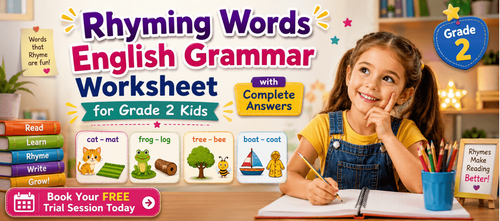

Rhyming Words English Grammar Worksheet for Grade 2 Kids with Complete Answers
Rhyming words make learning English fun and exciting for young learners. They help children recognize similar sounds, improve pronunciation, build vocabulary, and become more confident readers and writers. This Grade 2 Rhyming Words worksheet includes engaging activities such as matching rhyming words, multiple-choice questions, identifying rhyming pairs, rewriting sentences, and sentence-writing practice. Through these exercises, students get plenty of opportunities to strengthen their understanding of word patterns while enjoying language learning.
Download these English grammar worksheets and practice regularly to strengthen your language skills and build a strong foundation. You can also book a free trial to get expert guidance and improve your reading, writing, and comprehension abilities. The worksheets are designed in a simple and structured way to help K–8 students learn grammar concepts easily and use them confidently in everyday communication.
What Is Rhyming Words?
Rhyming words are words that have the same or similar ending sounds. Learning rhyming words helps students listen carefully to sounds in words and identify matching word patterns. In this Grade 2 English grammar worksheet, students practice finding, matching, and using rhyming words in different activities. These exercises help improve reading, spelling, vocabulary, and sentence-building skills.
What’s in This Worksheet?
1. Match the following activity to connect words with their rhyming partners.
2. Multiple-choice questions to identify the correct rhyming word.
3. Rhyming pair identification exercise using a word box.
4. Rewrite the sentences activity by replacing the last word with a rhyming word.
5. Sentence-writing practice using given rhyming word pairs.
6. Activities arranged from basic identification to sentence construction.
7. Exercises that help strengthen vocabulary, spelling, pronunciation, and writing skills.
Definitions, Examples, Techniques, and Tips
Definitions
Rhyming words are words that end with the same sound.
Examples from the worksheet include:
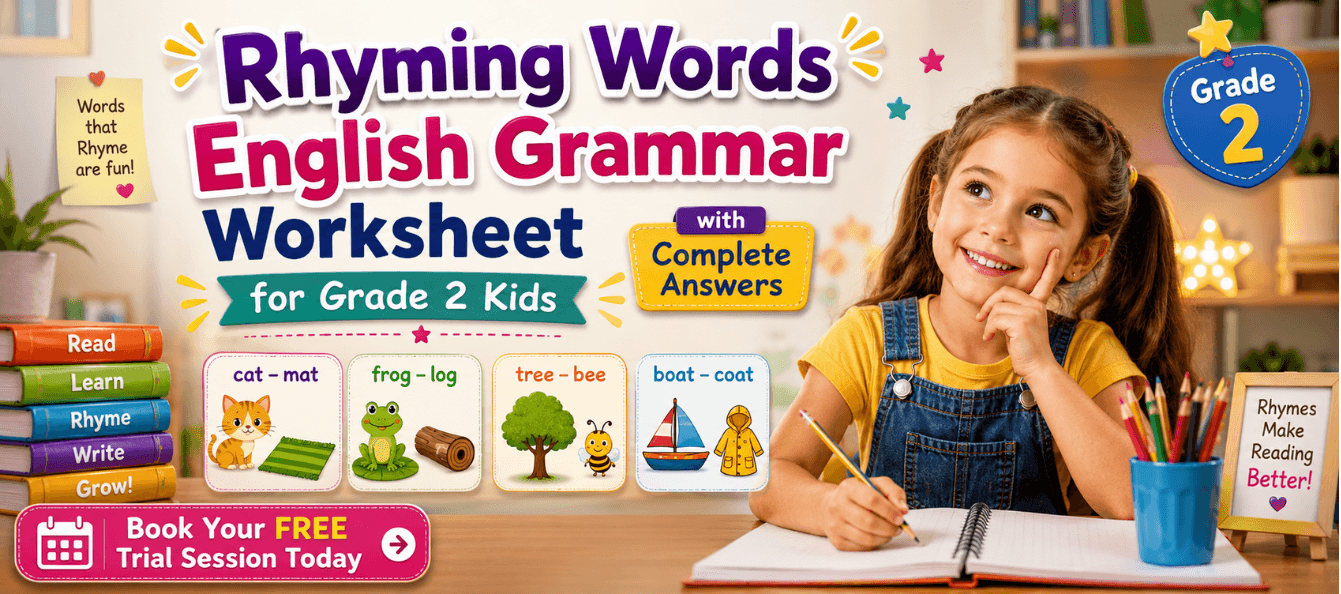
• cat – mat
• frog – log
• tree – bee
• boat – coat
• cold – bold
Techniques
• Read both words aloud and listen carefully to the ending sound.
• Compare the final sounds of words before choosing an answer.
• Practice matching words with similar sound patterns.
• Use rhyming words in simple sentences to remember them better.
Quick Learning Tips
• Say the words slowly and clearly.
• Look for similar ending letters and sounds.
• Practice reading rhyming word pairs every day.
• Use rhyming words while speaking and writing short sentences.
Why Is It Important to Learn This?
Learning rhyming words is important because it improves language development and reading skills. Rhyming activities help children recognize sound patterns, which supports better pronunciation and spelling. Students also become more confident when reading aloud and writing simple sentences. Understanding rhyming words lays a strong foundation for future literacy skills and helps children enjoy learning English.
Where Will This Knowledge Help You?
Students can use rhyming word skills in many situations:
• School assignments and grammar exercises.
• Reading poems, stories, and songs.
• Classroom discussions and speaking activities.
• Spelling practice and vocabulary development.
• Creative writing and sentence construction.
• English examinations and assessments.
How to Use This Worksheet?
1. Read every question carefully before answering.
2. Attempt each exercise independently.
3. Match or choose words by focusing on similar ending sounds.
4. Complete all activities in the order given in the worksheet.
5. Compare your responses carefully with the answer key.
6. Review any mistakes and understand the correct rhyming pattern.
7. Practice similar rhyming word pairs regularly for improvement.
8. The solutions below follow the exact worksheet order, making comparison simple and accurate.
Important Tips and Tricks
1. Listen carefully to the ending sound of each word.
2. Do not choose words based only on spelling; focus on pronunciation too.
3. Read all options before selecting an answer.
4. While rewriting sentences, replace the final word with a suitable rhyming word.
5. For sentence-writing activities, ensure the sentence uses the given rhyming words correctly.
6. Double-check spellings before finishing the worksheet.
7. Regular practice improves word recognition and reading fluency.
Complete Answer Key
Exercise:1
Match each word in Column A with a word in Column B that rhymes with it.
1. cat – mat
2. frog – log
3. light – fight
4. pin – tin
5. tree – bee
6. rock – sock
7. day – gray
8. boat – coat
9. cold – bold
10. sand – hand
Exercise: 2
Pick the word that rhymes with the word given in the question.
1. Choose the word that rhymes with "cake".
Answer: lake
2. What rhymes with "tear"?
Answer: bear
3. Which word rhymes with "fun"?
Answer: sun
4. What rhymes with "light"?
Answer: might
5. Choose the word that rhymes with "red".
Answer: bed
6. Which word rhymes with "dog"?
Answer: log
7. What rhymes with "pan"?
Answer: fan
8. Which word rhymes with "box"?
Answer: fox
Exercise: 3
Find and write the correct pair of rhyming words from the box given below.
1. book – look
2. car – far
3. fish – dish
4. sing – ring
5. cat – hat
6. red – bed
7. tree – bee
8. ball – wall
Exercise:4
Rewrite the sentence so the last word rhymes with the underlined word.
1. The bee sat on a cat.
2. He has a red bed.
3. I can jump on a red.
4. She saw a rat in the cat.
5. We will meet at the ball.
6. Dad has a big mug.
7. The bug ran up the rug.
8. She played with a brick.
9. He threw the rock in the sock.
10. I found a frog in a dog.
Exercise:5
Write a sentence for each rhyming word pair.
1. The mouse ran into the house.
2. A bee flew near the tree.
3. I found a sock near the rock.
4. The car passed under a bright star.
5. The fan is above the pan.
Great job completing this Grade 2 Rhyming Words English grammar worksheet. Practicing rhyming words regularly helps students improve pronunciation, vocabulary, reading fluency, and writing skills. Keep revisiting these activities and continue exploring new rhyming word pairs to become a more confident English learner.