
Teacher Conversation Practice Worksheet for KG Students
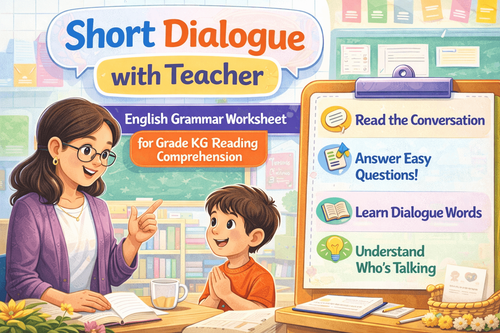

Short Dialogue with Teacher – English Grammar Worksheet for Grade KG Reading Comprehension
Young learners enjoy reading short and simple conversations because they are easy to understand and fun to imagine. In early learning stages, children begin to read small dialogues that help them understand how people talk to each other. This English grammar worksheet for Grade KG titled “Short Dialogue with Teacher” introduces students to a simple classroom conversation. Through this worksheet, children read a small dialogue between a teacher and a student named Ravi and answer questions based on the conversation. Such activities strengthen reading comprehension skills and help students recognize who is speaking, what they are saying, and what is happening in the scene.
What Is Short Dialogue with Teacher?
A dialogue is a conversation between two or more people. In this Grade KG English grammar worksheet, students read a short classroom conversation between a teacher and a boy named Ravi.
The teacher asks Ravi some questions. Ravi answers politely and shares what he likes to do. The teacher smiles, and the class listens quietly. At the end of the dialogue, the narrator explains that it was a happy talk in the classroom.
This worksheet helps children understand how conversations work. Students learn how to identify speakers, understand questions and answers, and observe actions in a scene. These skills help build a strong foundation for reading comprehension.
For Grade KG students, reading short dialogues is an important step in learning how to understand stories and conversations in English.
What’s in This Worksheet?
This English grammar worksheet is designed to help young learners practice reading comprehension through a simple dialogue.
1. A short dialogue passage
The worksheet begins with a short conversation between a teacher and a student named Ravi. The dialogue represents a situation that children often experience in school.
2. Clearly identified speakers
Each line in the conversation clearly shows who is speaking. The speakers include the Teacher, Ravi, the Class, and the Narrator.
3. Simple and easy sentences
The dialogue uses short sentences and familiar words that are suitable for Grade KG learners.
4. Multiple-choice questions
After reading the dialogue, students answer questions by choosing the correct option from four choices.
5. Ten comprehension questions
There are ten questions based on the dialogue. These questions check whether students understood the conversation.
6. Focus on key details
The questions ask about the characters, actions, and the setting of the conversation.
7. Answer checking section
Students can review their answers after completing the worksheet to see if they understood the dialogue correctly.
This structure makes the worksheet simple, engaging, and effective for young learners.
Definitions, Examples, Techniques, and Tips
To better understand the worksheet, it is helpful to explore the parts of the dialogue.
Definition of dialogue
A dialogue is a conversation where two or more people speak to each other. Dialogues show how people ask questions, give answers, and respond during a conversation.
Example from the worksheet
Teacher: “What is your name?”
Boy: “My name is Ravi.”
Teacher: “What do you like?”
Ravi: “I like to draw.”
This example shows a teacher asking questions and a student answering them.
Characters in the dialogue
Teacher
The teacher asks Ravi questions during the conversation.
Ravi
Ravi is the student answering the teacher’s questions.
Class
The class listens quietly while the teacher and Ravi talk.
Narrator
The narrator describes the situation and explains that it was a happy talk in the classroom.
Understanding actions in the dialogue
Teacher: (smiled)
Class: (listened quietly)
These actions help readers imagine what was happening during the conversation.
Understanding the setting
Narrator: It was a happy talk in the classroom.
This line tells students where the conversation happened and describes the mood of the situation.
Techniques for solving comprehension questions
• Read the dialogue slowly.
• Identify who is speaking.
• Look for answers directly in the passage.
• Read each option carefully before choosing the correct answer.
Quick learning tips
• Pay attention to names mentioned in the passage.
• Notice the actions written in brackets.
• Remember the location mentioned by the narrator.
• Focus on what the teacher asks and what Ravi answers.
Why Is It Important to Learn This?
Learning to read dialogues is very important for young students. It helps children understand how people communicate with each other.
First, dialogues teach children how questions and answers work in real conversations. This helps them improve their speaking and listening skills.
Second, reading comprehension exercises strengthen memory and attention. Students must remember details from the passage to answer questions correctly.
Third, dialogue reading improves vocabulary and sentence understanding. Children become familiar with common phrases used in everyday conversations.
Finally, practicing with worksheets like this prepares students for more advanced reading activities in higher grades.
Where Will This Knowledge Help You?
The skills developed from this English grammar worksheet are useful in many areas of learning.
In classroom learning
Students hear many conversations between teachers and students in class. Understanding dialogues helps them follow these interactions easily.
In reading stories
Many stories include conversations between characters. Dialogue comprehension helps students understand the story better.
In school assessments
Reading comprehension questions appear in many exams and worksheets. Practicing these skills helps students perform well.
In daily communication
Understanding conversations helps children communicate better with teachers, friends, and family members.
How to Use This Worksheet?
Students can follow these steps to complete the worksheet effectively.
1. Read the passage carefully
Start by reading the dialogue slowly. Understand who is speaking and what they are saying.
2. Observe the actions
Notice the actions written in brackets such as smiled and listened quietly.
3. Read the questions one by one
Look at each question and find the answer in the dialogue.
4. Choose the correct option
Each question has four choices. Select the option that matches the passage.
5. Review your answers
After completing the worksheet, read the dialogue again and check if your answers are correct.
6. Practice regularly
Doing more reading comprehension worksheets helps improve understanding and confidence.
The answers below follow the same order as the questions in the worksheet.
Important Tips and Tricks
1. Always read the passage first
Understanding the dialogue makes answering questions much easier.
2. Look for exact words in the passage
Many answers appear directly in the dialogue.
3. Pay attention to names and actions
Names like Ravi and actions like smiled help identify the correct answer.
4. Do not rush
Read each question carefully before choosing an option.
5. Think about the situation
Imagine the classroom conversation to understand the scene better.
6. Check your answers again
Re-reading the passage helps confirm whether your answers are correct.
Complete Answer Key
Read the questions and choose the right answer.
1. Who asked questions?
b) Teacher
2. What was the boy’s name?
b) Ravi
3. What did Ravi like to do?
b) Draw
4. Who smiled?
a) Teacher
5. Who listened quietly?
a) Class
6. Where did the talk happen?
b) Classroom
7. What kind of talk was it?
c) Happy
8. Who was the teacher speaking to?
b) Boy
9. What did the teacher first ask?
a) Name
10. What was Ravi doing?
a) Talking
Reading small dialogues is a wonderful way for young learners to build strong reading skills. The Grade KG English grammar worksheet “Short Dialogue with Teacher” introduces children to a simple classroom conversation and helps them practice understanding questions, answers, and actions in a story. By carefully reading the passage and answering the questions, students strengthen their comprehension abilities and gain confidence in reading English. Regular practice with such worksheets helps young learners become better readers and prepares them for more advanced learning in the future.