
The Boy and the Starfish English Reading Exercises for Kids in Grade 5
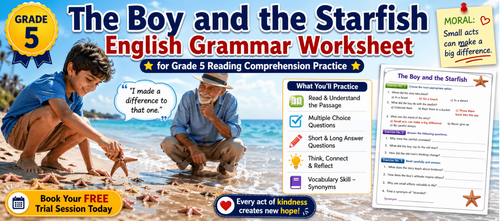

The Boy and the Starfish English Grammar Worksheet for Grade 5 Reading Comprehension Practice
Reading stories with meaningful lessons helps students improve comprehension, vocabulary, and critical thinking skills. “The Boy and the Starfish” is a thoughtful and inspiring Grade 5 reading comprehension worksheet that teaches children the importance of kindness and how even small actions can create a positive difference. This English grammar worksheet for Grade 5 helps students carefully read the passage, understand the events in order, and answer objective and subjective questions based on the story.
Students learn how to identify the moral of the story, understand character actions, and connect ideas from the passage to real life. The worksheet also improves reading fluency, sentence understanding, and interpretation skills through multiple exercises and comprehension-based questions.
Download these English grammar worksheets and practice regularly to strengthen your language skills and build a strong foundation. You can also book a free trial to get expert guidance and improve your reading, writing, and comprehension abilities. The worksheets are designed in a simple and structured way to help K–8 students learn grammar concepts easily and use them confidently in everyday communication.
What Is the Topic?
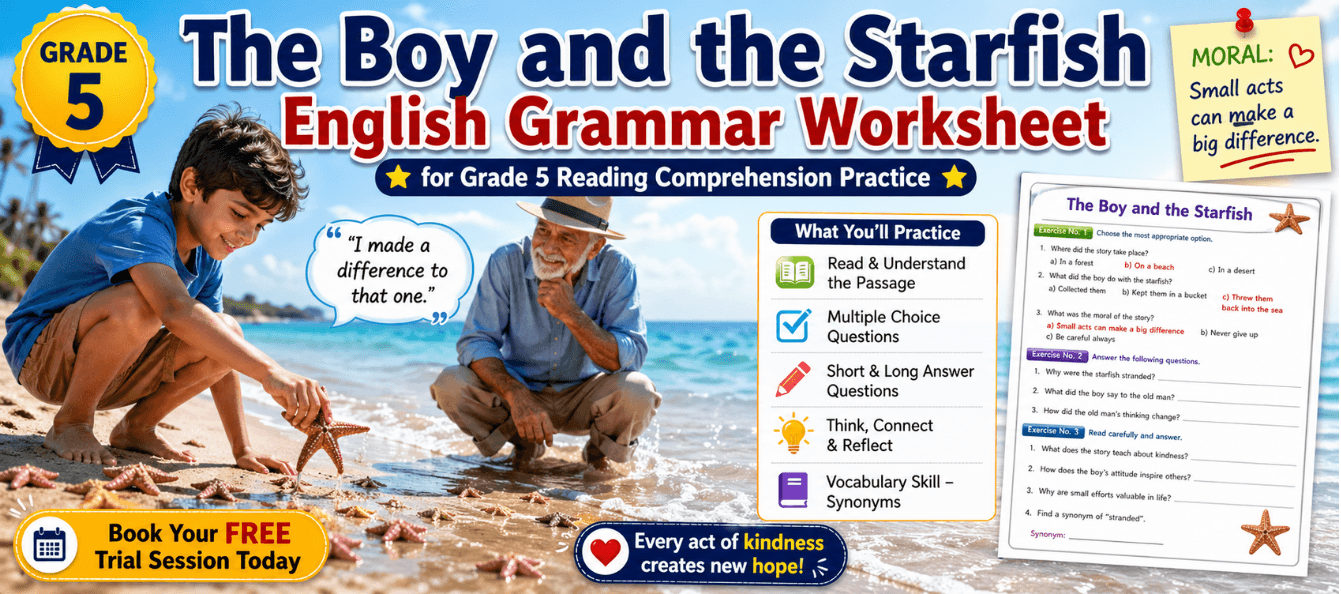
This Grade 5 worksheet focuses on reading comprehension through the story “The Boy and the Starfish.” The passage explains how a young boy helps stranded starfish by throwing them back into the sea one by one. An old man questions whether such a small action can make a difference, but the boy believes every act of kindness matters.
Students are expected to:
• Read the passage carefully
• Understand the sequence of events
• Identify the moral of the story
• Answer multiple-choice and descriptive questions
• Make connections between the story and real-life values
• Learn the importance of kindness and small efforts
The worksheet also helps students improve comprehension skills by answering factual and thinking-based questions in the correct order.
What’s in This Worksheet?
1. A short reading passage titled “The Boy and the Starfish.”
2. Multiple-choice questions based on the story.
3. Short-answer comprehension questions.
4. Questions that require deeper understanding and personal connection with the text.
5. Vocabulary practice through synonym identification.
6. Exercises that improve reading comprehension and critical thinking skills.
7. Questions arranged in a clear and structured format for Grade 5 students.
8. Practice that supports school assessments, class activities, and exam preparation.
Definitions, Examples, Techniques, and Tips
Definitions
Reading comprehension:
Reading comprehension means understanding the meaning of a passage and answering questions based on it.
Moral:
A moral is the lesson or message that a story teaches readers.
Synonym:
A synonym is a word that has a similar meaning to another word.
Examples From the Worksheet
Example of kindness:
The boy gently picked the starfish up one by one and threw them back into the sea.
Example of moral understanding:
“I made a difference to that one,” said the boy.
Example of synonym:
Synonym of “stranded”:
stuck
Techniques
• Read the passage slowly and carefully.
• Underline important lines while reading.
• Pay attention to what the characters say and do.
• Answer questions according to the story sequence.
• Look back at the passage before answering.
Quick Learning Tips
• Focus on keywords in the questions.
• Read all answer options carefully before choosing.
• Practice identifying the moral of the story.
• Learn new vocabulary from the passage.
• Revise answers after completing the worksheet.
Why Is It Important to Learn This?
Reading comprehension is an important skill for every student. This worksheet helps Grade 5 students improve their ability to understand passages and answer questions correctly. It also teaches valuable life lessons through storytelling.
Students develop:
• Better reading skills
• Improved concentration
• Stronger vocabulary
• Logical thinking
• Confidence in answering comprehension questions
The story also teaches that even small acts of kindness can make a meaningful difference in someone’s life.
Where Will This Knowledge Help You?
Students can use these comprehension skills in many areas of learning and daily life.
• School exams and comprehension tests
• Reading activities in class
• Writing summaries and answers
• Understanding story morals and themes
• Improving communication and speaking skills
• Building confidence in English reading tasks
The ability to understand passages carefully also helps students answer questions accurately during exams.
How to Use This Worksheet?
1. Read the passage completely before attempting the questions.
2. Understand the story and identify the main idea and moral.
3. Attempt the multiple-choice questions independently.
4. Answer the descriptive questions in the correct order.
5. Compare your answers carefully with the solutions.
6. Review mistakes and understand the correct responses.
7. Practice similar comprehension passages regularly to improve reading skills.
8. Follow the exact question order while checking answers to avoid confusion.
Important Tips and Tricks
1. Read every question carefully before answering.
2. Focus on details from the passage instead of guessing.
3. While answering multiple-choice questions, eliminate incorrect options first.
4. Pay attention to character actions and dialogues.
5. Understand the message or moral behind the story.
6. Write answers clearly and in complete sentences.
7. For vocabulary questions, look for context clues in the passage.
8. Examiners expect students to answer according to the passage content and maintain the correct order of responses.
9. Recheck all answers before submission.
10. Practice reading passages daily to improve speed and understanding.
Complete Answer Key
The Boy and the Starfish
One morning, a boy walked along the beach after the tide had gone out. Thousands of starfish lay stranded on the sand, drying in the sun. The boy gently picked them up one by one and threw them back into the sea. An old man watching said, “There are so many! You can’t save them all.” The boy smiled, tossing another starfish into the waves. “I made a difference to that one,” he said. The old man nodded thoughtfully, realising that every small act of kindness counts. The beach shimmered with new hope as the tide returned.
Exercise No. 1
Choose the most appropriate option in relevance to this passage.
1. Where did the story take place?
✔ b) On a beach
2. What did the boy do with the starfish?
✔ c) Threw them back into the sea
3. What was the moral of the story?
✔ a) Small acts can make a big difference
Exercise No. 2
Answer the following questions from the passage/story.
1. Why were the starfish stranded?
They were left on the beach after the tide went out.
2. What did the boy say to the old man?
“I made a difference to that one,” he said.
3. How did the old man’s thinking change?
The old man understood the power of small deeds.
Exercise No. 3
Read the questions carefully and answer the following by making connections with the text.
1. What does the story teach about kindness?
The story teaches that kindness matters, even in small ways.
2. How does the boy’s attitude inspire others?
The boy shows that actions count more than size.
3. Why are small efforts valuable in life?
Small efforts add up to meaningful change.
4. Find a synonym of “stranded.”
Synonym: stuck – The starfish were stuck on the sand.
This Grade 5 English grammar worksheet on “The Boy and the Starfish” is an excellent way for students to practice reading comprehension while learning an important life lesson about kindness and compassion. By regularly solving reading comprehension worksheets, students can improve their understanding skills, vocabulary, and confidence in English. Careful reading and consistent practice will help students perform better in exams and everyday communication.