
The Farmer’s Treasure Story-Based English Worksheet for Class 4
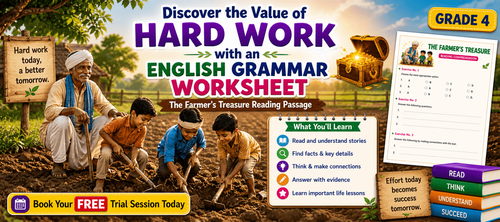

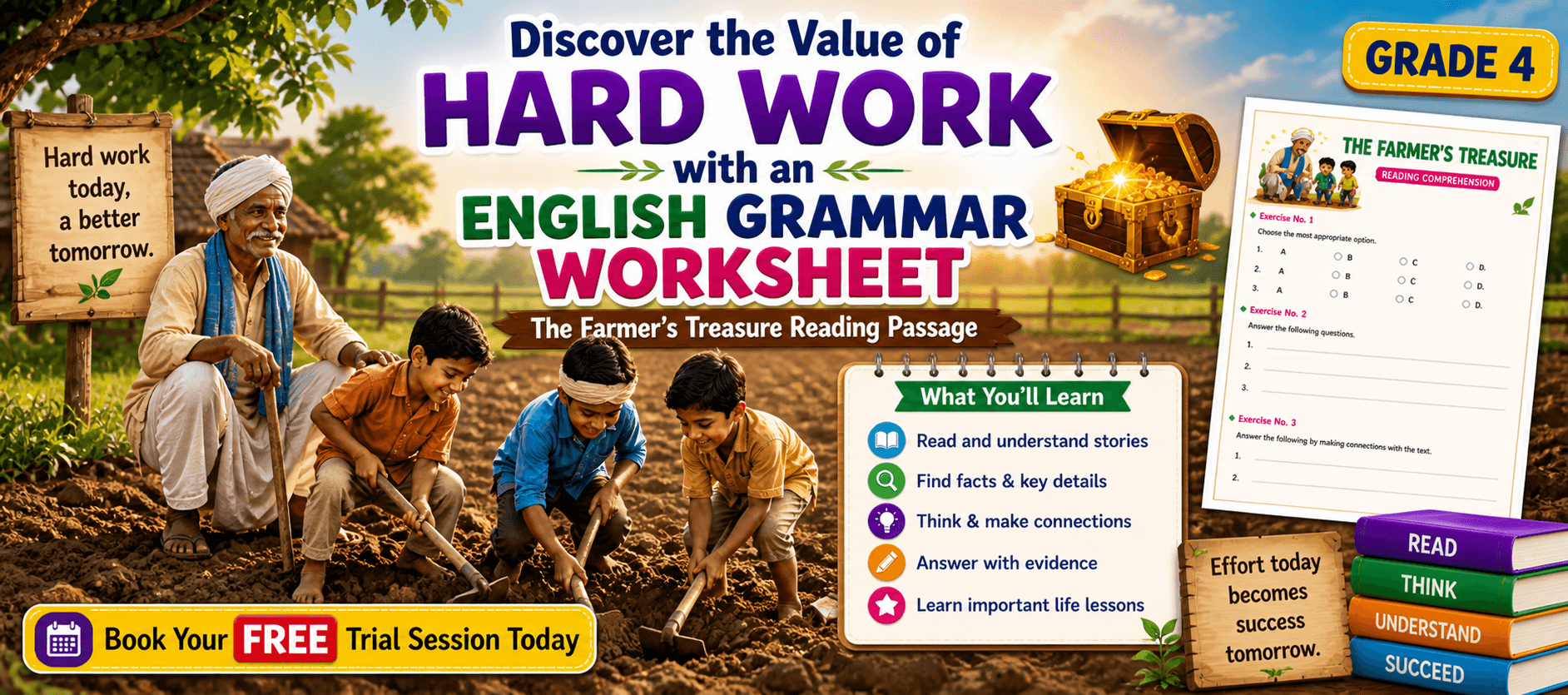
Discover the Value of Hard Work with an English Grammar Worksheet for Grade 4 on The Farmer’s Treasure Reading Passage
Stories often teach lessons that stay with us for life. One such meaningful story is about understanding the real meaning of wealth and success through effort and determination. This English grammar worksheet for Grade 4 on The Farmer’s Treasure helps students explore an inspiring story while improving reading comprehension and language understanding skills.
At this stage, Grade 4 learners begin developing deeper thinking abilities. They learn not only to read a story but also to understand characters, actions, meanings of words, and lessons hidden within the text. This worksheet encourages students to read carefully, observe details, and answer questions based strictly on the passage.
Download these English grammar worksheets and practice regularly to strengthen your language skills and build a strong foundation. You can also book a free trial to get expert guidance and improve your reading, writing, and comprehension abilities. The worksheets are designed in a simple and structured way to help K–8 students learn grammar concepts easily and use them confidently in everyday communication.
What Is the Topic?
The topic of this English grammar worksheet for Grade 4 is a reading comprehension passage titled The Farmer’s Treasure. Reading comprehension focuses on understanding a story by carefully reading the text and answering questions related to it.
Students learn to:
• Understand events in a story
• Identify important details
• Interpret character actions
• Understand meanings of words
• Recognize the moral or message of the passage
The worksheet encourages learners to think about why characters act in certain ways and what lesson the story teaches. It builds comprehension skills by combining reading, thinking, and answering questions logically.
What’s in This Worksheet?
This worksheet includes structured reading and comprehension activities designed to strengthen understanding skills.
1. A reading passage presenting a story about a farmer and his sons
2. Multiple-choice questions to check basic understanding
3. Short-answer questions that focus on reasoning and interpretation
4. Explanation-based questions connected to events in the story
5. Vocabulary understanding through word meaning identification
6. A creative thinking task related to the story’s title
The worksheet helps students practice careful reading while preparing for school assessments that require comprehension and written responses.
Definitions, Examples, Techniques, and Tips
Definitions
Reading comprehension means understanding what you read and answering questions based on the information given in the passage.
Examples from the worksheet
Students read about how the sons dig the field searching for treasure. Later, they learn that hard work itself becomes the real reward when they grow a successful crop.
Techniques used in the worksheet
• Reading the passage slowly and carefully
• Identifying key events in order
• Understanding cause and result in the story
• Interpreting character decisions
• Learning vocabulary through context
Quick learning tips
• Read the story more than once before answering questions
• Pay attention to actions taken by characters
• Look for clues that explain why events happen
• Focus only on information provided in the passage
Why Is It Important to Learn This?
Reading comprehension is one of the most important language skills for Grade 4 students. It helps learners move beyond basic reading and start understanding deeper meanings.
This topic helps students:
• Improve understanding of written texts
• Develop logical thinking skills
• Learn moral lessons through stories
• Strengthen written answer formation
• Build confidence in exams and classroom discussions
By working through this English grammar worksheet, students learn how effort, observation, and understanding work together to improve learning.
Where Will This Knowledge Help You?
The skills practiced in this worksheet support students in many real-life learning situations.
• School exams that include comprehension passages
• Reading stories and answering questions in class
• Writing meaningful answers based on text evidence
• Understanding lessons and morals from stories
• Participating actively in discussions and storytelling activities
Strong comprehension skills also help students understand textbooks better across all subjects.
How to Use This Worksheet?
Follow these steps to make the best use of this English grammar worksheet for Grade 4:
1. Read the passage independently before looking at any questions.
2. Attempt all questions carefully using only the information from the passage.
3. Review the answers after completing the worksheet.
4. Compare responses carefully with the answer key provided below.
5. Practice regularly to improve reading speed and understanding.
The solutions below follow the exact worksheet order, so students should match their answers step by step.
Important Tips and Tricks
1. Always read the passage completely before answering questions.
2. Avoid guessing answers without checking the story details.
3. Look for keywords in questions that match parts of the passage.
4. Understand the message of the story rather than memorizing lines.
5. For vocabulary questions, focus on how the word is used in the story.
6. When asked about ideas or titles, think about the main lesson taught.
7. Write answers clearly and based only on the passage information.
Complete Answer Key
Exercise 1
1 A
2 B
3 D
The sons became excited and began digging the entire field deeply with spades, searching from sunrise to sunset for many days.
Wise old Lakshmi Aunty walked by and said, "Since you have already dug the field so well, why not plant seeds?"
When harvest time came, they had the best crop in the village, sold it, and earned good money.
Exercise 2
Although disappointed about finding no gold, the brothers had already prepared the field through digging. Planting seeds turned their hard work into a successful harvest and real wealth.
No, they probably wouldn't have worked hard if asked directly. They were lazy and ignored their father's farming. Only the excitement of treasure motivated them to work initially.
Gopal knew his lazy sons wouldn't work unless motivated by treasure. His clever plan made them dig the field, which prepared it perfectly for farming and taught them the value of hard work.
Exercise 3
The word "lazy" means not wanting to work or be active.
OR
New title: "Hard Work Is the True Treasure"
Reading stories like The Farmer’s Treasure helps Grade 4 students understand that effort and perseverance lead to success. This English grammar worksheet for Grade 4 strengthens comprehension skills while teaching an important life lesson. With regular practice, students become more confident readers and thoughtful learners who can understand stories deeply and answer questions accurately.