
Time, Seasons & Directions Class 2 English Worksheet [PDF]
![Time, Seasons & Directions Class 2 English Worksheet [PDF]](https://cdn5.planetspark.in/media/small_Time_Seasons_Directions_Class_2_English_Worksheet_PDF_970992b616.png)

Grade 2 Vocabulary Worksheet: Time, Seasons, Directions & Transport Made Easy
Learning about time, seasons, directions, and transport can be a fun and essential part of building a strong foundation in grammar. For Grade 2 students, mastering these concepts helps them better understand the world around them, from knowing the time of day to recognizing seasonal changes and navigating spaces. This worksheet includes engaging exercises to make learning these topics enjoyable and effective. It’s designed to be simple, clear, and interactive, making it ideal for students in Grade 2.
Download these English grammar worksheets and practice regularly to strengthen your language skills and build a strong foundation. You can also book a free trial to get expert guidance and improve your reading, writing, and comprehension abilities. The worksheets are designed in a simple and structured way to help K–8 students learn grammar concepts easily and use them confidently in everyday communication.
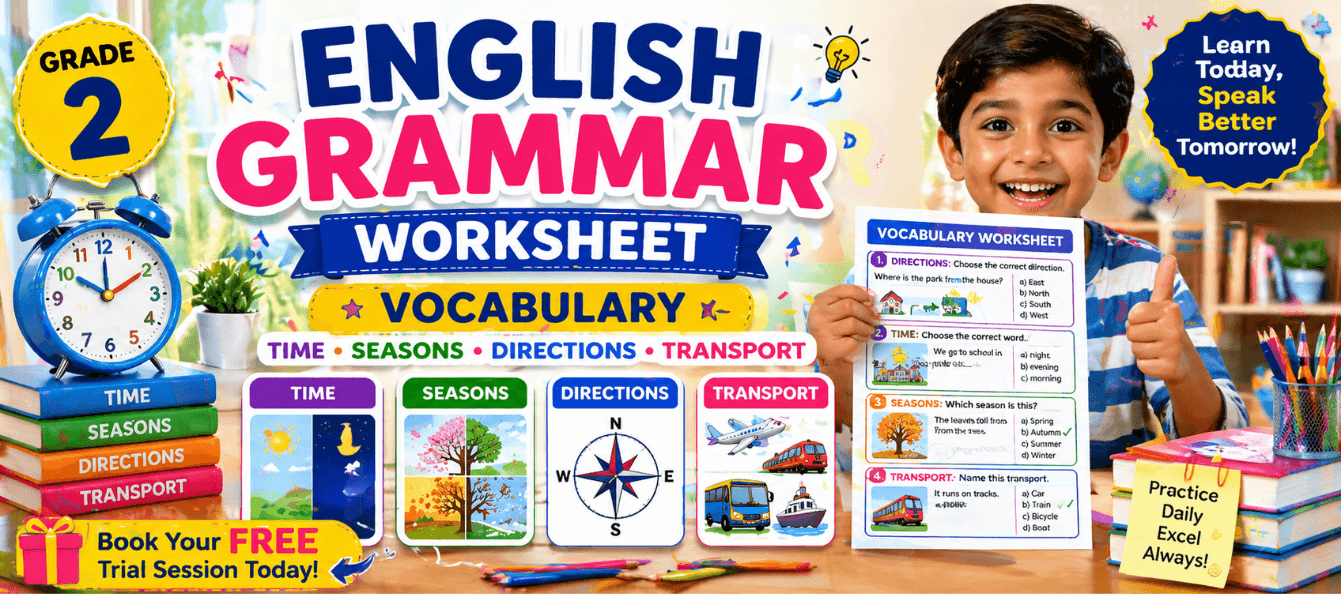
What is the topic?
In this worksheet, we focus on learning vocabulary related to time, seasons, directions, and transport. These four themes are essential for everyday communication. Time vocabulary includes words related to different parts of the day, such as morning, afternoon, and night. Seasons are divided into four main categories: winter, spring, summer, and autumn, which are tied to the weather and specific activities. Directions help students understand how to describe the location of objects or places, such as east, west, north, and south. Finally, transport vocabulary introduces different means of travel, including public transport and vehicles used on land, air, and water.
What’s in this worksheet?
This worksheet includes various exercises designed to build essential skills in time, seasons, directions, and transport.
1. Exercise 1: Directions - Choose the correct direction based on the provided images.
2. Exercise 2: Time - Choose the correct time-related word from the options.
3. Exercise 3: Seasons - Identify the correct season based on the description provided.
4. Exercise 4: Transport - Identify the correct mode of transport based on the description.
These exercises encourage students to practice vocabulary and reinforce their understanding of each topic, which is crucial for exam preparation and daily life applications.
Definitions, examples, techniques, and tips
- Time Vocabulary:
- Morning: The early part of the day, from sunrise to noon.
- Afternoon: The period of the day after noon until evening.
- Night: The time from sunset to sunrise, when it is dark.
- Season Vocabulary:
- Winter: The coldest season of the year, usually associated with snow and cold weather.
- Summer: The hottest season of the year, typically a time for outdoor activities and vacations.
- Spring: The season when flowers bloom and the weather becomes warmer.
- Autumn: The season when leaves fall from trees, and the weather cools down.
- Direction Vocabulary:
- East, West, North, South: Basic cardinal directions used to describe the location of places in relation to one another.
- Transport Vocabulary:
- Public transport: Vehicles that are used by the general public, such as buses and trains.
- Private transport: Vehicles owned by individuals, such as cars and bicycles.
Why is it important to learn this?
Learning about time, seasons, directions, and transport helps students in multiple ways. It strengthens their vocabulary and grammar skills, which are essential for effective communication. Understanding time-related terms enables students to manage their daily routines. Knowledge of seasons helps students connect with the world around them, while directions are crucial for navigation and safety. Finally, transport vocabulary is useful in both daily life and travel-related contexts. This knowledge sets a foundation for both academic success and real-life applications.
Where will this knowledge help you?
This knowledge will come in handy in various real-world situations, such as:
- Exams: The vocabulary related to time, seasons, directions, and transport is common in early grade exams.
- Writing tasks: Describing events, locations, and experiences requires accurate use of these terms.
- Class participation: Students will be able to confidently answer questions in class related to these topics and engage in discussions about the world around them.
How to use this worksheet?
1. Attempt independently first: Students should first try to solve the exercises on their own to test their understanding.
2. Review answers carefully: After completing the worksheet, review the answers to understand any mistakes.
3. Correct mistakes: If any errors are made, correct them with the correct information provided in the answer key.
4. Practice regularly: Consistent practice will help reinforce learning and build confidence.
The solutions follow the exact worksheet order. Students should compare answers carefully.
Important tips and tricks
1. Common mistakes: Students may confuse the directions or seasons, especially when describing their environment or activities. Practice with real-life examples like maps and weather descriptions can help avoid confusion.
2. What examiners expect: Accurate use of vocabulary and proper understanding of concepts are expected in exams.
3. How to score full marks: Pay close attention to the details in each question and choose the correct word based on the context provided.
4. How to approach activity-based or writing-based tasks: If a task involves writing, make sure to use complete sentences and appropriate vocabulary to describe the situation clearly.
Complete answer key
Exercise No. 1
1. c) south
2. a) east
3. a) west
4. b) north
5. b) east
6. b) east
7. c) east
8. a) west
9. c) south
10. a) west
Exercise No. 2
1. c) night
2. c) morning
3. a) evening
4. b) morning
5. c) day
6. b) night
7. c) morning
8. c) morning
9. b) afternoon
10. b) night
Exercise No. 3
1. b) months
2. b) four
3. a) month
4. b) season
5. c) February
6. b) monsoon
7. b) winter
8. c) spring
9. b) monsoon
10. a) spring
Exercise No. 4
1. c) bus
2. b) train
3. a) aeroplane
4. b) bus
5. a) tram
6. a) boat
7. b) bus stop
8. a) aeroplane
9. c) transport
10. a) metro
Understanding vocabulary related to time, seasons, directions, and transport is essential for Grade 2 students as it forms the foundation of their language skills. By practicing the exercises in this worksheet, students can improve their grammar, comprehension, and communication skills, setting them up for academic success.