
Class 4 Worksheet on Antonyms Usage Mastery

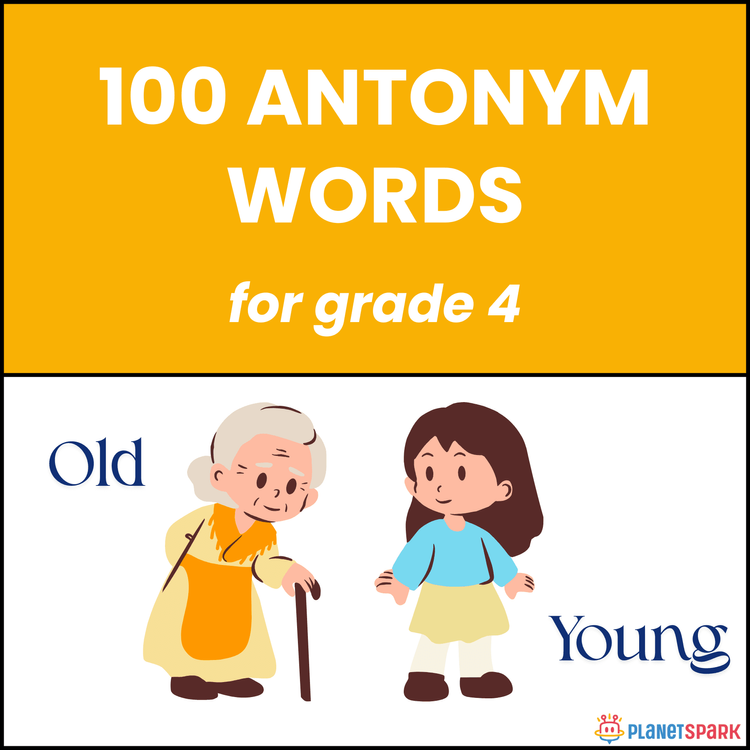
Class 4 Worksheet on Antonyms Usage Mastery
Opposites for Understanding: Antonym Skill Builder for Class 4
This Grade 4 worksheet helps learners strengthen vocabulary by practising 100 antonym words that cover a wide range of verbs, adjectives, and abstract ideas. Students write the opposite word for each item, encouraging deeper understanding of meaning relationships and improving word usage across reading and writing tasks.
The worksheet includes thoughtful word choices such as active, approve, balance, connect, defend, frequent, grateful, helpful, powerful, reveal and more—ideal for developing higher-order vocabulary in Class 4.
Each page lists 20 words in a clear, organised format that helps children practise independently while strengthening spelling and language precision.
Through consistent antonym work, students enhance comprehension, build expressive language, and gain confidence in using contrasting ideas across subjects.
Answer Key:
1. Active – Inactive
2. Adult – Child
3. Allow – Forbid
4. Alive – Dead
5. Apart – Together
6. Approve – Disapprove
7. Arrive – Depart
8. Awake – Asleep
9. Balance – Imbalance / Unbalance
10. Below – Above
11. Blunt – Sharp
12. Borrow – Lend
13. Bravehearted – Cowardly
14. Broad – Narrow
15. Calmness – Excitement
16. Capture – Release
17. Central – Peripheral
18. Choose – Reject
19. Combine – Separate
20. Complex – Simple
21. Connect – Disconnect
22. Constant – Changing
23. Continue – Stop
24. Courage – Fear
25. Create – Destroy
26. Decrease – Increase
27. Defend – Attack
28. Deliver – Collect / Receive
29. Deny – Accept
30. Descend – Ascend
31. Destroy – Build
32. Deny – Admit
33. Edge – Center
34. Encourage – Discourage
35. Expand – Contract
36. Exterior – Interior
37. Fade – Brighten
38. Flexible – Rigid
39. Freeze – Melt
40. Explain – Confuse
41. Frequent – Rare
42. Gather – Scatter
43. General – Specific
44. Generous-minded – Stingy / Selfish
45. Gentlehearted – Cruel
46. Global – Local
47. Graceful – Clumsy
48. Harmful – Harmless
49. Helpful – Unhelpful
50. Hide – Reveal
51. Hollow – Solid
52. Helpful – Unhelpful
53. Hope – Despair
54. Huge – Tiny / Small
55. Human – Inhuman
56. Include – Exclude
57. Increase – Decrease
58. Inner – Outer
59. Inferior – Superior
60. Innocent – Guilty
61. Join – Separate
62. Justice – Injustice
63. Lesser – Greater
64. Lively – Dull / Lifeless
65. Local – Global
66. Lock – Unlock
67. Loose – Tight
68. Lower – Raise
69. Majorly – Minimally (Answers may vary)
70. Maximum – Minimum
71. Mental – Physical
72. Mild – Harsh
73. Minimum – Maximum
74. Mountain – Valley
75. Multiply – Divide
76. Negative – Positive
77. Northern – Southern
78. Notice – Ignore
79. Obey – Disobey
80. Ordinary – Extraordinary
81. Outer – Inner
82. Peaceful – Violent
83. Polite-minded – Rude
84. Possible – Impossible
85. Powerful – Weak
86. Precious – Worthless
87. Prepare – Neglect / Ignore
88. Prevent – Allow / Permit
89. Protect – Harm
90. Provide – Withhold
91. Reduce – Increase
92. Refuse – Accept
93. Release – Capture
94. Remain – Leave
95. Reveal – Hide
96. Scatter – Gather
97. Secure – Insecure
98. Separate – Connect / Join
99. Silent – Noisy
100. Success – Failure
Use this worksheet regularly to help your child think critically about opposites and improve their mastery of advanced vocabulary.
Support your child’s language growth with focused antonym-building practice today!
🔖Book a free trial!
Frequently Asked Questions
They can replace repeated words with suitable opposites to improve writing variety.
They sometimes mix up opposites when words have similar meanings.
It builds flexibility in choosing correct words for essays and grammar tasks.