
Learn Key Channels of Business Communication in 2026


Table of Contents
- What Are Channels of Business Communication
- Types of Communication Channels in Business
- The 7 Channels of Communication Every Professional Should Kn
- Top Business Communication Channels in 2026 You Must Know
- Key Trends Shaping Communication in 2026
- Common Mistakes in Business Communication Channels
- PlanetSpark Business Communication Classes to Upgrade Your S
- Communicate with Clarity, Lead with Confidence
What if the real reason your ideas are ignored is not what you say, but how you say it?
Many working professionals struggle to choose the right channels of business communication, leading to confusion, delays, and missed opportunities. This blog explains the types of communication channels, explores the 7 channels of communication, and introduces modern tools shaping communication in 2026.
You will learn practical strategies, real workplace examples, and actionable tips to improve clarity and influence. By the end, you will know exactly which channel to use in every situation and how to communicate with confidence in a fast-evolving workplace.
What Are Channels of Business Communication
Channels of business communication refer to the different methods used to exchange information within an organization or with external stakeholders. These channels determine how messages are delivered, understood, and acted upon.
In today’s hybrid work environment, communication is no longer limited to emails and meetings. It includes digital tools, AI-powered platforms, and collaborative systems that enable faster and more effective interactions.
Business communication channels can be broadly classified into:
- Formal communication such as emails, reports, and official meetings
- Informal communication such as quick chats or casual discussions
- Internal communication within teams
- External communication with clients and partners
Each channel has its own purpose. For example:
- Emails provide documentation
- Meetings enable discussion
- Messaging tools support quick updates
Understanding the channels of business communication helps professionals avoid miscommunication and ensures that the right message reaches the right audience at the right time.

Why Choosing the Right Communication Channel Matters
Choosing the right communication channel is not just a technical decision. It directly impacts your professional image, efficiency, and relationships at work.
A poorly chosen channel can:
- Delay decision-making
- Create misunderstandings
- Reduce engagement
- Damage professional credibility
On the other hand, the right channel can:
- Improve clarity and speed
- Build trust with colleagues and clients
- Enhance collaboration
- Increase productivity
For instance, delivering critical feedback via email may seem efficient but can feel impersonal. A video call or face-to-face discussion allows tone and empathy to be conveyed effectively.
Key factors to consider include:
- Urgency of the message
- Complexity of the information
- Need for interaction
- Audience expectations
- Level of formality required
Professionals who master this skill are often seen as strong communicators and leaders.
Struggling to choose the right words in meetings? Book your FREE trial class now and learn communication that gets results before others do.
Types of Communication Channels in Business
Understanding the types of communication channels is essential for making informed decisions in professional settings. Each type serves a specific purpose and works best in certain situations.
Verbal Communication Channels
These include spoken interactions such as meetings, calls, and discussions. They allow immediate feedback and help clarify doubts quickly.
Examples:
- Team meetings
- Client calls
- Brainstorming sessions
Best used when:
- The message is complex
- Immediate response is needed
- Emotional tone matters
Written Communication Channels
Written communication provides a record and is suitable for detailed information.
Examples:
- Emails
- Reports
- Proposals
Best used when:
- Documentation is required
- Instructions need clarity
- Communication is formal
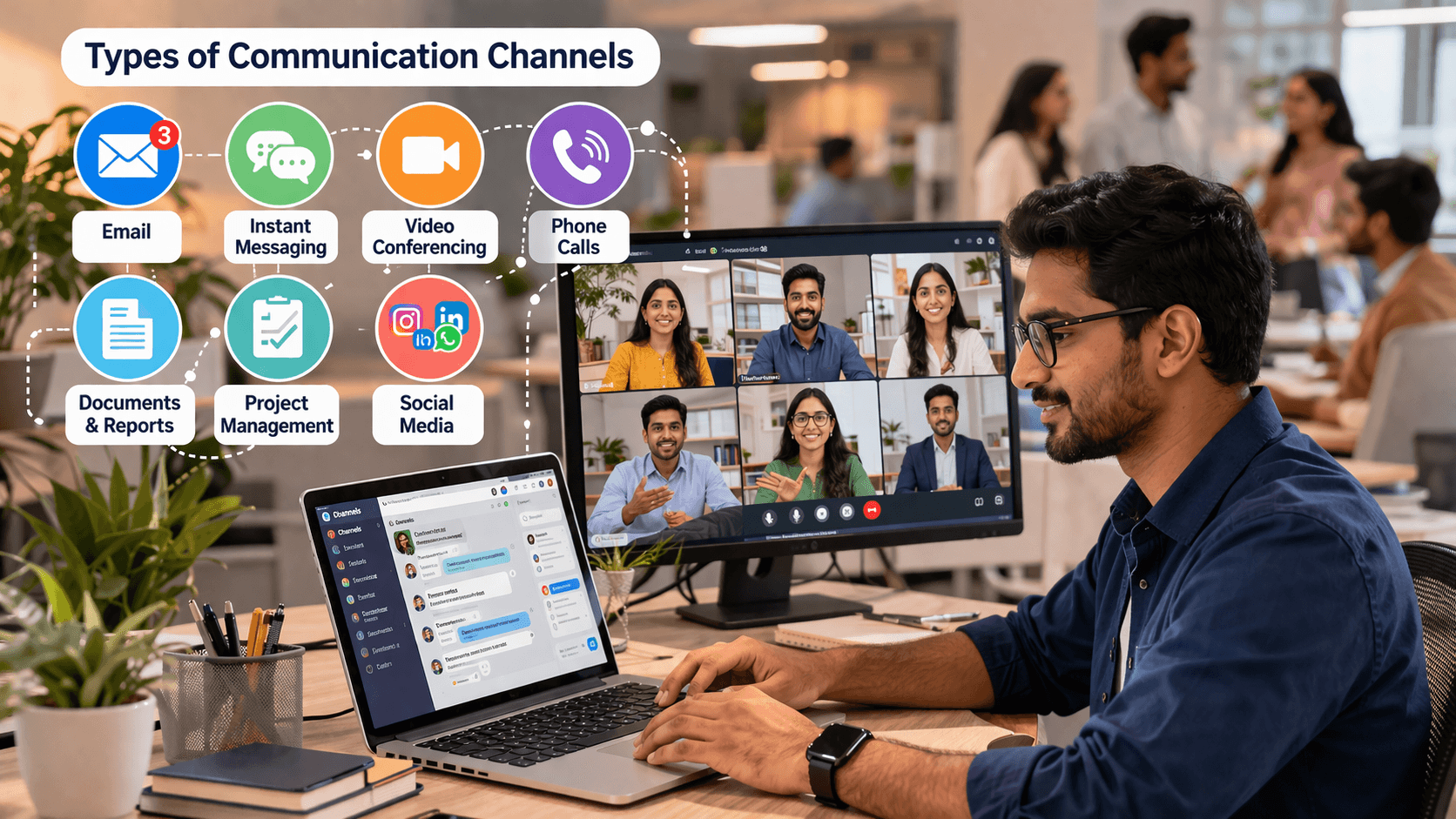
Digital Communication Channels
Digital tools have transformed workplace communication. They enable real-time collaboration across locations.
Examples:
- Messaging apps
- Project management tools
- Video conferencing platforms
Best used when:
- Teams are remote
- Quick updates are needed
- Collaboration is ongoing
Non-Verbal Communication Channels
These include body language, facial expressions, and tone of voice.
Examples:
- Eye contact
- Gestures
- Posture
Best used when:
- Building trust
- Enhancing verbal communication
Understanding these types of communication channels helps professionals choose wisely and communicate effectively.
The 7 Channels of Communication Every Professional Should Know
The 7 channels of communication provide a structured framework for understanding how communication happens in the workplace.
1. Face-to-Face Communication
The most effective channel for building trust and handling sensitive discussions.
2. Email Communication
A formal and widely used channel for documentation and professional communication.
3. Phone Communication
Useful for quick and urgent conversations that require immediate attention.
4. Video Conferencing
Combines visual and verbal communication, making it ideal for remote collaboration.
5. Instant Messaging
Allows quick and informal communication within teams.
6. Social Media Communication
Used for branding, marketing, and client engagement.
7. Reports and Documents
Provide structured and detailed information for decision-making.
Each of these channels plays a unique role. Professionals who understand and use all 7 channels of communication effectively can adapt to any situation.
Top Business Communication Channels in 2026 You Must Know
The workplace in 2026 is defined by integrated, AI-powered, and mobile-first communication systems. Understanding these modern channels gives professionals a competitive edge.
1. Unified Communication Platforms
Tools like integrated collaboration systems combine messaging, video, and file sharing in one place. They reduce app overload and improve efficiency.
2. Conversational Messaging Apps
Two-way messaging has replaced one-way updates. Professionals now engage in real-time conversations with clients and teams.
3. AI-Powered Video Conferencing
Modern video tools provide automatic summaries, insights, and transcripts, saving time and improving productivity.
4. Intelligent Email Systems
Emails now include AI features like auto-drafting, prioritization, and sentiment analysis.
5. Internal Social Platforms
Organizations use internal feeds to improve engagement and company culture.
6. AI Voice Assistants
These tools handle customer queries and support tasks efficiently.
7. Project Management Tools
Platforms help track progress, assign tasks, and maintain accountability.
These advancements are transforming the traditional channels of business communication into smarter, faster, and more interactive systems.
Still relying on outdated communication habits? Upgrade your skills today. Book a demo class and stay ahead in 2026 communication trends.
Key Trends Shaping Communication in 2026
The evolution of communication is driven by technology and changing workplace expectations.
1. Rise of AI in Communication
AI tools now assist with drafting messages, summarizing meetings, and analyzing communication patterns.
2. Hyper-Personalization
Messages are tailored based on context, audience, and preferences.
3. Mobile-First Communication
Professionals rely on mobile devices for quick and efficient communication.
4. Security and Privacy Focus
Organizations prioritize secure communication channels to protect sensitive information.
5. Intentional Communication
The focus has shifted to meaningful communication rather than excessive messaging.
This shift encourages professionals to communicate with clarity and purpose rather than volume.
How to Choose the Right Communication Channel
Choosing the right communication channel is a strategic decision that affects outcomes.
Ask yourself:
- What is the goal of the message
- Who is the audience
- How urgent is it
- Does it require feedback
Practical Framework
- Use meetings for complex discussions
- Use emails for formal communication
- Use messaging tools for quick updates
- Use reports for detailed information
Also consider workplace culture and preferences.
Professionals who choose the right channel save time, reduce confusion, and improve results.

Common Mistakes in Business Communication Channels
Many professionals unknowingly make mistakes that affect communication effectiveness.
1. Overusing One Channel
Relying only on email or messaging can limit effectiveness.
2. Ignoring Tone
Written communication often lacks emotional context.
3. Choosing Speed Over Clarity
Quick messages may lead to confusion.
4. Not Understanding the Audience
Different audiences require different approaches.
5. Avoiding Direct Communication
Face-to-face conversations are often more effective for complex issues.
Avoiding these mistakes can significantly improve your communication skills.
Real Workplace Examples of Communication Channels
Scenario 1: Project Update
A manager shares updates via email to maintain records.
Scenario 2: Urgent Issue
A quick phone call resolves a critical problem.
Scenario 3: Client Meeting
A video conference builds rapport and clarity.
Scenario 4: Team Collaboration
Messaging tools help coordinate tasks efficiently.
Scenario 5: Feedback Session
Face-to-face communication ensures clarity and empathy.
These examples highlight the importance of selecting the right channel for each situation.
How to Improve Your Business Communication Skills
Improving business communication skills requires consistent effort and practice.
Key Strategies
- Practice active listening
- Be clear and concise
- Adapt to different audiences
- Seek feedback
Daily Habits
- Review messages before sending
- Choose channels intentionally
- Observe effective communicators
Tools to Use
- Collaboration platforms
- Grammar tools
- Presentation software
Strong communication skills enhance career growth and professional confidence.
Want to communicate like top professionals? Book your trial class now and start building high-impact communication skills today.
PlanetSpark Business Communication Classes to Upgrade Your Skills
PlanetSpark business communication classes are designed for working professionals who want to communicate with clarity, confidence, and impact. Many professionals struggle with choosing the right communication channels, expressing ideas clearly, and handling workplace conversations effectively. Structured learning helps solve these challenges.
With a blend of expert-led sessions and AI-powered tools, PlanetSpark ensures practical, real-world communication improvement. Learners practice real scenarios such as meetings, client calls, and presentations to build confidence and fluency.
Key Features and USPs:
- Live, interactive 1:1 sessions with expert trainers
- Personalized learning roadmap based on skill assessment
- AI-powered tools like SparkX for speech and communication analysis
- Real-world practice including meetings, presentations, and negotiations
- Continuous feedback and progress tracking
- Confidence-building framework for professionals
- Structured curriculum aligned with workplace communication needs

Communicate with Clarity, Lead with Confidence
Mastering the channels of business communication is not just a professional skill but a career advantage. When you choose the right channel, your ideas gain clarity, your voice gains confidence, and your impact multiplies.
Consistent practice and mindful communication help you build stronger relationships and unlock new opportunities. As workplaces evolve, those who communicate effectively will always stand out and lead with confidence.
Also Read: Business Communication: Your Complete Workplace Guide
Master Business Communication by PlanetSpark
Business Communication Classes | Master Communication Skills
Frequently Asked Questions
Channels of business communication refer to formal and informal methods used within organisations, including upward, downward, and horizontal communication flows that support coordination and decision-making.
The main types of communication channels include verbal, written, digital, and non-verbal communication used in professional settings.
The 7 channels of communication include face-to-face, email, phone, video conferencing, messaging, social media, and reports.
They improve clarity, reduce misunderstandings, and enhance collaboration, which are essential for workplace success.
At PlanetSpark, we recommend considering urgency, audience, message complexity, and desired outcome before choosing a channel.
Face-to-face communication is often the most effective as it includes verbal and non-verbal cues.
You can improve your communication skills by practising regularly, listening actively, improving your vocabulary, and focusing on clarity while speaking. Structured programmes like PlanetSpark can also help by providing guided practice, feedback, and real-life communication activities.
Personalized Communication Roadmaps
Record a video to get a AI generated personalized communication reports