
Explore Kinesic Communication to Improve Non-Verbal Interaction Skills
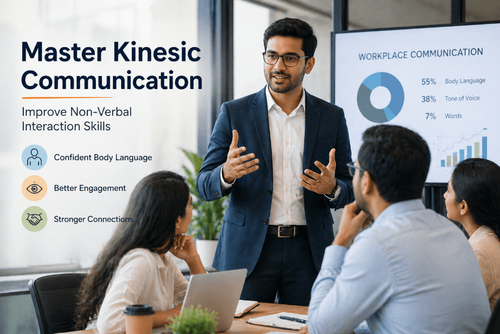

Table of Contents
- What is Kinesic Communication and Why It Matters
- Core Components of Kinesics for Improved Interaction
- Techniques to Improve Non-Verbal Skills
- Role of Kinesics in Communication at the Workplace
- Common Pitfalls in Kinesic Interaction
- Practical Ways to Build Strong Kinesic Communication
- How PlanetSpark Helps You Master Kinesic Communication
- Build Confidence Through Powerful Non-Verbal Communication
Have you ever been in a meeting where someone said all the right things, yet you still felt unsure about their confidence? Or noticed how a colleague’s body language spoke louder than their words? In professional settings, what you say is important, but how you say it often matters more.
This is where kinesic communication plays a crucial role. It refers to the use of body language such as gestures, posture, facial expressions, and eye contact to communicate messages. Many working professionals overlook this aspect, focusing only on verbal communication.
Understanding what is kinesics in communication can completely transform how you interact at work. Whether it is presentations, meetings, or interviews, strong non-verbal skills can make you appear more confident, credible, and persuasive.
The good news is that kinesic communication is a skill that can be learned and improved. With the right techniques and expert guidance from PlanetSpark, professionals can enhance their presence, communicate more effectively, and build stronger workplace relationships.
What is Kinesic Communication and Why It Matters

Kinesic communication is the foundation of non-verbal interaction. It refers to how your body movements, expressions, and physical presence convey meaning during communication. In many situations, people rely more on what they observe than what they hear, making kinesics a powerful communication tool.
Understanding what is kinesics in communication helps professionals become more self-aware. It allows them to recognize how their body language influences others and how they can use it intentionally to create better impressions. In workplace environments where first impressions and ongoing interactions matter, kinesic communication becomes a key differentiator.
Why kinesic communication is important
- Builds first impressions
Before you speak, your body language creates an impression. A confident posture and steady eye contact can instantly build trust and credibility in professional settings. - Supports verbal communication
Non-verbal cues reinforce your words, making your message more impactful and believable. When both verbal and non-verbal communication align, your message becomes stronger. - Enhances clarity and engagement
Proper gestures and expressions help convey ideas clearly and keep the audience engaged throughout conversations or presentations. - Improves professional relationships
Positive body language fosters trust and better collaboration in teams, making interactions smoother and more productive.
Real-world relevance
In meetings, interviews, and presentations, kinesic communication often determines how your message is received and remembered.
👉 PlanetSpark helps professionals understand and apply non-verbal communication effectively, improving both confidence and workplace presence.
Core Components of Kinesics for Improved Interaction
To truly master kinesic communication, it is important to understand its building blocks. Each component contributes to how your message is perceived and interpreted. When used effectively, these elements can enhance your communication significantly.
Many professionals focus only on what they say and ignore how they physically present themselves. However, improving these components can instantly elevate your communication skills and make you more impactful in professional interactions.
1. Facial Expressions
Facial expressions are one of the most powerful forms of non-verbal communication. A smile can convey friendliness, while a serious expression can indicate focus or concern.
Professionals must learn to align their expressions with their message. If your facial expression does not match your words, it can create confusion and reduce credibility.
2. Eye Contact
Eye contact shows confidence, attentiveness, and sincerity. It helps establish a connection with your audience or listener.
Maintaining balanced eye contact during conversations ensures engagement without making others uncomfortable. It also signals that you are actively involved in the interaction.
3. Gestures
Hand movements can emphasize key points and make communication more dynamic. They help in breaking monotony and keeping the audience engaged.
However, gestures should be controlled and purposeful. Overuse or random gestures can distract from your message.
4. Posture
Your posture reflects your confidence and professionalism. Standing or sitting upright conveys authority and attentiveness.
Poor posture, such as slouching, can make you appear uninterested or lacking confidence, even if your words are strong.
5. Body Movement and Space
How you move and position yourself during conversations also matters. Controlled movements indicate confidence, while excessive movement can show nervousness.
Maintaining appropriate personal space ensures comfort and respect during interactions.
Why these components matter
Each of these elements works together to create a complete communication experience. Ignoring even one aspect can affect how your message is received and interpreted.
👉 PlanetSpark trains professionals to master these components through guided practice and real-time feedback.
Techniques to Improve Non-Verbal Skills
Improving kinesic communication requires conscious effort and consistent practice. Many professionals are unaware of their body language habits, which can limit their effectiveness in communication.
Developing non-verbal skills is not about changing your personality but about becoming more aware of how you present yourself. Small improvements can lead to significant changes in how others perceive you.
Practical techniques to improve
- Practice in front of a mirror
Observing your expressions and posture helps identify areas of improvement. This builds self-awareness and allows you to correct mistakes early. - Record and review yourself
Watching your recorded presentations helps you notice gestures, posture, and expressions. It provides valuable insights into your communication style. - Maintain open body language
Avoid crossed arms or closed posture. Open gestures make you appear approachable, confident, and more receptive to communication. - Control nervous habits
Repetitive actions like fidgeting or tapping can distract from your message. Awareness helps eliminate these habits over time. - Use purposeful gestures
Every gesture should support your message rather than distract from it. Controlled gestures enhance clarity and engagement.
Why consistent practice matters
Non-verbal communication improves gradually. Regular practice helps build confidence and makes positive body language a natural habit.
👉 PlanetSpark provides structured sessions where professionals practice and refine their non-verbal skills in real-time scenarios.
Role of Kinesics in Communication at the Workplace
The role of kinesics in communication becomes even more important in workplace environments where interactions are frequent and impactful. Every meeting, presentation, and conversation is influenced by non-verbal cues.
Professionals who understand kinesic communication can communicate more effectively, build stronger relationships, and leave a lasting impression. It helps in aligning your message with your intent and ensures that your communication is perceived correctly.
Where kinesics matters most
- Presentations
Strong body language helps deliver impactful presentations and engage the audience effectively. It ensures your message is both heard and felt. - Meetings
Non-verbal cues like nodding and eye contact show attentiveness and participation. This encourages better collaboration. - Interviews
Confident posture and expressions create a strong impression on interviewers, increasing your chances of success. - Team collaboration
Positive body language improves communication and builds trust within teams, leading to better outcomes.
Why it impacts success
Professionals with strong kinesic communication are perceived as more confident, competent, and approachable.
👉 PlanetSpark helps professionals develop workplace-ready communication skills that combine verbal and non-verbal excellence.
Common Pitfalls in Kinesic Interaction
Even experienced professionals make mistakes in kinesic communication without realizing it. These small mistakes can have a big impact on how their message is received.
Understanding these pitfalls is the first step toward improving your non-verbal communication. Awareness helps you identify and correct these issues effectively.
Common pitfalls
- Lack of eye contact
- Closed body posture
- Overuse of gestures
- Nervous movements
- Mismatched expressions
How to avoid these mistakes
- Stay aware of your body language during interactions
- Practice regularly to build better habits
- Seek feedback from mentors or peers
- Focus on aligning your words with your actions
Why avoiding mistakes matters
Small non-verbal errors can create a negative impression even when your words are correct. Fixing these improves overall communication.
👉 PlanetSpark helps identify and correct these mistakes through personalized coaching and feedback.

Practical Ways to Build Strong Kinesic Communication
Building strong kinesic communication is a continuous process. It requires effort, awareness, and consistent improvement over time.
Professionals who actively work on their body language often see improvements not only in communication but also in confidence and leadership presence.
Effective strategies
- Observe confident speakers and learn from them
- Practice speaking with controlled gestures
- Work on posture and eye contact daily
- Take feedback seriously and implement changes
Building consistency
Consistency is key to improvement. Practicing daily helps make non-verbal communication natural and effortless.
👉 PlanetSpark offers continuous guidance and structured learning to help professionals build strong and consistent communication skills.
How PlanetSpark Helps You Master Kinesic Communication
PlanetSpark provides a comprehensive approach to improving kinesic communication by combining communication training with real-world practice. It focuses on both awareness and application, ensuring professionals can use these skills effectively.
Personalized learning approach
Each professional receives customized sessions based on their needs. This ensures targeted improvement and faster progress.
Focus on non-verbal communication
Special emphasis is given to body language, posture, and expressions, helping learners improve their overall presence.
Real-time practice sessions
Learners practice in simulated professional scenarios, improving confidence and clarity in communication.
Expert trainers
Experienced mentors guide learners step by step, helping them refine their skills effectively.
Continuous feedback
Regular feedback ensures steady improvement and helps eliminate mistakes in non-verbal communication.
Confidence building
PlanetSpark focuses on building confidence, which reflects in both verbal and non-verbal communication.
Why PlanetSpark stands out
It combines structured learning, expert guidance, and real-world application, making it highly effective for professionals.

Build Confidence Through Powerful Non-Verbal Communication
Mastering kinesic communication is essential for professionals who want to stand out in the workplace. It helps you communicate with confidence, clarity, and impact.
By understanding what is kinesics in communication and applying the right techniques, you can transform how you present yourself in professional settings.
With consistent practice and expert guidance from PlanetSpark, you can develop strong non-verbal skills that enhance your overall communication and career growth.
Frequently Asked Questions
Kinesic communication refers to the use of body language such as gestures, posture, and facial expressions to convey messages. It plays a key role in how people interpret your communication and often reinforces your spoken words.
Kinesics enhances clarity, builds trust, and improves engagement. It helps reinforce verbal messages and ensures your communication is more impactful and convincing.
You can improve by practicing in front of a mirror, recording yourself, and focusing on posture and gestures. Consistent practice and feedback help make these skills natural over time.
Common mistakes include poor eye contact, nervous gestures, and closed posture. These can create a negative impression even if your words are strong.
Kinesics plays a crucial role in presentations, meetings, and interviews. It helps convey confidence, clarity, and professionalism in workplace interactions.
PlanetSpark provides structured training, expert guidance, and real-time practice sessions. It focuses on improving both verbal and non-verbal communication skills together.
Yes, kinesic communication can be learned and improved with practice. With consistent effort and guidance, it becomes a natural part of effective communication.
Personalized Communication Roadmaps
Record a video to get a AI generated personalized communication reports