
5 Key Benefits of Communication Skills & How to Nurture Them
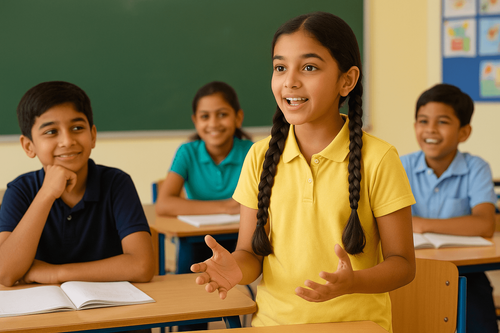

Table of Contents
- Builds Confidence and Self-Belief
- Enhances Academic Performance
- Strengthens Social and Emotional Skills
- Improves Problem-Solving and Critical Thinking
- Prepares for Future Leadership
- How Parents Can Support Communication Growth
- How Parents Can Support Communication Growth
- Why Communication Skills Are Essential for Kids
- Practical Daily Activities to Build Skills
- Common Mistakes to Avoid
- Conclusion
Communication skills don’t just help you talk better; they help you think clearly, listen actively, and connect meaningfully. Whether it’s sharing ideas in class, narrating a story, or resolving a disagreement, the ability to express thoughts with confidence is a lifelong advantage.
This blog explores the five key benefits of communication skills for kids and how you can nurture them at home, through habits, conversations, and everyday examples.
Builds Confidence and Self-Belief
The first visible outcome of good communication is confidence.
When you learn to express ideas clearly, whether in front of a class or in front of a group, you begin trusting your voice. That self-trust becomes the seed for leadership, participation, and courage.
For instance, a child who can explain their opinion calmly in a classroom discussion is also the one who feels confident standing up for themselves elsewhere.
You can nurture this by:
Encouraging children to describe their school day in full sentences.
Asking them to express preferences, “Why do you like this book?”
Celebrating the effort to speak, not just perfection in delivery.
Confidence in communication builds through repetition, validation, and kindness.
Enhances Academic Performance
Communication and academics go hand in hand. Kids who can listen attentively, ask questions, and express doubts learn faster and retain more.
For example:
During science lessons, the child who asks, “Why does that happen?” is also the one building curiosity and deeper understanding.
Group projects and oral exams improve dramatically when children can convey ideas clearly.
Teachers notice that strong communicators often become active learners, not because they study more, but because they engage better.
You can boost the studies by:
Encouraging questions during study time.
Asking yourself to explain what you've learned that day, teaching reinforces understanding.
Reducing interruptions allows you to finish explaining, even if you struggle.
Strengthens Social and Emotional Skills
When social awareness expands, children begin managing friendships, group dynamics, and empathy. Communication plays a silent yet powerful role here.
How?
Clear communication helps children express emotions without aggression or withdrawal.
Listening skills foster empathy, understanding others’ feelings, and responses.
Positive speech patterns (“I feel,” “I think,” “Can we try this?”) reduce conflict and build collaboration.
This social intelligence forms the base for teamwork, leadership, and emotional resilience later in life. You can model this at home by using calm, respectful speech.
Help your child communicate with empathy and confidence.
Join PlanetSpark’s to get the benefits of Communication Skills Program today.
Improves Problem-Solving and Critical Thinking
Communication is not just about speaking; it’s about organizing thoughts. When you articulate your reasoning, you strengthen logic and creativity simultaneously.
Encouraging yourself to “think out loud” improves how you analyse information. For instance:
“What could be another ending for this story?”
“If you were the class monitor, how would you solve this?”
By explaining, you structure thoughts step by step, an early form of critical thinking.
You can support this through games like “What Would You Do If…”, or through debate-friendly topics at the dinner table.
Prepares for Future Leadership
Strong communication lays the foundation for leadership in later years. Children who can share ideas, motivate peers, and listen thoughtfully often become natural team players and young leaders.
At a young age, leadership can start small, leading a group discussion, narrating the morning news, or volunteering during assemblies. Each experience adds confidence and shapes a sense of responsibility.
As they grow, these children tend to express opinions without fear, listen to different perspectives, and handle feedback maturely, all hallmarks of future leaders.
You can also encourage leadership through communication by:
Ask yourself to take charge of small home tasks and present your ideas.
Express gratitude or introductions in family gatherings.
How Parents Can Support Communication Growth
Communication thrives at home. Parents are a child’s first and most consistent teachers.
Here’s how to nurture clarity and confidence daily:
Encourage Open Conversations: Listen without judgment. Ask “What do you think?” instead of “Why did you do that?”
Create Speaking Opportunities: Let your child order food, talk to relatives, or participate in school events. Real-life practice is priceless.
Model Good Listening: Give full attention when your child speaks. Eye contact and patience teach respect through example.
Limit Screen Time: Encourage more real conversations; face-to-face interaction strengthens both empathy and vocabulary.
Praise Effort, Not Perfection: Children build fluency through encouragement, not correction. Highlight what they did well before guiding improvement.
How Parents Can Support Communication Growth
PlanetSpark bridges structured learning and natural communication growth through expert-led, engaging sessions.
One-on-One Live Classes: Personalised coaching ensures every child develops at their own pace.
Interactive, Gamified Activities: Storytelling, public speaking, and dialogue games make learning lively.
Expert-Curated Curriculum: Designed by alumni of IIT, XLRI, and Harvard, focused on clarity, confidence, and expression.
Continuous Feedback: Parents receive regular progress reports tracking speech clarity, confidence, and tone.
- Holistic Confidence Building: Children learn to speak, listen, and lead, all through fun, meaningful practice..
PlanetSpark’s courses nurture not just communication, but character, shaping articulate, empathetic young thinkers.
Don’t wait to build your child’s communication and leadership potential!
Enroll today in PlanetSpark’s Personality Development and Communication Classes.
Why Communication Skills Are Essential for Kids
At this stage, children are forming the habits that shape adolescence. Their ability to speak clearly, listen patiently, and express responsibly directly affects:
Academic success: Better participation and understanding.
Social well-being: Stronger friendships and emotional stability.
- Future readiness: Confidence in interviews, leadership roles, and presentations.
Communication is the foundation of self-expression, and self-expression is the foundation of confidence.
Practical Daily Activities to Build Skills
Here are simple routines parents can add at home:
“Describe Your Day” Game: Let your child explain one event in detail, what happened, how they felt, and what they learned.
Roleplay Conversations: Practice real scenarios like greeting guests, explaining directions, or solving a problem.
Story Retelling: After watching a movie or reading a book, ask your child to narrate it with their own twist.
Mirror Talk: Encourage them to speak in front of a mirror for 2–3 minutes daily, which improves posture and articulation.
Word of the Day: Introduce one new expressive word each morning and use it throughout the day.
These habits make communication fun, consistent, and rewarding.
Common Mistakes to Avoid
Overcorrecting grammar or pronunciation: Focus on confidence before precision.
Finishing sentences for them: Let your child find their words.
Limiting expression: Encourage creativity, even if stories sound exaggerated; imagination builds fluency.
Ignoring listening skills: Remind them that communication is two-way.
Neglecting emotion: Clear communication includes tone, empathy, and kindness.
Remember, children grow confident communicators when they feel heard, not tested.
Conclusion
Communication skills are more than words; they’re tools for thinking, connecting, and leading. Either for adults or for Children, mastering these skills builds academic strength, emotional intelligence, and lifelong confidence.
Parents who engage in daily, patient conversations give their children a head start in clarity and expression. And when guided by structured programs like PlanetSpark, these young minds learn to express thoughts with confidence, empathy, and purpose.
Frequently Asked Questions
They help children express ideas clearly, understand lessons better, make friends easily, and build confidence for public speaking and teamwork.
Encourage open conversation, storytelling, and roleplay. Limit screen time and model attentive listening.
Better eye contact, fewer filler words, clear sentences, and willingness to share opinions.
Yes. Students who ask questions, participate in class, and explain their answers perform better academically.
Class 3–5 is ideal, children are curious, imaginative, and receptive to feedback.