
Conflict Resolution Dialogue for Students (Scripts And Examples)
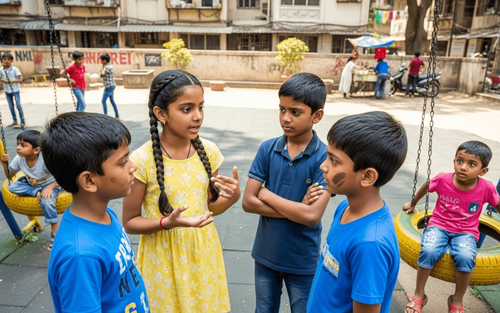

Table of Contents
- How to Resolve Conflict (Anatomy of a Good Conflict Conversa
- What Is Conflict Resolution Dialogue?
- Why Dialogue Matters More Than Winning
- Real Conflict Scenarios with Full Dialogues
- Phrases That Help (And Phrases That Hurt)
- Teaching Kids to Use "I" Statements
- Active Listening in Conflict Resolution
- When Dialogue Doesn't Work: Next Steps
- How Parents and Teachers Can Facilitate Dialogue
- How PlanetSpark Builds Conflict Resolution Dialogue Skills
Two friends stop talking after an argument.
Two classmates refuse to work together on a project.
Siblings won't share the TV remote without screaming.
A misunderstanding in a group chat explodes into hurt feelings.
A simple game competition can cause a lifelong grudge between teams.
Conflict is everywhere.
In classrooms. On playgrounds. At home. Online. In sports teams. Between friends, siblings, and classmates.
And here's what most kids don't realise: conflict itself is not the problem. How you handle it is.
You can say that the problem is not a problem, but the way you see it may be a problem.
You can scream. Blame. Shut down. Walk away angry. Let resentment build until friendships crumble.
Or you can TALK.
Not just any talk but dialogue. Real, honest, respectful conversation where both people feel heard, understood, and willing to find solutions together.
The difference between these two approaches? Everything.
One destroys relationships. The other strengthens them.
One leaves everyone angry. The other leaves everyone respected.
One teaches avoidance. The other teaches courage.
Here's the truth that most schools don't teach:
Conflict resolution is not being right. It's about being heard and listening to the other person.
It's not winning the argument. It's preserving the relationship while solving the problem.
And it requires something many kids (and adults) struggle with: dialogue skills. Everybody loves repeating dialogues from famous personalities or from films.
That’s why social media is brimming with such reels and lip-syncing. And students? They mostly talk dialogue what they listened to last night from the movie.
So, one skill that is popular among every generation, why not use it to resolve conflicts among students?
The conflict resolution dialogue is not instinctive. They are skills and part of communication. And skills can be taught.
At PlanetSpark, we teach kids to communicate not just when it's easy, but especially when it's hard because that's when communication matters most.
This guide provides the scripts, examples, and strategies to teach conflict-resolution dialogue to students so they can navigate disagreements with maturity, respect, and confidence.
Let's begin.
How to Resolve Conflict (Anatomy of a Good Conflict Conversation & Step-by-Step Conflict Resolution Framework)
What makes conflict resolution dialogue effective? It needs the right elements AND the right process. Here's a complete framework that combines both what good dialogue looks like and how to do it step-by-step.
Step 1: Create a Calm Environment First
You can't have productive dialogue in the middle of shouting, tears, or chaos. Emotions must cool before logic can engage.
How to create it:
- Take a break if emotions are too high (Let me take 5 minutes to calm down)
- Move to a quiet, neutral space (not one person's "territory")
- Both people sit down (standing can feel confrontational)
- Take 5 deep breaths together
- Count to 10 if needed
Parent/Teacher Script: I see you're both upset. Let's take five minutes to calm down, then we'll talk.
Key Insight: Trying to resolve conflict while angry is like trying to drive with a foggy windshield. Clear the fog first.
Step 2: Establish Turn-Taking Rules
If both people talk over each other, no one is heard. Without turn-taking, dialogue becomes a shouting match.
How to implement:
- One person speaks at a time (no interrupting)
- Set a time limit if needed (2 minutes each to start)
- Use a "talking stick" for younger kids (whoever holds, speaks)
- The listener's job: listen to understand, not to plan their rebuttal
Script: I'll speak first for 2 minutes without interruption. Then you get 2 minutes. Deal?
Step 3: State the Problem Using "I" Statements
"You" statements sound like attacks and trigger defensiveness. "I" statements express feelings without blame, opening the door to understanding.
The Formula: I feel [emotion] when [situation] because [reason].
Examples:
❌ You are so mean!
✅ It hurt me when you said that.
❌ You never listen to me!
✅ I feel unheard when I'm interrupted.
❌ You always take my stuff!
✅ I feel frustrated when my things are used without asking.
How to Do It: Focus on the specific issue, not everything they have ever done wrong. Keep it recent, specific, and honest.
Script: I want to talk about what happened at lunch today. I felt hurt when you laughed at my drawing in front of everyone.
Teach your child conflict resolution with our free communication skills session.
Step 4: Listen Actively to the Other Person's Side
There are always two perspectives. Until someone feels heard, they can't move toward solutions.
What Active Listening Looks Like
Physical cues:
- Eye contact
- Facing the speaker
- Nodding
- Not looking at phone/distractions
Verbal cues:
- I hear you.
- That makes sense.
- Tell me more.
- Can you explain what you meant?
Reflective listening: Repeat back what you heard: "So you are saying you weren't laughing at my drawing but at the joke someone told?"
How to Do It:
- Don't interrupt
- Don't plan your response while they're talking
- Ask clarifying questions
- Summarise what you heard to confirm understanding
Key Insight: Listening doesn't mean agreeing. It means understanding.
Step 5: Acknowledge Both Perspectives
Validating someone's feelings doesn't mean you agree with them. It means you understand them. This diffuses defensiveness and creates space for resolution.
How to Do It
Acknowledge your own feelings: "I felt embarrassed when everyone laughed."
Acknowledge their feelings: "I hear that you didn't mean to hurt me. You were laughing at the joke, not my drawing."
Script: I understand you weren't trying to be mean. And I hope you understand why I felt hurt.
Example: I hear that you felt left out. That makes sense. I didn't intend to exclude you, but I can see why it felt that way.
This isn't:
- Admitting you were wrong
- Giving up your perspective
- Saying, "You're right, I'm wrong"
This is:
- Showing empathy
- Creating mutual respect
- Building a bridge toward solutions
Step 6: Focus on the Problem, Not the Person
Attacking someone's character shuts down dialogue. Focusing on the specific behaviour or situation opens pathways to change.
Examples:
❌ You are lazy and irresponsible.
✅ When the dishes aren't done, it creates more work for everyone.
❌ You are a terrible friend.
✅ When you cancelled plans at the last minute without explanation, I felt disappointed and unimportant.
❌ You are so selfish.
✅ When you used my stuff without asking, I felt disrespected.
How to Do It: Separate the person from the behaviour. You can dislike what someone DID without attacking who they ARE.
Step 7: Brainstorm Solutions Together
If one person dictates the solution, the other feels powerless and resentful. Co-creating solutions builds ownership and commitment.
How it works:
Ask open-ended questions:
- What can we do so this doesn't happen again?
- How can we both feel okay about this?
- What would make this better for you?
- What can I do differently? What can you do differently?
Example Solutions:
- Next time, if you're joking, let me know so I don't think you're laughing at me.
- I'll be more mindful of timing if you're sharing something personal; I won't joke around.
- I'll return borrowed items within a week, and you can remind me if I forget.
The Key: Both people contribute ideas. Both people feel heard in the solution.
Step 8: Agree on Action Steps and Follow Through
Dialogue without action is just venting. Conflict resolution requires commitment to change.
How to Close:
Summarise the agreement clearly: "So we agreed that I'll return things within a week, and you'll remind me if I forget. Let's check in next week to see how it's going."
Confirm mutual understanding: "Are we good now?" "Yeah, we're good."
Express appreciation: "Thanks for talking about this." "I'm glad we worked it out."
Optional Physical Closure: Shake hands, hug, or fist bump to physically signal resolution and repair.
Follow-Through: Check in after a few days: "How's it going with [the solution we agreed on]?"
Summary of the Framework:
- Calm down first (emotions in check)
- Establish turn-taking (one speaks, one listens)
- State the problem using "I" statements (feelings, not attacks)
- Listen actively to their side (truly hear them)
- Acknowledge both perspectives (validation, not agreement)
- Focus on the problem, not the person (behaviour, not character)
- Brainstorm solutions together (collaboration, not dictation)
- Agree and follow through (commitment to change)
This framework works because:
- It respects both people
- It prioritises understanding over winning
- It focuses on solutions, not blame
- It preserves relationships while addressing problems
At PlanetSpark, we build this environment for students so that the conflicts are resolved on the spot, or they do not happen at all.
What Is Conflict Resolution Dialogue?
Conflict resolution dialogue is a conversation between two or more people aimed at understanding the problem, expressing feelings respectfully, acknowledging someone else's hurt without dismissing your own, and finding a middle ground even when emotions run high.
It's NOT:
- Yelling until someone gives up
- Blaming and attacking
- Ignoring the problem and hoping it disappears
- Speaking honestly but respectfully
- Acknowledging both perspectives
- Working toward a solution both people can accept
The Goal of Dialogue
The goal is not to "win." It's to:
- Understand each other's perspective
- Express your feelings without attacking
- Preserve or repair the relationship
- Find a solution that works for everyone
Key Insight
You can be right AND still lose the relationship. Dialogue teaches kids that being understood matters more than being "right".
Why "Dialogue" and Not Just "Talking"?
Talking = one person speaks, the other waits to respond (or interrupts).
Dialogue = both people speak AND listen. It's a two-way exchange where understanding is the priority, not just being heard.
Example:
Just Talking: "You're so selfish! You never share!" "Well, YOU took my pencil yesterday!" "That's different!" "No, it's not!"
Escalates into shouting. Nothing resolved.
Dialogue: "I felt hurt when you didn't share your markers with me. I thought we were friends." "I'm sorry. I didn't realise it hurt you. I was upset because you borrowed my pencil last week and forgot to return it." "Oh! I didn't know that bothered you. I'll make sure to return things faster." "Thanks. And I'll try to share better."
Understanding reached. Problem solved.
See the difference?
Talking = defending yourself.
Dialogue = understanding each other.
Why Dialogue Matters More Than Winning
It Preserves Relationships
Winning an argument but losing a friend isn't really winning.
Example: You prove your sibling was wrong. You "win." But now they're hurt, resentful, and distant. Was it worth it?
Dialogue says, "The relationship matters more than being right."
It Teaches Emotional Intelligence
Dialogue requires:
- Recognising your own emotions
- Understanding someone else's emotions
- Managing frustration
- Expressing feelings calmly
These are lifelong emotional intelligence skills.
It Prevents Escalation
Small conflicts, left unaddressed, become big conflicts.
Without dialogue: Resentment builds. Small irritations become major fights.
With dialogue: Issues get resolved before they explode.
It Builds Problem-Solving Skills
Conflict resolution dialogue teaches:
- Identifying the real problem
- Brainstorming solutions
- Compromising
- Evaluating outcomes
These are critical thinking skills disguised as communication skills.
It Prepares for Real Life
Adults don't get sent to the "timeout corner." They're expected to resolve conflicts professionally.
Future scenarios requiring dialogue:
- Disagreements with colleagues
- Relationship conflicts
- Neighbor disputes
- Customer service issues
- Family disagreements
Kids who learn dialogue young navigate adult life better.
Make your child a problem solver with the right conflict resolution dialogue training.
Real Conflict Scenarios with Full Dialogues
Let's see this framework in action with complete, realistic dialogues.
Scenario 1: Borrowed Item Not Returned
The Conflict: Sara lent her favourite book to Maya a month ago. Maya hasn't returned it. Sara is frustrated.
Dialogue:
Sara (calmly): "Hey Maya, can we talk for a minute?"
Maya: "Sure, what's up?"
Sara: "I lent you my book a month ago, and I've been waiting for it back. I feel frustrated because it's my favourite, and I'd like to read it again."
Maya: "Oh! I totally forgot. I'm sorry. I didn't realise you were waiting for it."
Sara: "I get that you forgot, but it's been a while. I felt like maybe you didn't care about returning it."
Maya: "I do care! I just got distracted. I'll bring it tomorrow, I promise."
Sara: "Okay. Can we agree that if I lend you something, you'll return it within two weeks?"
Maya: "Absolutely. And if I forget, just remind me."
Sara: "Deal. Thanks for understanding."
Maya: "Thanks for not being mad. I'll definitely bring it tomorrow."
What Made This Work:
- Sara used "I feel" statements
- She focused on the behaviour (not returning the book), not attacking Maya's character
- Maya acknowledged the problem and apologised
- They agreed on a solution together
- Both left feeling respected
Scenario 2: Group Project Disagreement
The Conflict: Arjun and Priya are working on a science project. Arjun feels Priya is not contributing equally.
Dialogue:
Arjun: "Priya, can we talk about the project?"
Priya: "Yeah, what about it?"
Arjun: "I feel like I've been doing most of the work, and I'm getting stressed. I need your help more."
Priya (defensively): "I've been helping! I made the poster!"
Arjun: "I know, and the poster looks great. But there's also research, writing, and practising the presentation. I feel like those are falling mostly on me."
Priya (pauses): "You're right. I didn't realise you felt that way. I've been really busy with volleyball practice."
Arjun: "I get that you're busy. But this is a team project. Can we divide the tasks more clearly?"
Priya: "Yeah, that makes sense. What still needs to be done?"
Arjun: "We need to finish the research and practice presenting. How about you do the research, and we practice together?"
Priya: "Okay, I can do that. I'll have the research done by tomorrow."
Arjun: "Thanks. And if you're overwhelmed, just let me know. We can adjust."
Priya: "I will. Sorry for not pulling my weight earlier."
Arjun: "It's okay. Let's just finish strong."
What Made This Work:
- Arjun didn't attack Priya; he expressed his feelings
- Priya got defensive initially (normal!), but then listened
- Arjun acknowledged what Priya HAD done (the poster)
- They solved the problem together
- Clear next steps were agreed upon
Scenario 3: Playground Exclusion
The Conflict: Rohan feels left out because his friends played a game without inviting him.
Dialogue:
Rohan (approaching his friends at recess): "Hey, can I talk to you guys?"
Friend 1: "Sure, what's up?"
Rohan: "Yesterday, you all played cricket without asking me. I felt left out and kind of hurt."
Friend 2: "We didn't mean to leave you out! You were with the other group, so we thought you were busy."
Rohan: "I was just talking to them for a minute. I didn't realise you'd start without me."
Friend 1: "Honestly, we didn't think you'd mind. We're sorry."
Rohan: "I do mind. You're my friends, and I wanted to play too."
Friend 2: "We get it. Next time, we'll wait or come get you. Okay?"
Rohan: "That would be great. And if I'm actually busy, I'll tell you."
Friend 1: "Cool. Want to play now?"
Rohan (smiling): "Yeah, let's go."
What Made This Work:
- Rohan expressed his feelings without accusing ("You excluded me on purpose!")
- Friends explained their perspective (they thought he was busy)
- Both sides understood the miscommunication
- Solution: clearer communication going forward
- Friendship repaired, not damaged
Scenario 4: Sibling Conflict Over Screen Time
The Conflict: Two siblings, ages 10 and 12, both want to watch TV at the same time.
Dialogue:
Older Sibling: "I want to watch my show now."
Younger Sibling: "But I've been waiting all day to watch mine!"
Older Sibling: "So have I."
Parent (stepping in briefly): "Let's pause. Instead of arguing, can you both talk about a solution?"
Younger Sibling (calmer): "I feel frustrated because I always have to wait. You're older, so you always get the remote."
Older Sibling: "That's not true. Last time, you watched your show first."
Younger Sibling: "Maybe, but it feels like you get it more."
Older Sibling: "Okay, I hear that. What if we take turns? You go first today; I go first tomorrow."
Younger Sibling: "But your show is an hour long. Mine is only 30 minutes."
Older Sibling (thinking): "How about we each get 30 minutes today? You watch first, then I watch. Tomorrow, I go first."
Younger Sibling: "Okay, that's fair."
Parent: "Great job working it out. Shake on it?"
(They shake hands and follow through.)
What Made This Work:
- Parent facilitated but didn't dictate
- The younger sibling expressed feelings without whining
- The older sibling listened and proposed a compromise
- Both felt heard
- The solution was fair and clear
Make your kid the best communicator. Book your free trial now!
Phrases That Help (And Phrases That Hurt)
Words matter. Let's compare.
Phrases That HELP Resolve Conflict
Phrases That HURT and Escalate Conflict
Teach kids:
Replace "You always..." with "I noticed that..."
Replace "You're wrong" with "I see it differently."
Replace "Whatever" with "I need a break, but we should talk later."
Teaching Kids to Use "I" Statements
"I" statements are the foundation of conflict resolution dialogue.
The Formula
"I feel [emotion] when [behaviour/situation] because [impact]."
Examples
Instead of: You're so annoying!
Try: I feel frustrated when you interrupt me because I can't finish my thoughts.
Instead of: You stole my idea!
Try: I feel upset because I shared my idea with you, and then you presented it as yours.
Instead of: You don't care about me!
Try: I feel hurt when you cancel plans at the last minute because it makes me feel unimportant.
Practice Activity
Give kids scenarios and have them create "I" statements.
Scenario: Your friend forgot your birthday.
"I" Statement: I felt sad when you forgot my birthday because birthdays are important to me.
Active Listening in Conflict Resolution
Listening is not just waiting for your turn to talk. It's truly hearing and understanding.
What Active Listening Looks Like
Physical cues:
- Eye contact
- Facing the speaker
- Nodding
- Not looking at phone/distractions
Verbal cues:
- I hear you.
- That makes sense.
- Tell me more.
Reflective listening:
- So what you're saying is...
- It sounds like you felt...
Practice Drill
Activity: Speaker talks for 1 minute about something that bothered them. The listener cannot interrupt. After 1 minute, the listener summarises what they heard.
Speaker: You understood me correctly, or Actually, what I meant was...
Why it works: Builds listening skills in low-stakes practice.
Become a problem solver with the right conflict resolution dialogue. Book your free trial now!
When Dialogue Doesn't Work: Next Steps
Sometimes, despite best efforts, dialogue fails.
Signs Dialogue Is not Working
- One person refuses to talk
- Emotions are too high (yelling, crying)
- One or both people aren't listening
- The conversation goes in circles
- Threats or insults are used
What to Do
Step 1: Take a Break
This isn't working right now. Let's take a break and try again later when we're calmer.
Step 2: Involve a Mediator
A trusted adult (parent, teacher, or counsellor) can facilitate.
Mediator's role:
- Keep both parties respectful
- Ensure both are heard
- Guide toward solutions
- Stay neutral
Step 3: Accept That Some Conflicts Take Time
Not every conflict resolves in one conversation. Some require:
- Cooling-off periods
- Multiple discussions
- Time to process emotions
Step 4: Know When to Walk Away
If someone is:
- Abusive
- Unwilling to change
- Repeatedly hurtful
It may be healthier to distance yourself than force resolution.
Teach kids: Not every relationship can or should be saved. Sometimes, setting boundaries is the healthiest choice.
How Parents and Teachers Can Facilitate Dialogue
Adults play a crucial role in teaching conflict resolution.
Don't Solve It FOR Them
Avoid: You take the red one. You take the blue one. Done.
Instead: You both want the red one. How can you solve this together?
Why: Kids learn by solving, not by being told solutions.
Model Dialogue in Your Own Conflicts
Kids learn by watching.
Model:
- Using "I" statements with your partner
- Listening without interrupting
- Apologising when wrong
- Compromising
Create a "Cool-Down" Space
A designated area where kids can go to calm down before dialogue.
Not punishment. A self-regulation tool.
Teach the Framework Explicitly
Don't assume kids know how to have productive conflict conversations. Teach it step-by-step.
Praise the Process, Not Just the Outcome
Instead of: Good, you made up.
Try: I'm proud of how you both listened and worked together to solve that.
How PlanetSpark Builds Conflict Resolution Dialogue Skills
At PlanetSpark, we teach communication skills that work in ALL situations, including conflict.
Structured Dialogue Practice
Kids practice conversations, debates, and discussions, learning to express ideas clearly and listen actively.
Result: When conflict arises, they know HOW to talk through it.
Emotional Expression Training
We teach kids to identify and articulate emotions.
Result: Instead of "You're mean," they say, "I felt hurt."
Perspective-Taking Activities
Through storytelling and role-play, kids learn to see situations from multiple angles.
Result: Empathy and understanding, the foundation of conflict resolution.
Safe Practice Environment
Kids practice difficult conversations in low-stakes settings.
Result: Confidence to handle real conflicts when they arise.
Conflict is inevitable.
Two people will disagree. Feelings will get hurt. Misunderstandings will happen.
But conflict doesn't have to destroy relationships. It can actually strengthen them if handled with dialogue, respect, and a willingness to understand.
The difference between a child who avoids conflict and one who resolves it?
Skills. Specifically, dialogue skills.
The ability to say "I feel hurt" without screaming. The ability to listen even when you disagree. The ability to find the middle ground instead of demanding your way. The ability to preserve relationships while addressing problems.
These are not natural talents. They're learned skills.
And every child can learn them with guidance, practice, and support.
Start today. Teach "I" statements. Model active listening. Practice the framework. Facilitate dialogue instead of dictating solutions.
Because the kids who learn to resolve conflict through dialogue?
They become the adults who build strong relationships, lead with empathy, and navigate life's challenges with grace.
And that's a skill worth teaching.
Here’s more for creative and curious souls who believe in running an extra mile. A fun and easy reading of :
Conflict resolution through communication techniques
Top 20 conflict resolution skills
Strategies to teach conflict resolution to kids
Frequently Asked Questions
Basic skills can start as young as age 5-6 (turn-taking, "I feel" statements). More complex dialogue skills develop through elementary and middle school.
For minor conflicts, yes, with guidance. For serious or escalating conflicts, step in as a facilitator, not a dictator. Teach them the process.
Focus on understanding first, apologies second. Sometimes kids apologise more willingly after they feel heard. Don't force empty apologies; they're meaningless.
Talking can be one-sided or defensive. Dialogue involves BOTH listening and speaking, with the goal of mutual understanding, not just being heard.
Dialogue is a two-way exchange of ideas where people talk with each other, often in a conversational, back-and-forth manner.
Communication is a broader process of sending and receiving messages. This can be one-way or two-way, spoken, written, visual, or nonverbal.
Absolutely. Children can develop these skills through role-playing, guided discussions, empathy exercises, and learning to express emotions respectfully.
PlanetSpark trains kids through live sessions, speaking tasks, and guided practice. The platform builds clarity, structure, confidence, and fluency through daily improvement cycles.