
Communication Techniques to Improve Speaking and Interaction
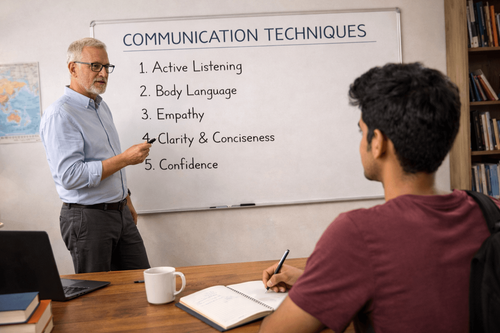

Table of Contents
- Why Communication Techniques Matter in Everyday Life
- What Are Communication Techniques
- Effective Communication Techniques That Improve Interaction
- Therapeutic Communication Techniques
- Think Fast Talk Smart Communication Techniques
- Multiple Access Techniques in Wireless Communication
- Practical Ways to Improve Communication Techniques
- PlanetSpark Communication Skills Course
- Mastering Communication Techniques for Lifelong Success
Communication techniques shape how we express ideas, build relationships, and influence outcomes in personal, academic, and professional settings. Whether you are a student, professional, parent, or leader, mastering communication techniques can transform how you connect with others. This blog explores effective communication techniques, therapeutic communication techniques, the popular Think Fast Talk Smart communication techniques, and even touches on multiple access techniques in wireless communication to understand communication from different perspectives.
Why Communication Techniques Matter in Everyday Life
Communication is the foundation of human interaction. From workplace collaboration to classroom discussions and family conversations, the ability to communicate clearly determines success.
Strong communication techniques help individuals:
Express ideas clearly and confidently
Build trust and stronger relationships
Reduce misunderstandings and conflicts
Improve leadership and collaboration
Enhance academic and professional growth
In modern society, communication skills are also linked to career success. Studies from global workplace reports consistently highlight communication as one of the most demanded soft skills by employers.
Key Areas Where Communication Techniques Are Essential
Workplace Communication
Presenting ideas effectively
Negotiating and persuading
Team collaboration and leadership
Academic Communication
Classroom participation
Presentations and debates
Written assignments and storytelling
Personal Communication
Building healthy relationships
Managing conflicts
Expressing emotions clearly
Good communication techniques combine clarity, empathy, listening, and structured thinking.
What Are Communication Techniques
Communication techniques are structured methods or strategies used to convey information effectively and ensure that the message is understood clearly.
These techniques involve both verbal and non-verbal elements, including:
Tone and voice modulation
Body language and facial expressions
Active listening
Clear sentence structuring
Emotional intelligence
Core Elements of Effective Communication
Verbal Communication
Verbal communication involves spoken or written language used to convey ideas.
Key aspects include:
Clarity of speech
Vocabulary usage
Sentence structure
Logical flow of ideas
Non-Verbal Communication
Research suggests that non-verbal signals contribute significantly to communication effectiveness.
Examples include:
Eye contact
Gestures and posture
Facial expressions
Voice tone
Listening Skills
Communication is not just about speaking.
Active listening ensures that:
The speaker feels heard
Misinterpretations are avoided
Conversations remain productive
Effective Communication Techniques That Improve Interaction
Effective communication techniques help individuals deliver messages clearly while understanding others better.
1. Active Listening
Active listening involves fully concentrating on what the speaker is saying rather than preparing a response while they speak.
Key practices include:
Maintaining eye contact
Avoiding interruptions
Paraphrasing the speaker’s message
Asking clarifying questions
Benefits:
Builds trust
Improves relationships
Reduces misunderstandings
2. Clear and Structured Messaging
Organising thoughts before speaking improves clarity.
A simple communication structure:
Start with the main idea
Add supporting points
Conclude with the key takeaway
This technique is widely used in presentations, business meetings, and classroom discussions.
3. Empathy in Communication
Empathy allows communicators to understand emotions and perspectives.
Ways to practise empathy:
Acknowledge feelings
Use supportive language
Avoid judgmental responses
Empathetic communication strengthens emotional connections.
4. Asking Open-Ended Questions
Open-ended questions encourage detailed responses.
Examples:
“What do you think about this idea?”
“How did you approach this problem?”
Benefits:
Encourages discussion
Reveals deeper insights
Improves collaboration
5. Feedback and Clarification
Constructive feedback improves communication quality.
Effective feedback should be:
Specific
Respectful
Actionable
Example format:
Observation
Impact
Suggestion
Therapeutic Communication Techniques
Therapeutic communication techniques are used in counselling, healthcare, and emotional support environments to help individuals feel understood and supported.
These techniques focus on empathy, listening, and emotional validation.
Common Therapeutic Communication Techniques
Reflective Listening
Reflective listening involves repeating or summarising what the speaker says to confirm understanding.
Example:
Speaker: “I feel overwhelmed with work.”
Response: “It sounds like your workload has been stressful recently.”
Validation
Validation acknowledges a person’s emotions without judgment.
Examples include:
“Your feelings are completely understandable.”
“It makes sense that you feel this way.”
Silence
Silence allows the speaker time to think and process emotions.
Used carefully, it encourages deeper expression.
Encouragement
Supportive prompts encourage individuals to continue sharing.
Examples:
“Tell me more about that.”
“What happened next?”
Therapeutic communication techniques are valuable not only in healthcare but also in parenting, leadership, and education.
Think Fast Talk Smart Communication Techniques
Think Fast Talk Smart communication techniques focus on spontaneous speaking and structured thinking during conversations or presentations.
The concept emphasises clarity under pressure.
Key Principles of Think Fast Talk Smart Communication
Structured Thinking
Quickly organising ideas before speaking helps maintain clarity.
A simple framework:
Situation
Key message
Supporting points
Conclusion
Pausing Before Responding
Taking a short pause allows the brain to organise thoughts and improves the quality of responses.
Simplifying Language
Clear and concise language ensures that the message is easy to understand.
Avoid:
Complex jargon
Long sentences
Unnecessary filler words
Storytelling
Storytelling helps listeners remember ideas more effectively.
A simple storytelling format:
Problem
Action
Result
These techniques are especially useful in interviews, meetings, and public speaking situations.
Multiple Access Techniques in Wireless Communication
While interpersonal communication focuses on human interaction, communication technologies also rely on advanced techniques.
Multiple access techniques in wireless communication allow multiple devices to share communication channels efficiently.
Why Multiple Access Techniques Are Important
Wireless networks must support communication between many devices simultaneously.
Without proper access techniques:
Signals could overlap
Data transmission could fail
Network performance could drop
Major Multiple Access Techniques
Frequency Division Multiple Access (FDMA)
Each user is assigned a unique frequency band.
Advantages:
Reduced interference
Continuous transmission
Time Division Multiple Access (TDMA)
Users share the same frequency but transmit signals at different time intervals.
Benefits include:
Efficient channel usage
Reduced signal overlap
Code Division Multiple Access (CDMA)
Multiple users transmit data simultaneously using unique codes.
Advantages:
Higher security
Improved capacity
These technologies enable mobile networks, satellite systems, and internet connectivity.
Understanding these techniques highlights how communication systems operate at both human and technological levels.
Practical Ways to Improve Communication Techniques
Improving communication requires consistent practice and structured learning.
Daily Habits That Improve Communication
Practise speaking clearly and confidently
Read regularly to expand vocabulary
Engage in discussions and debates
Record and analyse your speaking style
Seek feedback from mentors
Communication Exercises
Speech Practice
Choose a topic and speak for 2–3 minutes without notes.
Focus on:
Clarity
Structure
Confidence
Storytelling Practice
Narrate a short story with a beginning, middle, and end.
Benefits:
Improves creativity
Enhances engagement
Listening Exercises
Listen to podcasts or speeches and summarise the key message.
This strengthens comprehension and analytical skills.
PlanetSpark Communication Skills Course
PlanetSpark offers a comprehensive communication skills course designed to help children and adults develop confident speaking, structured thinking, and impactful expression. The programme combines personalised learning, advanced technology, and engaging activities to create a powerful communication development ecosystem.
Every learner receives 1:1 personal trainers who customise lessons according to learning style, pace, and personality. Trainers focus on essential skills such as fluency, storytelling, grammar, creative writing, and public speaking while providing real-time feedback.
PlanetSpark also designs a personalised curriculum and learning roadmap after assessing each student’s current skill level. This roadmap identifies gaps in vocabulary, grammar, confidence, and idea organisation while gradually building advanced speaking and presentation abilities.
Technology plays a key role through SparkX – an AI-enabled video analysis tool. Students upload speech recordings that are analysed for voice clarity, body language, grammar, confidence, and structure. Parents receive detailed performance reports that highlight strengths and improvement areas.
Students also practise through AI-led practice sessions, where a virtual coach provides instant feedback during storytelling or speech activities.
The platform encourages writing through Spark Diary, a digital journal where learners practise storytelling, reflections, and creative writing.
To maintain engagement, PlanetSpark integrates gamified learning modules, including vocabulary quizzes, spelling games, and grammar challenges.
Parents stay involved through structured PTMs and comprehensive progress reports, ensuring transparency in learning.
Students can also join learning clubs, such as debate clubs, storytelling groups, podcast communities, and comedy clubs. Through Sparkline, children safely share their work and receive peer appreciation.
Regular competitions, showcases, and speaking events further build confidence and public speaking experience.
Mastering Communication Techniques for Lifelong Success
Communication techniques are essential for personal growth, academic success, and professional achievement. Whether it is effective communication techniques for everyday conversations, therapeutic communication techniques for emotional understanding, or structured methods like Think Fast Talk Smart communication techniques, mastering these skills significantly improves how we interact with the world.
By practising active listening, structured thinking, empathy, and storytelling, individuals can communicate ideas with clarity and impact. Consistent learning and guided practice further strengthen these abilities over time.
For learners seeking structured training and measurable progress, specialised learning platforms can provide the guidance and tools needed to transform communication skills.
Strong communication is not just a skill, it is a lifelong advantage that empowers individuals to connect, influence, and succeed.
You can also read:
Frequently Asked Questions
Communication techniques are structured methods used to convey information clearly and effectively. They include strategies such as active listening, structured speaking, empathy, feedback, and body language control. These techniques help individuals deliver messages clearly while ensuring the listener understands the intended meaning.
Effective communication techniques include active listening, clear messaging, empathy, asking open-ended questions, and providing constructive feedback. These techniques help build trust, improve relationships, and reduce misunderstandings in personal and professional interactions.
Therapeutic communication techniques focus on emotional support and empathy. They are commonly used in counselling, healthcare, and caregiving environments. Examples include reflective listening, validation, silence, and encouragement. These techniques help individuals feel heard, understood, and supported.
Think Fast Talk Smart communication techniques focus on structured thinking during spontaneous conversations or presentations. They emphasise organising ideas quickly, simplifying language, using storytelling, and pausing before responding. These methods help individuals speak clearly and confidently in high-pressure situations.
Both children and adults can improve communication skills through structured practice, expert guidance, and consistent feedback. Activities such as storytelling, speech practice, debate, and writing exercises significantly improve fluency and clarity.
Learning platforms like PlanetSpark provide personalised training through 1:1 expert mentors, AI-powered speech analysis tools, gamified learning modules, and structured communication activities. These methods help learners develop confidence, clarity, and strong communication abilities over time.