
Fun Visual Communication Activities for Kids | Complete Guide

Table of Contents
- What Is Visual Communication for Kids?
- Age-Wise Visual Communication Activities for Kids (4–12 Year
- How Visual Communication Activities for Kids Support Academi
- Tips to Make Visual Communication Activities for Kids More E
- Build Powerful Communication Skills Through Visual Learning
- A Creative Pathway to Confident Communication
Shyness, hesitation, and limited verbal expression often make it difficult for children to share their ideas clearly. This is where visual communication becomes a powerful bridge, helping them express thoughts through pictures, symbols, colours, and creative visuals.
This blog explores fun, age-wise visual communication activities for kids, practical drawing games, picture-based exercises, storytelling tasks and digital tools that help children communicate confidently. Each section offers ready-to-use ideas for parents and teachers. Towards the end, there is a quick introduction to PlanetSpark’s communication skills programme, which nurtures confident young communicators through structured visual and verbal learning.
What Is Visual Communication for Kids?
Visual communication refers to the use of pictures, symbols, colours, shapes, and graphics to share ideas, messages, or stories. For kids, this form of communication feels natural because they think in images long before they form strong verbal expression. When children draw a house to explain a memory, point to a picture to show an emotion, or follow a chart to understand a classroom activity, they are using visual communication.
It strengthens comprehension, improves focus and allows children to express ideas without the pressure of finding the right words. It also enhances observation skills, encourages creativity, and builds confidence in sharing thoughts. Since children aged 4–12 learn best through visuals, these activities become essential tools for teachers and parents who want to boost early communication abilities.
In classrooms, visual communication is widely used through flashcards, picture boards, diagrams, mind maps, charts, and visual prompts. At home, simple daily tasks like drawing, doodling, matching pictures, or creating stories through images also build the same skills.
This blog breaks down the best fun visual communication activities for kids, suitable for ages 4–12, with a clear structure so the ideas are easy to apply.
Age-Wise Visual Communication Activities for Kids (4–12 Years)
Children in different age groups respond to different types of visual activities. The key is to select tasks that match their cognitive stage so learning feels natural, enjoyable and not overwhelming. The following breakdown helps parents and teachers understand what works best for preschoolers, primary-grade children, and pre-teens.
The activities are divided into three broad age groups:
Fun Drawing and Doodling Activities to Boost Expression
Drawing and doodling are the simplest yet most powerful visual communication activities for kids. They work as a bridge between thoughts and visuals, allowing children to communicate even when their verbal or written vocabulary is still developing. These activities also encourage emotional expression, imagination, and early storytelling skills. Kids naturally gravitate towards drawing because it offers freedom, choice, and creativity.
1. Emotion Doodle Sheets (Ages 4–7)
Emotion doodle sheets help kids express feelings visually. The activity involves giving children sheets with prompts like “Draw something that makes you smile” or “Show what a brave day looks like.” These visuals help kids process emotions in a healthy way while learning to identify and label feelings. Children who hesitate to talk about their feelings often communicate more freely through doodles. Teachers can use these sheets as daily warm-up activities to understand mood, behaviour, or emotional needs.
Join PlanetSpark’s communication programme to build strong visual interpretation skills.
2. Scene Drawing Based on Simple Prompts (Ages 6–9)
In this activity, kids receive prompts such as “A day at the zoo,” “Your dream playground,” or “What happens in your favourite story.” The goal is to encourage descriptive thinking. Kids create scenes filled with characters, settings, and actions. These scenes reflect how well they interpret visuals, understand details, and connect events. This activity also nurtures observation as children include small elements that matter to them.
3. Continuous Line Doodles (Ages 7–10)
This creative exercise requires kids to draw without lifting the pencil from the paper. Continuous line doodling encourages focus, flow, and adaptability because kids must work around mistakes. They often discover new shapes and patterns, leading to imaginative interpretations. This visual communication activity builds creativity while training kids to think differently when working with constraints.
4. Doodle Your Day (Ages 8–12)
This visual journaling activity allows kids to record events of their day through simple sketches. Instead of writing or explaining verbally, they use visuals to recall experiences. It improves memory retention, builds reflective thinking, and strengthens the connection between visuals and daily events. Over time, the doodle journal becomes a picture-based narrative of their growth.
Picture-Based Games That Enhance Observation and Understanding
Picture-based activities are excellent for building visual discrimination, interpretation, and comprehension. These skills are crucial for academic tasks like reading, diagram study, map interpretation, science experiments, and problem-solving. These fun visual communication activities for kids also help them process information quickly and accurately.
1. Spot the Difference (Ages 4–7)
This classic activity strengthens attention to detail. Kids analyse two images, noticing subtle changes in shapes, colours, or objects. The task improves concentration, comparison skills, and visual memory. It also trains children to scan visuals systematically, a foundational skill for reading readiness.
2. Picture Sequencing Cards (Ages 4–8)
Kids receive sets of pictures showing a sequence—plant growth, brushing teeth, or baking cookies. They arrange the visuals in order, explaining how one frame leads to another. This builds understanding of cause-and-effect relationships and supports logical thinking. It also develops early narrative skills essential for literacy.
3. Match the Image to the Word (Ages 5–7)
This combines vocabulary learning and visual association. Kids match pictures (fruits, animals, shapes, actions) with the correct words. It strengthens word recognition, boosts reading development, and reinforces concept clarity.
4. Guess the Picture (Ages 6–9)
An exciting game where only small parts of a picture are revealed initially. Kids guess the object or character using clues. This strengthens prediction skills, curiosity, and inferential reasoning.
Take a step towards stronger communication with expert-led classes at PlanetSpark.
5. Picture Clue Riddles (Ages 7–10)
Kids use picture clues to solve riddles. For example, pictures of water, sun, and plants may signal “photosynthesis.” This builds interpretative thinking, linking images to larger concepts, and encourages logical deduction.
Creative Storytelling Activities Using Visual Cues
Visual storytelling helps kids organise ideas, learn structure, and communicate clearly. These activities are essential for creativity and language development, especially for kids who find lengthy verbal explanations challenging. Storytelling through visuals improves sequencing, comprehension, imagination, and presentation skills.
1. Comic Strip Creation (Ages 7–12)
Kids design characters, scenes, and dialogues in comic-style frames. This requires them to plan events and decide what visuals best represent the story. They learn pacing, transition, and emotion expression through drawings. Comic strips are an excellent way to make writing interactive and fun.
2. Picture Prompt Stories (Ages 6–10)
A single picture becomes the starting point for a story. Kids describe what happened before the picture, what is happening now, and what may happen next. This develops inferential thinking and encourages creative expansion beyond the obvious.
3. Story Cubes (Ages 8–12)
Story cubes feature simple icons like stars, keys, animals, or objects. Kids roll them and use the resulting icons to build a quick story. This improves spontaneity, imaginative thinking, and visual interpretation skills.
4. Storyboard Planning (Ages 9–12)
A storyboard breaks a story into small frames similar to animation planning. Kids visualise key moments, transitions, and scenes. This activity is highly effective for developing structured thinking and improving clarity in communication.
5. Fix the Mixed-Up Story (Ages 7–10)
Kids receive scrambled image cards and must reorder them to form a coherent story. This enhances reasoning skills, helps identify logical flow, and builds understanding of narrative structure.
Emoji and Symbols Games for Better Visual Interpretation
Symbols and emojis are part of daily communication for children. These activities teach kids how to read non-verbal cues, interpret quick visual signals, and understand emotions behind symbols.
1. Emotion Emoji Challenge (Ages 4–8)
Kids match emojis to real-life feelings. They learn how visuals represent emotions such as anger, surprise, fear, excitement, or calmness. This boosts emotional intelligence and helps kids relate feelings to expressions.
2. Emoji Storytelling (Ages 7–12)
Create a story using a sequence of emojis representing places, emotions, weather, or actions. Kids interpret the symbols and build a creative narrative. This strengthens meaning-making through visuals.
Support academic success through interactive communication training at PlanetSpark.
3. Emoji Expression Cards (Ages 5–9)
Kids choose an emoji card and act it out. This teaches expression through gestures, posture, and facial movements. It improves non-verbal communication, body language awareness, and confidence.
4. Symbol Interpretation Game (Ages 8–12)
Kids interpret symbols such as traffic signs, arrows, hazard signs, or icons used in apps. The activity builds real-world awareness and teaches quick interpretation of visual cues used daily.
Hands-On Classroom Activities Using Charts, Diagrams, and Graphic Organisers
Graphic organisers help kids organise information visually, making learning easier and more structured. These tools support comprehension in subjects like science, social studies, English, and mathematics.
1. Mind Maps (Ages 8–12)
Kids create visual webs around topics like festivals, habitats, or famous personalities. Each branch leads to subtopics. This helps them break information into categories, making learning easier to retain.
2. Venn Diagrams (Ages 8–12)
Kids compare two items using overlapping circles. This supports analytical thinking and helps them identify similarities and differences. It also strengthens reasoning and classification skills.
3. Flowcharts (Ages 8–12)
Kids visually map out processes such as water cycles, life cycles, or classroom routines. This builds logical sequencing and helps students understand step-by-step workflows.
4. Label the Diagram (Ages 7–10)
Kids label parts of diagrams such as plants, maps, or body parts. This reinforces scientific understanding and improves visual-text association.
5. Timeline Creation (Ages 9–12)
Kids arrange historical events or life stages visually along a timeline. This boosts chronological understanding and helps them organise long-term information clearly.
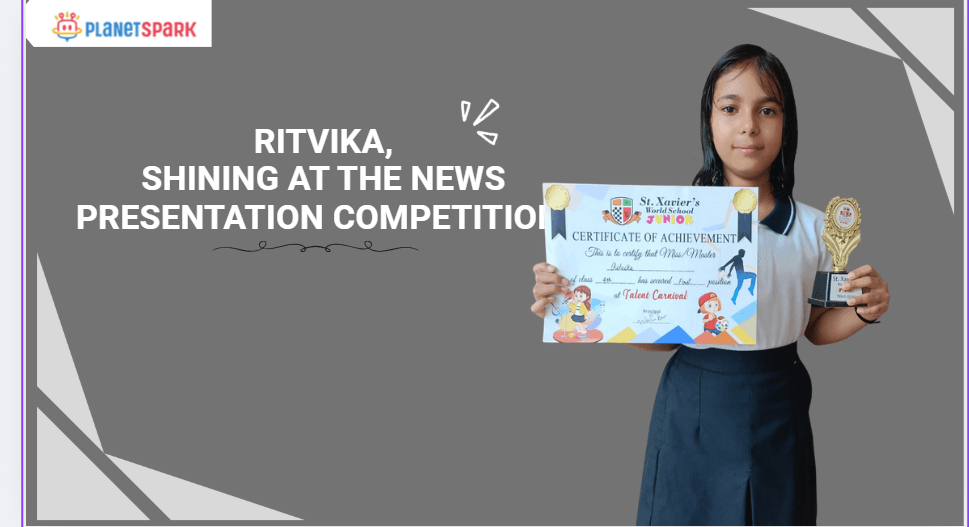
Ritvika has achieved a milestone in News Presentation! From the PlanetSpark classroom to the spotlight at the News Presentation Competition.
Start the same confidence journey with a free PlanetSpark trial session.
DIY Craft and Art Tasks That Strengthen Visual Communication
Art-based activities combine creativity with expression. These tasks teach kids to construct meaning through shapes, layouts, colours, and hands-on work.
1. Sticker Charts (Ages 4–7)
Kids build sticker-based charts to track habits, moods, or routines. This helps them understand visual patterns such as progress, repetition, and achievement.
2. Collage Making (Ages 6–10)
Kids cut out images from newspapers or magazines and arrange them based on themes like seasons, animals, or dreams. It teaches classification, thematic thinking, and visual arrangement skills.
3. Poster Making (Ages 8–12)
Kids design posters on topics such as safety rules, environment, or kindness. This teaches message clarity, layout planning, spacing, and visual emphasis.
4. Vision Boards (Ages 9–12)
Kids select images that represent goals, interests, or future aspirations. It encourages self-awareness and helps them articulate ideas visually.
5. Flipbooks (Ages 8–12)
Kids create a series of small drawings that animate when flipped. This teaches motion, sequence, and visual continuity.
Digital Visual Communication Activities
Digital-first visual communication is essential in today’s learning environment. These activities help kids understand design essentials, layout principles, and online creativity tools.
1. Canva Poster Design (Ages 8–12)
Kids learn basic design skills such as choosing templates, adjusting colours, and inserting text or icons. This teaches them how visuals can communicate messages effectively.
2. Digital Flashcard Creation (Ages 7–12)
Kids make flashcards for vocabulary, science concepts, or mathematics. Digital flashcards improve memory retention and make revision more engaging.
3. Slide Presentation Basics (Ages 10–12)
Kids create simple slides with headings, visuals, and bullet points. They learn clarity, structure, and visual consistency—skills essential for academic presentations
Help a child improve creative expression with PlanetSpark’s visual and verbal communication course.
4. Clipart Story Creation (Ages 7–10)
Kids build scenes using clipart elements. They select characters, objects, and backgrounds to tell stories visually. This strengthens imagination and composition skills.
5. Digital Sticker Sheets (Ages 8–12)
Kids design sticker sets with themes like animals, emotions, or school life. They learn symbolic communication while using design tools creatively.
How Visual Communication Activities for Kids Support Academic Growth
Visual communication activities for kids play a major role in strengthening learning outcomes across subjects. When children think, process, and express ideas visually, they understand concepts faster and retain information longer. These activities support academic development because visuals simplify complex ideas and make them easier to grasp.
Improved Comprehension
Visuals help children decode information quickly. Charts, diagrams, picture cues, and storyboards make subjects like science, mathematics, and geography more approachable.
Better Memory Retention
Studies show that visuals improve recall. When kids link images with concepts, the memory stays longer than words alone.
Enhanced Writing and Reading Skills
Visual sequencing, picture prompts, and graphic organisers strengthen structure, clarity, and logical flow—skills essential for literacy development.
Greater Concept Clarity
Subject-based visuals help children understand processes, relationships, cause-and-effect, and big-picture ideas with more confidence.
Boost in Critical and Analytical Thinking
When children interpret symbols, solve picture riddles, or create posters, they learn to analyse information before expressing it. This builds problem-solving skills that support academic success.
Tips to Make Visual Communication Activities for Kids More Engaging
Visual communication activities become more effective when guided properly. These tips help teachers and parents create engaging, purposeful, and interactive visual learning experiences.
Use Real-Life Examples
Integrate visuals that connect to daily life signs, symbols, product labels, traffic signals, or packaging designs. This builds relevance and curiosity.
Start the path to confident expression—join PlanetSpark’s communication skill course today.
Combine Visuals With Verbal Expression
Encourage children to talk about the visuals they create. This develops communication fluency and strengthens expressive abilities.
Offer Creative Freedom
Allow children to choose colours, designs, layouts, or storytelling styles. Freedom builds ownership and increases interest.
Use Age-Appropriate Activities
Selecting activities based on age ensures steady progress and avoids confusion or disengagement.
Encourage Consistency
Short daily visual tasks—doodles, prompts, charts, or flashcards—produce better results than occasional activities.
Display Their Work
Put up charts, posters, mind maps, or digital designs created by children. This boosts confidence and motivates better participation.
Build Powerful Communication Skills Through Visual Learning With PlanetSpark
PlanetSpark offers a structured, modern, and engaging communication skill-building experience that aligns perfectly with the value of visual communication activities for kids. The platform blends interactive learning, creative thinking, and practical exercises to help children express themselves confidently through both visual and verbal formats.

Key USPs of PlanetSpark Communication Skills Courses
Live interactive classes led by certified communication experts.
International curriculum aligned with global communication standards.
Project-based learning that includes storyboards, posters, scripts, presentations, and visual assignments.
Strong focus on public speaking, storytelling, creative writing, and digital communication.
Personalised feedback for every child’s communication style and expression pattern.
Confidence-boosting approach through debates, speeches, and expressive tasks.
Safe and fun learning space that encourages participation from shy or hesitant learners.
PlanetSpark allows children to develop expressive, confident communication skills through engaging visual and verbal learning experiences. Parents searching for structured, effective, and modern communication learning will find PlanetSpark a trusted choice.
A Creative Pathway to Confident Communication
Visual communication activities for kids build strong foundations for clear expression, creative thinking, and academic success. These activities help children understand concepts faster, express ideas more confidently, and develop essential communication skills through fun and meaningful tasks. When visuals become part of daily learning, children develop stronger memory, better comprehension, and better articulation. Supporting kids with structured visual tasks, storytelling, charts, diagrams, and digital tools helps them become confident communicators. Consistent practice, encouragement, and guided visual activities can transform a child’s communication abilities in powerful ways.
Frequently Asked Questions
Visual communication activities for kids include drawing, picture sequencing, chart-making, emoji interpretation, poster creation, and digital visual tasks. These activities help children express ideas through visuals instead of relying only on words, supporting clarity and creativity.
These activities simplify complex concepts and make them easier to understand. Visuals help children retain information, identify patterns, and improve comprehension. When kids learn through visuals, academic subjects feel more engaging and meaningful.
Younger children respond best to doodles, spot-the-difference games, picture cards, matching activities, sticker charts, and story sequencing. These activities build focus, observation, and early expressive skills.
Shy children often express themselves better through visuals. Activities like doodles, storyboards, emoji cards, and picture prompts allow them to communicate ideas without pressure. PlanetSpark’s communication programme can significantly boost confidence through guided visual and verbal expression.
Yes. Visuals help children organise thoughts, structure stories, express feelings, and translate ideas into clear messages. Activities like posters, mind maps, and digital designs strengthen both visual and verbal communication abilities.
PlanetSpark integrates creative visual tasks, storyboards, poster making, visual prompts, slide creation, and digital expression activities into its curriculum. This helps children communicate confidently through visual and verbal formats.
Digital tools like Canva, slide makers, and flashcard apps help children understand layout, design, and clarity. These tools prepare kids for modern communication demands in school and future academic settings.