
Interpersonal Skills in the Workplace: Importance & Key Tips
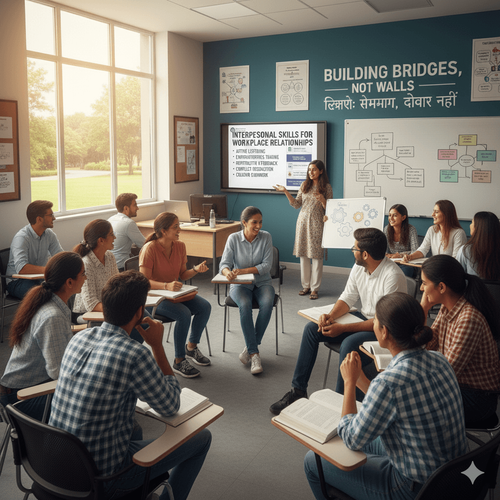

Table of Contents
Interpersonal skills in the workplace are
essential for building productive relationships, enhancing communication, and maintaining a professional environment that supports collaboration and growth. Today’s professionals face increasing expectations to work cross-functionally, navigate complex stakeholder interactions, and lead with empathy,making these skills more relevant than ever. This blog breaks down what interpersonal skills are, why they matter, how they impact performance, and how you can strengthen them strategically. Whether you are leading teams, managing clients, or working with peers, mastering interpersonal skills can significantly improve workplace harmony and success.
Understanding Interpersonal Skills in the Workplace
Interpersonal skills in the workplace refer to the abilities that allow professionals to interact effectively with colleagues, leaders, clients, and teams. These skills strengthen cooperation, minimize friction, and help you navigate diverse professional environments with clarity and confidence.
Interpersonal skills combine verbal communication, non-verbal signals, conflict resolution, negotiation abilities, emotional intelligence, relationship management, and mutual respect. These skills directly influence how well teams function, how productively employees work, and how smoothly projects progress,making them core competencies for every professional.
Mastering interpersonal skills enhances your ability to express ideas, listen actively, understand perspectives, handle disagreements, and foster trust. Professionals with strong interpersonal skills tend to become strong leaders, reliable team members, and skilled collaborators.
Why Interpersonal Skills Matter in Today’s Professional World
Interpersonal skills form the backbone of workplace culture, communication, and productivity. In modern organizations,where teamwork, hybrid offices, and cross-functional collaboration are the norm,professionals must navigate diverse personalities, work styles, and communication preferences. Strong interpersonal skills help employees build trust, express ideas clearly, maintain professionalism, and contribute meaningfully to organizational goals. Even individuals with exceptional technical capabilities may struggle to influence decisions, gain leadership visibility, or handle sensitive interactions if they lack interpersonal strength.
Interpersonal skills elevate workplace interactions in the following ways:
Workplace Harmony and Team Collaboration
Teams perform at their best when communication is respectful, transparent, and rooted in mutual understanding. Interpersonal skills help employees coordinate tasks more efficiently, resolve day-to-day issues before they escalate, and foster a work environment where everyone feels valued. These skills encourage active listening, constructive input, and shared accountability,ultimately strengthening team cohesion, efficiency, and morale. When team members communicate openly and empathetically, collaborations flow naturally, reducing friction and confusion across tasks.
Leadership and Influence
Modern leadership is driven by emotional intelligence rather than command-and-control authority. Leaders today must inspire confidence, provide clarity, coach team members, and create psychologically safe spaces where ideas are welcomed. Interpersonal skills allow managers to communicate expectations clearly, understand employee motivations, guide performance, and address challenges with empathy. Leaders with strong interpersonal competencies can defuse tension, promote innovation, and influence stakeholders effectively, ultimately accelerating organizational progress.
Client Communication and Business Growth
Client-facing roles demand professionalism, clarity, and empathy,qualities rooted in strong interpersonal skills. Clear communication helps professionals set accurate expectations, understand client pain points, and present solutions confidently. Empathy allows them to connect with clients on a deeper level, fostering trust and boosting long-term retention. Skilled communicators navigate difficult conversations with ease, handle objections constructively, negotiate better terms, and contribute directly to revenue growth. Strong interpersonal communication strengthens every stage of the client lifecycle,from onboarding to project delivery to relationship expansion.
Conflict Resolution
Workplace conflicts are inevitable, whether they stem from miscommunication, differing opinions, or performance-related concerns. Interpersonal skills help professionals approach disagreements calmly, listen to multiple perspectives, and identify solutions that prioritize fairness and team goals. Employees with strong interpersonal skills are less reactive and more objective, helping to de-escalate tension quickly. They can separate the issue from the individual, maintain professionalism, and turn conflicts into opportunities for improvement,resulting in healthier team dynamics and more sustainable outcomes.
Professional Growth and Reputation
An individual’s interpersonal skills shape how they are perceived by peers, managers, and clients. Employees who communicate effectively, maintain composure, collaborate willingly, and build positive relationships are often trusted with high-visibility tasks and leadership opportunities. These professionals tend to be viewed as reliable, approachable, and capable of representing the organization. Over time, interpersonal strengths contribute to faster promotions, stronger professional networks, and a positive organizational reputation,making them essential for long-term career success.
Types of Interpersonal Skills That Strengthen Workplace Relationships
Below is an expanded breakdown of essential interpersonal skills for professionals.
Communication Skills
Verbal Communication
Verbal communication is more than speaking,it involves choosing precise words, using an appropriate tone, and structuring your message logically. In professional environments, clarity reduces ambiguity, speeds up decision-making, and prevents communication gaps. Strong verbal communicators confidently present ideas, participate effectively in meetings, articulate expectations, and collaborate more efficiently. They understand audience dynamics and adapt their language accordingly, ensuring their message is understood consistently across teams, clients, and leadership.
Non-Verbal Communication
Non-verbal cues,such as gestures, eye contact, body posture, facial expressions, and even the pace of speaking,carry significant weight in workplace communication. These cues can reinforce your message or unintentionally contradict it. Professionals who master non-verbal communication appear more confident, trustworthy, and engaged. Understanding non-verbal signals also helps professionals interpret others’ reactions more accurately, allowing them to adjust their approach during sensitive discussions or negotiations.
Active Listening
Active listening involves absorbing information fully, processing it thoughtfully, and responding in a way that demonstrates understanding. It requires patience, focus, open-mindedness, and an ability to ask clarifying questions. Active listeners avoid interrupting, acknowledge others’ perspectives, and build stronger rapport. In the workplace, this skill strengthens collaborative problem-solving, reduces misunderstandings, and ensures decisions are well-informed. It also enhances emotional intelligence by helping professionals recognize unspoken concerns or hesitations.
Emotional Intelligence (EI)
Self-Awareness
Self-awareness is the ability to recognize your emotions, triggers, communication patterns, and behavioral tendencies. Knowing how you react under pressure allows you to adjust your behavior and maintain professionalism. Self-aware professionals are better equipped to handle critical feedback, identify skill gaps, and regulate emotional responses during complex interactions. This skill improves communication clarity, enhances decision-making, and creates a strong foundation for personal growth.
Empathy
Empathy goes beyond understanding someone’s words,it involves recognizing their emotions, motivations, and viewpoints. Empathetic professionals can support colleagues during challenges, build trust, and navigate cultural or personality differences with ease. Empathy strengthens team bonds, reduces workplace conflicts, and enhances leadership effectiveness. It also improves customer handling, as empathetic professionals are better at identifying client needs and delivering solutions that truly resonate.
Self-Regulation
Self-regulation is the ability to manage your emotions, maintain composure, and respond thoughtfully instead of reacting impulsively. Professionals with strong self-regulation skills stay calm under pressure, communicate respectfully during disagreements, and approach challenges with logic rather than emotion. This builds credibility, reduces workplace tension, and helps maintain consistency in professional behavior,making you a dependable and respected team member.
Collaboration & Teamwork
Shared Decision-Making
Shared decision-making encourages diverse opinions and collective problem-solving. Professionals with strong interpersonal skills contribute actively to discussions, respect differing perspectives, and support consensus-based decisions. This approach strengthens team ownership, reduces resistance to change, and leads to higher-quality outcomes. It also promotes transparency and boosts team morale by ensuring everyone’s voice is valued.
Supporting Colleagues
Supporting colleagues involves offering help proactively, sharing knowledge, acknowledging their efforts, and encouraging their growth. Employees who support their peers contribute to a positive culture built on trust and cooperation. They also foster a sense of community, which leads to improved productivity and reduced burnout across teams. Supportive professionals are often seen as problem-solvers and natural leaders.
Conflict Management Skills
Negotiation
Negotiation requires balancing assertiveness with openness. Effective negotiators prioritize fairness, understand multiple perspectives, and communicate objectives clearly. They aim for win-win outcomes rather than short-term victories. Negotiation skills are essential during salary discussions, project planning, team disagreements, and client interactions. Mastering negotiation boosts confidence, strengthens relationships, and helps maintain workplace harmony.
Problem-Solving Mindset
A problem-solving mindset focuses on identifying root causes, offering solutions, and preventing future issues. Professionals with this skill approach challenges logically rather than emotionally. They communicate solutions clearly, encourage team collaboration, and help maintain momentum during stressful periods. This mindset reduces negativity, enhances innovation, and empowers teams to handle obstacles with resilience.
Leadership & Mentoring Skills
Constructive Feedback
Constructive feedback must be specific, respectful, and solution-oriented. Effective professionals deliver feedback in a tone that promotes improvement rather than defensiveness. They also remain open to receiving feedback, using it to enhance their skills and performance. When feedback flows both ways, it strengthens trust, accelerates learning, and fosters a growth-driven culture.
Motivation & Influence
Motivational ability is a key leadership skill that helps inspire teams, communicate vision clearly, and drive collective performance. Influential professionals lead by example, demonstrate integrity, and encourage others to achieve their best. They build strong relationships through authenticity, transparency, and purposeful communication. Influence grounded in interpersonal strength has a lasting positive impact on team productivity and organizational success.
PlanetSpark Spoken English Course: Transforming Communication Skills for Professionals
PlanetSpark’s Spoken English Course is designed to build communication excellence through real-time learning experiences, AI-enabled insights, and personalized training. Here’s a structured breakdown of its powerful features:
Live, Interactive Learning Experience
Daily Conversation Sessions Based on Real-Life Scenarios
PlanetSpark replaces passive video learning with live daily conversations on real-world topics such as meetings, presentations, interviews, client discussions, and workplace communication.
Accent Neutralization and Clear Articulation
The course offers specialized modules on pronunciation, phonetics, and reducing mother tongue influence (MTI), crucial for professionals aiming for global-ready communication.
Personalized Communication Excellence
1:1 Personal Trainers
Each learner is matched with a certified communication expert who provides customized guidance, real-time correction, and tailored communication strategies.
Customized Learning Roadmap
Through assessments, PlanetSpark designs a unique curriculum for every learner, targeting vocabulary enhancement, grammar refinement, fluency improvement, and communication confidence.
AI-Driven Communication Growth
SparkX AI Video Analysis
This advanced tool evaluates speech clarity, confidence, body language, organization, sentence structure, and voice modulation,providing comprehensive feedback for measurable progress.
AI-Led Practice Sessions
Professionals can practice speeches, presentations, and responses independently, receiving instant AI-driven feedback on fluency, grammar, and pacing.
Skill-Building Tools & Learning Ecosystem
Spark Diary for Writing Development
Professionals can use this digital journal to practice structured writing, build clarity of thought, and refine communication style.
Gamified Learning Tools
Grammar challenges, vocabulary builders, and listening exercises keep learners engaged and ensure consistent progress.
Progress Reports & PTMs
Parents and professionals receive detailed progress tracking, showcasing improvements across communication parameters.
Lead with Impact: Strengthening Workplace Relationships Through Communication Excellence
Strong interpersonal skills are at the core of every successful professional relationship. Whether you are negotiating, collaborating, presenting ideas, or resolving conflicts, your communication style defines your workplace impact. Organizations today value professionals who are articulate, empathetic, confident, and capable of handling diverse environments with composure.
PlanetSpark empowers individuals to transform their communication skills through structured learning, personalized training, and AI-enabled practice. With its comprehensive Spoken English Course, learners gain practical fluency, confidence, professional articulation, and real-world communication readiness.
You may also read:
Frequently Asked Questions
Interpersonal skills are the abilities that help employees communicate, collaborate, and build positive relationships. They include active listening, empathy, teamwork, clarity in communication, and conflict resolution. These skills are essential because they support workplace harmony, strengthen professional bonds, and enable teams to achieve goals efficiently.
Strong interpersonal skills streamline communication, reduce friction, and enhance workflow efficiency. When employees understand each other’s perspectives, share ideas effectively, and collaborate without conflict, productivity naturally increases. Teams become more aligned, motivated, and quicker at solving problems.
These skills are absolutely learnable. While some individuals naturally communicate well, anyone can develop strong interpersonal abilities through practice, feedback, and real-world interactions. Techniques like role-playing, communication exercises, and emotional awareness training can help individuals improve significantly over time.
Employers prioritize communication, teamwork, empathy, adaptability, and conflict management. In today’s hybrid and cross-functional work culture, professionals who can collaborate effectively, lead discussions, and maintain emotional intelligence stand out and advance faster.
PlanetSpark offers live, practice-based communication and spoken English sessions that focus on real-world workplace scenarios. Through personalized coaching, role-playing exercises, confidence-building activities, and structured communication training, learners can strengthen interpersonal skills such as clarity, active listening, conflict resolution, and professional speaking—helping them perform better in team meetings, interviews, presentations, and client conversations.