
Why Live 1:1 Classes Are Better Than Group Classes
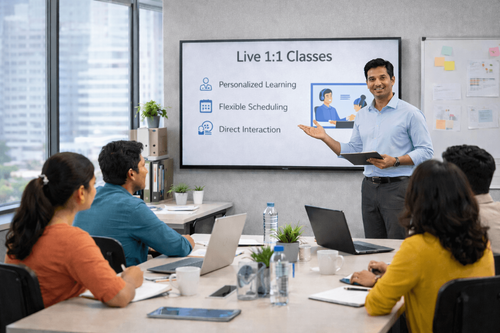

Table of Contents
- Understanding the Shift Towards Live 1:1 Classes
- Live 1:1 Classes vs Group Classes
- Benefits of One to One Tutoring in Online Learning
- Live Online Classes Benefits Compared to Recorded Learning
- Online vs Offline Classes, A Modern Comparison
- Why Interactive Online Classes Matter for Communication Skil
- The Science Behind Personalised Learning Outcomes
- PlanetSpark Communication Skill Course
- Why PlanetSpark Excels in Live 1:1 Learning
- Why Live 1:1 Classes Are the Clear Winner
Parents, learners, and educators today actively search for live 1:1 classes because they want faster improvement, focused attention, and measurable outcomes. This blog explores why one-on-one online classes consistently outperform group formats, especially for skill-based learning like communication. You will understand how personalised online learning works, how it compares with group, recorded, and offline classes, and why live interaction matters. If you are exploring a proven path to confidence, clarity, and expression, this guide will help you decide whether a PlanetSpark communication skill course is the right next step for your child.
Understanding the Shift Towards Live 1:1 Classes
What Are Live 1:1 Classes?
Live 1:1 classes are real-time online sessions where a single learner interacts directly with one instructor. Unlike group setups, the entire session is designed around the learner’s pace, goals, and challenges.
Key characteristics include
Individual attention throughout the session
Immediate feedback and correction
Flexible pacing and customised lesson flow
Higher accountability and engagement
Why Parents and Learners Are Moving Away from Group Classes
Group classes often prioritise coverage over comprehension. When multiple learners share one instructor, individual doubts, confidence gaps, and learning styles are easily overlooked.
Live one on one online classes solve this by
Eliminating peer pressure and comparison
Allowing learners to speak more and practise more
Adapting instantly to learner responses
Live 1:1 Classes vs Group Classes
Attention and Engagement Levels
In group classes, attention is divided. In 1:1 sessions, attention is absolute.
Advantages of live 1:1 classes include
100 percent instructor focus on one learner
Continuous interaction rather than passive listening
Higher retention due to active participation
Pace of Learning
Group classes move at an average pace. Live 1:1 classes move at the learner’s pace.
This means
Faster learners are not held back
Learners needing support are not rushed
Concepts are reinforced until mastery
Feedback Quality
Feedback in group classes is limited and generic. In contrast, the benefits of one to one tutoring include precise, actionable, and immediate feedback tailored to the learner’s mistakes and strengths.
Benefits of One to One Tutoring in Online Learning
Personalised Online Learning at Its Core
Personalised online learning is not a feature, it is the foundation of 1:1 classes.
Instructors can
Customise examples based on the learner’s interests
Adapt teaching styles for visual, verbal, or experiential learners
Continuously refine lesson plans
Stronger Confidence Building
Confidence grows when learners feel heard and supported.
Live 1:1 classes help by
Encouraging learners to speak without fear of judgement
Allowing repeated practice in a safe space
Building trust between trainer and learner
Better Skill Transfer
For skills like communication, public speaking, and storytelling, practice matters more than theory. Interactive online classes ensure learners practise repeatedly with guidance.
Live Online Classes Benefits Compared to Recorded Learning
Live vs Recorded Classes
Live and recorded classes differ fundamentally in how learning happens. Recorded classes deliver pre-set information, while live classes adapt in real time to the learner’s needs. This difference becomes critical when the goal is skill development rather than passive knowledge consumption.
Recorded Classes Are Static, Live Classes Are Dynamic
Recorded classes follow a fixed structure. The content, examples, pace, and explanations remain the same for every learner, regardless of their understanding level. If a learner misses a concept or needs deeper clarification, the content does not change.
Live classes, on the other hand, are dynamic. The instructor can adjust explanations, switch examples, slow down, or move faster based on the learner’s responses. This flexibility ensures that learning is aligned with the learner’s actual progress, not an assumed average.
Real-Time Doubt Solving
One of the biggest limitations of recorded learning is delayed or absent doubt resolution. Learners often pause videos, search elsewhere, or carry unresolved confusion forward.
In live online classes, doubts are addressed instantly.
Learners can ask questions the moment confusion arises
Instructors can reframe explanations immediately
Misunderstandings are corrected before they become habits
This real-time interaction significantly improves clarity and confidence, especially in subjects that require application and expression.
Adaptive Teaching Based on Learner Responses
Recorded content cannot react to learner behaviour. It does not know whether the learner is confused, bored, or ready to move ahead.
Live online classes allow instructors to
Read verbal responses, tone, and engagement levels
Adjust teaching strategies mid-session
Reinforce weak areas or introduce advanced challenges
This adaptive approach ensures personalised online learning, where teaching evolves with the learner rather than following a rigid script.
Two-Way Communication Rather Than One-Way Consumption
Recorded classes are primarily one-way. Learners listen, watch, and absorb passively. While this may work for basic information, it limits deeper understanding and skill application.
Live classes enable two-way communication.
Learners actively participate through discussion and practice
Instructors respond, question, and guide in real time
Learning becomes interactive rather than observational
This interaction is especially important for communication, speaking, and confidence-based skills where practice and feedback are essential.
Why Recorded Classes Fall Short for Skill Mastery
Recorded classes can deliver information efficiently, but skills require correction, repetition, and guided practice. Without live feedback, learners may repeat mistakes unknowingly, slowing progress and reducing confidence.
Accountability and Discipline in Live Online Learning
Structured Learning Routine
Live sessions are scheduled and instructor-led, creating a sense of routine. Learners know that a session is happening at a fixed time, which encourages consistency and commitment.
This structure helps
Build disciplined study habits
Reduce procrastination
Maintain learning momentum over time
Active Engagement and Preparedness
In live classes, learners show up knowing they will be seen, heard, and expected to participate. This naturally increases preparation and focus.
Because someone is actively engaging with them
Learners are more attentive
Participation levels are higher
Effort and accountability increase
Recorded classes lack this external accountability, making it easier to skip sessions or disengage halfway.
Consistent Progress Tracking
Live instructors can continuously monitor progress and adjust expectations. This ongoing oversight ensures learners stay on track and steadily improve, rather than consuming content without measurable outcomes.
In summary, while recorded classes may be suitable for basic information delivery, live online classes offer interaction, adaptability, accountability, and structure, making them far more effective for meaningful learning and skill mastery.
Online vs Offline Classes, A Modern Comparison
Flexibility and Accessibility
Online 1:1 classes remove location constraints and save commute time while maintaining quality.
Advantages of live online learning over offline include
Access to expert trainers regardless of geography
Safer and more comfortable learning environment
Easy scheduling around school routines
Focus and Safety
Offline group classes often come with distractions. At home, learners feel secure and focused, especially younger children.
Why Interactive Online Classes Matter for Communication Skills
Communication Needs Practice, Not Observation
Communication cannot be learned by watching others alone.
Interactive online classes ensure
Frequent speaking opportunities
Real-time correction of tone, posture, and language
Gradual confidence building through guided exposure
Measuring Progress Effectively
With 1:1 formats, progress is visible and measurable session by session, unlike group classes where individual growth often goes unnoticed.
The Science Behind Personalised Learning Outcomes
Cognitive Load Theory
Learners absorb better when content matches their processing capacity. One-on-one online classes regulate cognitive load effectively.
Behavioural Reinforcement
Immediate reinforcement and correction strengthen learning pathways, making live 1:1 classes far more effective than delayed feedback models.
PlanetSpark Communication Skill Course
Why PlanetSpark Excels in Live 1:1 Learning
PlanetSpark’s communication skill course is built entirely around the power of live 1:1 classes, combining expert trainers, AI tools, and structured pedagogy.
1:1 Personal Trainers for Every Child
Each learner is matched with a certified communication expert who understands learning style, pace, and personality. Trainers provide instant feedback on fluency, storytelling, public speaking, grammar, and creative writing, creating faster improvement and stronger mentor connections.
Personalised Curriculum and Learning Roadmap
A detailed assessment identifies gaps in grammar, vocabulary, fluency, confidence, and structure. A customised roadmap evolves continuously based on progress and trainer feedback.
SparkX AI Video Analysis
Children upload recorded speeches that are analysed for voice clarity, body language, grammar, confidence, and flow. Parents receive clear reports showing strengths and improvement areas.
AI-Led Practice Sessions
Outside live classes, AI coaches guide independent speech and storytelling practice with instant feedback, ensuring consistency beyond class hours.
Spark Diary and Gamified Learning
Daily writing through Spark Diary builds habits and clarity. Gamified tools like Grammar Guru, Spell Knockout, and vocabulary challenges make learning engaging and fun.
Progress Reports and PTMs
Structured progress reports and regular parent-teacher meetings ensure transparency, measurable outcomes, and aligned growth strategies.
Learning Clubs and Sparkline Platform
Debate clubs, storytelling circles, podcasting communities, and a safe content-sharing platform allow learners to practise publicly, collaborate, and build real-world confidence.
Why Live 1:1 Classes Are the Clear Winner
Live 1:1 classes outperform group formats because they prioritise the learner, not the syllabus. From personalised pacing and focused feedback to higher confidence and faster mastery, one-on-one online classes address the real needs of modern learners. Group classes may offer affordability or social exposure, but they rarely deliver depth, especially for communication skills. When learning requires practice, correction, and confidence building, interactive online classes are not optional, they are essential. Choosing a structured, expert-led, and personalised platform ensures that learning outcomes are not just promised, but achieved.
Frequently Asked Questions
Yes. Live 1:1 classes adapt to a child’s pace, confidence level, and learning style, ensuring deeper engagement and faster skill development compared to group classes.
Benefits include personalised attention, immediate feedback, flexible pacing, stronger confidence, and measurable progress, especially for communication-based skills.
Live classes allow interaction, doubt-solving, and real-time correction, while recorded classes are passive and lack accountability and adaptability.
When designed well, live online learning can be more effective than offline classes due to expert access, flexibility, safety, and personalised instruction.
PlanetSpark offers a comprehensive communication skill course with 1:1 expert trainers, AI-powered feedback tools, personalised learning paths, and global practice opportunities.