
Improve Preschool Communication with Daily Practice
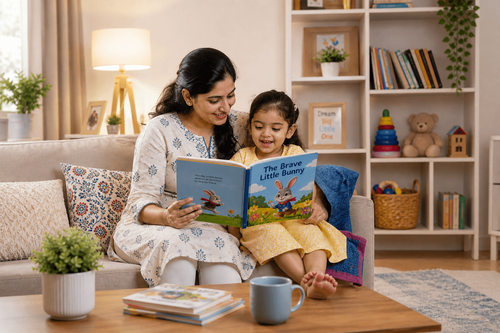

Table of Contents
- Why Preschool Communication Matters in Early Childhood
- Daily Habits to Improve Preschool Communication at Home
- Preschool Communication Milestones by Age 5
- Signs Your Child May Need Communication Support
- Why Parents Choose PlanetSpark for Preschool Communication
- How Parents Can Support PlanetSpark Learning at Home
- PlanetSpark Communication Skills Classes for Preschoolers
- Small Daily Practice Creates Big Future Confidence
What if just 15 minutes a day could help your child speak with more confidence, express feelings better, and become school-ready faster?
That is the power of strong preschool communication skills. During the preschool years, children rapidly develop vocabulary, listening ability, confidence, emotional expression, and social understanding. Yet many parents notice that their child struggles to explain thoughts, answer questions clearly, or speak confidently in groups.
The good news is that communication skills are highly trainable when nurtured through daily routines, playful learning, and expert guidance.
In this blog, you will learn practical home activities, age-wise milestones, warning signs to watch for, and how PlanetSpark communication skills classes help preschoolers become expressive, confident speakers through structured live learning.
Why Preschool Communication Matters in Early Childhood
Communication is much more than talking. It includes:
- Listening carefully
- Understanding instructions
- Asking questions
- Sharing ideas
- Expressing emotions
- Building friendships
- Participating in group settings
Children with strong preschool communication often perform better socially and academically because they can clearly express needs, understand teachers, and engage confidently.
Long-Term Benefits of Strong Communication
- Better Classroom Participation: Children with strong communication skills are more likely to answer questions, join discussions, and interact confidently with teachers. This helps them stay engaged and enjoy learning.
- Higher Confidence in Social Settings: When children can express themselves clearly, they feel more comfortable making friends and participating in group activities. Strong speaking skills reduce hesitation and build self-esteem.
- Faster Vocabulary Growth: Regular conversations expose children to new words and sentence patterns. As their vocabulary grows, they can share ideas more clearly and understand others better.
- Stronger Reading Readiness: Good communication supports phonics, listening comprehension, and storytelling ability. These early language foundations make learning to read much easier.
- Better Emotional Regulation: Children who can name and explain their feelings are less likely to act out in frustration. Communication helps them seek support and solve problems calmly.
- Leadership Potential Later in Life: Strong speakers often become confident presenters, team contributors, and decision-makers as they grow older. Early communication skills can shape future leadership qualities.
Preschool is a golden learning window because the brain absorbs language quickly through repetition and interaction.
Worried your child is shy or unclear while speaking?
Book a PlanetSpark Trial Class today before confidence gaps grow bigger.
Daily Habits to Improve Preschool Communication at Home
Children develop communication skills best through consistent practice in a relaxed and supportive environment. Small daily interactions often create stronger results than occasional long sessions. Here are some effective habits parents can begin right away.
1. Interactive Storytelling
Reading a short story every day is one of the easiest ways to improve language skills. Instead of only reading aloud, involve your child in the story by asking questions and encouraging responses. This helps children think, remember details, and express ideas clearly.
Ask questions such as:
- What happened first in the story?
- Who was your favorite character?
- Can you make a new ending?
- Why do you think the rabbit felt sad?
Storytelling builds vocabulary, sequencing skills, imagination, listening ability, and speaking confidence.
2. Narrate Daily Activities
Everyday routines can become powerful learning moments. Describe what you and your child are doing while getting ready, eating meals, or cleaning up. This technique helps children connect actions with words and understand sentence structure naturally.
Examples:
- We are washing our hands before lunch.
- You are wearing your blue socks today.
- I am cutting an apple into small pieces.
The more children hear language linked to actions, the easier it becomes for them to use those words independently.
3. Show and Tell
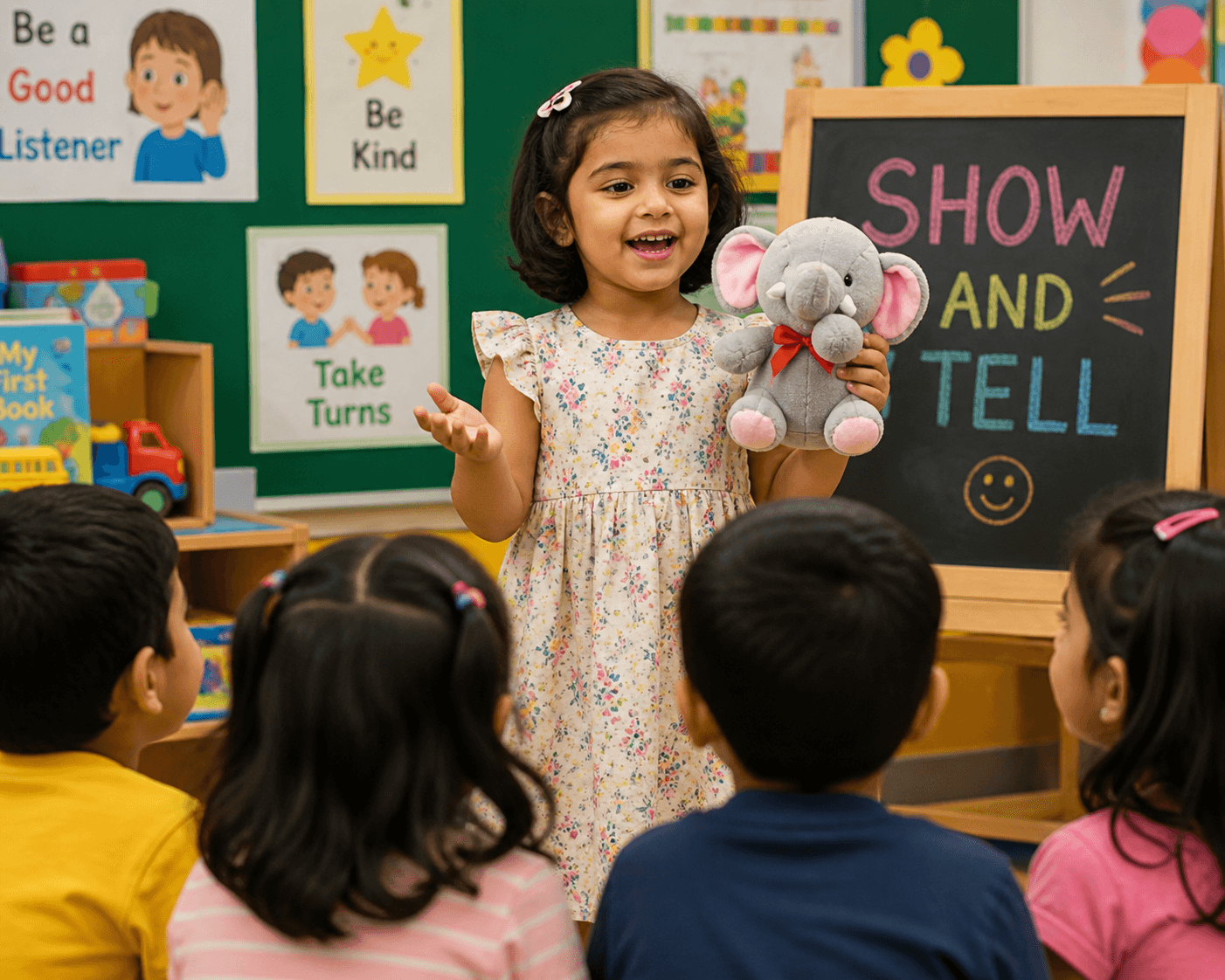
Choose one item each day and ask your child to describe it. This can be a toy, fruit, book, or favorite household object. Encourage them to use complete sentences.
Ask them to talk about:
- Color
- Shape
- Size
- Use
- Why they like it
This activity improves descriptive vocabulary, sentence building, and confidence while speaking in front of others.
4. Open-Ended Questions
Questions that need more than a yes or no answer encourage children to think deeply and speak more. They also help children organize thoughts and explain feelings.
Try asking:
- What was the best part of your day?
- Why do you like this toy so much?
- How did that game make you feel?
- What would you like to do tomorrow?
These conversations help children become expressive and thoughtful speakers.
5. Active Listening
Children speak more when they feel heard. Give your full attention when your child talks. Make eye contact, nod, smile, and respond warmly. Avoid interrupting or rushing them.
When children know their words matter, they become more willing to communicate and share ideas regularly.
6. Expand Their Sentences
If your child uses short phrases, repeat their words in a fuller sentence. This models better grammar and sentence structure without making them feel corrected.
For example:
Child says: “Car fast.”
Parent says: “Yes, the red car is moving very fast on the road.”
This naturally teaches vocabulary, grammar, and clearer expression.
Want expert-led speaking activities your child actually enjoys?
Book a free PlanetSpark demo class today. Limited seats available.
Preschool Communication Milestones by Age 5
Every child develops at a different pace, but communication milestones can help parents understand whether progress is on track.
Typical Age 5 Communication Skills
By age five, many children are able to:
- Speak in full sentences with clear meaning
- Tell stories with two or three connected events
- Hold short back-and-forth conversations
- Understand simple rhymes and word patterns
- Follow directions with multiple steps
- Use emotion words such as happy, angry, excited, sad
- Describe common objects by what they do
These milestones show growing language confidence and readiness for school.
Green Flags to Notice
Positive signs of communication growth include:
- Asking curious questions regularly
- Using imagination during play
- Talking while drawing or playing independently
- Enjoying songs, books, and storytelling
- Trying new words often
These signs suggest your child is building language naturally through daily experiences.
When Progress May Need Support
Some children benefit from extra guidance if they regularly show these signs:
- Speech is difficult for familiar adults to understand
- Vocabulary is much smaller than peers
- Rarely starts conversations
- Struggles to answer simple questions
- Gets frustrated while trying to speak
- Avoids speaking in group settings
Early support during preschool years often leads to faster and smoother improvement.
Signs Your Child May Need Communication Support
Some children need more structured help than casual home practice alone can provide. Recognizing the signs early can help parents take the right next step.
Common Parent Concerns
Parents often say:
- My child understands everything but does not speak much
- My child is shy around other children
- My child mixes words or stops mid-sentence
- My child avoids answering teachers
- My child becomes upset instead of explaining feelings
These concerns are common and can often be improved with the right support.
Why This Happens
There may be different reasons behind communication delays or hesitation, such as:
- Limited opportunities for real conversations
- Too much passive screen time
- Low confidence or shyness
- Delayed expressive language skills
- Lack of structured speaking practice
- Fear of making mistakes
Understanding the cause helps parents choose the best support plan.
What Helps Most
Children usually improve with consistent and encouraging practice. Helpful strategies include:
- Daily guided conversations at home
- Small-group speaking practice
- Vocabulary games and storytelling
- Positive reinforcement and praise
- Patient correction instead of pressure
- Professional communication coaching
Structured programs such as PlanetSpark preschool communication classes can make a measurable difference by combining expert teaching with engaging activities.
Noticing hesitation, unclear speech, or low confidence?
Book your PlanetSpark trial now before school pressure increases.
Why Parents Choose PlanetSpark for Preschool Communication
Parents today want more than random videos or worksheets. They want measurable skill-building with expert support.
Why PlanetSpark Works for Preschoolers
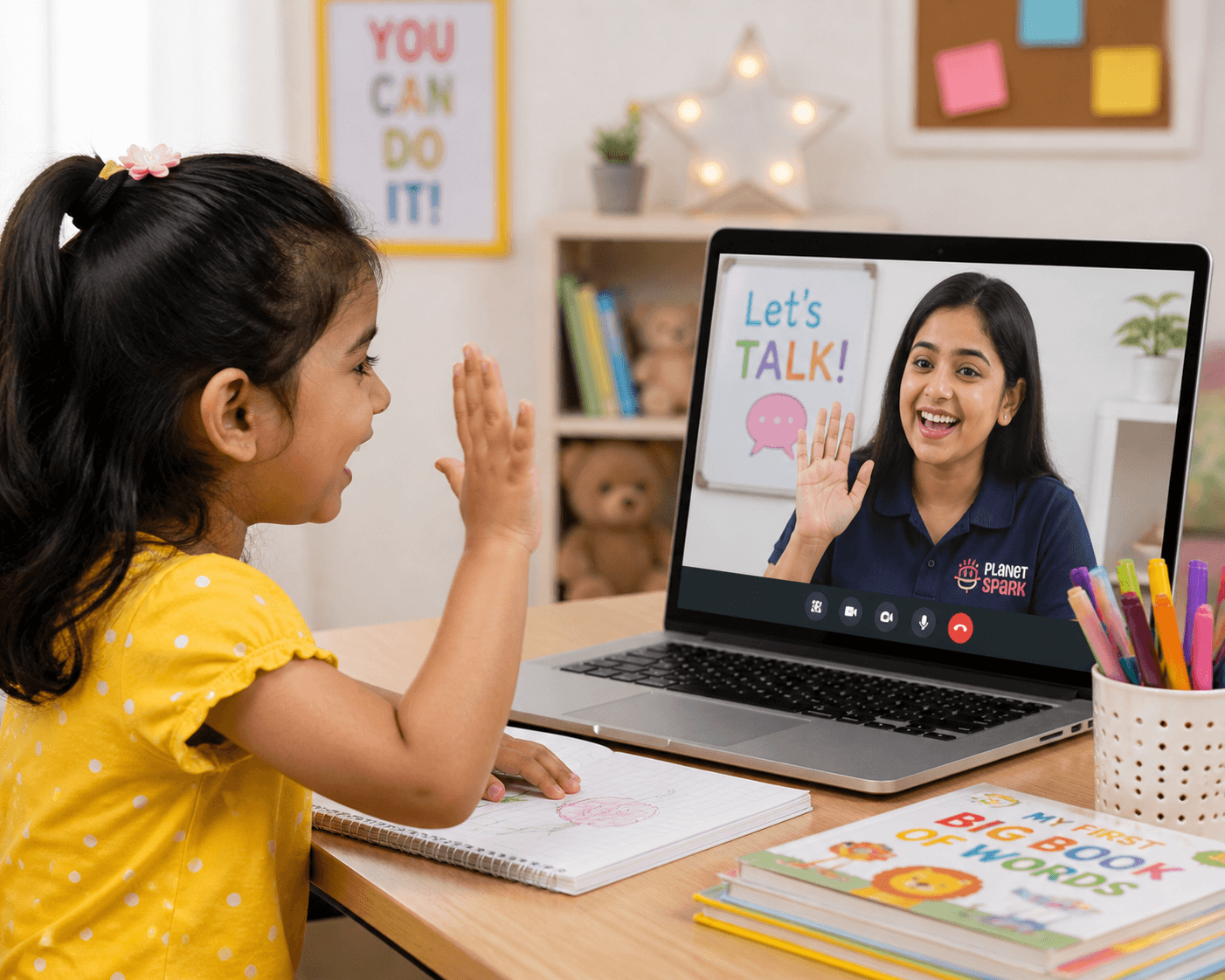
PlanetSpark offers live, interactive communication classes designed to build confidence, expression, vocabulary, and public speaking readiness from an early age.
Core Benefits
- Live 1:1 and small group sessions
- Trained expert teachers
- Personalized feedback
- Structured curriculum by age and level
- Storytelling and speaking activities
- Pronunciation and fluency practice
- Confidence-building exercises
- Progress tracking for parents
What Children Learn
- Clear speaking habits
- Sentence building
- Listening skills
- Vocabulary growth
- Emotional expression
- Social confidence
- Stage readiness for school events
Why Parents Prefer Live Classes
Unlike passive apps, live classes create accountability, speaking time, and immediate correction.
Ideal For Children Who Are:
- Shy speakers
- School starters
- Socially quiet
- Vocabulary delayed
- Highly energetic but unfocused speakers
How Parents Can Support PlanetSpark Learning at Home
The best results happen when expert classes + home practice work together.
Daily 10-Minute Routine
- Ask one open-ended question
- Read one short story
- Let child describe one object
- Practice one emotion word
- Praise speaking effort
Golden Rules for Parents
- Never compare siblings
- Avoid interrupting
- Correct gently
- Celebrate progress
- Be patient with pauses
- Speak clearly yourself
Example Praise Lines
- I loved how clearly you spoke
- Great job explaining that idea
- You used new words today
- I am proud you tried again
Confidence grows where communication feels safe.
PlanetSpark Communication Skills Classes for Preschoolers
How PlanetSpark Structures Learning
PlanetSpark uses age-appropriate methods so preschoolers learn joyfully, not under pressure.
Sample Activities in Class
- Picture speaking prompts
- Story completion games
- Introduce yourself practice
- Emotion vocabulary activities
- Show and tell sessions
- Listening and response games
- Rhymes with expression
Parent-Friendly Advantages
- Flexible schedules
- Online convenience from home
- Safe learning environment
- Regular performance insights
- Child-friendly teaching style
Why Structured Learning Matters
Children often know words but need systems to use them confidently. Regular guided speaking accelerates results far faster than irregular practice.
Booking Process
Parents can book a trial class easily, meet an expert trainer, understand the child's level, and experience the teaching style before enrolling.

Small Daily Practice Creates Big Future Confidence
Strong preschool communication skills can shape your child’s confidence, friendships, classroom success, and emotional intelligence for years to come.
A few daily habits like storytelling, active listening, role-play, and guided speaking can create powerful change. When combined with structured expert support from PlanetSpark, progress often becomes faster, clearer, and more measurable.
Your child does not need to be the loudest speaker. They just need the confidence to express who they are.
Also Read: 22 Ways on How to Improve Communication Skills: Tips for All Ages
How Kids Can Master Communication in Everyday Life
How to Achieve Clear Communication in Everyday Conversations
Frequently Asked Questions
Preschool communication includes a child’s ability to listen, understand, speak clearly, express feelings, ask questions, and interact socially.
The preschool years are ideal because language growth is fastest between ages 3 to 6.
Yes. PlanetSpark classes are designed to build confidence gradually through fun, low-pressure speaking activities.
Daily short practice of 10 to 15 minutes is highly effective when done consistently.
Yes, when classes are live and interactive. PlanetSpark focuses on active speaking, not passive watching.
Many parents notice better sentence formation, participation, and confidence within a few weeks of consistent learning.
Experienced PlanetSpark trainers use child-friendly engagement methods to encourage participation naturally.
You can book a PlanetSpark demo class online and attend a guided session to evaluate fit.