Stories often carry meanings that go
beyond what we see on the surface. This is where allegorical writing becomes important. An allegorical story uses characters, events, or settings to represent deeper ideas, lessons, or values. Many famous novels and stories are written in this style, making allegorical literature an essential part of learning and understanding storytelling.
Knowing the allegorical meaning behind a
story helps readers think more deeply and connect ideas to real life. An allegorical novel may look simple at first, but it often teaches powerful messages through symbols and themes. By exploring allegorical stories and real allegorical examples, readers can better understand how writers use imagination and structure to share meaningful ideas.
What Does Allegorical Really Mean?
Allegorical writing has been a cornerstone of literature for centuries. But what exactly is allegorical? In simple terms, an allegorical story uses characters, events, or settings to symbolize broader ideas and messages. Unlike ordinary stories, where the focus is mainly on entertainment or plot, an allegorical novel conveys deeper meaning, often teaching a moral, philosophical, or social lesson.
For example, in many allegorical works, a simple character like a fox or a bird may represent wisdom, deceit, or freedom. These stories allow writers to communicate complex themes in an engaging and relatable way. Understanding the allegorical meaning behind characters and events is essential for appreciating literature at a deeper level.
Why Teens Should Care About Allegorical Literature
Enhances Critical Thinking: Analyzing allegorical stories improves the ability to identify symbolism and deeper meanings.
Boosts Creativity: Writing your own allegorical story challenges imagination and abstract thinking.
Builds Moral Understanding: Allegories often address ethical dilemmas, helping readers reflect on values.
Prepares for Academic Success: Many novels studied in schools are allegorical, so understanding them aids in reading comprehension and essay writing.
Allegorical literature is not limited to old classics. Modern novels, graphic novels, and even films often include allegorical elements, making it relevant for teens and young adults who love storytelling and creative expression.
Table: Key Characteristics of Allegorical Writing
Characteristic
Explanation
Example
Symbolism
Characters or events represent ideas
In Animal Farm, pigs symbolize political leaders
Dual Meaning
Story works on surface and deeper level
A journey might mean adventure + personal growth
Moral or Lesson
Story conveys a message or value
Fables often teach honesty or kindness
Timeless Themes
Addresses universal issues
Freedom, justice, love, greed
Understanding these basics gives readers a framework to analyze allegorical novels and inspires them to experiment with allegorical writing themselves.
Why Allegorical Stories Matter in Literature
Allegorical stories have a unique position in literature because they combine entertainment with enlightenment. They help readers connect fictional narratives with real-life ideas, making literature not just enjoyable but educational.
The Educational Value of Allegorical Literature
Develops Interpretation Skills: Readers learn to interpret symbols and metaphors.
Encourages Ethical Reflection: Stories often explore themes like justice, honesty, courage, or societal issues.
Enhances Cultural Awareness: Many allegorical works reflect historical or cultural contexts, giving readers insights into different societies.
Promotes Emotional Intelligence: Understanding characters’ symbolic struggles helps readers empathize and reflect on emotions.
How Allegorical Stories Engage Teens
Teens are naturally curious and often enjoy stories that challenge their imagination. Allegorical novels allow them to:
Identify hidden meanings behind characters and events.
Discuss abstract ideas with peers in book clubs or classes.
Write their own creative stories with layered meanings.
For instance, a story about a lonely tree might appear simple at first, but it could symbolize resilience, hope, or the journey of life. Understanding the allegorical meaning adds depth to the reading experience.
Comparison of Allegorical and Literal Stories
Feature
Allegorical Story
Literal Story
Purpose
Teach moral, political, or social lessons
Entertain or narrate events
Characters
Represent ideas or traits
Represent people or realistic roles
Interpretation
Requires thinking and analysis
Direct and straightforward
Examples
Animal Farm, The Alchemist
Harry Potter, Percy Jackson
By understanding these differences, teens can better appreciate allegorical literature and even begin incorporating symbolic elements in their own writing.
Why Writers Use Allegory
Communicate Complex Ideas: Authors can discuss controversial or abstract topics safely.
Engage Readers on Multiple Levels: A story can be enjoyed at the surface or interpreted more deeply.
Create Memorable Stories: Symbolic characters and themes often leave lasting impressions.
Allegorical stories matter because they bridge imagination and meaning, making reading a richer experience. They inspire readers to think beyond the literal and explore ideas in nuanced ways.
Writing or analyzing an allegorical novel requires understanding its core elements. These elements are what make the story symbolic, layered, and meaningful. Let’s break them down for easy understanding:
a) Characters as Symbols
In allegorical stories, characters are rarely just themselves. Each character represents an idea, virtue, vice, or social role.
Examples:
A fox may symbolize cunning or deceit.
A brave knight can represent courage or justice.
Groups of animals, like in Animal Farm, symbolize different social classes or political groups.
Tips for Teens Writing Allegorical Characters:
Choose traits carefully; they should clearly connect to the theme.
Avoid making the symbolism too obvious; subtlety engages readers.
Use dialogue and actions to reinforce symbolic meaning naturally.
b) Setting and Environment
Settings in allegorical novels often symbolize larger concepts:
Forests can represent mystery, fear, or growth.
Rivers may symbolize change, passage of time, or challenges.
Towns or kingdoms often reflect society, politics, or human behavior.
Quick Tip: Always ask, “Could this place represent something bigger than itself?”
c) Plot with Dual Meaning
An allegorical story works on two levels:
The surface plot that entertains.
The underlying meaning, which conveys moral, social, or philosophical lessons.
Bullet Points – Features of an Allegorical Plot:
Clear beginning, conflict, and resolution.
Events often mirror real-life situations or abstract ideas.
Themes emerge naturally through character actions and story progression.
d) Theme and Moral
Themes in allegorical novels are universal: freedom, justice, greed, love, courage, or friendship. Authors use the plot and characters to communicate the allegorical meaning behind the story.
Table – Allegorical Elements Example:
Element
Purpose
Example in Allegorical Novels
Character
Represent an idea
Pig in Animal Farm = Political leader
Setting
Symbolize concept
River = Life’s journey
Plot
Dual meaning
Quest = Personal growth + Adventure
Theme
Convey lesson
Greed leads to downfall
e) Symbols and Motifs
Allegorical writing often includes recurring symbols or motifs to reinforce the story’s meaning.
A light may symbolize hope or knowledge.
Darkness can signify fear, ignorance, or evil.
Animals or objects may appear repeatedly to emphasize themes.
Pro Tip for Teens: Try spotting patterns in novels - repetition often hints at allegory.
Understanding these key elements allows readers to both appreciate allegorical literature and create meaningful allegorical writing themselves. It’s like decoding a hidden message embedded in an exciting story.
Many classic and modern novels use allegory to explore important themes. Knowing examples can inspire teens to read critically and write creatively.
a) Animal Farm by George Orwell
Type: Political allegory
Allegorical Meaning: Represents the Russian Revolution and totalitarianism.
Key Symbolism:
Pigs = Leaders
Animals = Citizens
Farm = Society
Why It’s Popular: Orwell combines simple storytelling with deep political commentary, making it both accessible and thought-provoking.
b) The Alchemist by Paulo Coelho
Type: Philosophical allegory
Allegorical Meaning: The journey of life and personal dreams.
Key Symbolism:
The desert = Life’s challenges
Treasure = Personal destiny or goal
Impact: Inspires teens to think about life goals and self-discovery through a symbolic adventure.
c) The Lion, the Witch, and the Wardrobe by C.S. Lewis
Type: Moral and religious allegory
Allegorical Meaning: Good vs. evil, sacrifice, and redemption.
Key Symbolism:
Aslan = Goodness and sacrifice
White Witch = Evil and temptation
Narnia = The world or human society
Why Teens Love It: Combines fantasy adventure with layered moral lessons.
d) Other Notable Allegorical Works
Lord of the Flies by William Golding – Symbolizes human nature and societal breakdown.
The Little Prince by Antoine de Saint-Exupéry – Explores innocence, love, and understanding life’s truths.
Alice’s Adventures in Wonderland by Lewis Carroll – Contains allegorical critiques of logic, society, and growing up.
Bullet Points – Lessons from Famous Allegorical Novels:
Stories can teach moral or social lessons without being preachy.
Symbols and motifs create memorable characters and events.
Allegorical novels allow readers to interpret and discuss ideas on multiple levels.
How Teens Can Learn from These Novels
Identify Symbols: Spot characters or events that represent bigger ideas.
Analyze the Theme: Think about what the story is teaching beyond the surface.
Practice Writing: Try creating short allegorical stories inspired by your favorite novels.
Discuss with Peers: Talking about interpretations helps deepen understanding.
These novels show that allegorical writing is not just for adults or academics. Teens can enjoy, analyze, and even write their own allegorical stories, making reading both fun and intellectually enriching.
Understanding allegorical meaning in literature requires careful observation. Allegorical novels are filled with symbols, motifs, and themes that convey messages beyond the surface story. Learning to identify these helps teens appreciate literature on a deeper level and improves critical thinking skills.
a) Recognizing Symbols
Symbols are objects, characters, or events that represent abstract ideas.
Tips to Spot Symbols in Allegorical Literature:
Look for repetition: If an object or character appears multiple times, it might symbolize something.
Analyze names and traits: Sometimes names hint at personality traits or concepts.
Check character actions: How a character behaves can indicate the idea they represent.
Examples:
A river may symbolize life or change.
A mask could represent deception or hidden identity.
A journey often represents growth, discovery, or challenges.
b) Identifying Themes
Themes are the underlying lessons or ideas conveyed through allegory. They are usually universal, relating to morality, society, or human nature.
Common Themes in Allegorical Novels:
Good vs. Evil
Freedom and Oppression
Courage and Perseverance
Friendship and Loyalty
Greed and Consequences
Bullet Points – Quick Guide for Teens:
Ask yourself: “What is this story really teaching me?”
Observe character choices and consequences.
Notice how the setting or events mirror real-world situations.
c) Using a Table to Decode Allegorical Symbols
Symbol
Possible Meaning
Example
Light
Hope, knowledge
The Alchemist – guiding light on the journey
Animal
Human traits or societal roles
Animal Farm – pigs as leaders
Journey
Life experiences or personal growth
The Little Prince – travels symbolize learning
Objects
Concepts or values
Mask = deception, Crown = power
d) Applying This Skill in Everyday Reading
Start with simple stories or fables. They often have clear allegorical meaning.
Highlight or note down recurring elements.
Discuss your interpretations with friends, teachers, or in book clubs.
Gradually move on to complex novels where allegory is more subtle.
By spotting symbols and understanding themes, teens not only enjoy reading more but also develop analytical skills that are useful in academics and creative writing.
Writing Your Own Allegorical Story: Tips for Teens
Creating an allegorical story can be exciting and educational. By using symbolic characters, events, and settings, teens can express ideas and lessons creatively.
a) Start with a Clear Theme
Before writing, decide what message or lesson you want your story to convey.
Questions to Ask Yourself:
Do I want to teach a moral lesson?
Am I exploring a social or political idea?
Do I want the story to inspire personal growth or reflection?
Example: If your theme is courage, you could create a character who faces challenges and grows braver over time.
b) Create Symbolic Characters
Characters in allegorical writing represent abstract ideas, virtues, or vices.
Tips for Developing Characters:
Assign a symbolic trait to each character.
Ensure their actions reflect the trait consistently.
Keep characters relatable to maintain engagement.
Example Table – Character Development:
Character
Represents
Role in Story
A Brave Lion
Courage
Faces challenges and inspires others
A Sneaky Fox
Deceit
Creates conflict or obstacles
A Wise Owl
Knowledge
Guides other characters
c) Build a Meaningful Setting
Settings in allegorical stories are more than just backdrops - they enhance symbolism.
Forests = mystery, fear, or growth
Mountains = challenges, personal achievement
Rivers = journeys, life transitions
Tip: Think about how every location in your story can add symbolic value.
d) Develop a Dual-Level Plot
An allegorical story works on two levels: the surface plot and the deeper meaning.
Bullet Points – How to Achieve This:
Ensure the plot is engaging even without knowing the symbolism.
Weave lessons and themes naturally into the events.
Avoid making symbolism too obvious; subtlety is key.
e) Use Symbols and Motifs Strategically
Repeat symbols to reinforce the theme.
Introduce objects or events that hint at deeper meaning.
Connect characters and setting to the lesson you want to convey.
Quick Example:
A storm in your story can symbolize internal conflict or societal challenges.
A treasure may represent personal growth rather than material wealth.
f) Tips for Teens to Start Writing
Read allegorical literature to understand techniques.
Start with short stories before attempting a full novel.
Brainstorm ideas using a theme-first approach.
Discuss your story ideas with peers or mentors for feedback.
Experiment with symbols, characters, and settings to make your story layered and meaningful.
Writing your own allegorical story is not just an academic exercise - it’s a creative adventure that helps teens think deeply, reflect on life, and communicate ideas effectively.
Writing an allegorical story is exciting but challenging. Many teens make similar mistakes when trying to incorporate symbolism, themes, and characters. Being aware of these pitfalls helps create stories that are meaningful and engaging.
a) Overloading Symbols
One common mistake is using too many symbols at once. While symbols are important, too many can confuse readers.
Tips:
Focus on 2–3 key symbols per story.
Ensure each symbol clearly connects to the theme.
Avoid forcing symbolism into every character or event.
Example: If a story is about courage, don’t include unrelated symbols like money or fame unless they directly support the theme.
b) Making Symbolism Too Obvious
Subtlety is key in allegorical writing. If the meaning is too obvious, the story loses depth and becomes predictable.
Tips:
Show, don’t tell: Use actions and events to hint at the meaning.
Let readers interpret the symbolism themselves.
Balance between entertainment and lesson.
Example: Instead of writing “The lion was brave because it symbolized courage,” show the lion facing danger bravely to convey the idea naturally.
c) Ignoring the Surface Story
A story should work both on the surface and as an allegory. Some writers focus so much on the hidden meaning that the story itself becomes dull.
Bullet Points – How to Avoid This Mistake:
Ensure the plot is engaging and logical.
Create relatable characters with clear goals and challenges.
Keep events exciting and interesting, even without analyzing symbols.
d) Using Clichéd Symbols and Themes
Reusing overdone symbols (like the sun always meaning hope) can make your story predictable. Fresh, creative symbolism captures readers’ attention better.
Tip: Experiment with unusual objects or characters to symbolize your ideas.
e) Not Planning the Allegorical Meaning
Some writers start without a clear theme, leading to scattered ideas. Planning the central lesson or message ensures that every plot point and character contributes meaningfully.
Quick Table – Mistakes vs. Fixes
Mistake
How to Fix
Example
Too many symbols
Focus on 2–3 main ones
Brave lion + guiding river
Obvious symbolism
Show through actions
Lion faces danger instead of stating courage
Weak plot
Balance story + allegory
Add exciting conflicts/events
Clichéd ideas
Use creative, fresh symbols
A storm for personal struggle instead of generic light/dark
No clear theme
Define theme first
Theme = friendship, courage, justice
By avoiding these mistakes, teens can write allegorical stories that are engaging, meaningful, and thought-provoking.
Building Strong Creative Writing Skills with PlanetSpark
Unlock your child’s imagination and help them become confident writers with PlanetSpark’s Creative Writing program. This program is designed to nurture creativity while teaching structure, vocabulary, and coherent expression, making writing an enjoyable and skill-building experience.
Key Highlights of PlanetSpark Creative Writing:
Genre-Based Curriculum: Covers short stories, poetry, journal writing, essays, book reviews, and persuasive letters, with dedicated lessons for each genre.
Framework-Driven Instruction: Learn story arcs (beginning-middle-end), S.T.O.R.Y structure, 5W1H method, and PEEL technique for essays and arguments.
Writing + Speaking Integration: Present written work orally to enhance expressive confidence and narrative flow.
Editing, Feedback, and Rewriting: Focus on revising work with real-time editing, peer review, and teacher feedback.
Real Publishing Opportunities: Publish stories on PlanetSpark’s blog, e-magazine, or co-authored anthologies to boost visibility and pride.
Creativity Stimulus Activities: Engage in story dice, prompts, image-based writing, and guided imagination exercises to foster original thinking.
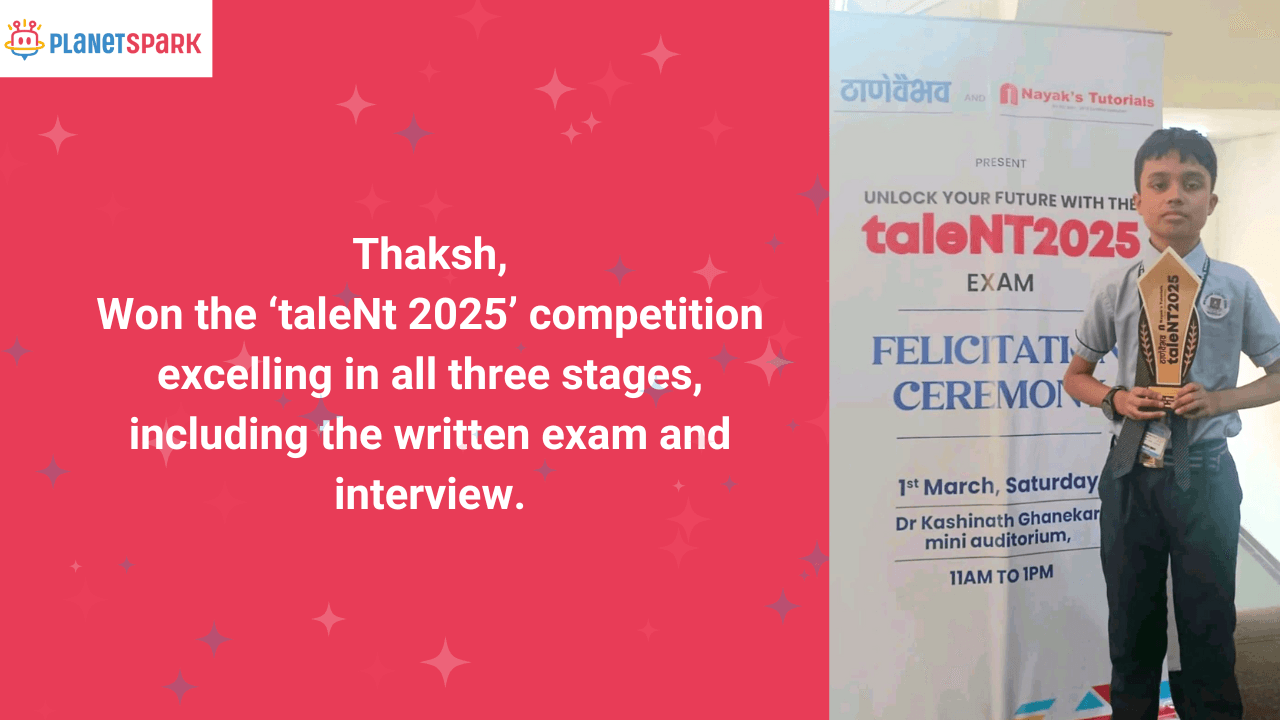
Thaksh’s Journey to Winning the ‘taleNt 2025’ Competition
Thaksh showcased exceptional confidence, clarity of thought, and creative expression by winning the ‘taleNt 2025’ competition in Thane. Excelling across all three stages, including the written examination and the interview round, Thaksh demonstrated strong communication skills, structured thinking, and the ability to express ideas effectively. This achievement reflects consistent practice, sharp reasoning, and a growing mastery of written and spoken expression, setting an inspiring example for young learners.
Unlock Your Creativity with Allegorical Writing
Allegorical writing opens doors to imagination, critical thinking, and creative expression. Through symbolic characters, meaningful settings, and layered plots, stories become more than entertainment - they teach lessons, reflect society, and inspire readers.
Learning to read and write allegorical literature develops important skills:
Analytical Thinking: Decoding symbols and themes improves comprehension.
Creative Expression: Crafting allegories encourages originality and imagination.
Moral Reflection: Exploring allegorical meanings helps teens reflect on values and life lessons.
Key Takeaways for Teens:
Focus on clear themes and meaningful symbolism.
Develop characters and plots that engage readers on multiple levels.
Read and analyze famous allegorical novels to understand techniques.
Practice writing short stories, gradually building to more complex narratives.
Allegorical stories are a bridge between imagination and insight. By understanding allegorical meaning, spotting symbols, and crafting their own tales, teens can create literature that entertains, inspires, and leaves a lasting impact.