
Basic Writing Strokes for Kindergarten: Easy Pre-Writing Stroke Activities to Build Strong Early Writing Skills
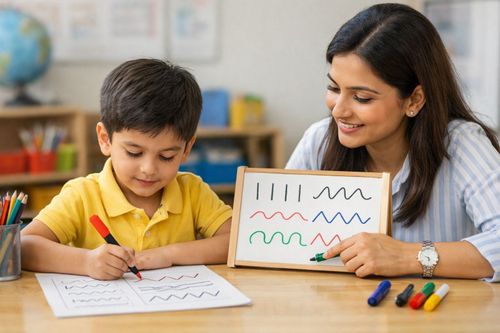

Table of Contents
- What Are Pre Writing Strokes?
- Why Are Writing Strokes Important?
- Basic Writing Strokes for Kindergarten
- Fun Pre-Writing Stroke Activities for Kids
- Step-by-Step Learning Progression
- Best Tools for Writing Practice
- Tips for Parents and Teachers
- Common Mistakes to Avoid
- Success Story: Nirvana Mehta’s Journey to Confident Expressi
- When Is a Child Ready to Start Writing?
- From Strokes to Letters
- About PlanetSpark : Basic Writing Strokes for Kindergarten
- Conclusion
Learning to write isn’t about jumping straight into ABCs it begins with simple lines, curves, and playful strokes that quietly build the foundation of strong writing skills. These early movements may seem small, but they play a big role in shaping how confidently a child will write, draw, and express their ideas in the future. When children start with the basics, they develop better control, coordination, and comfort with holding a pencil.
In this blog, you’ll explore easy pre-writing strokes, fun and engaging activities to practice them, and simple tips to support your child’s learning at home. You’ll also discover how guided platforms like PlanetSpark can help children build strong writing habits through structured learning, expert guidance, and confidence-building techniques that make the entire process easy and enjoyable.
What Are Pre Writing Strokes?
Pre-writing strokes are simple lines and shapes that children learn before they start writing letters and words. These basic patterns help kids understand how to move a pencil and control their hand movements in the right direction.
These strokes usually include:
• Straight lines (up and down or side to side)
• Curved lines (like smiles or waves)
• Circles (round shapes like a ball)
• Zig-zag patterns (sharp, pointed lines)
Help your child write with confidence-Book a Free Demo Class now.
Each of these strokes plays an important role in building handwriting skills. Just like building blocks help create a strong structure, these simple strokes prepare children to write alphabets and numbers more easily and confidently over time.
This is why many modern learning approaches, including platforms like PlanetSpark, focus on building these basic skills before introducing formal writing.
Why Are Writing Strokes Important?
Practicing writing strokes is an important first step in a child’s learning journey. It helps children build the basic skills they need before they start writing letters and words.
Improve Hand Control
Children learn how to hold a pencil correctly and move it smoothly across the page. This strengthens their finger muscles and improves grip.
Boost Brain Development
As kids draw different lines and shapes, they begin to understand patterns, directions, and how things are formed, which supports overall learning.
Prepare for School
When children practice these strokes regularly, writing letters and words becomes much easier and less stressful for them later.
According to the Centers for Disease Control and Prevention, developing fine motor skills like writing and drawing is a key part of early childhood growth and learning.

Basic Writing Strokes for Kindergarten
Let’s look at the most important strokes every child should learn. These simple patterns help children understand how different lines come together to form letters later on.
1. Vertical Lines ( | )
• Straight up and down lines
• These are usually the first strokes children learn
• Example: Rain falling from the sky
2. Horizontal Lines ( — )
• Side-to-side lines from left to right
• Help children learn writing direction
• Example: A road or the horizon
3. Diagonal Lines ( / \ )
• Slanting lines in different directions
• Slightly more challenging and require better control
• Example: Slides or mountains
4. Curved Lines ( C, U )
• Smooth and rounded lines
• Very important for forming many letters
• Example: Smiles, waves, or rainbows
5. Circles ( O )
• Complete round shapes
• Help children control circular motion
• Example: Balloons, wheels, or the sun
6. Zig-Zag Lines
• Lines with sharp turns and angles
• Improve hand control and direction change
• Example: Lightning or waves
7. Cross and Plus Shapes (+, X)
• Made by combining different lines
• Help children practice joining strokes together
• Example: Simple symbols or patterns
By practicing these strokes regularly, children slowly build the confidence and control needed for neat and clear handwriting.
Build writing skills step by step-Book a Free Demo Class now.
Fun Pre-Writing Stroke Activities for Kids
Learning becomes more effective when children enjoy the process. When practice feels like play, kids stay interested and learn faster.
1. Sand Writing
Let children draw lines and shapes in sand using their fingers. This improves hand movement and makes learning sensory and fun.
2. Coloring Activities
Encourage kids to color inside shapes and patterns. This helps improve control, focus, and pencil grip.
3. Salt Tray Tracing
Fill a tray with salt and let children trace strokes with their fingers. It’s a simple and engaging way to practice writing movements.
4. Connect the Dots
Join dots to form lines, shapes, and patterns. This helps children understand direction and sequence.
5. Toy Tracing
Use toy cars or objects to follow drawn lines. This builds coordination and makes practice more playful.
Interactive learning methods like these are often included in structured programs such as PlanetSpark, where children learn writing skills through guided and engaging activities.
Step-by-Step Learning Progression
Children learn best when concepts are introduced step by step. Following a simple order helps them build confidence and avoid confusion while learning writing strokes.
Recommended Order for Learning Strokes
- Vertical Lines - Easy up-and-down movements, perfect for beginners
- Horizontal Lines - Help children learn left-to-right direction
- Circles - Introduce smooth, continuous hand movement
- Diagonal Lines - Slightly challenging and improve control
- Curves - Important for forming many letters
- Patterns and Combinations - Mix of all strokes to build stronger skills
This gradual approach allows children to move from simple to slightly complex strokes in a natural way. Many structured learning programs, such as PlanetSpark, follow a similar step-by-step method to make early writing easier and more effective for kids.
Best Tools for Writing Practice
Using the right tools can make writing practice easier and more enjoyable for children. Simple, child-friendly materials help them feel comfortable while learning.
Tools to Make Learning Fun
• Thick crayons - Easy to hold and perfect for beginners
• Pencils with good grip - Help children hold the pencil correctly and comfortably
• Chalk and board - Great for practicing big strokes and improving hand movement
• Worksheets - Useful for guided practice and repetition
• Whiteboard markers - Allow kids to write, erase, and practice again without pressure
Using these tools regularly helps children build confidence and develop better control over their writing movements.
In guided learning environments like PlanetSpark, these tools are often combined with interactive activities to make writing practice more engaging for kids.
Tips for Parents and Teachers
Helping children learn to write becomes much easier when the approach is simple, positive, and stress-free. The goal is to make learning enjoyable so that children stay interested and motivated.
• Keep practice time short (10–15 minutes) so children don’t feel tired or bored. Short sessions help maintain focus and make learning more effective.
• Encourage and appreciate their efforts instead of only focusing on results. Positive feedback builds confidence and motivates children to keep trying.
• Do not rush the learning process every child learns at their own pace. Giving them time helps them understand and improve naturally.
• Make activities playful and enjoyable so children see writing as a fun activity rather than a task.
• Focus on improvement rather than perfection, especially in the early stages. Small progress over time leads to strong skills.
According to UNICEF, early learning should be play-based and stress-free, as this helps children develop skills more effectively while enjoying the process.
Give your child the right start in writing:
Common Mistakes to Avoid
While teaching writing, it’s important to focus not just on what to do, but also on what to avoid. Small mistakes in the early stage can affect a child’s interest and confidence in writing.
• Forcing children to write too early can create pressure and make them dislike writing. It’s better to let them first enjoy simple activities like drawing and tracing.
• Giving too many worksheets can make practice feel boring and tiring. Children learn better when activities are fun, short, and engaging.
• Ignoring proper pencil grip can lead to difficulty in writing later. Teaching the correct grip from the beginning helps children write more comfortably and neatly.
• Comparing children with others can lower their confidence and make them feel discouraged. Every child learns at their own speed, and progress may look different for each one.
Every child learns in their own way and at their own pace. With patience, encouragement, and the right approach, children can develop writing skills confidently and enjoy the learning process.
Success Story: Nirvana Mehta’s Journey to Confident Expression
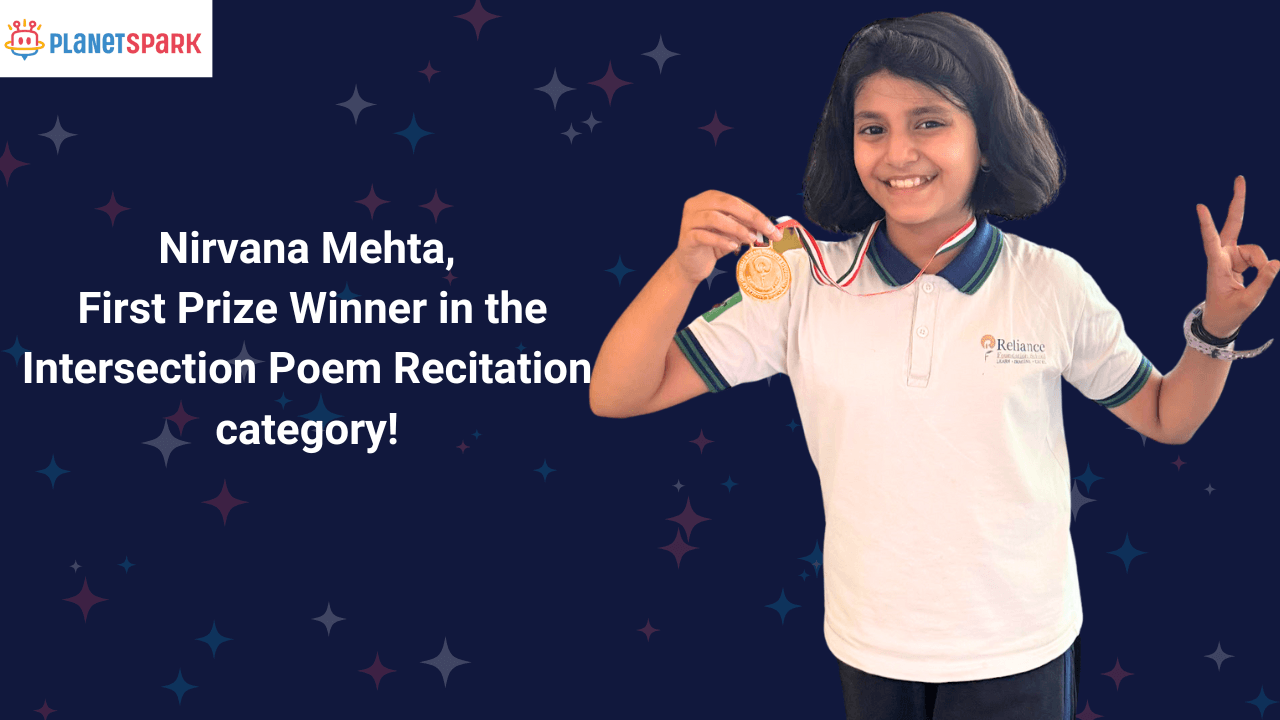
Nirvana Mehta, a 10-year-old student, has shown how the right guidance and consistent practice can transform a child’s confidence. She achieved First Prize in the Intersection Poem Recitation category, impressing everyone with her strong voice, clear expression, and stage presence.
Her journey reflects steady improvement in communication and public speaking skills. Through regular practice and structured learning at PlanetSpark, Nirvana developed the confidence to express herself clearly and perform fearlessly on stage.
When Is a Child Ready to Start Writing?
Every child develops at their own pace, but there are some common signs that show they may be ready to begin writing.
Your child may be ready if they:
• Can hold a pencil or crayon comfortably
• Enjoy drawing and scribbling on their own
• Are able to follow simple lines and shapes
• Show curiosity or interest in writing letters or patterns
These early signs indicate that a child is developing the control and interest needed for writing. With the right support and regular practice, they can smoothly begin their writing journey.
Your child can be the next success story-Book a Free Demo Class today.
From Strokes to Letters
Basic writing strokes act as the building blocks of letters. When children practice these simple lines and shapes regularly, they slowly develop better control over their hand movements. This makes it much easier for them to start forming alphabets without feeling confused or overwhelmed.
• Vertical and horizontal lines come together to form letters like T and H, helping children understand straight-line structure
• Curved strokes are used to create letters like C, O, and S, which require smooth and continuous movement
• A combination of lines and curves helps form letters like A, B, and D, where children learn to join different strokes correctly
As children continue practicing, they begin to recognize patterns in letters and understand how each shape is formed. With time, these small steps help them move from simple strokes to writing complete letters, words, and even sentences with better confidence, control, and neatness.
About PlanetSpark : Basic Writing Strokes for Kindergarten
PlanetSpark helps young learners build a strong foundation for writing through simple and engaging stroke-based activities. Our program focuses on developing fine motor skills, hand control, and pre-writing abilities preparing children for confident letter formation and early writing success.
1. Expert Early Learning Guidance
Children learn with trained educators who guide them step by step in practising basic strokes, ensuring proper grip, posture, and hand movement.
2. Structured Pre-Writing Development
A well-designed curriculum introduces lines, curves, patterns, and shapes helping kids progress from simple strokes to letter formation.
3. Activity-Based Learning Approach
Fun activities like tracing, colouring, pattern drawing, and worksheets make learning enjoyable while strengthening hand coordination.
4. Motor Skill & Hand Control Development
Regular practice improves finger strength, pencil control, and eye-hand coordination essential for neat and confident writing.
5. Confidence in Early Writing
By mastering basic strokes, children gain the confidence to write letters, words, and sentences with ease as they grow.
Conclusion
In this blog, we explored how basic writing strokes help children begin their writing journey with simple lines and shapes. We also looked at different types of strokes, fun and engaging practice activities, useful tools, and easy tips that make learning smooth, effective, and enjoyable for kids. These small steps create a strong foundation that supports early learning and builds interest in writing.
With regular practice, patience, and the right guidance, children can gradually develop better hand control, confidence, and neat handwriting. Over time, these skills not only improve writing but also support overall communication and learning abilities. With the added support of structured platforms like PlanetSpark, children can grow into confident writers and communicators, ready for future academic success.
Frequently Asked Questions
Start with simple lines and shapes using fun activities like tracing and coloring. Guided platforms like PlanetSpark can make learning easier and more structured.
Activities like sand writing, connect-the-dots, and coloring help improve hand control. Structured learning from PlanetSpark adds expert guidance.
Children usually start between 3–5 years when they develop basic motor skills. Early guidance through PlanetSpark can boost confidence.
They build hand control and prepare kids for writing letters. Programs like PlanetSpark help strengthen these foundational skills effectively.
Use playful methods like drawing, tracing, and games. Learning platforms like PlanetSpark make writing interactive and enjoyable for kids.
With regular practice and the right guidance, kids can show improvement in writing skills within a few weeks. Consistency is key.
Pre-writing strokes are basic lines and shapes like curves, zig-zags, and circles that help children develop hand control before writing letters.
Yes, structured online programs with interactive activities and expert guidance can significantly improve writing and fine motor skills.