
Perfect Writing Pattern for Nursery Kids: How PlanetSpark Helps?
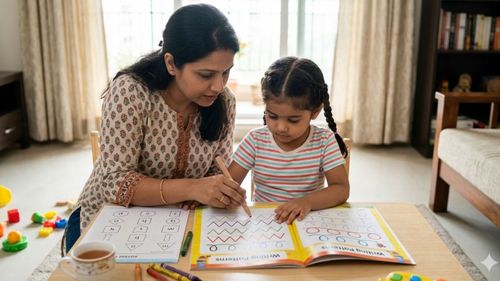

Table of Contents
- Understanding Writing Patterns in Early Childhood
- Patterns for Nursery Class: Step-by-Step Progression
- Patterns for Kindergarten: Taking Writing Skills Forward
- Pattern Activities for Kindergarten and Nursery Kids
- Right Age to Introduce Pattern Writing
- How PlanetSpark Supports Early Pattern Writing
- Why Writing Pattern for Nursery Is So Important
- From First Strokes to Confident Skills: A PlanetSpark Succes
- Common Mistakes Parents Make While Teaching Pattern Writing
- Signs Your Child Is Progressing Well
- Why PlanetSpark Is the Best Place to Build Exceptional Skill
- Building Confident Writers from the Very Beginning at Planet
A structured writing pattern for nursery kids builds early handwriting skills, improves motor control, and boosts confidence in young learners. This guide explains age-appropriate writing strokes, tracing methods, and practice routines for nursery children. It also highlights how PlanetSpark supports kids through fun activities, expert guidance, and interactive lessons that make writing enjoyable, engaging, and effective while laying a strong foundation for future learning and communication skills.
Understanding Writing Patterns in Early Childhood
Writing patterns in early childhood support hand control, letter formation, and confidence, helping young learners develop essential pre-writing skills through guided practice and repetition.
What Is Pattern Writing?
Pattern writing refers to structured strokes, shapes, and repeated lines that help children develop control over hand movements. These patterns are not random drawings; they are purposeful exercises designed to prepare children for letter formation.
Common pattern writing examples include:
Straight lines (vertical and horizontal)
Curved lines
Slanting lines
Zigzag patterns
Loops and waves
Simple shapes like circles and spirals
Before children can write alphabets or numbers, they must learn how to control a pencil, recognize shapes, and maintain direction, all of which are developed through pattern writing. PlanetSpark strengthens these skills through structured, age-appropriate activities guided by expert educators, ensuring confident and joyful early writing development.

Patterns for Nursery Class: Step-by-Step Progression
Writing patterns for nursery children develop gradually, moving from free movement to controlled strokes. Each stage strengthens fine motor skills, hand coordination, and confidence needed for smooth letter writing.
Stage 1: Free Scribbling
Free scribbling allows children to move their hands freely and explore writing tools. It helps them understand pressure, direction, and motion while building finger strength and comfort with pencils and crayons.
Free scribbling without fixed shapes
Random marks and movements
Stage 2: Straight Line Patterns
Straight line patterns introduce structure and control. These patterns teach children to move their hands in specific directions, laying the foundation for forming letters with straight strokes.
Vertical lines
Horizontal lines
Standing lines
Sleeping lines
Stage 3: Curved and Slanting Patterns
Curved and slanting patterns help children practice smooth, flowing movements. They improve wrist flexibility and prepare young learners for writing rounded and angled letter shapes.
Curves
Slanting lines
Semi-circles
Stage 4: Complex Patterns
Complex patterns combine multiple movements and require better coordination. Practicing these patterns improves rhythm, control, and fluency, making the transition to letter writing easier and more confident.
Zigzag patterns
Waves
Loops
Spiral patterns
Help Your Child Become a Powerful Young Storyteller!
Patterns for Kindergarten: Taking Writing Skills Forward
As children progress beyond nursery, patterns for kindergarten become more structured, purposeful, and refined. At this stage, pattern writing acts as an essential bridge between basic strokes and actual letter formation. Children begin applying control, consistency, and direction while practicing patterns that closely resemble real handwriting movements.
Key focus areas for kindergarten patterns include:
Neater strokes that show better pencil control
Improved spacing between strokes and shapes
Consistent size to maintain uniform writing
Directional accuracy for correct letter formation
Common patterns for kindergarten include:
Repeated shapes to build rhythm and flow
Pattern extensions to develop logical sequencing
Letter-based strokes that mirror alphabets
Pre-cursive loops to support smooth writing
These patterns strengthen fine motor skills, enhance visual coordination, and build writing confidence. Regular practice helps children transition smoothly into formal handwriting while improving speed, clarity, and overall presentation in classroom writing tasks.
Pattern Activities for Kindergarten and Nursery Kids
Learning writing patterns becomes more effective when combined with play. Engaging activities help children enjoy practice while strengthening fine motor skills, coordination, and confidence in early writing development.
1. Tracing Games
Using dotted lines and colorful worksheets encourages children to follow patterns independently. Tracing builds control, improves hand movement, and helps children understand stroke direction without the pressure of perfect writing.
2. Sand and Salt Writing
Drawing patterns with fingers in sand or salt trays enhances sensory learning. This activity improves tactile awareness, hand coordination, and helps children remember patterns through touch-based exploration.
3. Air Writing
Air writing allows children to draw patterns using large arm movements. It improves muscle memory, shoulder control, and coordination, making it easier for children to reproduce patterns on paper later.
4. Clay and Play-Dough Patterns
Rolling clay or play-dough into lines, curves, and shapes strengthens finger muscles. This hands-on activity supports grip development and prepares children for controlled pencil movements.
5. Digital Pattern Games
Interactive apps and videos make pattern practice exciting and visual. When used in moderation, they reinforce learning, improve focus, and motivate children through guided, screen-based engagement.
Build Strong Writing Skills That Last a Lifetime!
Right Age to Introduce Pattern Writing
Pattern writing can be introduced as early as 2.5 to 3 years, depending on a child’s developmental readiness. At this age, children should be gently guided, not forced, through playful and pressure-free activities that encourage natural writing interest.
Signs your child is ready for pattern writing include:
Can hold a crayon or pencil comfortably
Enjoys scribbling, coloring, or drawing
Shows curiosity toward shapes and lines
Can sit and focus on an activity for short periods
Starting at the right time helps children build confidence, coordination, and a positive attitude toward writing.
How PlanetSpark Supports Early Pattern Writing
PlanetSpark supports early pattern writing through structured, play-based learning designed by experts, helping young children build confidence, fine motor control, and strong pre-writing skills at the right pace.
With PlanetSpark, your child:
Learns correct pencil grip and hand posture through guided, age-appropriate exercises.
Practices writing patterns using interactive worksheets, games, and creative activities.
Develops shape recognition, stroke direction, and spacing naturally.
Builds focus and attention with short, engaging, and pressure-free sessions.
Strengthens finger muscles using hands-on activities like tracing and drawing.
Gains confidence through personalized feedback from trained educators.
Enjoys learning through a balanced mix of digital tools and offline practice.
This structured approach ensures children enjoy writing while developing essential skills needed for smooth and confident handwriting.
Why Writing Pattern for Nursery Is So Important
A strong writing pattern for nursery learners is the base of confident handwriting and future academic success. Here’s why it matters:
1. Develops Fine Motor Skills
Pattern writing strengthens finger muscles and improves grip control, which is crucial for writing letters smoothly.
2. Improves Hand–Eye Coordination
Tracing and copying patterns help children synchronize what they see with what they write.
3. Builds Pre-Writing Confidence
Children who practice patterns early feel more confident when introduced to alphabets and numbers.
4. Enhances Focus and Discipline
Repeating patterns teaches patience, attention, and consistency are skills useful across all subjects.
5. Supports Brain Development
Patterns help children understand sequences, symmetry, and order, which boosts logical thinking.
From First Strokes to Confident Skills: A PlanetSpark Success Story

Earned a Certificate of Excellence, showcasing his growing confidence and skills nurtured at PlanetSpark-Shlok.
Strong writing patterns build the foundation of lifelong learning. Start your child’s journey from simple strokes to confident writing—join PlanetSpark today and help your child master writing patterns with joy and confidence.
Common Mistakes Parents Make While Teaching Pattern Writing
Many parents unknowingly slow writing progress by using incorrect methods. Avoiding these common mistakes helps children enjoy pattern writing, build confidence, and develop strong pre-writing skills naturally.
Common mistakes include:
Forcing children to write for long hours, which causes fatigue, frustration, and loss of interest.
Expecting perfection too early, creating pressure instead of encouraging gradual improvement.
Skipping basic strokes and moving too quickly to complex patterns or letters.
Comparing children with other learners, which lowers confidence and motivation.
Using boring or repetitive worksheets that fail to engage young minds.
A child’s learning journey should always be encouraging, playful, and stress-free.
Signs Your Child Is Progressing Well
Positive progress in pattern writing appears through small, consistent changes. These signs show improved motor control, growing confidence, and a healthy interest in writing activities at an early learning stage.
You’ll notice improvement when:
Pencil grip becomes firmer and more controlled.
Patterns become smoother with fewer breaks or corrections.
Writing speed improves without losing clarity.
Children show natural interest in writing and drawing.
Frustration reduces and confidence increases.
These small wins indicate strong foundational growth and readiness for advanced writing skills.

Why PlanetSpark Is the Best Place to Build Exceptional Skills
PlanetSpark offers a complete learning ecosystem that helps children become confident, expressive, and imaginative writers. With expert-led classes, AI-powered tools, and engaging activities, students don’t just learn writing—they master the art of storytelling, clarity, structure, and creativity. Here’s how PlanetSpark transforms every child into a skilled young author:
What PlanetSpark Offers for Creative Writing Excellence
1:1 Personal Trainers who guide children through grammar, storytelling, vocabulary, and expression
Personalised Writing Curriculum tailored to your child’s level, goals, and pace
Spark Diary for daily writing practice that builds consistency and creativity
Genre-Based Learning covering stories, poems, essays, book reviews, speeches, and more
Creative Stimulus Activities like story dice, picture prompts, and imagination games
Real Publishing Opportunities through blogs, e-magazines, anthologies, and showcases
SparkX AI Video Analysis to refine delivery when presenting written work
Gamified Tools like SparkBee and quizzes that strengthen grammar, vocabulary, and spelling
PlanetSpark ensures your child not only writes better but thinks sharper, imagines deeper, and communicates with confidence that lasts a lifetime.
Building Confident Writers from the Very Beginning at PlanetSpark
Pattern writing is more than an early learning activity. It forms the foundation of confident and fluent writing. When children practice patterns at the right pace, they develop control, coordination, and a positive attitude toward learning. With encouragement and playful methods, writing becomes an enjoyable journey rather than a task.
PlanetSpark supports this journey by combining expert guidance, engaging activities, and personalized learning. Its structured approach helps children master patterns naturally, build confidence, and transition smoothly into handwriting. With PlanetSpark, young learners do not just learn to write. They learn to love writing.
Also Read:
Online Vs Offline Education - What’s Better For Creative Writing? | PlanetSpark
Types of Imagery Explained: Build Creative Skills at PlanetSpark
Frequently Asked Questions
Pattern writing helps nursery children practice basic strokes like lines, curves, and shapes. It improves pencil control, fine motor skills, and prepares them for writing alphabets confidently in later stages.
Children can begin learning writing patterns between ages two and three, depending on readiness. Early exposure through fun activities helps develop hand strength, coordination, and interest in pre-writing skills.
Patterns for kindergarten improve stroke accuracy, spacing, and consistency. Regular pattern practice strengthens muscle memory, enabling children to write letters neatly, fluently, and with better speed and confidence.
Effective pattern activities include tracing worksheets, sand writing, clay modeling, air writing, and guided drawing games. These activities make learning enjoyable while strengthening fine motor skills and writing readiness.
PlanetSpark uses age-appropriate pattern writing activities, expert-led live classes, and personalized feedback. This structured approach builds strong writing foundations while keeping nursery children engaged, confident, and stress-free.
Parents choose PlanetSpark for its child-friendly curriculum, trained educators, and holistic learning approach that combines writing patterns with creativity, communication skills, and confidence-building from an early age.