
Composition Writing: Format and Examples | Planet Spark
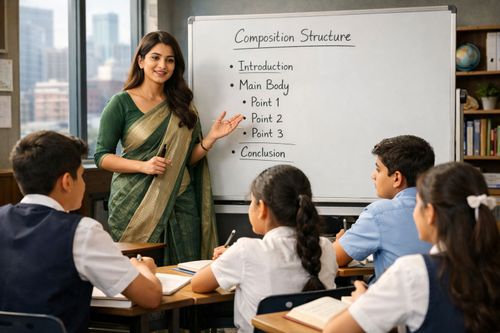

Table of Contents
- What is Composition Writing? (Simple Explanation)
- Composition Writing Format
- How to Write a Composition (Step-by-Step Guide with PlanetSp
- Composition Writing Topics for Practice
- Composition Writing Examples (With Simple Breakdown)
- Common Mistakes in Composition Writing (And How to Avoid The
- How PlanetSpark Helps You Improve Composition Writing Faster
- Tips to Improve Composition Writing Skills
- Success Story: How Himanshu Improved His Composition Writing
- About PlanetSpark : Creative Writing
- Conclusion
Ever struggled to turn your ideas into clear, well-structured writing? Whether it's for exams, work or daily communication, composition writing is a skill that can truly set you apart. In this guide, you’ll learn the format, easy steps, practical topics and real examples to help you write better with confidence.
If you often feel stuck or unsure how to improve, guided learning can make things easier. Platforms like PlanetSpark help you build strong writing skills with expert feedback, structured practice and step-by-step support, so you can improve faster and more effectively.
What is Composition Writing? (Simple Explanation)
Composition writing is the process of organizing your thoughts and expressing them clearly in a structured written format. It is one of the most important skills used in school exams, competitive tests and even in professional life; like writing emails, reports or presentations. Good composition writing helps you communicate your ideas in a way that is easy to understand and impactful.
There are four main types of composition writing:
- Narrative - Writing that tells a story or shares an experience
- Descriptive - Writing that describes a person, place, or event in detail
- Expository - Writing that explains a topic or gives information
- Argumentative - Writing that presents an opinion supported by logic and reasons
Understanding these types helps you choose the right style based on the topic and purpose of your writing.
"Struggling to start your writing journey?"
Book a Free Demo Class with PlanetSpark
Composition Writing Format
A well-written composition is not just about good ideas, it’s about presenting those ideas in a clear and organized way. Following the right format makes your writing easy to read, understand and score better in exams or real-life communication.
Let’s break it down into three simple parts:
1. Introduction (Start Strong)
The introduction is the first impression of your composition, so it should grab the reader’s attention.
- Begin with a hook – this could be a question, a fact or an interesting statement
- Clearly introduce the topic so the reader knows what to expect
- Keep it short, simple and engaging
Example: Instead of starting directly, you can write something interesting like:
"Have you ever wondered how education shapes our future?"
2. Body Paragraphs (Explain Your Ideas Clearly)
This is the main part of your composition where you explain your ideas in detail.
- Divide your content into 2–3 paragraphs
- Each paragraph should focus on one main idea
- Use examples, reasons or experiences to support your points
- Maintain a logical flow, your ideas should connect smoothly
Use simple words and short sentences to make your writing easy to read.
3. Conclusion (End with Impact)
The conclusion is your final chance to leave a good impression.
- Summarize the main idea of your composition
- Avoid adding new points here
- End with a strong closing line (thought, suggestion or message)
Example:
"In conclusion, education is the key to a successful and meaningful life."
How to Write a Composition (Step-by-Step Guide with PlanetSpark)
If you’re wondering how to write a composition in a simple and effective way, don’t worry, it becomes easy when you follow a clear step-by-step process. Whether you’re a student or an adult, these steps will help you write better, faster and with more confidence.
1. Understand the Topic Clearly
Before you start writing, take a moment to fully understand the topic.
- Read the topic carefully (twice if needed)
- Identify what is being asked (story, opinion, explanation etc.)
- Think about the purpose of your writing
Tip: If your understanding is clear, your writing will automatically become better.
2. Brainstorm Your Ideas
Now, think of all the ideas related to the topic.
- Write down points that come to your mind
- Don’t worry about order or grammar yet
- Focus on collecting useful thoughts, examples or experiences
This step helps you avoid getting stuck while writing.
3. Create a Simple Outline
Once you have ideas, organize them into a basic structure.
- Decide what will go in the introduction
- Arrange your points for the body paragraphs
- Plan how you will conclude
A rough outline saves time and keeps your writing clear and focused.
4. Write Your First Draft
Start writing your composition using your outline.
- Focus on expressing your ideas clearly
- Don’t aim for perfection in the first draft
- Keep your sentences simple and easy to read
Remember: Writing first, editing later is the best approach.
5. Edit and Improve (Very Important Step)
After writing, take time to improve your composition.
- Check grammar and spelling mistakes
- Improve sentence structure
- Remove repeated or unnecessary words
- Make sure your ideas flow smoothly
This step turns an average composition into a great one.
Follow these steps regularly and focus on improvement, not perfection. Over time, you’ll see a big difference in your writing skills.
Composition Writing Topics for Practice
One of the best ways to improve your composition writing skills is through regular practice. The more topics you explore, the more confident and creative you become. Practicing different types of topics also helps you think from different perspectives and improves your ability to express ideas clearly.
Here are some useful and easy-to-understand composition writing topics for both students and adults:
1. My Favourite Hobby
Write about something you love doing in your free time.
- What is your hobby?
- Why do you enjoy it?
- How does it make you feel?
This topic helps you practice personal and descriptive writing.
2. Importance of Education
Explain why education is important in our lives.
- How does education shape our future?
- What are its benefits?
- How does it help society?
This improves your expository writing skills.
3. A Day Without Internet
Imagine your life without the internet for one day.
- What challenges would you face?
- What activities would you do instead?
- How would it affect your routine?
Great topic for creative and imaginative thinking.
4. My Dream Job
Write about what you want to become in the future.
- What is your dream job?
- Why do you want it?
- What steps will you take to achieve it?
Helps in goal-based and structured writing.
5. A Memorable Journey
Describe a trip or journey you will never forget.
- Where did you go?
- What made it special?
- What did you learn from it?
This builds storytelling and narrative skills.
6. The Role of Technology in Life
Discuss how technology affects our daily lives.
- Benefits of technology
- Challenges or disadvantages
- Your personal opinion
Useful for analytical and opinion-based writing.
Don’t just read, write regularly. The more you practice different composition writing topics, the better your skills will become over time.
Composition Writing Examples (With Simple Breakdown)
Understanding composition writing becomes much easier when you see real examples. Below are simple and well-structured compositions along with clear explanations, so you can learn how to write your own effectively.
Example 1: Importance of Education
Introduction:
Education is one of the most powerful tools that can shape a person’s future and build a better society. It not only helps individuals grow but also contributes to the development of a nation.
Body:
Education provides knowledge and develops important life skills such as critical thinking, communication and problem-solving. It helps people make informed decisions and improves their quality of life. Educated individuals have better career opportunities and can contribute positively to society. Moreover, education promotes equality and reduces poverty by opening doors for everyone to succeed.
Conclusion:
In conclusion, education is the foundation of a successful and meaningful life. It is essential for both personal growth and the progress of society and therefore, it should be accessible to all.
"Want to write like these examples?"
Book a Free Demo Class with PlanetSpark
Why This Example Works
- Clear and engaging introduction
- Well-explained ideas in the body
- Logical flow of thoughts
- Strong and meaningful conclusion
Example 2: A Rainy Day
Introduction:
A rainy day is one of the most beautiful experiences in nature, bringing freshness, calmness, and joy to our surroundings.
Body:
The sky becomes cloudy, and soon raindrops begin to fall, creating a soothing sound. The cool breeze and the smell of wet soil make the atmosphere pleasant. Trees and plants look greener and more vibrant. Children enjoy playing in the rain, while many people prefer staying indoors with a cup of tea, enjoying the peaceful weather. Rain also helps farmers by nourishing crops and maintaining the balance of nature.
Conclusion:
In conclusion, a rainy day is refreshing and enjoyable. It not only adds beauty to nature but also brings happiness and relaxation to people’s lives.
Why This Example Works
- Uses descriptive language to create clear imagery
- Maintains a smooth and natural flow
- Covers both personal experience and general benefits
- Ends with a satisfying conclusion
Common Mistakes in Composition Writing (And How to Avoid Them Easily)
Even if you have good ideas, small mistakes can reduce the quality of your composition. The good news is that most of these mistakes are very common and once you understand them, you can easily avoid them and improve your writing.
Let’s look at the most common mistakes and how to fix them:
1. Writing Without a Clear Structure
Many people start writing without planning, which makes the composition confusing and unorganized.
- Ideas may not connect properly
- The reader may find it hard to follow your thoughts
How to avoid it:
Always follow a simple structure:
- Introduction
- Body paragraphs
- Conclusion
A clear format makes your writing easy to read and understand.
2. Grammar and Spelling Mistakes
Small grammar or spelling errors can reduce the quality of even a well-written composition.
- Incorrect sentence formation
- Spelling errors
- Misuse of punctuation
How to avoid it:
- Read your composition carefully after writing
- Use simple sentences if you’re unsure
- Practice basic grammar rules regularly
3. Repeating the Same Ideas Again and Again
Sometimes writers repeat the same point in different ways, which makes the composition boring.
- Lack of new information
- Reader loses interest
How to avoid it:
- Plan your ideas before writing
- Make sure each paragraph adds something new
- Keep your content meaningful and to the point
"Tired of repeating the same writing mistakes?"
Book a Free Demo Class now
4. Weak Introduction or Conclusion
A poor beginning or ending can affect the overall impression of your composition.
- Introduction may feel dull or unclear
- Conclusion may not properly summarize the topic
How to avoid it:
- Start with an interesting hook (question, fact, or idea)
- End with a strong closing thought or message
5. Going Off-Topic
One of the biggest mistakes is writing content that is not related to the topic.
- Irrelevant points confuse the reader
- Marks may be reduced in exams
How to avoid it:
- Understand the topic clearly before writing
- Stick to the main idea throughout
- Remove any unnecessary or unrelated points
Always take a few minutes to revise your composition before submitting. A quick review can help you catch mistakes and make your writing much better.
How PlanetSpark Helps You Improve Composition Writing Faster
Many students and even adults struggle with composition writing, not because they lack ideas, but because they don’t get the right direction, feedback and practice. Writing is a skill that improves with guidance and without it, progress can feel slow and confusing. This is where PlanetSpark becomes a helpful solution.
Instead of learning randomly, you get a clear and structured path that helps you understand exactly how to improve step by step.
1. Live 1:1 Classes with Expert Teachers
One of the biggest advantages is personalized learning.
- You get individual attention from trained teachers
- Your strengths and weaknesses are identified clearly
- Lessons are adjusted based on your learning level
This helps you improve faster compared to general classroom learning.
2. Structured Writing Programs (No Confusion)
Many learners don’t know what to practice or how to improve. A structured program solves this problem.
- Step-by-step learning from basics to advanced
- Clear understanding of format, grammar and creativity
- Regular practice with guided exercises
You always know what to learn next, no guesswork.
3. Real-Time Feedback and Corrections
One of the most important parts of improving writing is feedback.
- Teachers correct your mistakes instantly
- You learn why something is wrong and how to fix it
- Continuous improvement with every session
This prevents you from repeating the same mistakes again and again.
4. Focus on Grammar, Creativity and Confidence
Good composition writing is not just about grammar, it’s also about expressing ideas confidently.
- Improve sentence formation and vocabulary
- Learn how to present ideas creatively
- Build confidence in writing and speaking
This balanced approach makes your writing more effective and engaging.
5. Practice with Real Topics and Examples
Practice plays a key role in mastering writing skills.
- Get access to exam-level and real-life topics
- Learn through examples and guided writing
- Regular assignments to strengthen skills
The more you practice with the right guidance, the better you become.
"Ready to become confident in writing?"
Book a Free Demo Class with PlanetSpark today
Tips to Improve Composition Writing Skills
Want to get better quickly? Follow these tips:
- Read books and articles regularly
- Practice writing daily
- Learn new vocabulary
- Focus on clarity over complexity
- Get feedback from experts
Improvement comes with consistency and the right learning approach.
Success Story: How Himanshu Improved His Composition Writing
Himanshu, a Class 8 student, always struggled with composition writing. He had good ideas but found it difficult to organize them properly and often made grammar mistakes, which affected his marks and confidence.
With structured practice and expert guidance from PlanetSpark, he gradually improved his writing skills. Within a few months, his compositions became clearer, more structured and he started scoring better, while also gaining confidence and enjoying writing.
About PlanetSpark : Creative Writing
PlanetSpark helps children master Creative writing with clarity, accuracy, and confidence through engaging 1:1 live classes. Our Creative writing Program strengthens sentence construction, tense usage, vocabulary, and writing skills helping kids communicate correctly and effectively in school and everyday life.
1. 1:1 Expert Coaching
Each child is guided by a certified trainer who personalises lessons to their learning style and pace ensuring a strong grasp of grammar rules and accurate usage.
2. Personalised Learning Path
A customised curriculum identifies each learner’s gaps and gradually builds skills in tenses, sentence structure, parts of speech, and punctuation taking them from basic grammar to mastery.
3. AI-Powered Grammar Feedback
With SparkX and AI-led practice exercises, students receive instant feedback on sentence accuracy, punctuation, and word usage making improvement measurable and consistent.
4. Interactive & Gamified Learning
Engaging modules like Grammar Guru, Sentence Builder, and Daily Quizzes make learning grammar fun, motivating kids to practise daily while reinforcing concepts.
5. Confidence in Writing & Communication
Through structured exercises, storytelling, and writing practice, children develop the confidence to write and speak grammatically correct English in every context.
Conclusion
Composition writing is a valuable skill for both students and adults, it helps in exams, work and everyday communication. With the right structure and regular practice, anyone can improve. If you want faster progress and expert support, platforms like PlanetSpark can help you build strong writing skills with confidence. Start practicing today and level up your writing.
Frequently Asked Questions
Composition writing is the process of organizing and expressing your ideas clearly in a structured format using an introduction, body, and conclusion.
The format includes three main parts: introduction (start), body paragraphs (explanation), and conclusion (ending with a strong message).
The main types are narrative, descriptive, expository, and argumentative, each used for different purposes and writing styles.
You can improve by practicing regularly, reading more, learning new vocabulary, following a clear structure, and getting expert feedback.
Composition writing helps students develop thinking, language, and communication skills at the same time. It improves vocabulary, sentence structure, and clarity of expression by encouraging organized thinking. Regular practice also strengthens reading comprehension and builds confidence in speaking and presenting ideas.