
Diegetic Meaning Made Simple for Students with PlanetSpark


Table of Contents
- What Is Diegetic Meaning? (Explained Simply)
- Understanding Diegetic Sound and Non-Diegetic Sound
- Diegetically Meaning: How Actions and Details Work Inside a
- Diegetic Meaning in Books, Movies, and Everyday Stories
- Why Diegetic Meaning Is Important for Students
- Common Examples of Diegetic vs Non-Diegetic (Quick Compariso
- Diegetic Meaning in Digital Media and Video Games
- Success Story: A Young Achiever with PlanetSpark
- How PlanetSpark Helps Students Master Diegetic Meaning
- Why PlanetSpark Is the Best Place to Build Exceptional Skill
- Building Confident Storytellers with PlanetSpark Learning
Every story has a world of its own, where characters live, speak, and react to what happens around them. Diegetic meaning helps students understand this inner world by showing how meaning is created through experiences inside the story. This guide explains the idea creatively with simple examples and easy explanations. It shows students how to read between the lines, write vivid stories, and speak with clarity. PlanetSpark nurtures these skills through engaging storytelling and guided learning, helping students grow into confident communicators.
What Is Diegetic Meaning? (Explained Simply)
The diegetic meaning refers to anything that exists inside the world of the story. If the characters in a story can see it, hear it, or experience it, then it is diegetic. In simple words, diegetic meaning answers one key question:
“Is this part of the story world that the characters are living in?”
If the answer is yes, then it has a diegetic meaning.
To understand the meaning of diegetic, we need to know where the word comes from. The term “diegetic” comes from the Greek word diegesis, which means “narration” or “telling a story.” Over time, it became a way to describe things that belong to the story’s internal world.
For students, the meaning of diegetic can be remembered easily as:
Diegetic = Part of the story world
This idea is widely used in:
Storytelling
Films and movies
Theatre and drama
Creative writing
Video games
Animation and cartoons
PlanetSpark introduces such concepts early so students can develop strong storytelling awareness.

Understanding Diegetic Sound and Non-Diegetic Sound
One of the most common ways students learn about diegetic meaning is through sound. This is where the terms diegetic sound and non-diegetic sound come in.
What Is Diegetic Sound?
Diegetic sound is any sound that characters in the story can hear. Since it exists inside the story world, it has a clear diegetic meaning.
Examples of diegetic sound:
Characters talking to each other
Footsteps while walking
A phone ringing in a scene
Music playing on a radio inside the story
Door opening or closing
Rain, wind, or thunder that characters react to
If a character hears it, responds to it, or reacts to it, then the sound is diegetic.
For example, imagine a movie scene where a student is studying, and music is playing from their phone. Since the character can hear the music, it is a diegetic sound, and it clearly fits the diegetic meaning.
What Is Non-Diegetic Sound?
Non-diegetic sound is the opposite. It is a sound that only the audience hears, not the characters.
Examples of non-diegetic sound:
Background music added for emotion
A narrator’s voice explaining the story
Dramatic music during a fight scene
Sound effects added only for viewers
If the characters are unaware of the sound, then it does not have a diegetic meaning.
Let Your Child Discover the Joy of Creative Expression!
For instance, when sad music plays during an emotional movie scene, the characters are not actually hearing that music. That makes it a non-diegetic sound.
Understanding the difference between diegetic sound and non-diegetic sound helps students analyse films and stories more deeply, which is a skill strongly encouraged in PlanetSpark’s communication programs.
Diegetically Meaning: How Actions and Details Work Inside a Story
The phrase diegetically meaning is used when we describe how something functions within the story world. When something is explained or justified inside the story itself, it works diegetically.
For example:
A character knows how to fight because the story shows they trained for years.
A magical object works because the story explains its origin.
A sudden behaviour change is shown through events in the plot.
All of these are examples of diegetically meaning, which means the story explains things from within its own world.
Students often confuse this with explanations given to the audience directly. But if the explanation exists only for viewers and not characters, it is not diegetic.
PlanetSpark helps students practice using diegetically meaningful language in their writing by encouraging them to:
Show reasons inside the story
Avoid unexplained actions
Build believable story worlds
Diegetic Meaning in Books, Movies, and Everyday Stories
Diegetic meaning shapes the world within a story. It influences characters’ experiences, sounds, and actions, helping readers and viewers understand narratives more deeply through context and internal storytelling cues.
Turn Everyday Experiences Into Extraordinary Stories!
Diegetic Meaning in Books
In books, diegetic meaning appears through:
Dialogue between characters
Descriptions of settings
Character thoughts (if part of the narrative)
Events happening in the plot
For example, if a character hears a noise and reacts, that noise has diegetic meaning. If the author describes background music for the reader, it does not. Students curious to join creative writing classes can click this link and begin with the experts.
Diegetic Meaning in Movies
Movies make diegetic meaning even clearer using visuals and sound. Diegetic sound, like talking, footsteps, and ambient noise, creates realism, while non-diegetic sound adds emotion and drama.
Understanding this helps students:
Analyse films better
Understand director choices
Improve creative thinking
Diegetic Meaning in Daily Life Stories
Even when students tell personal stories, they use diegetic meaning naturally. When you describe:
Who was present
What you heard
What happened around you
You are using diegetic details.
PlanetSpark uses relatable storytelling exercises to help students connect theory with real-life communication.
Boost Grammar, Vocabulary, and Story Structure Effortlessly!
Why Diegetic Meaning Is Important for Students
Understanding diegetic meaning is not just for film students or writers. It helps students in many ways:
Improves Reading Comprehension: Understanding diegetic meaning helps students identify what truly happens inside the story world, allowing them to follow events clearly and separate actual plot details from added explanations.
Builds Better Writing Skills: When students use diegetic meaning, their writing becomes logical and believable because actions, sounds, and events are clearly explained within the story itself, making narratives stronger.
Enhances Speaking and Storytelling: Knowing diegetic meaning helps students explain stories confidently, describe events clearly, and connect ideas smoothly while speaking, making their storytelling engaging and easy to understand.
Develops Critical Thinking: Students learn to question why elements exist in a story, analyse their purpose, and understand how details support the narrative, improving overall analytical and thinking skills.
PlanetSpark focuses on these benefits by teaching storytelling concepts step by step, ensuring students gain confidence in communication.
Common Examples of Diegetic vs Non-Diegetic (Quick Comparison)
This comparison clearly shows which elements belong inside the story world and which are added only for the audience. It helps students quickly understand the difference between diegetic and non-diegetic elements in simple, clear terms.
This simple comparison helps students quickly identify the meaning of diegetic in any story. Students can click this link to learn the habit of writing from the PlanetSpark professionals.
Build Strong Writing Skills That Last a Lifetime!
Diegetic Meaning in Digital Media and Video Games
Diegetic meaning is commonly used in digital media and video games to create realistic and immersive experiences. It refers to elements that exist inside the game world and are experienced by the characters themselves.
Common examples of diegetic elements in games include:
Sounds like footsteps, gunfire, alarms, or character voices
Visual cues such as maps shown on devices, signboards, or messages within the game world
Health indicators, timers, or warnings displayed on a character’s suit or screen
These elements help players understand the story without breaking immersion. Information is shared naturally through the game environment rather than outside explanations. For students, learning diegetic meaning through games makes storytelling concepts easier to grasp, more engaging, and easier to remember, while also improving their understanding of narrative structure.
Success Story: A Young Achiever with PlanetSpark
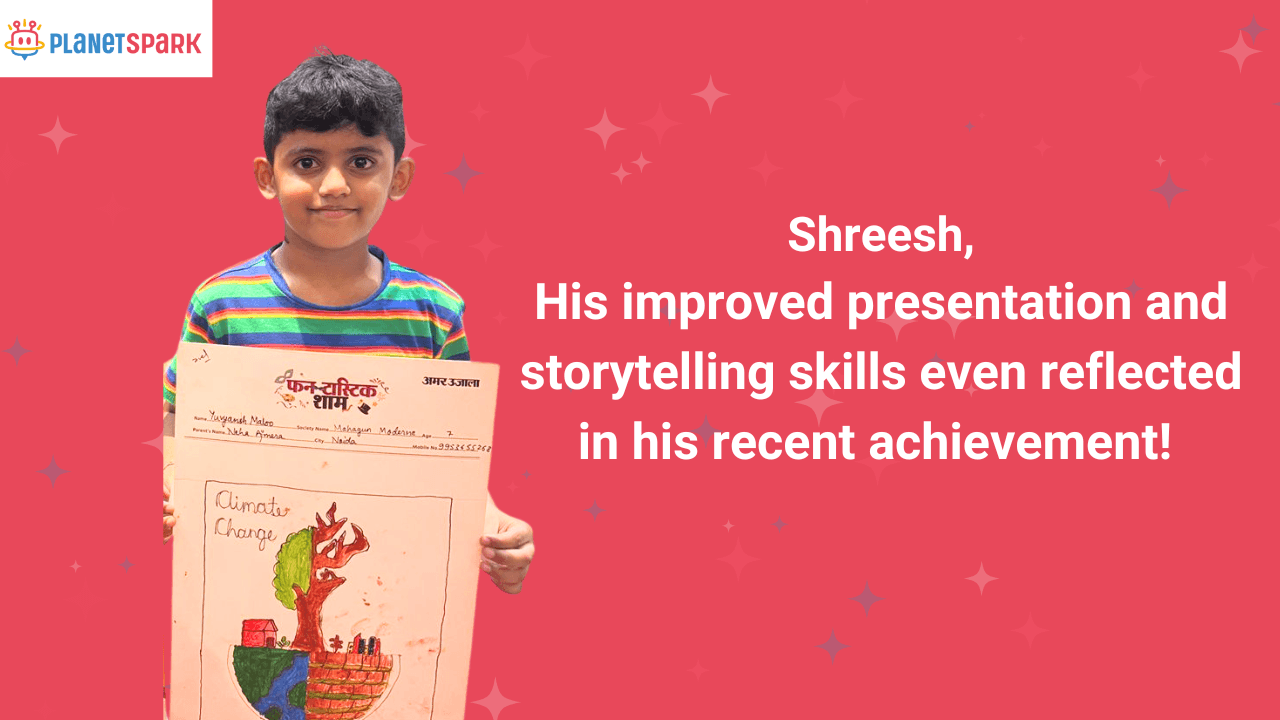
PlanetSpark has helped Shreesh express his ideas creatively and confidently. His improved presentation and storytelling skills are even reflected in his recent achievement — winning second place in the Junior Category of a drawing competition on ‘Climate Change’ organised by the Amar Ujala team.
If you want your child to develop strong communication, creativity, and confidence like Shreesh, join PlanetSpark today and help them achieve similar success.
How PlanetSpark Helps Students Master Diegetic Meaning
PlanetSpark believes that storytelling should be fun, practical, and confidence-building. Instead of teaching theory alone, PlanetSpark:
Uses real-life examples
Encourages creative writing
Improves speaking and presentation
Builds storytelling confidence
Students learn how diegetic meaning, diegetic sound, and non-diegetic sound work in stories they already enjoy movies, cartoons, books, and games.
By practising these concepts, students naturally improve:
Vocabulary
Story structure
Logical thinking
Communication skills

Why PlanetSpark Is the Best Place to Build Exceptional Skills
PlanetSpark offers a complete learning ecosystem that helps children become confident, expressive, and imaginative writers. With expert-led classes, AI-powered tools, and engaging activities, students don’t just learn writing—they master the art of storytelling, clarity, structure, and creativity. Here’s how PlanetSpark transforms every child into a skilled young author:
What PlanetSpark Offers for Creative Writing Excellence
1:1 Personal Trainers who guide children through grammar, storytelling, vocabulary, and expression
Personalised Writing Curriculum tailored to your child’s level, goals, and pace
Spark Diary for daily writing practice that builds consistency and creativity
Genre-Based Learning covering stories, poems, essays, book reviews, speeches, and more
Creative Stimulus Activities like story dice, picture prompts, and imagination games
Real Publishing Opportunities through blogs, e-magazines, anthologies, and showcases
SparkX AI Video Analysis to refine delivery when presenting written work
Gamified Tools like SparkBee and quizzes that strengthen grammar, vocabulary, and spelling
PlanetSpark ensures your child not only writes better but thinks sharper, imagines deeper, and communicates with confidence that lasts a lifetime.
Building Confident Storytellers with PlanetSpark Learning
To sum it up, understanding diegetic meaning helps students see how stories work from the inside. It teaches them to identify what belongs to the story world and what is added only for the audience. By learning the difference between diegetic and non-diegetic elements, students become better readers, writers, and thinkers. They learn to follow plots more clearly, understand characters deeply, and notice important details that improve comprehension and storytelling skills.
Diegetic meaning also supports confident communication and creative expression. When students use diegetic elements in writing and speaking, their ideas sound logical and believable. With guided learning from PlanetSpark, students can apply this concept easily across books, films, digital media, and real-life storytelling, building strong communication skills that support academic success and personal growth.
Frequently Asked Questions
Diegetic meaning refers to elements that exist inside the story world. Characters can see, hear, or experience these elements. It helps students understand what truly belongs to the narrative.
Diegetic sound is heard by characters within the story, such as dialogue or background noises. Non-diegetic sound is added only for the audience, like background music or narration.
Understanding diegetic meaning improves reading comprehension and writing clarity. It also helps students analyse stories better and explain events confidently while speaking or presenting ideas.
Yes, students can use diegetic meaning to explain actions naturally within stories. This makes writing logical, believable, and more engaging for readers and academic assessments.
PlanetSpark teaches diegetic meaning through simple examples and creative storytelling activities. Students practice applying the concept in writing and speaking, building confidence and clarity.
PlanetSpark offers structured learning, expert guidance, and interactive lessons. These help students improve storytelling, communication, and critical thinking skills enjoyably and effectively.