
Draft Writing: How to Create and Improve Your First Draft
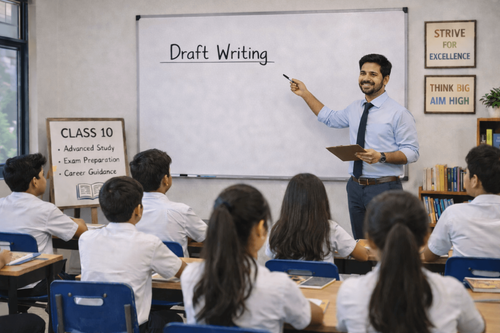

Table of Contents
- What is Draft Writing?
- How to Write a Draft Step by Step
- Step 1: Understand Your Purpose
- Step 2: Brainstorm Ideas
- Step 3: Create a Simple Outline
- Step 4: Write Without Editing
- Step 5: Take a Break
- Step 6: Revise and Improve
- Example 1: Essay Draft
- Example 2: Story Draft
- Example 3: Email Draft
- 1. The Ugly First Draft Method
- 2. The Layering Technique
- 3. Voice to Text Drafting
- 4. Question-Led Drafting
- 5. Reverse Outline Technique
- Trying to Be Perfect Too Early
- No Structure
- Too Much Repetition
- Weak Introduction
- Rushed Conclusion
- Ignoring the Reader
- Content Check
- Structure Check
- Language Check
- Read Aloud Test
- Get Feedback
- Tips for Kids
- Fun Draft Prompts
- Student Benefits
- Quick Student Formula
- Why It Helps Professionals
- Useful Tools
- Build a Writing Routine
- Weekly Challenge
- PlanetSpark Creative Writing Course
- Turn Every Rough Draft into Great Writing
Draft writing is the process of turning ideas into a workable version of your content before polishing it. Whether you are a student, child, blogger, professional, or aspiring author, a strong first draft helps you organise thoughts, develop clarity, and improve expression. In this guide, you will learn how to write a draft, useful drafting techniques, common mistakes, draft writing examples, and practical ways to revise your work into a final masterpiece.
What is Draft Writing?
Draft writing is the first complete version of a piece of writing. It is not meant to be perfect. Instead, it helps you capture ideas, structure arguments, and build momentum.
Think of a draft as the bridge between your idea and the final polished version.
Why Draft Writing Matters
Many people delay writing because they want every sentence to sound perfect immediately. That often leads to writer’s block. Drafting removes that pressure.
Benefits of draft writing:
- Helps you start faster
- Organises scattered ideas
- Improves creativity
- Reduces fear of mistakes
- Makes editing easier
- Builds confidence in writing
- Creates a clear roadmap for revision
Who Needs Draft Writing?
Draft writing is useful for:
- Students writing essays and assignments
- Kids learning creative writing
- Bloggers creating articles
- Professionals writing emails or reports
- Authors writing stories or books
- Adults improving communication skills
How to Write a Draft Step by Step
If you often wonder how to write a draft, follow this practical process.
Step 1: Understand Your Purpose
Before writing, ask yourself:
- What am I writing?
- Who will read it?
- What should readers learn or feel?
- Is the tone formal, creative, persuasive, or informative?
Example:
If you are writing a school essay, your goal may be to explain a topic clearly.
If you are writing a story, your goal may be to entertain and engage.
Step 2: Brainstorm Ideas
Write down everything related to your topic. Do not judge ideas too early.
Use methods like:
Mind Mapping
Write the topic in the center and add connected ideas around it.
Freewriting
Write continuously for 5 to 10 minutes without stopping.
Question Method
Ask:
- What?
- Why?
- How?
- When?
- Where?
- Who?
Step 3: Create a Simple Outline
An outline keeps your draft organised.
Basic structure:
- Introduction
- Main Body Point 1
- Main Body Point 2
- Main Body Point 3
- Conclusion
For stories:
- Beginning
- Conflict
- Rising Action
- Climax
- Ending
Step 4: Write Without Editing
This is the most important rule of first draft writing.
Keep moving forward. Ignore grammar mistakes, repeated words, or awkward sentences for now.
Your only goal: complete the draft.
Writing First Draft Tips
- Set a timer for 20 minutes
- Silence distractions
- Focus on ideas, not perfection
- Use placeholders if stuck
- Keep writing even if it feels messy
Example placeholder:
[Add statistics here]
[Describe character later]
Step 5: Take a Break
Once the draft is complete, step away for some time. A fresh mind helps you spot weak areas more easily.
Even a 30-minute break can help.
Step 6: Revise and Improve
Now shape the draft into strong writing.
Check:
- Clarity
- Structure
- Flow
- Grammar
- Word choice
- Repetition
- Tone
- Accuracy
Draft Writing Examples
Examples help you understand how rough ideas become polished writing.
Example 1: Essay Draft
Topic: Why Reading is Important
First Draft Version
Reading is important because it helps us learn many things. Books teach us about history, science and life. Reading also improves vocabulary. It is also fun.
Improved Version
Reading is important because it expands knowledge, improves vocabulary, and develops imagination. Books help readers learn about science, history, and life experiences. In addition, reading can be enjoyable and relaxing, making it both educational and entertaining.
Lesson
The improved version adds detail, flow, and stronger vocabulary.
Example 2: Story Draft
First Draft Version
A boy found a dog in rain. He took it home. They became friends.
Improved Version
During a heavy rainstorm, Aarav discovered a trembling puppy under a bench. He wrapped it in his jacket and carried it home. That unexpected rescue became the start of a lifelong friendship.
Lesson
Details create emotion and visual impact.
Example 3: Email Draft
First Draft Version
Hi sir, I need leave tomorrow because work at home.
Improved Version
Dear Sir,
I would like to request leave for tomorrow due to urgent work at home. Thank you for your understanding.
Regards,
[Your Name]
Lesson
Drafting helps improve professionalism and clarity.
Best Drafting Techniques for Better Writing
Strong writers use systems, not luck. These drafting techniques can improve speed and quality.
1. The Ugly First Draft Method
Allow yourself to write badly at first. This removes pressure and increases output.
Popular among professional authors because perfection can wait.
2. The Layering Technique
Write in rounds:
- Round 1: Main ideas
- Round 2: Details
- Round 3: Examples
- Round 4: Editing
This is ideal for essays and blogs.
3. Voice to Text Drafting
Speak your ideas aloud and convert speech into text. Useful for fast idea capture.
Great for adults and busy professionals.
4. Question-Led Drafting
Turn each heading into a question and answer it.
Example:
Why is exercise important?
Exercise improves health, energy, and mood.
5. Reverse Outline Technique
After writing, identify what each paragraph says. This reveals gaps and weak structure.
Common First Draft Mistakes to Avoid
Everyone makes mistakes while drafting. Recognising them helps you improve faster.
Trying to Be Perfect Too Early
Editing every sentence while drafting slows progress.
No Structure
Random ideas confuse readers.
Too Much Repetition
Using the same word repeatedly weakens impact.
Weak Introduction
A dull opening loses attention.
Rushed Conclusion
Many writers end abruptly without summarising key ideas.
Ignoring the Reader
Always write with your audience in mind.
How to Improve Your First Draft Like a Pro
Once your draft is complete, use this editing checklist.
Content Check
Ask:
- Does it answer the topic clearly?
- Are examples relevant?
- Is anything missing?
Structure Check
See if ideas flow logically.
Good transitions:
- First
- In addition
- However
- Therefore
- Finally
Language Check
Improve:
- Grammar
- Spelling
- Vocabulary
- Sentence variety
Read Aloud Test
Read your writing aloud. If something sounds awkward, revise it.
Get Feedback
A teacher, mentor, or editor can notice issues you may miss.
Draft Writing for Kids
Children often believe writing means getting everything right immediately. Teaching drafting builds confidence.
Tips for Kids
- Start with pictures or prompts
- Use simple outlines
- Focus on ideas first
- Celebrate creativity
- Edit later with guidance
Fun Draft Prompts
- If I could fly for one day
- My secret superhero power
- A talking pet adventure
- The day the school disappeared
Drafting teaches children that mistakes are part of learning.
Draft Writing for Students
Students use drafts for essays, exams, projects, and applications.
Student Benefits
- Better marks through organised answers
- Stronger grammar
- Faster writing speed
- Clear arguments
- Better exam preparation
Quick Student Formula
- Understand topic
- Plan points
- Draft quickly
- Revise carefully
- Proofread finally
Draft Writing for Adults and Professionals
Draft writing is equally important in workplaces.
Use drafts for:
- Emails
- Reports
- Presentations
- Proposals
- Social media posts
- Speeches
Why It Helps Professionals
- Saves time
- Reduces mistakes
- Improves clarity
- Sounds professional
- Builds confidence in communication
Tools That Help in Draft Writing
Technology can speed up drafting and revision.
Useful Tools
- Grammar checkers
- Note-taking apps
- Mind mapping tools
- Voice typing tools
- Distraction-free writing apps
- AI feedback tools
Use tools to support your skills, not replace thinking.
Daily Habits to Become Better at Draft Writing
Improvement comes through consistent practice.
Build a Writing Routine
- Write 10 minutes daily
- Keep a journal
- Rewrite old drafts
- Read quality books
- Learn new words
- Observe good writing styles
Weekly Challenge
Choose one topic each week and create:
- One rough draft
- One edited version
- One final polished version
This habit creates visible progress.
PlanetSpark Creative Writing Course
If you want structured support instead of learning alone, PlanetSpark Creative Writing Course offers a complete system for stronger writing and communication. Every learner gets 1:1 personal trainers who adapt lessons to learning style, pace, and goals. The personalised curriculum builds grammar, fluency, storytelling, confidence, and creative writing step by step.
With SparkX AI video analysis, learners receive detailed feedback on clarity, body language, grammar, confidence, and idea flow. AI-led practice sessions make speech and storytelling practice interactive beyond class time. Spark Diary helps build daily writing habits through journals, stories, poems, and prompts.
Gamified tools like vocabulary quizzes, spelling challenges, and grammar games keep learning exciting. Regular PTMs and progress reports help parents track growth with measurable insights. Learners can also join clubs like debate, story writing, podcasting, comedy, and poetry for real-world practice. Through Sparkline, children safely share content, celebrate creativity, and gain confidence. Competitions, showcases, and recognitions make progress motivating and fun.
Whether you are a child building fundamentals or an adult improving communication, PlanetSpark creates a clear path to success.
Start your writing journey with PlanetSpark and turn rough drafts into confident expression.
Turn Every Rough Draft into Great Writing
Draft writing is where real writing begins. No great essay, story, article, or speech starts perfectly. The first draft gives shape to ideas, while revision gives them power. When you stop fearing mistakes and start embracing the drafting process, writing becomes easier, faster, and more enjoyable.
Use the strategies in this guide, practise regularly, and review your work with purpose. Whether you are a child learning creative expression, a student aiming for better grades, or an adult improving communication, mastering draft writing can transform your results. The secret is simple: write first, improve later, and keep going.
You can also read:
Frequently Asked Questions
Draft writing is the first version of any piece of writing. It is created to organise ideas before final editing. A draft does not need to be perfect. It helps writers focus on content first and polish later. Students, kids, bloggers, and professionals all use drafts to improve quality and clarity.
To write a draft quickly:
Understand the topic
Make a short outline
Set a timer
Write without editing
Keep ideas flowing
Revise later
Speed comes from separating writing and editing into different stages.
The best first draft tips include:
Do not chase perfection
Write freely
Use simple language first
Add examples later
Leave placeholders if stuck
Finish before editing
Take a break before revising
These habits help reduce writer’s block.
Effective drafting techniques include:
Ugly first draft method
Layered drafting
Reverse outlining
Freewriting
Mind mapping
Question-led drafting
Different writers prefer different methods, so experiment and choose what works best.
PlanetSpark helps learners strengthen draft writing through 1:1 expert coaching, personalised curriculum, creative writing practice, AI feedback tools, journaling through Spark Diary, and regular progress tracking. Kids and adults learn how to generate ideas, structure content, revise effectively, and write with confidence in real-world situations.