
Epistolary Meaning and Use in Novel Writing at PlanetSpark


Table of Contents
- Define Epistolary in Simple Terms
- What Is an Epistolary Novel
- How Epistolary Writing Shapes Character Voice
- Epistolary Novel Examples Students Should Know
- Why Writers Choose the Epistolary Form
- How Epistolary Writing Improves Creative Writing Skills
- Common Challenges in Writing an Epistolary Novel
- About PlanetSpark
- Final Thoughts on Epistolary Writing
Epistolary writing is a powerful storytelling format that allows writers to tell stories through letters, diary entries, emails, or personal messages instead of traditional narration. Understanding the epistolary meaning helps young writers explore emotions, perspectives, and events in a more personal and realistic way. For teens and college-going students, the epistolary form feels especially relevant because it mirrors how people communicate today, making storytelling more engaging, authentic, and expressive.
PlanetSpark helps young writers understand and apply epistolary writing through structured creative writing guidance. With expert mentors and live practice, students learn how to use epistolary techniques confidently in their own stories.
Define Epistolary in Simple Terms
To define epistolary, it refers to a style of writing in which the story is told through written documents rather than a continuous third-person or first-person narration. These documents can take many forms, including letters, diary entries, emails, text messages, journal notes, or official records. Each piece of writing becomes a part of the story, revealing events as they unfold through the character’s own words.
Understanding the epistolary meaning helps writers realize that storytelling does not always require a narrator to explain what is happening. Instead, the story emerges naturally through what characters choose to write, omit, or emphasize. This makes the narrative feel more personal and immersive. Readers gain direct access to a character’s inner thoughts, emotions, and perspective, which creates a sense of realism and emotional closeness that traditional narration may not always achieve.

Why the Epistolary Format Feels Personal
The epistolary format feels personal because readers experience the story exactly as the character records it. There is no external voice interpreting events or guiding emotions. What the reader knows is limited to what the character chooses to write, making the experience feel authentic and intimate.
Because the writing often reflects private thoughts or personal communication, emotions feel raw, honest, and immediate. This is why many writers choose epistolary writing for emotionally driven stories that explore identity, relationships, conflict, or self-discovery. The format allows readers to feel as though they are reading something private, which strengthens emotional engagement.
What Is an Epistolary Novel
What is an epistolary novel? An epistolary novel is a novel written entirely or mostly through documents such as letters, diary entries, emails, or written exchanges between characters. Instead of following a continuous narrative voice, the story unfolds through a series of personal records that gradually reveal the plot.
An epistolary novel invites readers to actively piece together the story. As readers move through different documents, they interpret events, relationships, and motivations based on what is written and what is left unsaid. This makes the reading experience more interactive and intellectually engaging.
Epistolary Novel Meaning in Literature
The epistolary novel meaning in literature lies in its ability to show rather than tell. Instead of describing emotions, conflicts, or events from a distance, the writer allows characters to express themselves directly through their own words.
This format helps writers:
• reveal character emotions in a natural and believable way
• show multiple perspectives on the same events
• create suspense through incomplete or delayed information
• build realism by mimicking real forms of communication
By relying on documents rather than narration, epistolary novels feel grounded in reality while still allowing creative storytelling.
Enroll now at PlanetSpark and build strong creative writing skills with expert guidance.
How Epistolary Writing Shapes Character Voice
One of the strongest advantages of epistolary writing is its ability to develop a strong and distinct character voice. Because the story is told through letters, diary entries, or messages, every piece of writing reflects the personality, emotional state, and mindset of the person writing it. Tone, vocabulary, sentence length, and even punctuation naturally change based on who the character is and what they are experiencing at that moment.
This format forces writers to be intentional about voice. A confident character may write directly and assertively, while an anxious character may hesitate, overexplain, or contradict themselves. These subtle differences make characters feel real rather than constructed.
For students, epistolary writing becomes an excellent exercise in voice development. Writers learn how different characters sound on the page and how language choices reveal emotions, background, relationships, and intent. This practice deepens character writing skills and improves overall narrative quality across all forms of storytelling.
Using Voice to Build Authentic Characters
Epistolary writing encourages writers to ask meaningful questions while drafting each entry. Who is writing this document and who is it meant for? What emotions are influencing the tone right now? What information is being shared openly, and what is being hidden or avoided?
Questions such as what the character is afraid to admit, what they exaggerate, or what they leave unsaid help writers build layered and believable personalities. Because the story unfolds through personal writing, characters feel authentic and emotionally grounded. Their voices emerge naturally, making readers feel as though they are reading something private and real rather than a constructed narrative.
Epistolary Novel Examples Students Should Know
Epistolary novel examples help students understand how flexible and powerful this storytelling format can be. Some epistolary novels rely entirely on letters or diary entries, while others combine emails, reports, messages, and personal reflections to tell a complete story.
Well-known epistolary novel examples demonstrate how:
• relationships unfold gradually through correspondence
• tension builds through unanswered letters or delayed replies
• emotions deepen through private reflection
• truth is revealed slowly through conflicting perspectives
By studying epistolary novel examples, students learn how structure directly affects storytelling impact. They see how pacing, gaps in information, and shifts in voice can create suspense and emotional depth without traditional narration.

Why Writers Choose the Epistolary Form
Writers choose the epistolary form because it allows deeper emotional exploration and creative freedom. Since the story is told through personal documents, readers experience events directly through the characters’ thoughts and emotions rather than through explanation.
This format works especially well for themes such as identity, isolation, relationships, memory, and self-discovery. These themes resonate strongly with teens and young adults, making epistolary writing both relevant and powerful for modern readers. The form allows writers to explore vulnerability and inner conflict in a way that feels natural and honest.
Epistolary Writing in Modern Storytelling
Modern epistolary writing has evolved beyond handwritten letters. Today, it often includes emails, chat messages, social media posts, voice notes, and digital journals. This evolution makes the format feel current and relatable, especially for young writers who already communicate through these mediums daily.
By using modern communication formats, writers can reflect contemporary life while still using a classic literary structure. This blend of tradition and modernity keeps epistolary storytelling fresh and engaging.
How Epistolary Writing Improves Creative Writing Skills
Learning epistolary writing strengthens multiple creative writing skills at once. Because writers cannot rely on long descriptions or an external narrator, they must communicate meaning through voice, word choice, and structure.
Epistolary writing helps students:
• improve emotional expression through authentic voice
• develop strong and consistent narrative perspective
• practice concise yet meaningful writing
• understand perspective, bias, and reliability in storytelling
These skills translate directly into stronger storytelling across all formats. Whether students write narratives, essays, or scripts, the clarity, emotional awareness, and voice control developed through epistolary writing continue to enhance their creative work.
Book a free demo class with PlanetSpark and watch your child write with clarity and imagination.
Common Challenges in Writing an Epistolary Novel
While powerful, epistolary writing comes with challenges. Writers must maintain clarity without confusing readers, especially when switching between multiple documents or voices.
Common difficulties include:
• repeating information across entries
• unclear timelines
• similar sounding character voices
• lack of narrative progression
With proper guidance, students learn how to overcome these challenges and use the format effectively..
About PlanetSpark
PlanetSpark transforms how students learn to communicate and write with confidence. Through live 1:1 sessions, expert mentors, and structured creative writing activities, learners develop clarity, expression, and storytelling skills.
1:1 Expert Coaching
Students receive personalised guidance on writing structure, voice, and creativity.
Step-by-Step Creative Writing Instruction
Learners practise storytelling formats including narrative, descriptive, and epistolary writing.
Real-Time Feedback and Revision
Students refine their writing through guided feedback and improvement cycles.
Continuous Skill Tracking
Progress is tracked across creativity, structure, vocabulary, and expression.
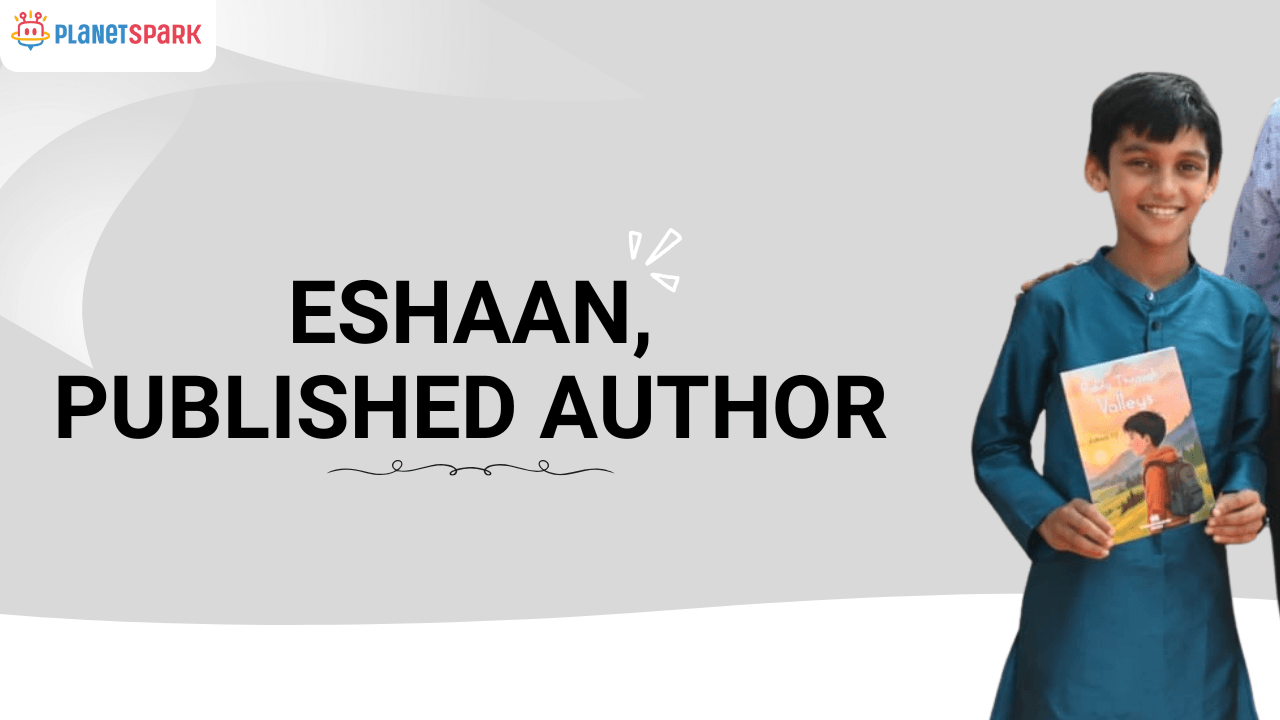
Eshaan’s Journey: From Classroom Creator to Published Young Author
Eshaan, a dynamic Grade 7 learner aged 12, has taken a remarkable leap as he has officially become a published author. What began as a simple classroom writing activity grew into a captivating storybook that showcases his creativity, discipline and evolving mastery of written expression. With consistent practice and a strong focus on clarity, Eshaan transformed everyday writing tasks into a meaningful literary achievement that reflects his dedication to stronger language skills.
Final Thoughts on Epistolary Writing
Understanding epistolary meaning opens up a unique and expressive way of storytelling for young writers who want their stories to feel personal and emotionally real. The epistolary novel format allows writers to move beyond traditional narration and communicate directly through character voices, making stories feel authentic and immersive. By writing through letters, diary entries, or messages, students learn how voice, emotion, and perspective shape powerful narratives.
With guided practice and expert support, students can confidently use epistolary writing to explore ideas, emotions, and multiple viewpoints with depth and clarity. PlanetSpark’s structured creative writing coaching helps learners master the epistolary format step by step, from understanding its purpose to applying it effectively in original stories. This guided approach ensures students not only learn the format but also use it creatively and confidently in their own storytelling journey.
Book a free demo class with PlanetSpark and watch creative writing skills grow.
Frequently Asked Questions
Epistolary meaning in literature refers to a style of writing where a story is told through letters, diary entries, emails, or other written documents. Instead of a traditional narrator, characters reveal events and emotions through their own written words. This format creates a sense of intimacy and realism because readers experience the story directly from the character’s perspective.
To define epistolary writing, it is a narrative technique where the plot unfolds through personal documents written by characters. These documents act as the primary storytelling tool rather than descriptive narration. This approach helps writers focus on voice, emotion, and perspective in a natural way.
An epistolary novel is a novel written entirely or mostly using letters, diary entries, emails, or messages exchanged between characters. The story develops through these documents rather than continuous narration. Readers actively piece together the plot by interpreting the characters’ personal writing.
The epistolary novel meaning lies in showing emotions, events, and relationships through personal writing instead of explanation. It helps students understand how storytelling can be driven by voice and perspective. This format also teaches how different viewpoints shape a single narrative.
Epistolary novel examples help students see how this format works in real stories. They show how character voice, suspense, and emotional depth are created through written communication. Studying examples also helps students learn structure and pacing in non-traditional narratives.
Epistolary writing improves creative writing by strengthening voice, emotional expression, and perspective. It teaches writers to convey meaning clearly without relying on heavy narration. These skills help students write more authentic and engaging stories across different genres.