
Essay on Tribes of India for Students


Table of Contents
- The Major Tribes of India
- Cultural Heritage of Indian Tribal Communities
- Social Structure and Kinship in Tribal Societies
- Economic Practices and Livelihoods
- Challenges Faced by Indian Tribal Communities
- Impact of Modernization and Development
- Role of NGOs and Civil Society in Supporting the Tribes of I
- Sustainable Development and Tribal Communities
- Case Studies of Tribal Development in India
- Tribal Movements and Advocacy
- Preservation of Tribal Languages and Literature
- Why Choose PlanetSpark Creative Writing?
India is home to one of the richest tapestries of culture in the world, and at the heart of this diversity lie the Tribes of India, communities known for their deep connection with nature, unique customs, and traditional wisdom. Spread across mountains, forests, deserts, and plains, the tribal groups of India form an essential part of the nation’s identity.
These communities contribute to India’s cultural wealth with their languages, art forms, rituals, and sustainable lifestyles. While they represent only a small percentage of the population, their impact on Indian heritage is immense. Understanding the Tribes of India is not just a study of people; it’s a journey into stories, traditions, and ways of life that are centuries old.
The Major Tribes of India
India is home to more than 700 tribes, each with its own identity, language, festivals, and traditions. Some of the major ones include:
1. Bhil Tribe (Rajasthan, Gujarat, MP)
One of India’s largest tribes, known for its archery skills and vibrant paintings.
2. Gond Tribe (Central India)
Famous for their Gond art, folktales, and strong community bonding.
3. Santhal Tribe (Jharkhand, West Bengal, Odisha)
Known for their music, dance forms, and agricultural lifestyle.
4. Naga Tribes (Nagaland, Northeast)
Renowned for tribal festivals like Hornbill, colorful costumes, and warrior traditions.
5. Mizo Tribe (Mizoram)
Known for bamboo dance, woven fabrics, and disciplined community life.
6. Toda Tribe (Tamil Nadu)
A small tribe famous for its unique huts, dairy culture, and embroidery.
7. Bodo Tribe (Assam)
Recognized for their folk dances, weaving, and agrarian lifestyle.
Together, these tribes in India form a rich patchwork of traditions that cannot be found anywhere else in the world.
Cultural Heritage of Indian Tribal Communities
The cultural heritage of Indian tribes is a treasure trove of artistic expression and traditional wisdom.
1. Folk Dance and Music
Tribal dance forms such as Ghoomar, Bihu, Dhimsa, and Santhali dance express love, harvest celebrations, and communal joy.
2. Tribal Art and Crafts
Art forms like Gond paintings, Warli art, Pattachitra, bamboo art, and beadwork reflect tribal stories, nature, and everyday life.
3. Rituals and Festivals
Tribal festivals such as Karam, Sarhul, Hornbill, and Bhagoria are deeply connected to seasons, harvest, and nature worship.
4. Clothing and Ornaments
Tribal attire includes handwoven fabrics, bead necklaces, silver ornaments, and feather-based accessories.
This cultural richness makes the Tribes of India a vibrant part of the country’s heritage.
Creative writing helps children express stories from India’s diverse cultures with confidence.
Enroll now in PlanetSpark’s Creative Writing classes; spots are filling fast!
Social Structure and Kinship in Tribal Societies
Tribal social structure is unique and often different from mainstream society.
1. Community Living
Most tribes follow a collective lifestyle, where families support one another and decisions involve the whole community.
2. Clan and Lineage
Tribes are divided into clans known as gotras, kutumb, or panas, depending on the region.
3. Leadership
Village elders or tribal chiefs, such as the Munda headman or Gaon Burah, play key administrative and social roles.
4. Gender Roles
Many tribes are matrilineal, especially in the Northeast, where property and family names pass through mothers.
This social structure strengthens unity and preserves culture across generations.
Economic Practices and Livelihoods
Most tribal communities depend on the natural environment for daily survival.
1. Agriculture
Shifting cultivation (jhum), terrace farming, and small-scale farming remain common.
2. Forest-Based Livelihoods
Many tribes rely on forest products like honey, herbs, bamboo, and firewood.
3. Handicrafts and Weaving
Tribal artisans create unique artworks that are now celebrated globally.
4. Hunting and Gathering
Though less common today, some tribes still depend on gathering wild fruits, roots, and occasional hunting.
Their lifestyles are often sustainable and eco-friendly, showcasing centuries-old wisdom.
Give your child the power to turn knowledge into expressive writing.
Challenges Faced by Indian Tribal Communities
Despite their cultural richness, the tribes of India face several struggles:
1. Limited Access to Education
Schools in remote areas are often far and poorly equipped.
2. Displacement
Development projects, mining, and dams have displaced many tribal communities.
3. Healthcare Gaps
Tribal populations face higher infant mortality, malnutrition, and limited access to medical care.
4. Poverty and Unemployment
Lack of skill training leads to limited income opportunities.
5. Cultural Erosion
With modernization, tribal languages and traditions are at risk of disappearing.
Understanding these challenges is important when studying Indian tribes and their place in a modernizing world.
Impact of Modernization and Development
Modernization brings both opportunities and challenges for tribal groups.
Positive Impacts
Better education opportunities
Roads, electricity, and healthcare access
New job opportunities through tourism and local enterprises
Negative Impacts
Loss of languages and traditional practices
Cultural assimilation
Increased environmental threats
Migration to cities, leading to identity loss
Balancing development with cultural preservation remains a critical challenge. The future of the Tribes of India depends on inclusive growth that respects their heritage.
PlanetSpark’s expert-led sessions build storytelling, essay writing, and expressive skills.
Sign up now, a free demo class is available for a short time!
Role of NGOs and Civil Society in Supporting the Tribes of India
Non-governmental organizations (NGOs) and civil society groups have played an essential role in bridging the gap between the tribal communities of India and mainstream development. While government schemes provide a macro-level framework, NGOs step in at the grassroots level where support and implementation matter the most.
Many NGOs focus on education, healthcare, livelihood training, women's empowerment, and cultural preservation. For example, initiatives in Odisha, Jharkhand, and Madhya Pradesh have empowered tribal families by teaching sustainable farming, improving financial literacy, and introducing digital learning. Their localized approach helps tribal people gain the tools they need to adapt, grow, and safeguard their heritage.
Civil society movements have also been powerful in raising awareness about land rights, environmental protection, and the need for ethical development. These groups advocate for changes in laws, equitable resource distribution, and the protection of tribal identity.
Sustainable Development and Tribal Communities
Sustainable development is not just an option; it is a necessity for the future of the Tribes of India. Tribal communities have historically lived in harmony with nature, using forest resources responsibly and practicing environmentally balanced lifestyles. Ironically, these same communities often face the highest displacement due to industrial projects, deforestation, and mining.
To create meaningful change, development needs to follow a tribal-first model. This includes:
Community-owned forest management
Renewable energy projects adapted to local environments
Promotion of traditional handicrafts
Local entrepreneurship and village-level industry
Protection of biodiversity and natural habitats
Empowering tribal communities with sustainable opportunities ensures they aren’t forced to choose between livelihood and cultural survival.
Case Studies of Tribal Development in India
Understanding the growth of tribal communities becomes easier through real-life examples. Several successful models highlight how proper planning and respect for culture can transform lives.
Case Study 1: Kerala’s Kudumbashree & Tribal Inclusion
Women from tribal communities were trained in micro-enterprises, organic farming, and eco-products. Today, many tribal families in Wayanad and Idukki have achieved financial independence.
Case Study 2: Jharkhand PVTG Nutrition Mission
The government, along with NGOs, improved nutrition levels among the Particularly Vulnerable Tribal Groups (PVTGs). Community kitchens, healthcare camps, and culturally adapted diets led to significant improvement in child health.
Case Study 3: Maharashtra Warli Art Revival Project
Warli tribal artists were supported with training, workshops, and global exhibitions. This not only preserved heritage but also created income opportunities.
These success stories prove that development can uplift without erasing identity, when done the right way.
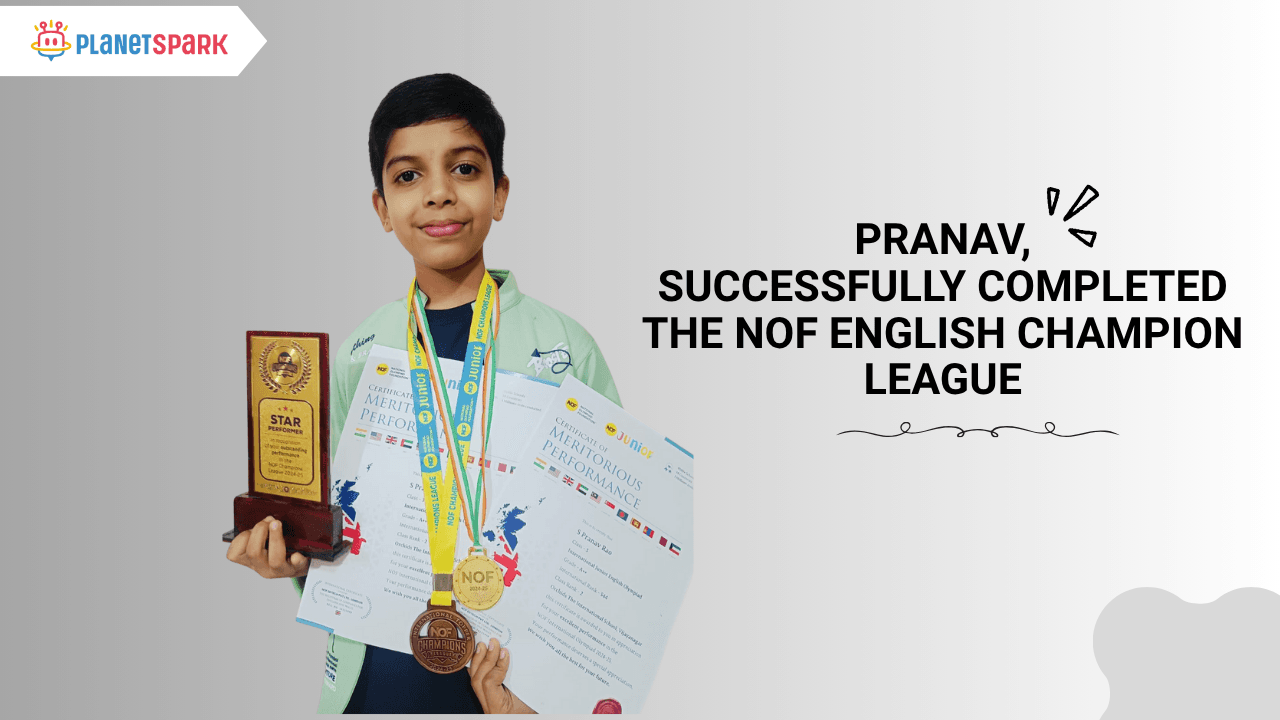
Pranav, a Grade 3 star, completed the NOF English Champion League, showcasing remarkable brilliance in both Public Speaking and Creative Writing.
When Pranav first joined PlanetSpark, he already had curiosity and spark; he just needed the right direction to shape his ideas. Through engaging storytelling activities, structured creative writing tasks, and confidence-building speaking sessions, he sharpened his thought process and learned how to express himself with clarity and impact.
Pranav’s hard work and enthusiasm paid off when he confidently stepped into the NOF English Champion League. Not only did he complete it successfully, but he also stood out for his strong narration, idea generation, and expressive speaking skills.
His journey shows that when a young learner is given the right environment and encouragement, they don’t just participate, they shine.
PlanetSpark is proud of Pranav’s achievement and excited for the many stages he’ll conquer next.
Creative Writing builds thinkers!
Tribal Movements and Advocacy
The tribal movements of India have shaped the nation’s social and political landscape. These movements ensure that voices from the forested and rural regions are heard when decisions affecting their land and future are made.
Some major tribal movements include:
Santhal Rebellion (1855–56): One of the earliest resistance movements against exploitation.
Bastar Rebellion (1910): An important movement against colonial forest policies.
Jharkhand Movement: Led to the formation of the state of Jharkhand in 2000.
Forest Rights Movement: Advocated for legal recognition of traditional forest dwellers.
These movements emphasize dignity, identity, and rights, reminding India that progress must be inclusive.
Preservation of Tribal Languages and Literature
Among the Tribes of India, language is more than communication; it’s identity. Over 197 tribal languages are spoken across the country, yet many are endangered due to migration, resource loss, and modernization.
Efforts to preserve tribal literature include:
Documenting oral stories, folklore, and songs
Introducing bilingual education in tribal schools
Promoting indigenous scripts like Ol Chiki (Santali)
Digitizing tribal stories for younger generations
Creative Writing programs and storytelling initiatives are increasingly being used to teach children about India’s tribal heritage, ensuring these languages and stories survive beyond one generation.
Why Choose PlanetSpark Creative Writing?
PlanetSpark helps children write with imagination, clarity, and emotional intelligence. In topics like the Tribes of India, writing becomes more than an academic exercise; it becomes a way to understand culture, empathy, and identity.
PlanetSpark’s Creative Writing program offers:
Genre-Focused Curriculum: Covers diverse forms like stories, poems, essays, reviews, and persuasive letters to build versatile writing skills.
Framework-Based Learning: Students master story arcs, the S.T.O.R.Y structure, the 5W1H method, and the PEEL technique for structured writing.
Writing and Speaking Integration: Learners present their written pieces to strengthen expression and storytelling confidence.
Real-Time Editing: Classes emphasize rewriting and refinement through peer reviews and teacher feedback.
Publishing Opportunities: Students can feature their work on PlanetSpark’s blog, e-magazine, or co-authored anthologies for recognition.
Creativity Boosters: Writing prompts, imagination games, and story dice activities nurture originality and creative thinking.
Whether your child loves essays, stories, or poetry, this program builds a strong foundation for writing that stands out in school and competitions.
Last few seats left, help your child become a confident writer.
Honouring the Voices of India
The Tribes of India represent some of the richest cultural traditions in the world. Their wisdom, lifestyle, art, and resilience form an essential part of India’s identity. Understanding their heritage is not just an educational requirement; it’s a responsibility.
As we move toward a more modern world, preserving tribal culture, supporting their rights, and promoting their development ensures that India’s diversity remains strong and vibrant.
Through learning, reading, and writing, children can develop a deeper appreciation for these communities and carry forward the values of respect, inclusivity, and cultural pride.
Frequently Asked Questions
Tribes in India are indigenous communities who have preserved their traditions, cultural practices, and social structures over centuries. They are officially recognised as Scheduled Tribes and are spread across states such as Odisha, Jharkhand, Chhattisgarh, Madhya Pradesh, and the North-Eastern region.
India has over 700 tribes, each with unique customs, languages, and lifestyles. Some of the most well-known include the Gond, Bhil, Santhal, Munda, Khasi, Bodo, and Toda tribes.
Tribal culture represents the raw, original heritage of India. Their knowledge of nature, traditional medicine, art, dance, and storytelling forms an irreplaceable part of the country’s cultural identity.
The major challenges include displacement due to development projects, loss of forests, unemployment, lack of education access, and threats to their languages and traditions.
Students can explore books, school resources, documentaries, cultural exhibitions, and academic essays. Creative Writing programs like PlanetSpark also help students express what they learn through essays, stories, and projects.