
Metafiction Made Easy: Learn Self-Aware Stories with PlanetSpark


Table of Contents
- Metafiction Definition: What It Really Means in Literature
- Metafiction: A Simple Explanation for Students
- What Is Metafiction and How Is It Different From Traditional
- Why Writers Use Metafiction and Why Students Should Learn It
- Historiographic Metafiction: Rethinking History Through Stor
- Historiographic Metafiction Short Stories and Their Learning
- Why Metafiction Strengthens Reading, Writing, and Thinking S
- How PlanetSpark Makes Metafiction Easy and Enjoyable
- Role of Self-Aware Stories in Building Clear Thinking
- Speaking Smarter Through This Engaging Story Style
- Success Stories That Inspire Young Learners
- How Students Slowly Grow From Beginners to Confident Writers
- Why PlanetSpark Is the Best Place to Build Exceptional Skill
- Shaping Confident Thinkers and Writers with PlanetSpark
Metafiction turns stories into conversations. Instead of staying silent, the story speaks, questions itself, and invites the reader to think along. This creative style helps students understand how writing works and why choices matter. With clear guidance, learners explore ideas freely, read with curiosity, and write with confidence. PlanetSpark makes this journey engaging by turning storytelling into a guided, enjoyable experience where young minds learn to think, create, and express themselves boldly.
Metafiction Definition: What It Really Means in Literature
A clear metafiction definition begins with one central idea: self-awareness.
Metafiction is a form of fiction that deliberately draws attention to itself as a created story.
Instead of hiding the fact that it is fictional, metafiction highlights the process of storytelling and invites readers to think about how narratives are constructed.
Unlike traditional fiction, which aims to feel natural and immersive, metafiction challenges that illusion. It reminds readers that:
- A writer is making choices
- Language shapes meaning
- Stories are not neutral, but they are constructed
A strong metafiction definition includes both form and purpose. Form refers to how the story is written, while purpose refers to why the writer chooses to expose the storytelling process.
Common ways metafiction appears include:
- Narrators commenting on their own narration
- Characters questioning their role in the story
- Stories that discuss how plots are formed
- Authors appearing as characters
This self-awareness is not accidental. It encourages readers, especially students, to think critically instead of consuming stories passively.
At PlanetSpark, students are taught that understanding the metafiction definition helps them become stronger readers and more intentional writers.
Metafiction: A Simple Explanation for Students
Metafiction define the concept simply: imagine a story that knows it is a story and wants you to know it too.
In basic terms:
Metafiction defines fiction that talks about itself.
This explanation is especially helpful for young learners who may find literary terms intimidating. When we metafiction define the idea in simple language, students quickly grasp it.
For example:
- A narrator says, “This is the part where stories usually end.”
- A character complaining about how the author treats them.
- A story explaining why it chose a particular ending.
When teachers metafiction define the concept this way, students realize they have already encountered such stories, which are often in children’s books, cartoons, and even movies.
PlanetSpark uses this simplified metafiction definition approach to ensure learners feel confident before moving on to deeper analysis.
What Is Metafiction and How Is It Different From Traditional Fiction?
To fully understand what is metafiction, it’s important to compare it with traditional storytelling.
Traditional fiction:
- Creates a sense of realism
- Hides the author
- Encourages emotional immersion
Metafiction:
- Reveals the storytelling process
- Acknowledges the author or narrator
- Encourages reflection and questioning
When students learn what metafiction is, they discover that stories don’t have to follow strict rules. They can experiment, break patterns, and still be meaningful.
Build Strong Writing Skills That Last a Lifetime!
This understanding helps students:
- Recognize narrative techniques
- Understand author intent
- Develop analytical reading skills
PlanetSpark introduces metafiction using relatable examples, ensuring students don’t just understand the term by understanding its purpose.
Why Writers Use Metafiction and Why Students Should Learn It
Writers choose metafiction to explore ideas that traditional storytelling cannot easily address.
They use it to:
- Question reality and truth
- Explore how stories influence belief
- Add humor, irony, or commentary
- Challenge conventional narrative structures
For students, learning metafiction offers several benefits:
- It builds critical thinking
- It encourages originality
- It improves narrative awareness
- It boosts creative confidence
Understanding metafiction definition and learning to define metafiction ideas clearly helps students articulate complex thoughts in simple ways, an essential academic and life skill.
PlanetSpark nurtures this skill through guided writing and structured creative exercises. Click this link to learn to work on developing a writing habit with proper guidance.
Historiographic Metafiction: Rethinking History Through Stories
One of the most advanced forms of metafiction is historiographic metafiction. This genre blends historical events with self-aware storytelling to question how history is written and remembered.
Historiographic metafiction:
- Uses real historical settings or figures
- Mixes fact with fictional commentary
- Questions the objectivity of historical records
Instead of presenting history as a fixed truth, it highlights that history is shaped by perspective, power, and narrative choices.
Boost Grammar, Vocabulary, and Story Structure Effortlessly!
For students, this genre strengthens:
- Analytical thinking
- Historical awareness
- Interpretation skills
PlanetSpark introduces historiographic metafiction gradually, helping learners build confidence before tackling complex texts.
Historiographic Metafiction Short Stories and Their Learning Value
Historiographic metafiction short stories are especially effective for students because they combine depth with brevity.
These stories often:
- Retell historical events with fictional twists
- Include narrators who question historical accuracy
- Highlight missing or silenced voices
By reading and writing such stories, students learn that:
- History is interpreted, not just recorded
- Stories influence how we remember the past
- Perspective changes meaning
PlanetSpark uses short-form historiographic metafiction to help students engage with complex ideas without feeling overwhelmed.
Why Metafiction Strengthens Reading, Writing, and Thinking Skills
When students understand the metafiction definition and can confidently apply metafiction concepts themselves, their academic skills improve significantly.
As readers, they:
- Analyze structure and technique
- Question narrative reliability
- Engage more deeply with texts
As writers, they:
- Develop strong narrative voices
- Experiment with structure
- Communicate ideas clearly
Metafiction encourages students to think about how they are writing while they write, a key skill taught consistently at PlanetSpark. Students can click this link and learn creative writing online with the guidance of PlanetSprak professionals.
Turn Everyday Experiences Into Extraordinary Stories!
How PlanetSpark Makes Metafiction Easy and Enjoyable
PlanetSpark transforms complex literary concepts into engaging learning experiences through:
- Clear explanations
- Age-appropriate examples
- Interactive writing exercises
- Personalized mentor feedback
Students don’t just memorize the metafiction definition and apply it creatively and confidently.
PlanetSpark ensures learners:
- Understand what metafiction is deeply
- Can metafiction define ideas independently
- Develop strong communication skills
- Enjoy the learning journey
Role of Self-Aware Stories in Building Clear Thinking
Self-aware stories make students stop and think while reading. The story may talk to the reader or explain why something is happening. This helps students understand that stories are created step by step, not magically.
These stories help students:
- Read more carefully
- Notice how stories are written
- Ask questions while reading
- Understand the meaning better
Instead of only remembering events, students begin to think about choices made by the writer. This improves thinking skills and makes reading more interesting.
Over time, students become confident readers. They learn that it’s okay to question a story and think differently. Reading no longer feels boring or confusing but becomes enjoyable and thoughtful.
Speaking Smarter Through This Engaging Story Style
Self-aware storytelling not only with reading and writing also improves how students speak and share ideas. When students understand how a story is built, they learn how to explain their thoughts clearly.
This style helps students:
- Organize ideas before speaking
- Explain reasons confidently
- Speak with clarity and structure
- Feel comfortable sharing opinions
When students talk about their own stories, they naturally learn to describe choices and give explanations. This builds strong communication skills. Over time, students become more confident speakers in class discussions, presentations, and everyday conversations.
Clear thinking leads to clear speaking, and self-aware storytelling supports both in a natural way.
Success Stories That Inspire Young Learners
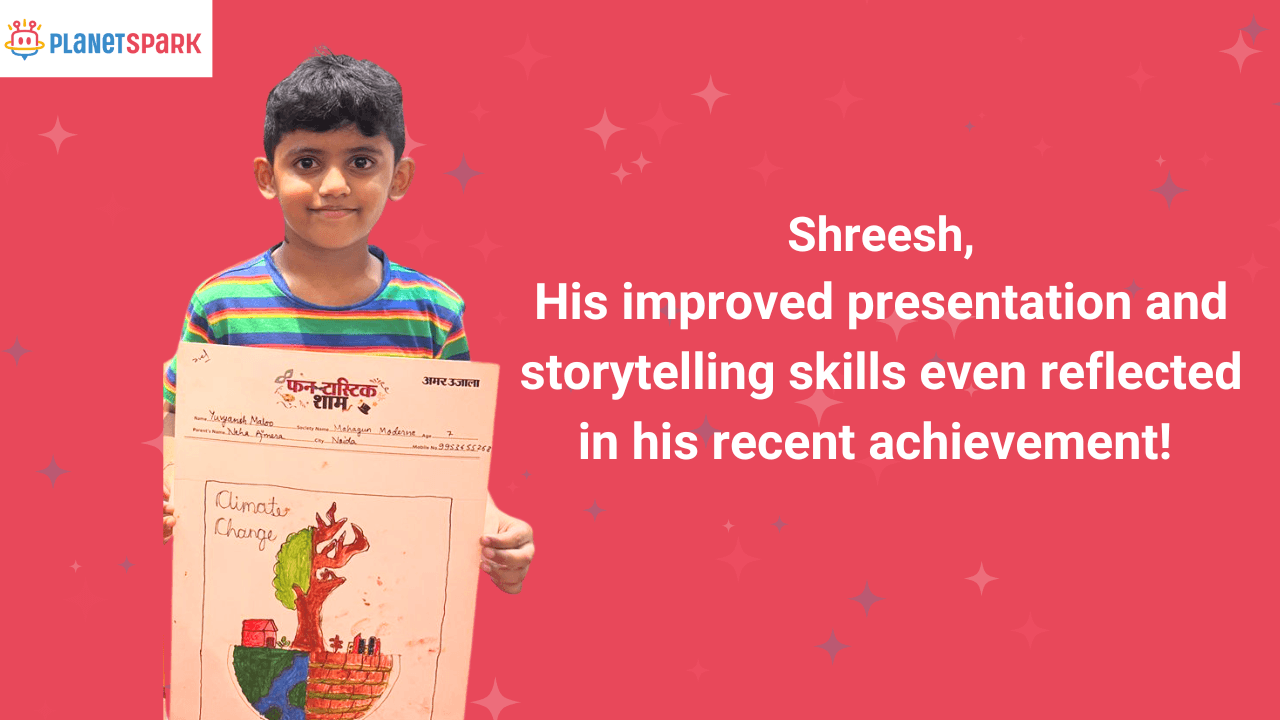
PlanetSpark has helped Shreesh express his ideas creatively and confidently. His improved presentation and storytelling skills are even reflected in his recent achievement — winning second place in the Junior Category of a drawing competition on ‘Climate Change’ organized by the Amar Ujala team.
If you want your child to build creativity, confidence, and strong expression skills, encourage them to join PlanetSpark and begin their own success story today.
How Students Slowly Grow From Beginners to Confident Writers
Students do not become strong writers overnight. Growth happens step by step. Self-aware storytelling supports this journey by helping students notice their own progress.
At first, students:
- Copy simple ideas
- Try short explanations
- Write with support
With practice, they:
- Express thoughts clearly
- Make confident writing choices
- Develop their own voice
As students learn to think about their writing, they improve naturally. They understand what works and what doesn’t. This slow and steady growth builds confidence and strong writing skills that last beyond the classroom.
Why PlanetSpark Is the Best Place to Build Exceptional Skills
PlanetSpark offers a complete learning ecosystem that helps children become confident, expressive, and imaginative writers. With expert-led classes, AI-powered tools, and engaging activities, students don’t just learn writing—they master the art of storytelling, clarity, structure, and creativity. Here’s how PlanetSpark transforms every child into a skilled young author:
What PlanetSpark Offers for Creative Writing Excellence
- 1:1 Personal Trainers who guide children through grammar, storytelling, vocabulary, and expression
- Personalised Writing Curriculum tailored to your child’s level, goals, and pace
- Spark Diary for daily writing practice that builds consistency and creativity
- Genre-Based Learning covering stories, poems, essays, book reviews, speeches, and more
- Creative Stimulus Activities like story dice, picture prompts, and imagination games
- Real Publishing Opportunities through blogs, e-magazines, anthologies, and showcases
- SparkX AI Video Analysis to refine delivery when presenting written work
- Gamified Tools like SparkBee and quizzes that strengthen grammar, vocabulary, and spelling
PlanetSpark ensures your child not only writes better but thinks sharper, imagines deeper, and communicates with confidence that lasts a lifetime.
Shaping Confident Thinkers and Writers with PlanetSpark
To sum it up, self-aware storytelling helps students see stories in a new way. They learn that stories are created through choices, ideas, and imagination. This understanding makes reading more interesting and helps students think carefully instead of just following the plot.
When students try this style in their own writing, they feel free and confident. They understand that writing does not have to be perfect on the first attempt. By explaining their thoughts and experimenting with ideas, students slowly develop a clear voice and enjoy expressing themselves.
With the right guidance, this learning becomes simple and enjoyable. Students grow step by step, improve communication skills, and build confidence that lasts beyond the classroom. Over time, they become thoughtful readers, expressive writers, and curious learners ready to explore new ideas.
Frequently Asked Questions
Metafiction is a storytelling style where the story is aware of itself. It may talk to the reader, explain its own choices, or remind us that it is a created story.
Metafiction helps students think deeply while reading and writing. It improves understanding, builds creativity, and teaches students how stories are structured instead of just focusing on the plot.
Yes, many children’s books already use self-aware storytelling. When explained clearly, students enjoy it because it feels playful, engaging, and encourages them to ask questions and think independently.
Metafiction allows students to explain ideas, experiment with structure, and reflect on their writing. This builds confidence, reduces fear of mistakes, and helps them develop a strong personal voice.
PlanetSpark teaches complex writing ideas through simple explanations, guided practice, and expert feedback. Students learn step by step, apply concepts creatively, and grow into confident readers and writers.
PlanetSpark combines structured learning with creativity. Students receive personal guidance, practice regularly, and build communication skills that support academic success and confident self-expression beyond the classroom.