
Understanding Tones in Literature with PlanetSpark


Table of Contents
Tones in literature play a major role in shaping how readers understand a story’s message, emotions, and deeper meaning. The tone of a text helps us feel whether the writer is being serious, joyful, sarcastic, hopeful, or critical.
This guide by PlanetSpark explains what a tone in literature is, the meaning of tone in literature, common types of tones, clear examples of tone, and the important difference between tone and mood. By the end, you will be able to easily identify tone in stories and improve your reading and writing skills.
What Is a Tone in Literature?
A tone in literature refers to the author’s attitude toward the subject, characters, or readers. It shows how the writer feels about what they are writing.
Tone is created through:
Word choice (diction)
Sentence structure
Imagery
Figurative language
For example, a writer can describe rain as peaceful and refreshing or as cold and depressing. The event is the same, but the tone changes the feeling.
The meaning of tone in literature goes beyond simple words. It reflects the writer’s viewpoint and guides how readers interpret the text. A formal tone is used in academic writing, while a playful tone suits children’s stories. Authors use tone deliberately to shape emotions and meaning, making tone in stories essential for reader engagement.

Types of Tones in Literature
There are many types of tones in literature, usually based on emotion or purpose. Below are some common ones with easy explanations and examples.
Formal Tone
A formal tone uses polished language and well-structured sentences. It avoids slang and contractions and is often used for serious topics.
Example:
Jane Austen’s Pride and Prejudice:
“It is a truth universally acknowledged, that a single man in possession of a good fortune, must be in want of a wife.”
Informal Tone
An informal tone sounds conversational and relaxed. It uses everyday language and creates closeness with readers.
Example:
Mark Twain’s The Adventures of Huckleberry Finn:
“You don’t know about me without you have read a book by the name of The Adventures of Tom Sawyer.”
Optimistic Tone
An optimistic tone expresses hope, positivity, and belief in good outcomes.
Example:
Paulo Coelho’s The Alchemist:
“When you want something, all the universe conspires in helping you to achieve it.”
Pessimistic Tone
A pessimistic tone focuses on despair, fear, or hopelessness.
Example:
George Orwell’s 1984:
“Imagine a boot stamping on a human face—forever.”
Turn ideas into powerful stories—enroll with PlanetSpark now!
Types of Tones in Writing
The types of tones in writing also apply to essays, journalism, and speeches, not just literature.
Humorous Tone
Uses wit, irony, or exaggeration to entertain.
Example of tone:
Douglas Adams’ The Hitchhiker’s Guide to the Galaxy:
“The ships hung in the sky in much the same way that bricks don’t.”
Serious Tone
A serious tone communicates importance and depth.
Example:
To Kill a Mockingbird by Harper Lee:
“You never really understand a person until you consider things from his point of view.”
Suspenseful Tone
Creates tension and anticipation, common in thrillers and mysteries.
Example:
“The footsteps grew louder as he hid in the dark corner, barely breathing.”
Example of Tone in Literature
Joyful tone – Harry Potter by J.K. Rowling
This line uses bright and magical words like glittering, sun-soaked, and magical. These words create happiness and excitement, making the reader feel joy and wonder.
Optimistic tone – Anne of Green Gables by L.M. Montgomery
This sentence focuses on hope and fresh beginnings. It shows a positive belief that the future can be better, which makes the reader feel encouraged and hopeful.
Sad Tone: The Fault in Our Stars by John Green
A sad tone expresses pain, loss, and emotional suffering. In this novel, John Green presents the reality of illness and fear through heartfelt thoughts:
"I'm a grenade, and at some point I'm going to blow u,p and I would like to minimise the casualties, okay?"
This line shows the character’s emotional struggle and fear of hurting loved ones, creating deep sympathy in readers.
Assertive Tone: Atlas Shrugged by Ayn Rand
An assertive tone shows strong confidence and firm beliefs. Ayn Rand’s characters speak boldly and stand by their principles:
"I swear by my life and my love of it that I will never live for the sake of another man, nor ask another man to live for mine."
This quote clearly reflects determination and independence, shaping the novel’s powerful tone.
Concerned Tone: The Kite Runner by Khaled Hosseini
A concerned tone shows care, worry, and emotional attachment. In The Kite Runner, this feeling is captured in a simple yet emotional line:
"For you, a thousand times over."
These words show deep loyalty and love, while also hinting at guilt and emotional pain.
Cynical Tone: Catch-22 by Joseph Heller
A cynical tone questions systems and exposes their flaws through sarcasm. In this war novel, Heller highlights the absurdity of rules:
"There was only one catch, and that was Catch-22..."
The statement shows how illogical systems trap individuals, creating humour mixed with frustration.
Ironic Tone: Ozymandias by Percy Bysshe Shelley
An ironic tone contrasts expectation with reality. Shelley describes a powerful king whose greatness has disappeared:
"Look on my Works, ye Mighty, and despair!"
Ironically, nothing remains except ruins, showing that power and pride do not last forever.
Serious Tone: To Kill a Mockingbird by Harper Lee
A serious tone is thoughtful and meaningful, often dealing with moral issues. Atticus Finch says:
"You never really understand a person until you consider things from his point of view..."
This advice encourages empathy and reflection, reinforcing the novel’s serious themes of justice and equality.
Fearful Tone: Edgar Allan Poe’s Works
A fearful tone creates tension and fear through dark imagery and emotions. In The Tell-Tale Heart, Poe builds suspense:
"It grew louder—louder—louder!"
The repetition reflects the narrator’s panic and madness, making readers feel uneasy.
Melancholy Tone: Stopping by Woods on a Snowy Evening by Robert Frost
A melancholy tone mixes quiet beauty with sadness. Frost writes:
"But I have promises to keep,
And miles to go before I sleep."
The lines suggest responsibilities and tiredness, giving the poem a calm yet thoughtful sadness.
Make learning English fun and effective with PlanetSpark—enroll today!
Tone vs Mood Explained
Tone and mood are closely connected, but they are not the same.
Tone is the writer’s attitude toward the subject or characters. It shows how the author feels and is revealed through word choice, sentence style, and language. For example, an author may sound sarcastic, serious, cheerful, or angry while telling a story.
Mood is the feeling that the reader experiences while reading. It is how the story makes you feel. Mood is created through setting, imagery, descriptions, and the tone itself. A story can make readers feel tense, sad, joyful, mysterious, or fearful.
In short, the writer creates the tone, and the reader feels the mood.
For example, if the author uses a sarcastic tone, it may create a tense or uneasy mood for the reader.
Identifying Tone in Stories
To understand the tone of a story, you can use WILDS. It helps you see how the writer feels.
W – Word Choice
Look at the words the author uses.
Happy, hopeful words → positive tone
Harsh, dark words → angry or sad tone
I – Imagery
These are descriptions that help you see, hear, or feel something.
Bright, beautiful images → joyful or calm tone
Dark, scary images → fearful or serious tone
L – Language
Check if the language is formal or casual.
Formal language → serious or respectful tone
Casual language → friendly or relaxed tone
D – Details
Notice what the writer talks about more and what is left out.
Focusing on pain or loss → sad tone
Focusing on success or hope → positive tone
S – Syntax
This means sentence length and structure.
Short sentences → urgency, fear, excitement
Long sentences → calm, thoughtful tone
Figurative Language
Metaphors and similes (comparisons) also show tone. For example, comparing love to sunshine creates a warm and happy tone.
In short, WILDS helps you understand the writer’s feelings hidden in the story.
How To Craft Tone in Your Writing
Writers create tone by making thoughtful choices while writing. Tone shows how the writer feels and how they want the reader to feel.
- Choosing Words Carefully
The words you use matter a lot.
Soft, positive words create a happy or calm tone.
Strong or negative words create a serious, angry, or sad tone. - Matching Tone to Audience and Purpose
Your tone should fit who you are writing for and why you are writing.
A school essay needs a formal tone.
A story or blog can have a friendly or emotional tone. - Keeping Tone Consistent
Once you choose a tone, stick to it.
Suddenly changing from serious to funny can confuse the reader unless it is done on purpose. - Revising for Clarity and Emotion
After writing, reread your work.
Ask yourself:
Does it sound the way I want it to?
Does it clearly show the emotion or attitude I intend?
PlanetSpark Success Story
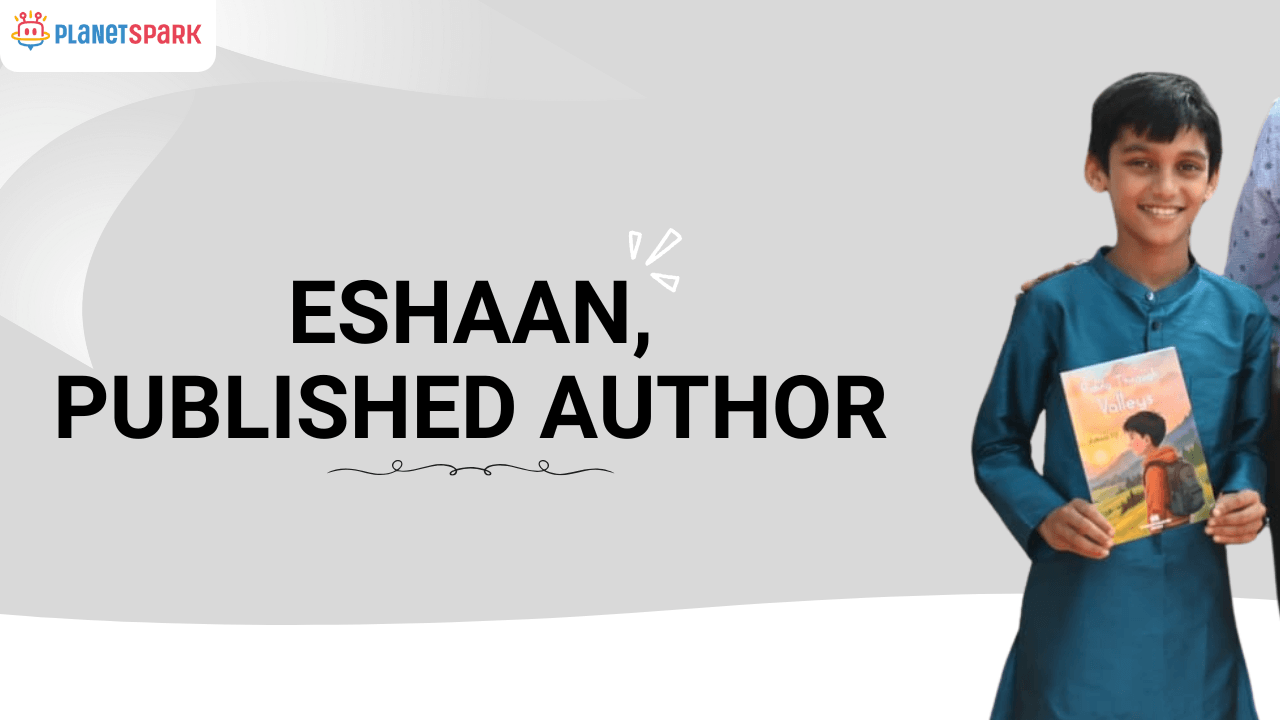
Eshaan proudly became a published author, transforming a simple classroom activity into a beautifully written storybook with PlanetSpark’s expert guidance. His journey boosted both his creativity and confidence.
✨ Want your child’s ideas to turn into real achievements?
Enroll with PlanetSpark today! 🚀
How Does PlanetSpark Help in Creative Writing?
PlanetSpark makes learning fun as easy as we immerse kids in fun, pictures, and game-based learning for kids of all ages. Our online English grammar and writing classes are specifically designed to help kids understand the basics and core concepts, and later apply them in real-world communication. With gamified creative writing courses, your child can practice grammar from beginner to advanced level without feeling pressured or bored.
Here’s what makes PlanetSpark different from other ed-tech platforms:
1. Step-by-step learning process which starts from beginner's writing topics to advanced concepts like writing different tone types in stories, poems, etc., worldbuilding, and many more.
2. More than 800+ interactive practice worksheets and quizzes specially handpicked and designed by industry experts to make grammar and creative writing easy and engaging.
3. Expert certified English teachers with hands-on experience in the teaching industry who can personalise sessions according to the needs of the child.
4. Live, 1:1 interactive classes with teachers and trainers who provide instant feedback and offer two-way engagement through active participation.
5. Curriculum built around real-world situations to make the learning process seem natural and relevant.
6. Learning through games, storytelling, and visual effects makes the child feel that learning is fun and engaging.
7. Follows the latest curriculum for students appearing for board exams, so that they feel confident while giving their exams.
Conclusion: Build Your Confidence in Creative Writing
Tones in literature help to become a strong reader and a better writer as well. You can understand how an author feels or what they have expressed in a particular writing sample. Whether the writing sounds serious, joyful, fearful, or hopeful, you, as a reader, can start to understand the deeper meaning behind the words. Tones shape the emotions in a piece of writing, guide the interpretation, and make the story more powerful and memorable.
As a writer, learning to use tones correctly helps in allowing you to express ideas more clearly and connect emotionally with the readers. Small factors like selection of words, sentence length, and imagery can completely change how your writing feels.
Thus, with the right guidance and regular practice, mastering tones becomes much easier and enjoyable, and that's where PlanetSpark comes in by helping the young learners turn imagination into a fine and confident expression.
Frequently Asked Questions
Tone is the author’s attitude, while mood is the feeling the reader gets. The writer creates the tone, and the tone helps create the mood.
The same sentence can sound polite, angry, or humorous depending on tone. Word choice and punctuation can completely change how a message is understood.
No. Tone is used in emails, speeches, advertisements, essays, and conversations. Every form of communication has a tone.
Students lose marks when the tone does not match the question, audience, or situation. For example, using a casual tone in formal writing.
In spoken communication, tone is shown through voice, pitch, and emphasis, helping listeners understand emotions and intentions.
Yes. Exclamation marks, question marks, and ellipses can make writing sound excited, doubtful, or dramatic.