
Make Your Kid's Annual Function Speech Memorable With PlanetSpark


Table of Contents
- Why Annual Function Speeches Are More Than Just a School Eve
- How Regular Practice Can Improve Annual Function Speech Deli
- Common Public Speaking Challenges Kids Face During Annual Fu
- Why Annual Function Speeches Build Confidence and Personal G
- Annual Function Speech Topics for Kids
- Common Mistakes Kids Make During Annual Function Speeches
- Tips to Overcome Stage Fright
- How PlanetSpark Helps Kids Shine in Annual Function Speeches
- Conclusion
The annual school function is one of the most exciting events in a child’s academic year. It’s a stage where kids get to showcase not just their talents, but also their confidence, clarity, and communication skills. Yet, for many children, delivering a speech in front of teachers, classmates, and parents can be a nerve-wracking experience.
This is where guided training can make a huge difference. Programs like PlanetSpark help children overcome these hurdles with expert-led practice, pronunciation exercises, and interactive public speaking sessions.
In this blog, we’ll explore how you can help your child deliver a memorable annual function speech, tackle common speaking challenges, and prepare with confidence.
Why Annual Function Speeches Are More Than Just a School Event
An annual function speech is not just a requirement of school, it’s a golden opportunity for children to develop essential life skills. Speaking confidently in front of an audience teaches kids how to organize their thoughts, articulate ideas clearly, and express themselves effectively. These are skills that go far beyond the stage, they help in classroom participation, group discussions, and even interviews in the future.
Moreover, delivering a speech at a school event encourages self-confidence, stage presence, and leadership qualities. Children learn to manage nervousness, maintain eye contact, modulate their voice, and engage their audience, all critical aspects of public speaking.
Without proper guidance, many kids may struggle with stage fright, unclear speech, or lack of structure in their delivery. This is where programs like PlanetSpark come in. With expert-led coaching, personalized feedback, and practice exercises, PlanetSpark ensures that kids are not just prepared for their annual function speeches but also gain skills that stay with them for life.
In the next section, we’ll look at the common public speaking challenges children face during annual functions and how to address them effectively.
Help Your Child Speak Clearly, Express Ideas Confidently, and Shine on Stage
Schedule a Demo Now and Start Their Public Speaking Journey!
How Regular Practice Can Improve Annual Function Speech Delivery
Regular practice is the key to building confidence and fluency in any public speaking activity, including annual function speeches. When children practice consistently, they not only memorize their lines, but also develop clarity, rhythm, and stage presence.
Benefits of Regular Practice:
Improves Fluency: Repeated practice helps kids speak smoothly without unnecessary pauses.
Enhances Pronunciation: Kids get familiar with difficult words and sounds, making their speech clearer.
Builds Confidence: Familiarity with the speech content reduces anxiety and nervousness.
Polishes Voice Modulation and Tone: Children learn to emphasize key points and maintain a natural rhythm.
Refines Gestures and Body Language: Practicing in front of mirrors or family members improves stage presence.
Practical Ways to Practice:
Daily Rehearsals: Encourage short daily sessions rather than cramming at the last moment.
Record and Review: Recording speeches allows kids to identify areas of improvement.
Mirror Practice: Helps children observe their expressions and gestures.
Family Audience: Presenting in front of parents or siblings builds real-time confidence.
Common Public Speaking Challenges Kids Face During Annual Functions
| Challenge | Description | Impact on Speech | How PlanetSpark Helps |
|---|---|---|---|
| Stage Fright & Nervousness | Feeling anxious or scared before speaking on stage. | Leads to trembling voice, fidgeting, or forgetting lines. | Guided practice sessions and confidence-building exercises to reduce fear. |
| Mumbling or Unclear Pronunciation | Difficulty articulating words correctly. | Audience may struggle to understand the child. | Pronunciation drills and speech clarity exercises. |
| Forgetting Lines | Losing track of the speech or missing key points. | Breaks the flow and reduces overall impact. | Step-by-step rehearsal techniques and memory-friendly methods. |
| Speaking Too Fast or Too Slow | Uncontrolled pacing during delivery. | Makes it hard for the audience to follow or causes monotony. | Practice sessions focused on pace, pauses, and voice modulation. |
| Monotone Delivery | Speaking without variation in tone or emphasis. | Reduces engagement and fails to hold the audience’s attention. | Interactive exercises on tone, emphasis, and expressive speaking. |
| Lack of Gestures & Body Language | Minimal use of hand movements or facial expressions. | Makes the speech less lively and engaging. | Coaching on gestures, posture, and stage presence. |
| Low Confidence | Shyness or hesitation to speak loudly and clearly. | Limits participation and overall performance. | Confidence-building activities and positive reinforcement. |

Why Annual Function Speeches Build Confidence and Personal Growth
Participating in an annual function speech is more than just reciting lines, it’s a powerful confidence-building exercise that contributes to a child’s overall growth. Standing in front of an audience teaches children how to overcome nervousness, express themselves clearly, and engage listeners effectively.
How Annual Function Speeches Foster Confidence and Growth:
Boosts Self-Esteem: Successfully delivering a speech gives kids a sense of accomplishment and pride.
Enhances Communication Skills: Children learn to articulate ideas, improve vocabulary, and use proper tone and pronunciation.
Teaches Emotional Control: Managing stage fear and nervousness helps children handle stressful situations in the future.
Develops Leadership Skills: Taking the stage encourages initiative, responsibility, and presence.
Encourages Critical Thinking: Preparing a speech helps children organize thoughts logically and express opinions clearly.
By practicing regularly and focusing on clarity, expression, and stage presence, children can excel not only in school events but also in classroom discussions, presentations, and social interactions.
Annual Function Speech Topics for Kids
My School and Its Values
Importance of Discipline in School
My Favourite Teacher
The Value of Friendship
How to Stay Healthy and Fit
Importance of Reading Books
My Favourite Hobby
Why Respecting Elders Is Important
Role of Technology in Our Lives
Importance of Environmental Conservation
The Joy of Helping Others
How to Be a Good Student
My Favourite Festival
The Importance of Teamwork
How Sports Build Character
Learning From Mistakes
My Dream Career
Importance of Honesty
How to Save Water and Electricity
The Power of Positive Thinking
Importance of Creativity in Daily Life
How to Manage Time Effectively
The Role of Music and Arts in Life
Importance of Cleanliness
How Reading Improves Knowledge
Why Learning English Is Important
My Favourite Story or Character
The Importance of Courage
How Travel Broadens Our Mind
The Value of Perseverance
Prepare Your Child to Deliver a Memorable Annual Function Speech With Expert Guidance.
Book a Demo Now and See the Difference!
Common Mistakes Kids Make During Annual Function Speeches
Even the most well-prepared children can make certain mistakes when delivering their annual function speech. Identifying these pitfalls helps parents guide their kids to speak confidently and make a lasting impression.
| Mistake | Why It Happens | Impact on Performance | How to Avoid |
|---|---|---|---|
| Mumbling or Speaking Unclear Words | Nervousness or lack of pronunciation practice | Audience struggles to understand, reducing speech effectiveness | Practice pronunciation, speak slowly, emphasize tricky words |
| Speaking Too Fast or Too Slow | Anxiety or uncertainty about timing | Speech may seem rushed or boring | Time the speech, practice pacing, and pause for emphasis |
| Monotone Delivery | Lack of awareness about tone | Speech sounds dull and disengaging | Practice voice modulation, stress key words, use natural rises and falls |
| Forgetting Lines or Losing Track | Insufficient rehearsal or stage fright | Breaks the flow and reduces confidence | Rehearse in chunks, use cue cards, practice multiple times |
| Ignoring Gestures and Body Language | Focused only on words | Speech appears stiff and less engaging | Encourage expressive gestures, maintain eye contact, stand confidently |
| Overloading with Complicated Words | Trying to impress the audience | May confuse the child or audience | Use simple, clear words; focus on meaning and clarity |
| Reading Entirely From Notes | Fear of forgetting lines | Reduces engagement with audience | Memorize key points, glance at notes only when necessary |
| Overconfidence | Excitement or lack of practice | Speaking too fast, skipping parts, or overacting | Encourage balance: confidence with controlled delivery |
Tips to Overcome Stage Fright
Stage fright is one of the most common challenges kids face during annual function speeches. Helping children manage anxiety ensures they deliver confidently and naturally.
Effective Strategies:
Breathing Exercises: Teach deep, slow breaths to calm nerves before and during the speech.
Mock Presentations: Practice speaking in front of family, friends, or a small audience to simulate the real stage experience.
Visualization Techniques: Encourage kids to imagine a successful speech, picturing themselves speaking confidently and being applauded.
Positive Self-Talk: Help children replace “I can’t do it” thoughts with affirmations like “I am prepared and confident.”
For a comprehensive guide on overcoming stage fright, check out our blog on "Stage Fright in Kids: How to Help Them Speak Bravely"
How to Memorize Your Speech Effectively
Memorization can make a child feel more secure on stage, but the key is to memorize strategically without sounding robotic.
Proven Techniques:
Chunking: Break the speech into smaller sections or paragraphs to learn step by step.
Cue Cards: Use small cards with key points to jog memory without reading the full speech.
Storytelling Techniques: Turn the speech into a story with a beginning, middle, and end for easier recall.
Repetition: Rehearse each section multiple times daily to build confidence and fluency.
Practice Aloud: Speaking the speech out loud helps improve memory, voice clarity, and pacing.
For more tips, check out our blog on "Tips for Kids to Master the Art of Public Speaking"
How PlanetSpark Helps Kids Shine in Annual Function Speeches
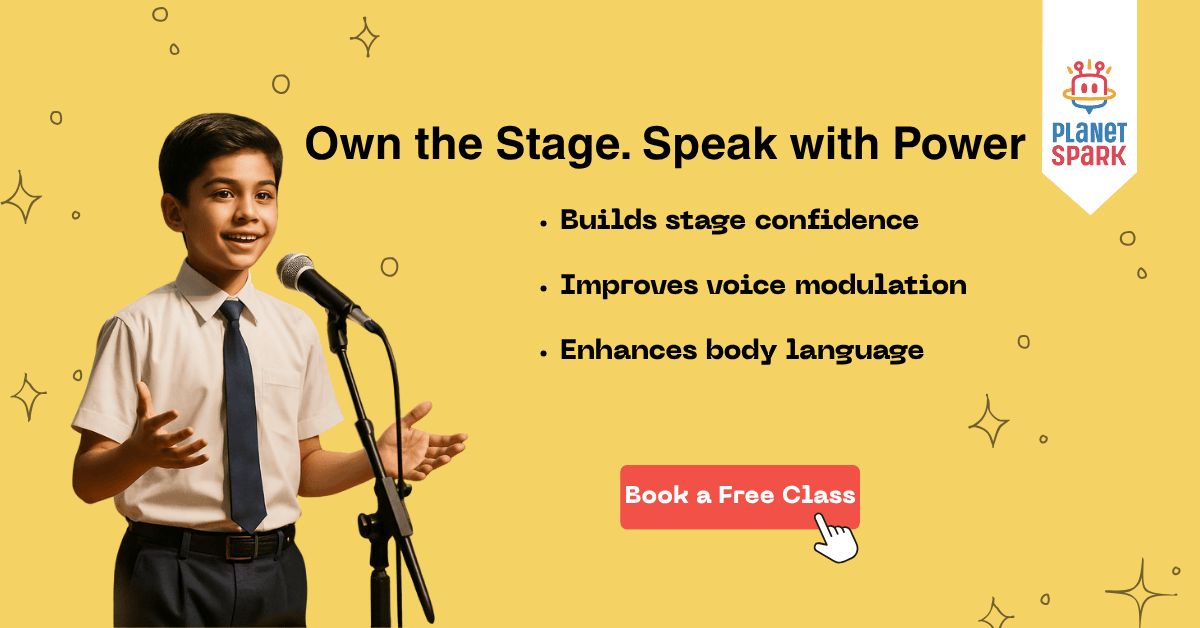
Delivering a confident and engaging speech requires more than memorizing lines, it’s about clear articulation, expressive voice, and stage presence. PlanetSpark’s expert-led programs provide children with the guidance, practice, and feedback they need to excel.
Key Benefits of PlanetSpark for Annual Function Speeches:
Structured Speech Practice: Kids learn to organize their thoughts, craft compelling speeches, and practice effectively.
Pronunciation and Clarity Coaching: Exercises help children speak clearly, avoid mumbling, and pronounce tricky words correctly.
Confidence and Stage Presence: Activities and mock presentations reduce stage fright and boost self-assurance.
Voice Modulation & Expression: Children learn tone variation, emphasis, and expressive delivery to keep the audience engaged.
Interactive and Fun Learning: Sessions include games, exercises, and storytelling techniques that make speech practice enjoyable.
Personalized Feedback: Each child receives guidance tailored to their strengths and areas for improvement, ensuring steady progress.
With PlanetSpark, kids don’t just memorize a speech, they learn to communicate confidently, leaving a lasting impression during their annual function and beyond.
Conclusion
An annual function speech is more than just a school event, it’s an opportunity for children to build confidence, improve communication skills, and develop stage presence. With consistent practice, guidance, and the right techniques, kids can overcome challenges like stage fright, unclear pronunciation, or forgetting lines.
By focusing on clarity, expression, and rehearsal, children don’t just perform well, they grow as confident, articulate, and expressive individuals. Whether it’s through home practice, supportive feedback, or expert coaching, every child has the potential to shine on stage and make their speech memorable.
Frequently Asked Questions
Stage fright is common among kids. Encourage practice at home, mock presentations, deep breathing exercises, and positive self-talk to boost confidence.
For most school events, annual function speeches should be 1–3 minutes for younger kids and 3–5 minutes for older students, keeping it engaging and concise.
Daily short practice sessions of 10–15 minutes are more effective than cramming at the last moment. Frequent practice improves fluency and confidence.
Use chunking techniques, cue cards, storytelling, and repetition. Encourage practice aloud with natural expression rather than rote memorization.
Typical mistakes include mumbling, speaking too fast/slow, monotone delivery, forgetting lines, and poor gestures. Identifying these helps improve performance.