


As students in Class 8, mastering English conjunctions is not only a grammar requirement, but it’s also essential for building better sentences, enhancing writing clarity, and improving communication skills. Whether you’re writing essays, giving speeches, or solving grammar exercises, conjunctions help your language flow smoothly. In this blog, we’ll explore everything you need to know about conjunctions for Class 8 types, rules, examples, exercises, and expert tips.
But grammar doesn’t have to be boring! At PlanetSpark, we make learning grammar interactive, exciting, and effective. Through live expert-led classes, AI-powered feedback, and fun writing challenges, students not only understand the rules of grammar but also apply them confidently in real-life speaking and writing.
Let’s begin!

Why are Conjunctions important in English Grammar?
Conjunctions help you construct rich, elegant statements without the choppiness that several short sentences might cause. We can't describe every complex topic in a sequence of short, simple words without conjunctions. Conjunctions are words or groups of words that connect two or more sentences or phrases. They are often described as joining words since it combines two or more sentences and creates continuity and meaning for those sentences.
Examples:
- She usually eats at home because she likes cooking.
- We listened eagerly, for he brought news about our families.
- They can listen to music provided they don't disturb anybody.
For example, He likes playing. He didn't clean up after coming home. (Without conjunction)
He likes playing; however, he didn't clean up after coming home. (With conjunction)
How to Identify a Conjunction?
Conjunctions are joining words that connect two or more words, phrases, or clauses in a sentence. Identifying them becomes easy when you understand their role in connecting ideas.
Here are some simple ways to identify conjunctions in a sentence:
- Check if the word is joining two ideas, words, or clauses.
- See if the sentence still makes complete sense without that word.
- Look for relationships like reason, contrast, choice, condition, or time.
Examples:
- I stayed at home because it was raining.
(Shows reason) - You can have tea or coffee.
(Shows choice) - She studied hard, but she could not score well.
(Shows contrast)
By practicing sentence formation, students can quickly identify conjunctions and improve their grammar accuracy.
Strengthen your grammar skills with PlanetSpark’s expert-led English classes.
Types of Conjunction
Conjunctions are subdivided into 3 types depending on their usage. They are as follows -
- Subordinating Conjunction Words
- Correlative Conjunction Words
- Coordinating Conjunction Words
- Conjunctive Adverbs
1. Correlative Conjunction for Class 8
These are the types of conjunctions that work in pairs to combine sentences and phrases.
Examples:
- The company deals in both hardware and software.
- She is not only beautiful but also smart.
- I loved both the party and the guests.
Some of the most commonly used Correlative Conjunctions are as follows:
|
Correlative Conjunctions |
Examples |
|
Whether/or |
Do you care whether we have noodles or rice for dinner? |
|
Both/and |
He has both Physics and Chemistry Textbooks. |
|
Such/that |
She was such a smart girl that she passed the exams easily. |
|
No sooner/than |
We had no sooner gone to bed than the phone rang. |
|
As/As |
His scorecard was not as bad as I thought. |
|
Rather/than |
He would rather play than study. |
|
Neither /nor |
He is neither rich nor too poor to attend college. |
|
Hardly /when |
Hardly had he reached the stop when the bus started. |
|
Not only/But also |
You should not only study complex, but also fundamental English concepts. |
|
Either /or |
Either do your homework now or do it later. |
2. Coordinating Conjunction for Class 8
In a sentence, you can use coordinating conjunctions to connect words, sentences, and clauses of the same grammatical rank: or, so, nor, for, and, yet, and but are the most frequent coordinating conjunctions; you can memorize them using the mnemonic device 'FANBOYS.'
Examples:
- I am a wife and a mother
- He didn't call his friends or his father
- I bought a pencil but forgot to buy a pen
Some of the most commonly used Coordinating Conjunctions are as follows
|
Coordinating Conjunctions |
Examples |
|
And |
He loves cooking and singing |
|
Yet |
The students worked hard yet failed the exams |
|
But |
The teacher tried to make the student understand but failed. |
|
Or |
Come with us or stay at home. |
|
Nor |
I have never talked to that guy, nor do I want to do it. |
|
So |
He was sick, so he skipped office. |
|
For |
He loves his school, for he loves spending time with friends. |

3. Subordinating Conjunction for Class 8
It connects the independent and dependent adverb clauses. To put it another way, rather than connecting two independent sentences of equal weight, The employment of subordinating conjunction words lowers the importance of one sentence over another.
Examples:
- I read the newspaper because it provides information.
- The train reached the station before us.
- We went to our seats as soon as the teacher arrived.
Some of the most commonly used Subordinating Conjunctions are as follows
|
Subordinating Conjunctions |
Examples |
|
As if |
He behaved as if he were a judge. |
|
As much as |
He likes cooking as much as singing. |
|
Because |
Blake cleaned the floor because he soiled it. |
|
Until |
Sam waited until his mom returned from work. |
|
Before |
Jessica completed his tasks before the scheduled time. |
|
If only |
If only I had enough time to complete the paper. |
|
Once |
Once I pick you up from school, we can go to the restaurant. |
|
Than |
The tree was alive for more than 300 years. |
|
Whenever |
The kids fed the strays whenever they had time. |
|
While |
Bhanu washed her clothes while her mother was gone. |
You can check out other English grammar lessons on Planet Spark and improve your English literacy.
4. Conjunctive Adverbs for Class 8
They're also known as transition words. They can connect sentences, words, and phrases in the same way that words from the regular conjunction list can. Examples of this type are; furthermore, meanwhile, as a result, and others.
|
Conjunctive Adverbs |
Examples |
|
Consequently |
He didn't do his homework. Consequently, he skipped school. |
|
Furthermore |
I have to practice tennis. Furthermore, I have to complete my studies on time. |
|
Indeed |
His cousin is indeed beautiful |
|
Hence |
He broke his toys; hence, he has been punished. |
|
Likewise |
The painter has to paint the doors. Likewise, he has to paint the walls. |
|
Meanwhile |
My mother was late, so in the meanwhile, I cooked for her. |
|
However, |
He paid for the tests; however, he is yet to start studying. |
Difference Between Types of Conjunctions
Understanding the difference between conjunction types helps students use them correctly while writing and speaking.
| Type | Function | Example |
|---|---|---|
| Coordinating Conjunction | Joins equal words, phrases, or clauses | I was tired, but I finished my work. |
| Subordinating Conjunction | Connects dependent and independent clauses | I stayed home because it was raining. |
| Correlative Conjunction | Works in pairs to connect equal elements | Either you come now or stay home. |
| Conjunctive Adverbs | Connects ideas and shows transitions | He was late; however, he completed the work. |
Learning these differences makes sentence construction easier and more effective.
Want to make grammar easy and fun?
FANBOYS: Easy Trick to Remember Coordinating Conjunctions
FANBOYS is a simple acronym used to remember the seven coordinating conjunctions in English grammar.
| Letter | Conjunction | Function |
|---|---|---|
| F | For | Shows reason |
| A | And | Adds information |
| N | Nor | Shows a negative choice |
| B | But | Shows contrast |
| O | Or | Shows choice |
| Y | Yet | Shows unexpected contrast |
| S | So | Shows result |
Example:
I wanted to go out, but it started raining.
Memorizing FANBOYS helps students quickly identify and use coordinating conjunctions correctly.
Rules of Conjunction in English Grammar
- Rule 1 - To make a comparison, the conjunctions so/as and as/as are utilized. However, as/as can be used in all these negative and affirmative situations, but so/as is only used in negative statements.
For example, as you behave, so you have to bear.
- Rule 2 - The conjunction 'and' always comes after the conjunction 'both'
For example, she is both pretty and intelligent.
- Rule 3 - Lest is considered a negative word that is always followed by should or the verb's initial form. Keep in mind that the words (not, no, and never) should not be used with the word lest.
Example - Dance carefully lest she should fall.
- Rule 4 - In negative or interrogative statements, the connective doubt/doubtful is preceded by that, but in affirmative sentences, it is followed by if and whether.
Example - I don't doubt that he is hardworking.
- Rule 5 - 'Unless' and 'Until' are terms that have a negative connotation. 'Unless' is focused on action, whereas Until is focused on time. Remember to avoid using the words (never, not, " or " no) in clauses with till and until clauses.
Example - He can win unless he practices.
- Rule 6 - When there are more than two people or things involved, (none of/one of) is used rather than (neither/either).
Example - One of the employees complained to the manager.
- Rule 7 - A comma(,) or yet is usually used after the conjunction Though/Although.
Example - Though she put in a lot of effort, she cannot pass the test.
- Rule 8 - Use the appropriate pair of conjunctions at all times. Not only with but also with others
Example - No sooner had he finished his speech than the audience applauded.
- Rule 9 - Than comes after the conjunction Rather/Other.
Example - You have no other option than to go back to school.
Exam Tips for Class 8
Conjunction questions are common in school grammar tests and exams. Here are some useful tips to score better:
- Learn the different types of conjunctions and their uses.
- Memorize common correlative pairs like either/or and neither/nor.
- Practice sentence joining exercises regularly.
- Understand clause relationships before choosing a conjunction.
- Revise FANBOYS for coordinating conjunctions.
- Read sample sentences to understand practical usage.
Regular practice can help improve grammar accuracy and boost confidence in exams.
Practice Questions of Conjunction for Class 8 online
- None of the employees complained about the theft.
- Many boys and girls went to the show.
- Answer the questions first before you go to the next.
- Not only have I completed my Physics homework, but I have also completed my history essay.
- Since Kenny was short, he did not apply to the army.
- Omkar lost the match, but he played well.
- Before she left, she made sure the room was clean.
- Even though it rained a lot, we enjoyed our holiday.
- We can meet wherever you want.
- Please don't disturb me while I am working.
- You don't need to go unless you want to.
- Sanjana and John have come to the party.
Master conjunctions, sentence-building, and grammar rules with personalized learning at PlanetSpark.
Quick Revision
Here’s a quick summary of what you learned about conjunctions:
- Conjunctions are words that join words, phrases, clauses, or sentences.
- They improve sentence flow and make writing smoother.
- The main types of conjunctions are coordinating, subordinating, and correlative conjunctions.
- Conjunctive adverbs also help connect ideas in sentences.
- FANBOYS helps remember coordinating conjunctions easily.
- Correct usage of conjunctions improves writing and speaking skills.
Keep practicing to master conjunctions and strengthen your grammar foundation.
Why Choose PlanetSpark for English Grammar?
Learning grammar becomes easier and more effective when students get the right guidance and practice. At PlanetSpark, students learn grammar through interactive live sessions, engaging activities, and expert mentoring.
Here’s why PlanetSpark helps students improve faster:
- Live one-on-one grammar classes with expert teachers
- Practical grammar exercises and writing practice
- Personalized feedback for faster improvement
- Fun activities, quizzes, and interactive learning methods
- Confidence-building through speaking and writing sessions
- AI-powered learning support for better progress tracking
PlanetSpark helps students build strong grammar foundations and become confident communicators.
Build better grammar habits with expert guidance and interactive learning.
Wrapping Up
Conjunctions are an important part of English grammar because they help connect ideas clearly and effectively. From joining simple words to forming complex sentences, conjunctions make communication smooth and meaningful.
For Class 8 students, understanding the different types of conjunctions, their rules, and their practical use can improve both writing and speaking skills. With regular practice and the right guidance, mastering conjunctions becomes much easier.
Keep practicing sentence-building exercises and grammar activities to strengthen your understanding and use conjunctions confidently in everyday communication.
Reader Can Also Read
Grammar Curriculum
What Our Students Say About PlanetSpark

Parents of Oviya Singh
Oviya Singh, a PlanetSpark student, spoke about ‘Soil Conservation’ in her TEDxTalk by addressing the status quo and questioning, ‘Is the world running out of food?’
Mohd Rafiq
Thanks to PlanetSpark and his teacher’s guidance, Ayan now speaks confidently, participates actively, and has published his first storybook.

Mr. & Mrs. Bipin Patel
PlanetSpark helped my son Ahan find his voice and confidence. From stage speaking to being published in Pearls of Poetry, his growth has been remarkable.

Mrs. Sushila Thapa
PlanetSpark’s Public Speaking program has boosted Sristi’s confidence and clarity, her school performance speaks for itself.

Rajiv Sharma
My daughter has transformed from a shy kid to a confident speaker in just 6 months. The personalized attention and structured curriculum made all the difference.
Parents of Oviya Singh
Oviya Singh, a PlanetSpark student, spoke about ‘Soil Conservation’ in her TEDxTalk by addressing the status quo and questioning, ‘Is the world running out of food?’
Mohd Rafiq
Thanks to PlanetSpark and his teacher’s guidance, Ayan now speaks confidently, participates actively, and has published his first storybook.
Mr. & Mrs. Bipin Patel
PlanetSpark helped my son Ahan find his voice and confidence. From stage speaking to being published in Pearls of Poetry, his growth has been remarkable.
Mrs. Sushila Thapa
PlanetSpark’s Public Speaking program has boosted Sristi’s confidence and clarity, her school performance speaks for itself.
Rajiv Sharma
My daughter has transformed from a shy kid to a confident speaker in just 6 months. The personalized attention and structured curriculum made all the difference.
Practice with Our Worksheets
Class 5 Quotation Marks Dialogue English Grammar Worksheet
Practice using quotation marks correctly while writing dialogues and conversations.
Class 3 Grammar Worksheet on Subject–Verb Agreement
Match subjects and verbs correctly in sentences with this simple worksheet.
Class 4 Multiple Meaning Words English Worksheet
Discover words with multiple meanings using clear sentence examples.
KG English Worksheet on Colours and Shapes
Fun activities to help KG kids learn colours and shapes with simple examples.
Class 4 Grammar Worksheet on Adding details
Learn to expand ideas by adding descriptive words and clear information.
Class 2 English Worksheet for Sentence Writing
Build writing skills with guided sentence-building tasks suited for young learners.

Class 3 English Worksheet on Concrete and Abstract Nouns
Learn the difference between concrete and abstract nouns with activities designed to strengthen grammar concepts in young Class 3 learners.

Class 2 English Worksheet on Collective Nouns
Explore collective nouns for groups of animals, people, and things.
Class 5 Quotation Marks Dialogue English Grammar Worksheet
Practice using quotation marks correctly while writing dialogues and conversations.
Class 3 Grammar Worksheet on Subject–Verb Agreement
Match subjects and verbs correctly in sentences with this simple worksheet.
Class 4 Multiple Meaning Words English Worksheet
Discover words with multiple meanings using clear sentence examples.
KG English Worksheet on Colours and Shapes
Fun activities to help KG kids learn colours and shapes with simple examples.
Class 4 Grammar Worksheet on Adding details
Learn to expand ideas by adding descriptive words and clear information.
Class 2 English Worksheet for Sentence Writing
Build writing skills with guided sentence-building tasks suited for young learners.
Class 3 English Worksheet on Concrete and Abstract Nouns
Learn the difference between concrete and abstract nouns with activities designed to strengthen grammar concepts in young Class 3 learners.
Class 2 English Worksheet on Collective Nouns
Explore collective nouns for groups of animals, people, and things.
Why Thousands of Parents Trust PlanetSpark
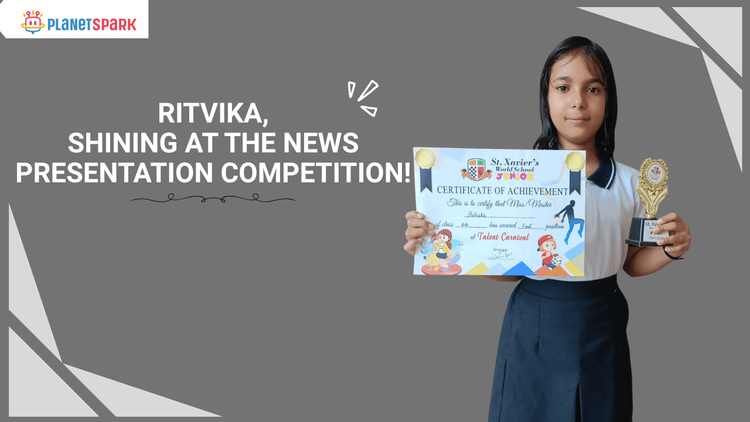
Ritvika (News Presentation Competition)
Ritvika has achieved a milestone in News Presentation! From the PlanetSpark classroom to the spotlight at the News Presentation Competition.
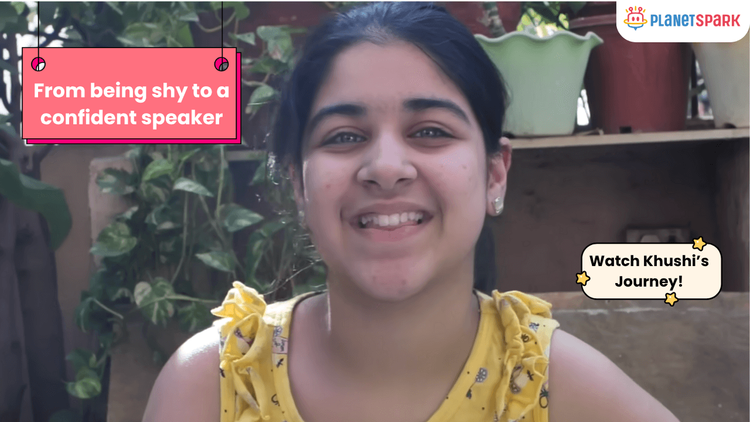
Khushi Bhatia, 10 Years
Khushi transformed from being a shy to a confident speaker with PlanetSpark!
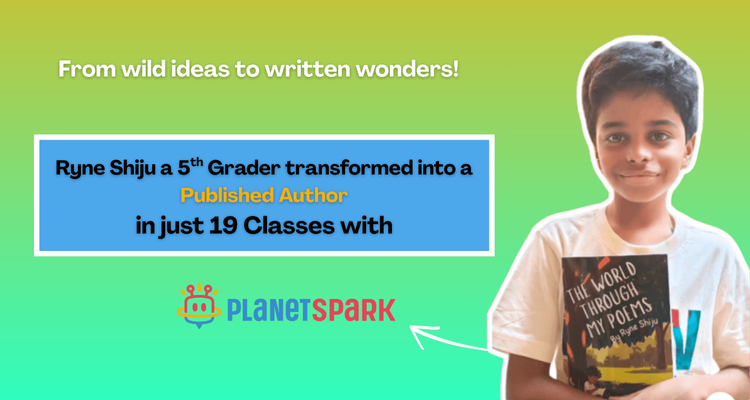
Ryne Shiju (Published Author)
Ryne Shiju, a bright PlanetSpark star, has turned imagination into inspiration becoming a published author whose words now empower and inspire.

Muskaan (SpellBee International Participant)
We are beyond proud of Muskaan from PlanetSpark, who showcased her spelling brilliance at the SpellBee International Programme.
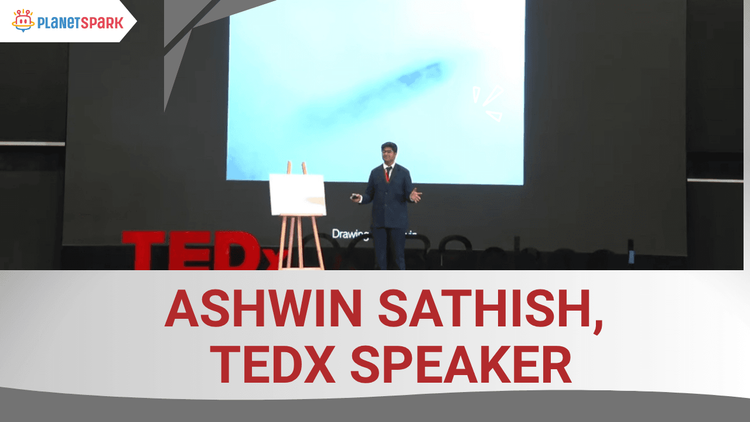
Ashwin Sathish (TEDx Speaker)
Ashwin Sathish, Grade 8 from New Delhi, stood tall as a TEDx Speaker, sparking conversations that truly matter. From classroom confidence to commanding a global stage, his journey reflects the power of voice, vision, and courage.

Eshaan (Published Author)
Eshaan has officially became a published author, turning classroom activity into a captivating storybook.
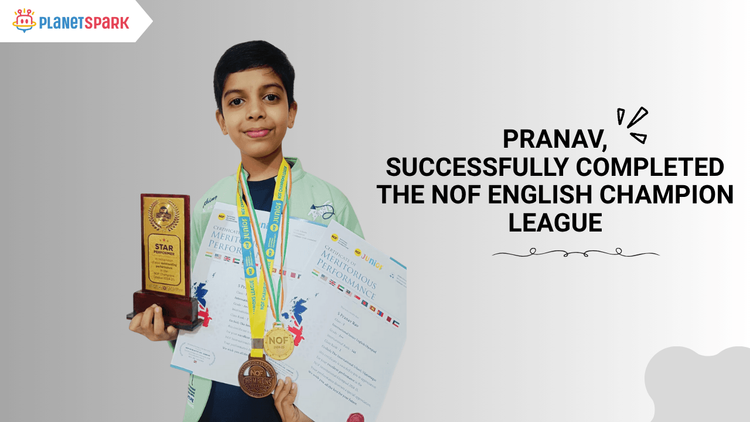
Pranav (NOF English Champion League)
Pranav, a Grade 3 star, has successfully completed the NOF English Champion League, showcasing his brilliance in Public Speaking and Creative Writing.

Ovia Singh (TEDx Speaker)
Oviya Singh from PlanetSpark challenged the status quo in her TEDx Talk, asking, ‘Is the world running out of food?’ as she highlighted the importance of soil conservation.
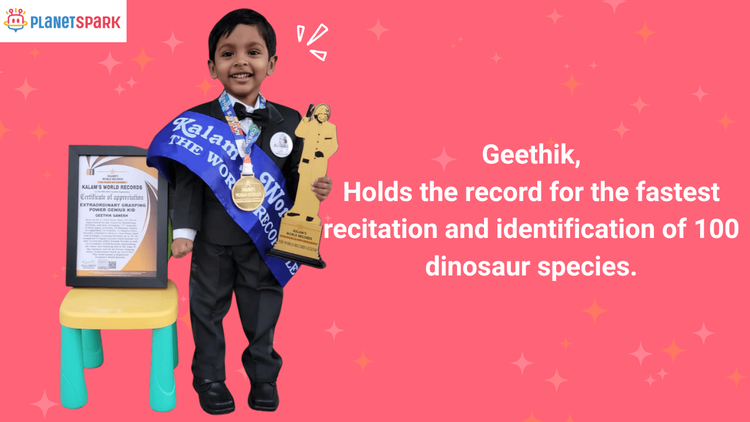
Geethik (Fastest Recitation)
Geethik’s PlanetSpark-sharpened speaking skills helped him set a 100-dinosaur recitation record.
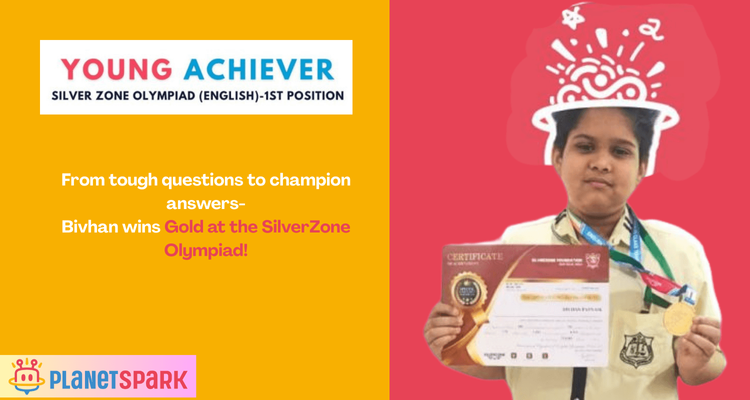
Bivhan Patnaik (SilverZone Olympiad)
Bivhan, in just Grade 4, wins Gold at the SilverZone Olympiad, a true symbol of brilliance, focus, and PlanetSpark-guided success.

Advaith Gupta (SpellBee International)
Advaith Gupta – Spelling His Way to Global Recognition! From mastering vocabulary to shining at SpellBee International, Advaith creates remarkable achievements.
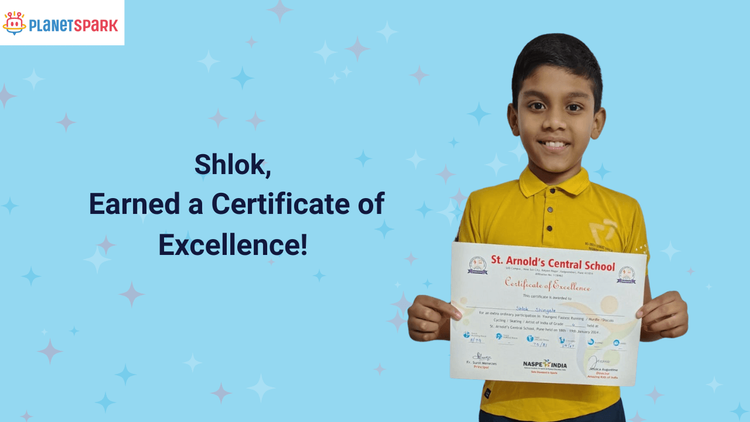
Shlok (certificate of excellence)
Earned a Certificate of Excellence, showcasing his growing confidence and skills nurtured at PlanetSpark.
Ovia Singh, 11 Years
Oviya Singh from PlanetSpark challenged the status quo in her TEDx Talk, asking, ‘Is the world running out of food?’ as she highlighted the importance of soil conservation.
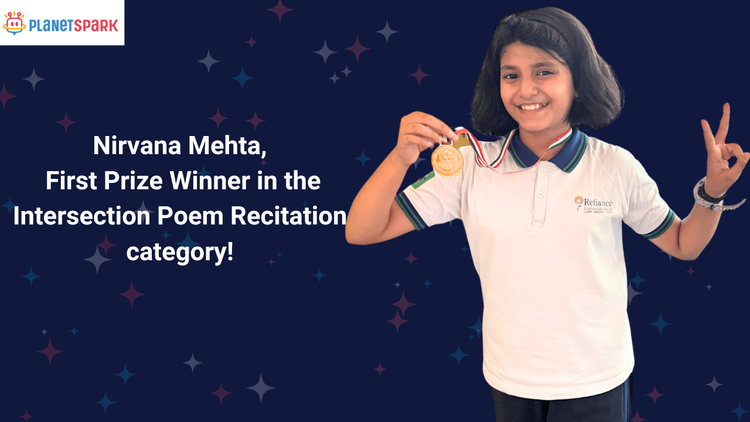
Nirvana Mehta (Wom Poem Recitation)
First Prize Winner in the Intersection Poem Recitation category
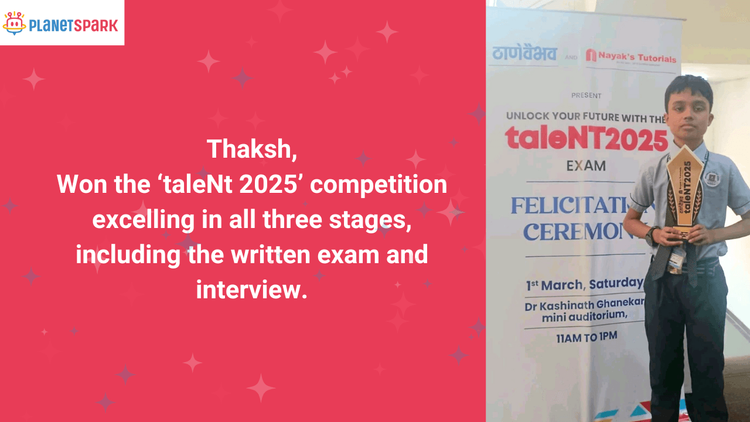
Thaksh (Won the ‘taleNt 2025’ competition)
Thaksh, won the ‘taleNt 2025’ competition in Thane after excelling in all three stages, including the written exam and interview.
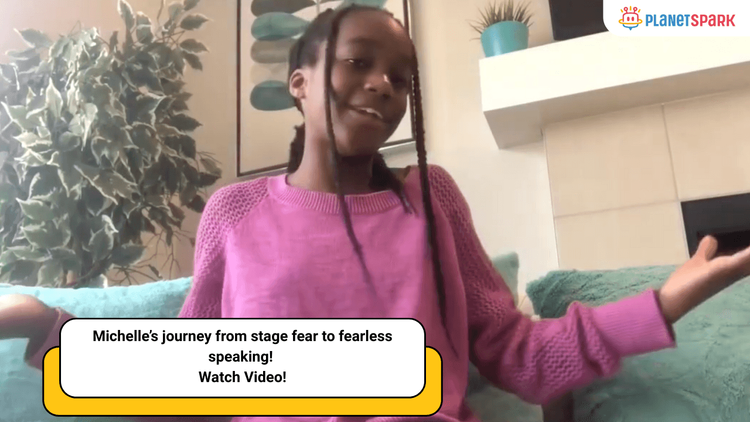
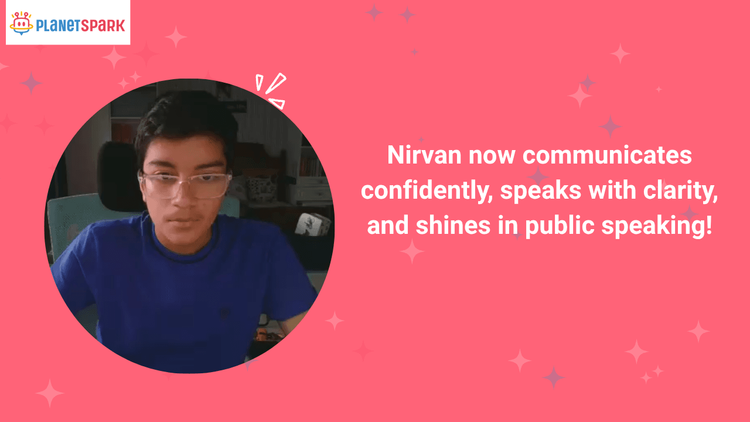
Nirvaan, Grade 9
Nirvan now communicates confidently, speaks with clarity, and shines in public speaking!
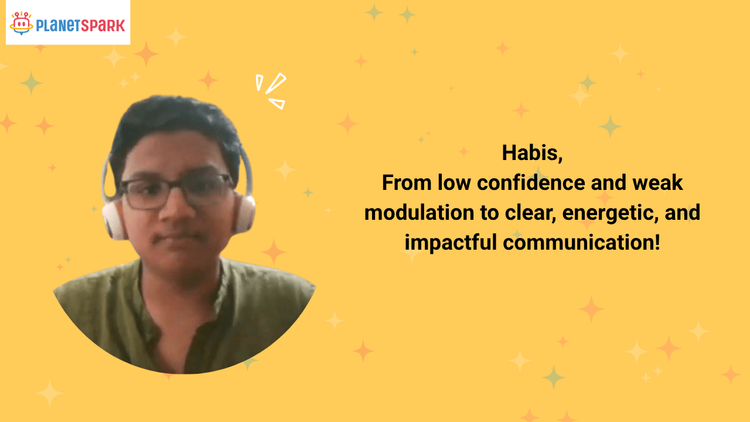
Habis, Grade 9
Meet Habis — once a shy speaker, now delivering every message with clarity, confidence, and strong stage presence.

Prathmesh (Got 3rd Prize in MUN)
Secured Third Prize at a Model United Nations event, reflecting his strong communication and critical thinking skills built at PlanetSpark.
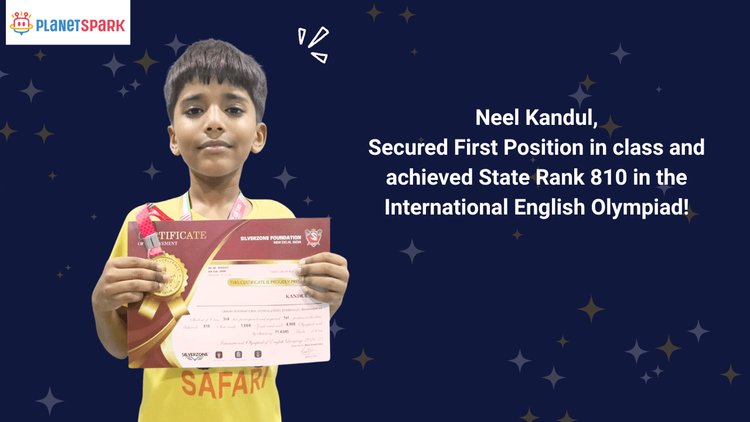
Neel Kandul, First Position in class and State Rank 810 in the International Olympiad of English Language.
First Position in class and State Rank 810 in the International Olympiad of English Language.
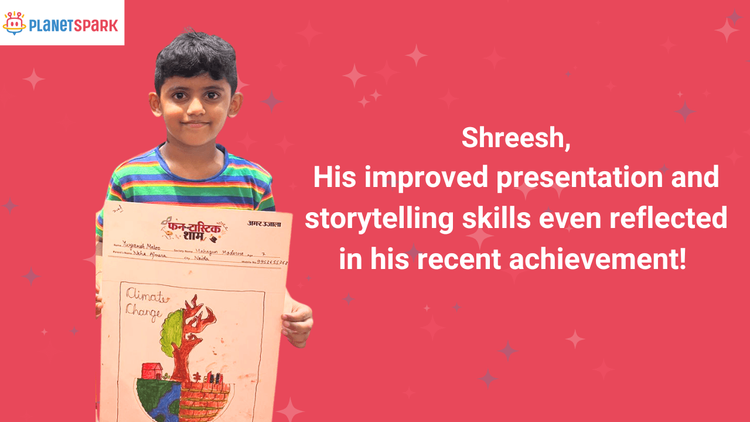
Shreesh
His improved presentation and storytelling skills even reflected in his recent achievement — winning second place in the Junior Category of a drawing competition on ‘Climate Change’ organized by the Amar Ujala team.
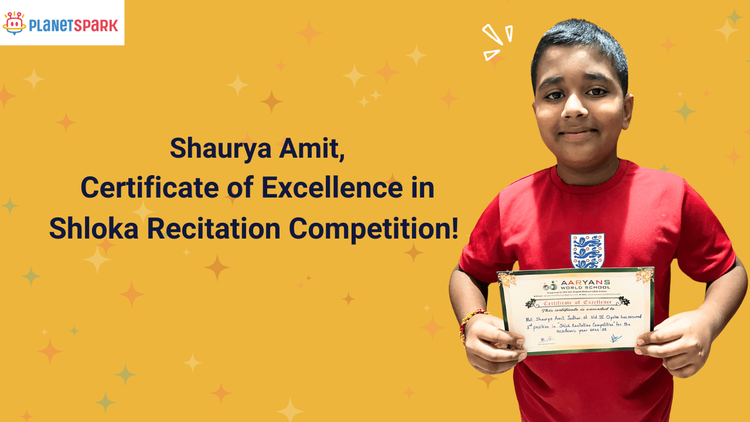
Shaurya Amit (Certificate of Excellence)
Certificate of Excellence in Shloka Recitation Competition

Manvik, 10 Years
Manvik Kumar, a student at PlanetSpark shares his story of becoming a confident Public Speaker.
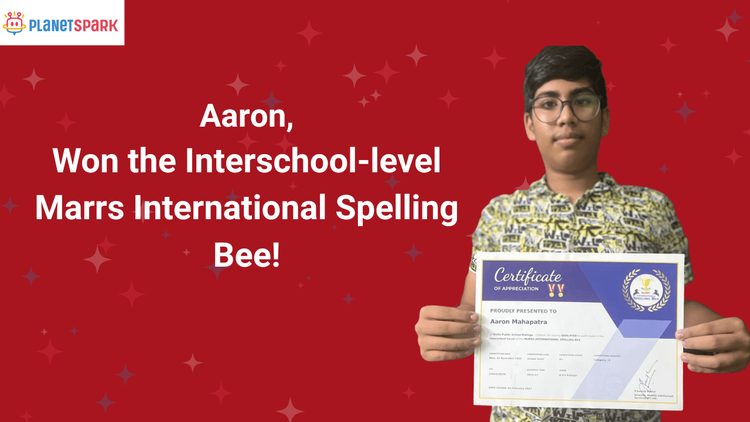
Aaron, International Spelling Bee Winner
Won at the Interschool-level Marrs International Spelling Bee, showcasing strong language skills and consistent PlanetSpark-driven growth.
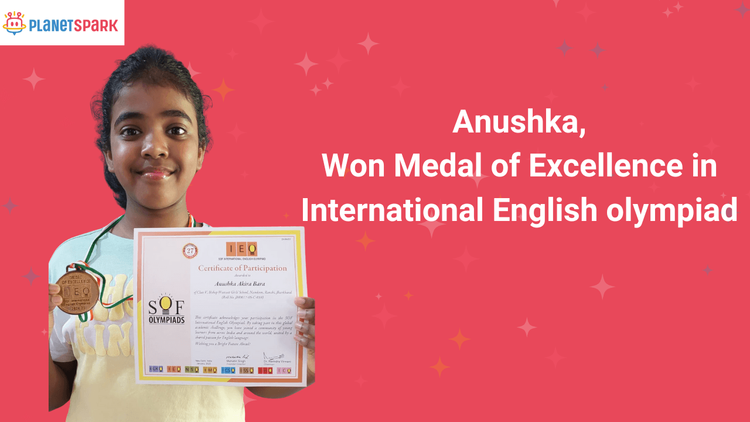
Anushka, Won Medal of Excellence in International English olympiad
Anushka won medal of excellence in International English olympiad. She scored sixth position in her school in olympiad.
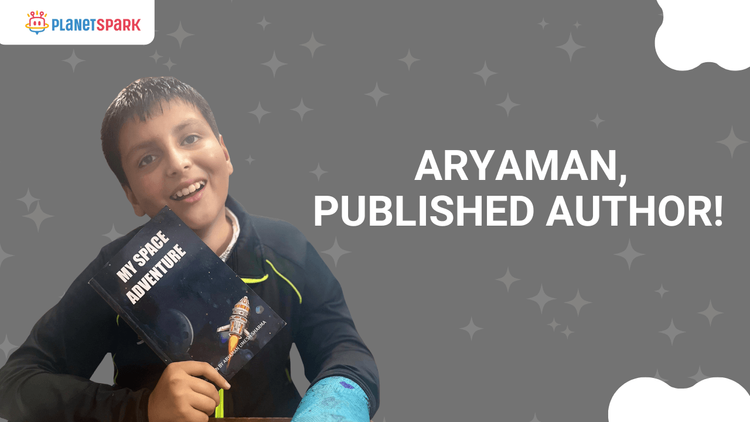
Aryaman, Published Author
Aaryaman became a published author, reflecting his creativity, communication skills, and confidence nurtured at PlanetSpark.
Frequently Asked Questions
What is FANBOYS?
+A. FANBOYS is an acronym for 'for', and, nor, but, or, yet, and so. This acronym is used for coordinating conjunction.
What are the most commonly used conjunctions?
+The most commonly used conjunction in the English language is 'and', 'or' and 'but'.
Why are Conjunctions important?
+Conjunctions are important in the English language as it helps in expressing complex expressions easily. It helps in combining sentences and phrases.
What are the 4 types of Conjunctions?
+The 4 types of Conjunctions are as follows:
What are paired conjunctions?
+Paired conjunctions are words that are used together in sentences that showcase alternatives or make a point. Examples of paired conjunctions include not only… but also, neither…nor, either…or and others.