
Story in English for Class 6 | Learn & Write Better


Every child loves a good story, one that makes them imagine, dream, and think. For Class 6 students, learning to write a Story in English is more than completing an exam question; it’s a chance to build creativity, expression, and confidence in communication. Story writing helps children explore ideas, learn sequencing, understand character emotions, and express thoughts clearly.
In the world of academics, a well-written story shows originality and structure. But beyond exams, storytelling builds imagination, vocabulary, empathy, and even leadership. Stories shape the way children understand the world, and mastering story writing at this age sets a strong base for creative growth.
For Class 6 learners, writing a Story in English also teaches them how to create a beginning, middle, and end. They learn how to build tension, create a problem, solve it, and end with a meaningful story moral. Whether it’s a story about animals, adventures, honesty, friendship, or courage, children learn to put their thoughts into a clear and engaging narrative.
This skill doesn’t develop overnight. Students need guidance, practice, and real examples to learn how to structure their stories well. That is exactly why this blog has been created: to give Class 6 students the right foundation for story writing through simple techniques and easy examples.
Main Points for Writing a Story
Before writing a Story in English, Class 6 students must understand the most important elements. A story is not just a few sentences put together; it is a complete journey with characters, a setting, a problem, events, and a conclusion. When these things come together naturally, the story becomes interesting, meaningful, and memorable.
Here are the essential points students should follow:
1. The Setting
This tells the reader where and when the story takes place.
Examples:
A forest early in the morning
A school classroom during a thunderstorm
A mountain village during winter
A clear setting helps the reader imagine the world of the story.
2. Characters
Characters are the people, animals, or creatures in the story.
For Class 6, it is best to keep characters simple and easy to understand.
Examples:
A brave girl
A clever fox
A hardworking boy
A mischievous monkey
Characters drive the story forward. Their feelings, actions, and problems make the story meaningful.
3. The Problem
A story becomes interesting only when something unexpected happens.
This problem creates curiosity and keeps the reader engaged.
Examples:
A lost puppy
A broken bicycle before a race
A friend who needs help
An incomplete treasure map
Without a problem, the story feels empty.
4. The Rising Action
This is where the story grows more interesting.
Students add small events that build suspense and show how characters react.
5. The Solution
Every story must end with the problem being solved.
For Class 6 students, the solution should be simple, positive, and realistic.
6. The Story Moral
Stories become meaningful when they teach something valuable.
This is where a story with moral becomes important.
Popular morals include:
Honesty is the best policy.
Hard work always pays off.
Kindness can change everything.
Courage makes us strong.
Writing a story with a clear moral helps students think about values and lessons learned.
Want your child to master story writing?
Model of a Story
A model story helps Class 6 students see how all elements come together: characters, setting, problem, and moral. Here’s a simple yet engaging Story in English to use as a reference:
Model Story: The Lost Key
Riya was a cheerful Class 6 student who lived in a small and beautiful town. One sunny afternoon, her teacher asked her to lock the classroom before leaving for home. Riya took the key carefully and put it inside her pencil box. But on her way home, she stopped at the park to play with her friends.
After reaching home, she suddenly remembered the key. She opened her pencil box, but the key was missing! Riya panicked. “What will my teacher say?” she thought. She rushed back to the park and searched the bench, the grass, even the playground slide, but the key was nowhere to be found.
Feeling helpless, she sat down to think. Then she remembered stopping at the ice-cream cart. Maybe it fell there! She ran quickly and asked the ice-cream seller if he had seen a key around. The kind man smiled and took out a tiny silver key from his pocket. “A girl dropped this earlier,” he said.
Riya thanked him happily and ran home. She promised herself she would be more careful next time. The next morning, she returned the key to her teacher and felt proud of her honesty and responsibility.
Moral: Responsibility makes us trustworthy.
Strengthen your child’s storytelling skills with expert Creative Writing classes!
Understanding Story in English Through Morals
A Story in English for Class 6 becomes truly impactful when it carries a moral. Morals guide young learners to think beyond the storyline; they absorb values, perspectives, and lessons that shape character and creativity. When students read or write a story with moral, they understand how actions lead to outcomes, how choices shape journeys, and how characters evolve.
Morals also bring structure. When children know the lesson they want to convey, they can plan the plot better. This simplifies story writing and strengthens clarity, especially for Class 6 students still developing narrative skills.
Examples of Story With Moral for Class 6
Story: The Proud Pine Tree (Short Model)
Once upon a time, in a dense forest, a tall Pine Tree stood beside a small, leafy Bush. The Pine Tree always made fun of the Bush for being tiny and weak.
One day, a strong storm hit the forest. The Pine Tree, unable to bend, broke and fell with a loud crash. But the Bush bowed low and survived the storm.
Moral: Pride leads to downfall. Humility helps you survive.
Story: The Talking Pebble
A young boy named Aarav picked up a smooth pebble from the riverside. To his surprise, the pebble spoke and said it had magical powers. Aarav became excited but greedy; he asked the pebble for too many things at once. The pebble lost its glow and stopped working.
Moral: Greed destroys what you already have.
Don’t let your child miss the chance to master story writing!
Writing Your Own Story in English
After exploring examples, it’s time for students to create their own story in English. This is where imagination meets structure. Many Class 6 learners know what they want to write—but struggle with how to begin.
To make story-writing simple and exciting, students can follow a creative pattern:
1. Choose a Theme or Moral
Everything becomes easier when a student knows the lesson they want the reader to learn.
Examples:
Honesty is the best policy
Hard work leads to success
Kindness always wins
Teamwork makes tasks easier
2. Create Relatable Characters
Characters for Class 6 stories should be simple yet expressive.
Examples:
A wise grandmother
A naughty dog
A confident girl saving her village
A robot that learns emotions
3. Build the Setting
A good story in English lets readers imagine the world clearly. Students should describe:
Time (morning, night, winter, festival time)
Place (village, forest, classroom, spaceship)
4. Add Conflict and Resolution
A story becomes engaging when something goes wrong, and the hero must fix it.
Examples:
A lost treasure map
A secret message
A natural disaster
A misunderstanding between friends
Finally, the resolution ties the plot to the story moral naturally.
Sample Own Story Starter for Students
Here’s a simple starter to inspire Class 6 students:
“Ria loved painting more than anything. But when her art competition came closer, she began to doubt herself. One day, something unexpected happened…”
Students can continue this by adding:
A mentor
A surprising twist
A personal realisation
A moral like “Believe in yourself”
Give your child the power to write original, impressive stories!
How PlanetSpark Builds Strong Story Writing Skills
PlanetSpark is built for young creators, especially Class 6 students who are exploring storytelling with curiosity and imagination. The focus isn’t on memorising pre-written stories. Instead, the goal is to help students think, imagine, feel, and express creatively.
Why Class 6 Students Love PlanetSpark Creative Writing
Genre-Focused Curriculum: Covers diverse forms like stories, poems, essays, reviews, and persuasive letters to build versatile writing skills.
Framework-Based Learning: Students master story arcs, the S.T.O.R.Y structure, 5W1H method, and the PEEL technique for structured writing.
Writing and Speaking Integration: Learners present their written pieces to strengthen expression and storytelling confidence.
Real-Time Editing: Classes emphasize rewriting and refinement through peer reviews and teacher feedback.
Publishing Opportunities: Students can feature their work on PlanetSpark’s blog, e-magazine, or co-authored anthologies for recognition.
Creativity Boosters: Writing prompts, imagination games, and story dice activities nurture originality and creative thinking.
PlanetSpark ensures that the craft of writing becomes a joyful, skill-building habit, not a stressful school assignment.
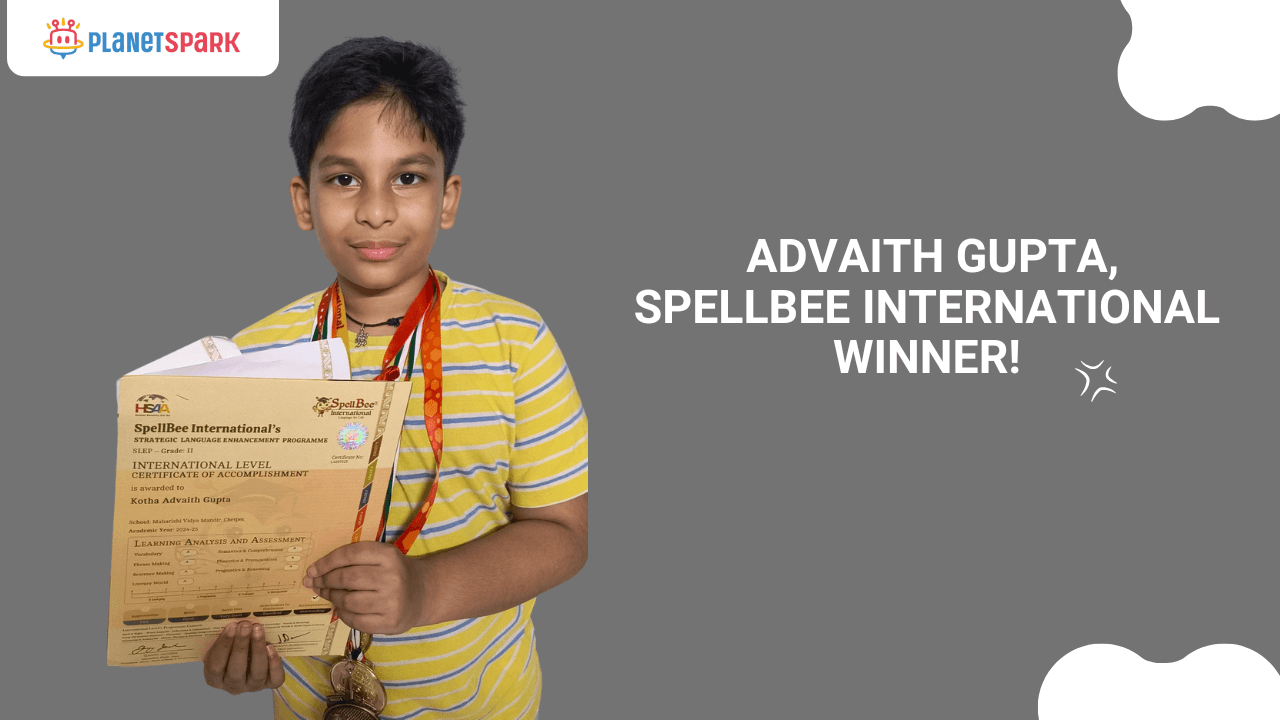
Shining at SpellBee International with Confidence & Creativity (Subtitle)
Success stories inspire students, and Advaith’s story is one of determination, practice, and confidence.
Advaith Gupta, a bright and enthusiastic learner, began his English learning journey with a simple desire:
to improve vocabulary and become fearless in communication.
With dedicated practice, structured learning, and strong mentor guidance, Advaith not only mastered challenging spellings but also shone at SpellBee International, winning recognition at a global level.
His achievements reflect what happens when vocabulary, confidence, and creativity come together.
Your child can write unforgettable stories, but only if they start today!
Final Thoughts on Mastering a Story in English
Writing a Story in English for Class 6 is more than completing a school task; it’s a doorway to imagination, clarity, confidence, and creative thinking. When children learn to build stories with structure, emotion, and moral values, they learn to communicate better and think deeper.
From exploring story elements to understanding morals and writing original narratives, students gradually develop powerful creative writing skills. And with the right support, like PlanetSpark’s engaging and structured Creative Writing Program, this journey becomes smooth, fun, and transformative.
A good writer isn’t born, they are made through guidance, practice, and the courage to express freely.
Frequently Asked Questions
A good story uses simple language, clear characters, a proper beginning–middle–end structure, and a meaningful moral. Class 6 students should aim for creativity while keeping sentences crisp and easy to understand.
Most Class 6 stories range from 150–300 words, depending on school guidelines. What matters more than length is clarity, creativity, and delivering a strong message.
By practising regularly, reading short stories, using creative prompts, planning story outlines, and learning to build characters and settings. Guided learning under structured programs like PlanetSpark accelerates improvement.
A story moral teaches values and completes the narrative with purpose. It helps readers learn something meaningful and gives direction to the entire plot.
Absolutely! Story writing and storytelling improve vocabulary, imagination, expression, fluency, and confidence, skills essential for academics and life.