
Learn and practice jolly phonics 42 sounds for better reading skills


Table of Contents
- What Are Jolly Phonics 42 Sounds?
- Why Kids Should Learn Jolly Phonics 42 Letter Sounds
- Complete List of Jolly Phonics 42 Sounds
- Group-wise Breakdown of Jolly Phonics Sounds
- How Jolly Phonics Helps Improve Reading Skills
- Fun Ways to Teach Jolly Phonics to Kids
- Activities to Practice Jolly Phonics 42 Sounds
- Why Choose PlanetSpark for Phonics Learning
- Conclusion
Learning to read can feel like a big adventure for kids, and one of the best ways to begin is through jolly phonics 42 sounds. These sounds form the foundation of early reading and help children recognize how letters connect with sounds in words. Instead of memorizing words, kids learn to decode them step by step.
Jolly Phonics is a fun and engaging method that teaches children how to read and write using sounds, actions, and activities. The idea is simple. When kids understand sounds, they can read almost any word with confidence.
Why phonics learning is important for kids
Phonics builds a strong base for language development. It helps children:
- Recognize letter sounds quickly
- Blend sounds to form words
- Improve pronunciation
- Build confidence while reading
Without phonics, reading can become confusing. But with the right approach, children enjoy the process and learn faster.
How jolly phonics makes learning fun
What makes this method special is its interactive approach. Instead of just reading from books, kids:
- Learn through actions and gestures
- Sing songs related to each sound
- Practice with fun games
- Use visual and audio cues
This multi-sensory learning keeps children engaged and helps them remember sounds easily.
Key features of this learning method
Here are some unique features of jolly phonics 42 letter sounds:
- Systematic learning from simple to complex sounds
- Focus on sound recognition before spelling
- Use of stories and actions for better memory
- Encourages independent reading skills
Quick overview of learning stages
| Stage | What Kids Learn |
|---|---|
| Sound Recognition | Identifying each sound |
| Letter Formation | Writing letters correctly |
| Blending | Combining sounds to read words |
| Segmenting | Breaking words into sounds |
By following these stages, children gradually become confident readers.
What to expect in this blog
In this blog, you will learn:
- What these 42 sounds are
- How they are grouped
- Why they are important for kids
- Fun ways to teach and practice them
This guide is designed to make learning simple, fun, and effective for young learners.
“Good grammar is the foundation of great expression.”
Enroll in PlanetSpark English Grammar Course to boost your child’s language skills.
What Are Jolly Phonics 42 Sounds?
Understanding jolly phonics 42 sounds is the first step toward building strong reading skills. These sounds represent the basic building blocks of the English language. Instead of focusing only on letters, this method focuses on the sounds they make.
Simple explanation of phonics sounds
Every word we speak is made up of sounds. For example:
- Cat → c-a-t
- Dog → d-o-g
Children learn to identify these sounds and then blend them together to read full words.
The jolly phonics system includes 42 main sounds, which cover:
- Alphabet sounds
- Digraphs (two letters making one sound like “sh”)
- Alternative sounds
Types of sounds included
The 42 sounds are not just A to Z. They include different types of sounds that appear in everyday words.
1. Single letter sounds
These are basic sounds like:
- s, a, t, i, p, n
2. Digraphs
Two letters that make one sound:
- sh, ch, th, ee, oo
3. Tricky sounds
Some sounds are slightly different and need practice:
- ai, oa, ie
How these sounds are structured
The sounds are taught in a specific order, not alphabetically. This helps kids start reading quickly.
| Group | Example Sounds |
|---|---|
| Group 1 | s, a, t, i, p, n |
| Group 2 | c, k, e, h, r, m, d |
| Group 3 | g, o, u, l, f, b |
| Group 4 | ai, j, oa, ie, ee, or |
| Group 5 | z, w, ng, v, oo |
| Group 6 | y, x, ch, sh, th |
| Group 7 | qu, ou, oi, ue, er, ar |
This structured approach makes it easier for kids to learn step by step.
Why learning all 42 sounds matters
When children learn all jolly phonics 42 letter sounds, they gain the ability to:
- Read new words independently
- Spell words correctly
- Understand word patterns
- Improve speaking skills
Instead of guessing words, kids rely on sounds, which builds accuracy and confidence.
Common examples kids can relate to
Here are a few easy examples:
- sh → ship
- ch → chair
- ai → rain
- ee → tree
Practicing these sounds daily helps children recognize them quickly while reading.
Difference between letters and sounds
It is important to understand:
- Letters are written symbols
- Sounds are what we hear
For example, the word “phone” starts with the sound “f” even though it uses “ph”. This is why phonics is more effective than simple alphabet learning.
How kids can start learning
To begin learning:
- Start with simple sounds
- Practice daily with repetition
- Use visual aids and actions
- Keep sessions short and fun
With regular practice, children quickly become comfortable with sounds and begin reading words on their own.
“Clear grammar leads to clear thinking.”
Help your child master English with PlanetSpark English Grammar Course.
Why Kids Should Learn Jolly Phonics 42 Letter Sounds
Learning jolly phonics 42 sounds is not just about reading. It builds a strong foundation for overall language development in kids. When children understand sounds clearly, they become confident readers, writers, and speakers.
Builds strong reading skills from an early stage
Children who learn phonics early can easily decode new words. Instead of memorizing, they understand how words are formed.
This helps them:
- Read unfamiliar words without hesitation
- Improve reading speed gradually
- Develop better comprehension skills
For example, if a child knows the sounds of “b”, “a”, and “t”, they can easily read “bat” without guessing.
Improves pronunciation and speaking clarity
Correct pronunciation starts with sound recognition. When kids practice jolly phonics 42 letter sounds regularly, they learn how each sound is spoken.
This leads to:
- Clear and confident speech
- Better communication skills
- Reduced hesitation while speaking
Boosts confidence in learning
One of the biggest challenges for kids is lack of confidence while reading. Phonics removes that fear.
When children can read on their own:
- They feel independent
- They enjoy reading books
- They participate more in class activities
Confidence grows naturally when learning becomes easy and fun.
Encourages independent learning
Phonics empowers kids to learn without constant help. Once they understand sound patterns, they can:
- Try reading new words
- Correct their own mistakes
- Explore books on their own
This independence is very important for long-term academic success.
Enhances spelling skills
Spelling becomes easier when kids understand sounds. Instead of memorizing spellings, they break words into sounds.
Example:
- Ship → sh-i-p
- Train → t-r-ai-n
This method helps children spell accurately and reduces common errors.
Develops listening and memory skills
Phonics is not just about reading. It also improves listening ability.
Kids learn to:
- Identify sounds in words
- Differentiate between similar sounds
- Remember sound patterns
These skills are useful in both academics and daily communication.
Key benefits at a glance
| Benefit | Impact on Kids |
|---|---|
| Reading Skills | Faster and accurate reading |
| Speaking | Clear pronunciation |
| Confidence | Better participation |
| Spelling | Fewer mistakes |
| Memory | Strong recall ability |
Creates a strong base for advanced learning
Once kids master jolly phonics 42 sounds, they can easily move to:
- Sentence reading
- Story comprehension
- Creative writing
This early foundation plays a major role in future academic success.
“Confidence in English starts with grammar.”
Upgrade your child’s skills with PlanetSpark English Grammar Course today.
Complete List of Jolly Phonics 42 Sounds
To master jolly phonics 42 sounds, it is important to know all the sounds in a structured way. These sounds are divided into groups to make learning simple and effective for kids.
Full list of all 42 sounds
Here is the complete list of sounds:
Group 1:
s, a, t, i, p, n
Group 2:
c, k, e, h, r, m, d
Group 3:
g, o, u, l, f, b
Group 4:
ai, j, oa, ie, ee, or
Group 5:
z, w, ng, v, oo (long), oo (short)
Group 6:
y, x, ch, sh, th (voiced), th (unvoiced)
Group 7:
qu, ou, oi, ue, er, ar
Understanding sound variations
Some sounds may look similar but are pronounced differently. This is why practice is important.
Examples:
- oo (long) → moon
- oo (short) → book
- th (voiced) → this
- th (unvoiced) → thin
These variations help kids understand real-life word usage.
How sounds are grouped for easy learning
The grouping is designed in a way that kids can start reading quickly. Instead of learning A to Z, they learn useful sound combinations first.
Why this grouping works
- Helps form simple words early
- Keeps kids motivated
- Reduces confusion
- Improves retention
For example, after learning the first group, kids can already read words like:
- sat
- pin
- tap
Practice tips for each group
To make learning effective:
- Focus on one group at a time
- Repeat sounds daily
- Use flashcards for quick recall
- Practice blending sounds into words
Sample practice routine
| Day | Activity |
|---|---|
| Day 1 | Learn 2–3 new sounds |
| Day 2 | Revise + practice words |
| Day 3 | Add new sounds + blending |
| Day 4 | Play sound-based games |
Common challenges kids face
While learning all jolly phonics 42 letter sounds, kids may:
- Confuse similar sounds
- Forget previously learned sounds
- Struggle with blending
How to overcome these challenges
- Use repetition and revision
- Make learning fun with games
- Encourage daily practice
- Use visual and audio support
Fun idea to remember sounds
Turn learning into a game:
- Match sound cards with pictures
- Say sounds with actions
- Create simple words using blocks
This keeps kids engaged and improves retention.
“Confidence in English starts with grammar.”
Upgrade your child’s skills with PlanetSpark English Grammar Course today.
Group-wise Breakdown of Jolly Phonics Sounds
Understanding jolly phonics 42 sounds becomes much easier when they are learned in groups. This method helps kids avoid confusion and builds their reading skills step by step. Each group introduces a mix of simple and slightly advanced sounds so children can start forming words early.
Why learning in groups is effective
Teaching all 42 sounds at once can feel overwhelming. Grouping makes the process:
- Simple and structured
- Easy to remember
- More engaging for kids
- Practical for forming words early
Children begin reading small words after just the first group, which boosts their confidence.
Detailed breakdown of all groups
Here is how the sounds are divided:
Group 1: Basic starter sounds
s, a, t, i, p, n
These are the first sounds kids learn. They are easy to pronounce and combine.
Words kids can form:
- sat
- pin
- tap
- pat
This early success motivates kids to continue learning.
Group 2: Expanding sound base
c, k, e, h, r, m, d
These sounds help kids create more meaningful words.
Examples:
- cat
- red
- hen
- map
Group 3: Building vocabulary
g, o, u, l, f, b
Now children can form a wider range of words.
Examples:
- log
- bug
- fun
- bat
Middle groups with blended sounds
Group 4: Introduction to digraphs
ai, j, oa, ie, ee, or
These sounds are slightly advanced and very common in daily words.
Examples:
- rain (ai)
- boat (oa)
- tree (ee)
Group 5: Mixed sounds
z, w, ng, v, oo
Children learn nasal and vowel sounds here.
Examples:
- sing (ng)
- zoo (z)
- wood (oo)
Advanced sound groups
Group 6: Complex blends
y, x, ch, sh, th
These sounds require more practice.
Examples:
- ship (sh)
- chat (ch)
- thin (th)
Group 7: Final sound set
qu, ou, oi, ue, er, ar
These complete the set of jolly phonics 42 letter sounds.
Examples:
- coin (oi)
- car (ar)
- queen (qu)
Quick summary table
| Group | Focus | Difficulty Level |
|---|---|---|
| 1 | Basic sounds | Easy |
| 2 | Word building | Easy |
| 3 | Vocabulary | Easy |
| 4 | Digraphs | Medium |
| 5 | Mixed sounds | Medium |
| 6 | Complex sounds | Medium |
| 7 | Advanced sounds | Hard |
How to teach each group effectively
To help kids learn better:
- Introduce 2–3 sounds at a time
- Revise previous sounds daily
- Use actions and storytelling
- Practice word formation regularly
Common mistakes to avoid
While teaching grouped sounds:
- Do not rush through groups
- Avoid skipping revision
- Do not focus only on memorization
Instead, focus on understanding and practice.
“Better grammar, better communication.”
Give your child an edge with PlanetSpark English Grammar Course.
How Jolly Phonics Helps Improve Reading Skills
Learning jolly phonics 42 sounds directly improves a child’s ability to read. It gives kids the tools they need to decode words instead of guessing them. This method builds strong reading habits from the beginning.
Improves word recognition
Phonics teaches kids how to connect sounds with letters. This helps them recognize words faster.
Instead of memorizing words, children:
- Break words into sounds
- Blend sounds smoothly
- Read confidently
Example:
- “ship” → sh-i-p
- “train” → t-r-ai-n
This method works for almost every word.
Develops blending skills
Blending is the ability to combine sounds to form words. It is one of the most important reading skills.
Children learn to:
- Read letter by letter
- Join sounds together
- Understand word structure
With practice, blending becomes automatic.
Enhances reading fluency
Fluency means reading smoothly without stopping. When kids master jolly phonics 42 letter sounds, they:
- Read faster
- Make fewer mistakes
- Understand sentences better
Fluent reading improves overall learning.
Builds strong comprehension skills
Reading is not just about words. It is about understanding meaning.
Phonics helps kids:
- Focus on meaning instead of decoding
- Read sentences smoothly
- Understand stories better
When decoding becomes easy, comprehension improves naturally.
Encourages correct pronunciation
Many kids struggle with pronunciation. Phonics solves this problem by teaching correct sound formation.
Children learn:
- How each sound is spoken
- Where to stress words
- How to pronounce tricky words
This improves both reading and speaking skills.
Supports long-term academic growth
Strong reading skills are important for all subjects. Phonics helps kids in:
- English learning
- Understanding instructions
- Answering questions correctly
It builds a foundation for future success.
Before vs after learning phonics
| Skill | Before Learning | After Learning |
|---|---|---|
| Reading | Slow and unsure | Fast and confident |
| Pronunciation | Incorrect | Clear |
| Confidence | Low | High |
| Understanding | Limited | Strong |
Fun ways reading improves with phonics
Kids start enjoying reading when it becomes easy. They:
- Explore storybooks
- Read signs and labels
- Try writing their own words
This creates a positive learning habit.
“Grammar is the key to fluent English.”
Unlock your child’s potential with PlanetSpark English Grammar Course.
Fun Ways to Teach Jolly Phonics to Kids
Teaching jolly phonics 42 sounds does not have to be boring or repetitive. Kids learn best when they are having fun. When phonics is taught through games, actions, and creativity, children stay engaged and remember sounds easily.
Make learning playful and interactive
Children have short attention spans, so turning lessons into playful activities works very well.
You can:
- Use actions for each sound
- Sing phonics songs
- Tell short stories using sounds
- Use colorful flashcards
For example, while teaching the sound “s”, kids can pretend to be a snake and make a hissing sound. This makes learning memorable.
Use action-based learning
Each sound can be linked with a physical action. This helps kids connect movement with memory.
Examples:
- s → snake action
- t → tapping motion
- p → popping sound
This method improves retention because kids learn using both body and mind.
Incorporate phonics games
Games make learning exciting and reduce boredom.
Some fun game ideas:
- Sound matching game (match sound to picture)
- Word building with letter cards
- Phonics treasure hunt
- Guess the sound game
These games help reinforce jolly phonics 42 letter sounds in a natural way.
Use visual learning tools
Visual aids help children understand and remember sounds better.
You can use:
- Flashcards with pictures
- Charts of sounds
- Animated videos
- Storybooks with phonics focus
Create a fun learning routine
Consistency is key, but it should not feel like pressure.
A simple routine:
| Time | Activity |
|---|---|
| 10 mins | Learn new sounds |
| 10 mins | Revise old sounds |
| 10 mins | Play phonics games |
Short and fun sessions work better than long, tiring lessons.
Encourage storytelling with sounds
Kids love stories. You can create simple stories using phonics sounds.
For example:
- Use words like cat, bat, mat
- Ask kids to repeat and identify sounds
- Let them create their own small stories
This improves both creativity and phonics skills.
Use music and rhymes
Songs are one of the best ways to teach phonics.
- Create simple rhymes for each sound
- Use repetition in songs
- Add actions while singing
Kids remember sounds faster when they are linked with music.
Reward and motivate kids
Positive reinforcement encourages kids to learn more.
You can:
- Give stickers or stars
- Appreciate small achievements
- Celebrate progress
This builds confidence and keeps kids motivated.
Avoid making learning stressful
While teaching, avoid:
- Forcing kids to memorize
- Long study sessions
- Too much correction
Keep the environment relaxed and encouraging.
“Learn grammar, speak with confidence.”
Start your child’s journey with PlanetSpark English Grammar Course.
Activities to Practice Jolly Phonics 42 Sounds
Practicing jolly phonics 42 sounds regularly is important for mastering them. The more kids practice, the better they understand and remember the sounds.
Daily practice activities for kids
Simple daily activities can make a big difference.
- Repeat sounds aloud
- Practice blending words
- Identify sounds in objects around them
- Read small phonics words
Consistency is more important than duration.
Sound recognition activities
These activities help kids identify sounds quickly.
Activity ideas:
- Show a picture and ask for the starting sound
- Say a word and ask kids to break it into sounds
- Use flashcards for quick recall
Word building exercises
Word building helps kids understand how sounds form words.
You can use:
- Letter tiles
- Alphabet cards
- Magnetic letters
Example:
- c + a + t → cat
- d + o + g → dog
This strengthens blending skills.
Phonics writing practice
Writing helps reinforce learning.
Kids can:
- Trace letters
- Write simple words
- Copy phonics patterns
This improves both spelling and handwriting.
Interactive group activities
If kids are learning in a group, activities become more fun.
- Sound quiz games
- Group storytelling
- Role play using phonics words
These activities improve participation and confidence.
Use everyday objects for learning
Phonics can be practiced anywhere.
Ask kids to identify sounds in:
- Toys
- Fruits
- Household items
Example:
- Ball → b sound
- Cup → c sound
This connects learning with real life.
Weekly practice plan
| Day | Activity |
|---|---|
| Monday | Learn new sounds |
| Tuesday | Word building |
| Wednesday | Reading practice |
| Thursday | Writing practice |
| Friday | Games and revision |
| Weekend | Fun activities and review |
Track progress regularly
Tracking helps understand improvement.
You can:
- Maintain a progress chart
- Test sound recognition weekly
- Note difficult sounds
This helps focus on weak areas.
Make practice enjoyable
To keep kids interested:
- Change activities frequently
- Use colorful materials
- Add rewards and appreciation
When kids enjoy practicing jolly phonics 42 letter sounds, learning becomes natural and effective.
Why Choose PlanetSpark for Phonics Learning
PlanetSpark is a trusted platform that helps kids master jolly phonics 42 sounds through interactive and structured learning. It focuses on making phonics simple, engaging, and easy to understand for young learners. With expert trainers and activity-based sessions, children not only learn sounds but also apply them in reading and speaking.
The platform follows a step-by-step approach where kids learn jolly phonics 42 letter sounds with proper guidance, regular practice, and personalized attention. This helps them build strong reading skills, improve pronunciation, and gain confidence. The learning experience is designed to be fun so that children stay interested and motivated throughout their journey.
Key benefits of PlanetSpark:
- Personalized learning plans based on the child’s pace
- Live interactive classes with expert phonics trainers
- Focus on reading, pronunciation, and speaking skills
- Regular assessments and progress tracking
- Fun activities, games, and storytelling methods
- Continuous feedback and improvement support for kids
- Guidance for parents to support learning at home
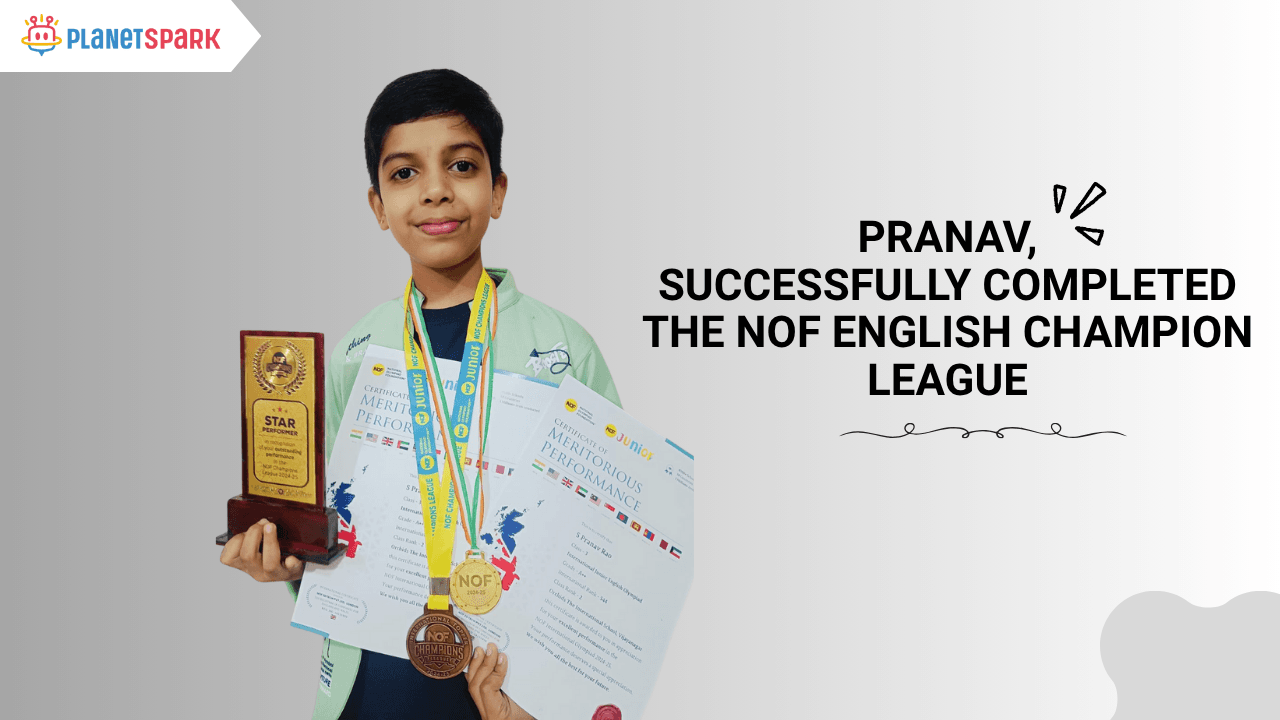
Pranav’s Success Story: A Rising Star in English Excellence
Pranav, a bright Grade 3 student, successfully completed the NOF English Champion League with outstanding performance. He showcased exceptional skills in public speaking and creative writing, reflecting his confidence, creativity, and strong command of the English language.
Conclusion
Learning jolly phonics 42 sounds is one of the most effective ways to build strong reading skills in kids. It helps children understand how sounds form words, making reading easier and more natural. Instead of memorizing, kids learn to decode, blend, and read with confidence.
By mastering jolly phonics 42 letter sounds, children improve not only their reading but also their pronunciation, spelling, and overall communication skills. With regular practice, fun activities, and the right guidance, phonics learning becomes simple and enjoyable.
A strong phonics foundation supports long-term academic growth and helps kids become independent learners. When children feel confident while reading, they develop a love for learning that stays with them for life.
“Strong grammar builds strong communication.”
Join PlanetSpark English Grammar Course and help your child speak and write with confidence.
You must read :
Learn Phonics Sounds A to Z With Words & Examples For Kids
Jolly Phonics Learning with PlanetSpark for Early Reading Skills
Frequently Asked Questions
Jolly phonics 42 sounds are the basic sounds of the English language taught to help kids read and write easily. These include letter sounds, digraphs, and blended sounds.
They help children understand how words are formed, improve reading skills, and build confidence in speaking and writing.
Kids can start learning phonics at an early stage when they begin recognizing letters and sounds. Early learning helps build a strong foundation.
The time depends on the child’s learning pace, but with regular practice, kids can learn all sounds in a few weeks to a couple of months.
The best way is through fun activities like games, songs, actions, and daily practice. Interactive learning helps kids remember sounds better.
Yes, kids can easily learn phonics at home with the help of parents, simple activities, and consistent practice.