
Question Forms in English Grammar: Rules and Examples
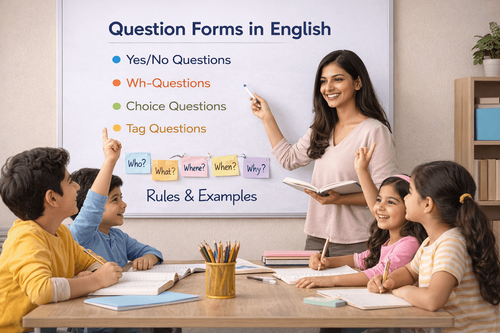

Have you ever wondered how people ask clear and meaningful questions in English? Asking questions is an essential part of communication, whether in conversations, classrooms, interviews, or professional discussions.
Understanding question forms helps learners gather information, clarify doubts, and participate confidently in conversations. In English, different types of question structures allow speakers to ask about facts, opinions, choices, or confirmations.
Learning how question forms in English work can greatly improve both speaking and writing skills. Once learners understand the rules and patterns, they can easily form accurate and effective questions in everyday communication.
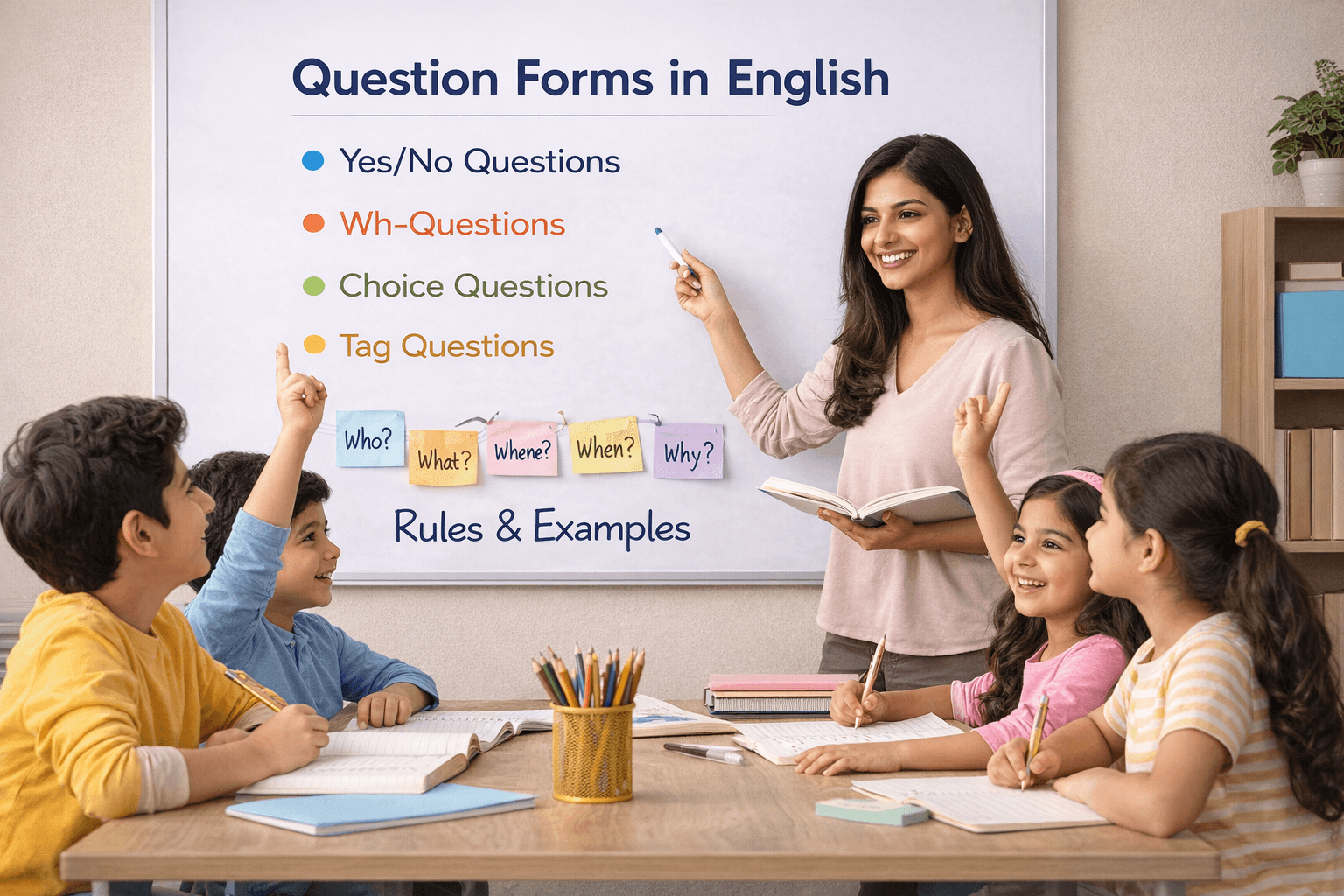
Question Forms in English Grammar: Rules and Examples
Question forms in English grammar are sentence structures used to ask for information, clarification, or confirmation. These forms follow specific grammatical patterns and often include auxiliary verbs, question words, or changes in word order.
Understanding these patterns helps learners communicate effectively and develop stronger language skills.
What Are Question Forms?

Asking the right questions is the first step to better learning and communication. Strengthen your English grammar and speaking confidence with structured practice.
Book a free trial class with PlanetSpark today.
Question forms are grammatical structures used to ask questions in English. They usually involve a change in sentence structure, often placing the auxiliary verb before the subject.
For example:
Statement: She is reading a book.
Question: Is she reading a book?
By learning question forms in English, learners can ask questions correctly and participate more actively in conversations.
Types of Question Forms in English
There are several types of question forms in English grammar that help speakers ask different kinds of questions.
1. Yes/No Questions
Yes/No questions are used when the expected answer is either yes or no. These questions usually begin with an auxiliary verb.
Examples:
Are you coming to the meeting?
Did she finish the project?
Can they solve the problem?
These are some of the most common question forms in English used in daily conversations.
2. Wh-Questions
Wh-questions begin with words such as who, what, where, when, why, and how. They are used to gather detailed information.
Examples:
What are you studying today?
Where did they go yesterday?
Why is the meeting important?
Wh-questions help learners ask more specific and meaningful questions.
3. Choice Questions
Choice questions allow the speaker to offer options while asking a question.
Examples:
Would you like tea or coffee?
Are you studying science or commerce?
Should we meet today or tomorrow?
These question forms in English grammar help guide the listener to choose between alternatives.
Curiosity begins with a question.
Mastering question forms in English grammar helps learners communicate ideas clearly and participate confidently in discussions.
Book a free trial class with PlanetSpark today and start learning.
4. Tag Questions
Tag questions are short questions added to the end of a statement to confirm information.
Examples:
You completed the assignment, didn’t you?
She is attending the seminar, isn’t she?
They finished the project, didn’t they?
Tag questions are frequently used in conversations to seek confirmation.
Rules for Forming Question Forms in English
To form correct question forms, it is important to follow a few basic rules.
• Use an auxiliary verb before the subject in most questions.
• Begin with question words (who, what, where, when, why, how) when asking for specific information.
• Maintain the correct word order in the sentence.
• Use tag questions to confirm or verify information.
By understanding these rules, learners can easily form grammatically correct questions.
Importance of Learning Question Forms

Judge a person by their questions rather than their answers. – Voltaire
Learning the correct question forms in English helps you ask clear, meaningful questions in every conversation.
Start improving your communication skills , book a free trial class today.
Learning question forms in English grammar improves communication and helps learners participate actively in discussions.
Some benefits include:
• Asking questions clearly in conversations
• Improving speaking and writing skills
• Developing better understanding during discussions
• Enhancing confidence in academic and professional settings
Mastering question forms in English is an essential step toward becoming a confident communicator.
Develop Strong Communication Skills
Clear communication often begins with the ability to ask the right questions. When learners understand question forms, they can express curiosity, seek information, and engage in meaningful conversations.
PlanetSpark offers personalised learning sessions designed to strengthen communication, grammar, and creative thinking skills.
Students learn through:
• Public speaking activities
• Storytelling and debates
• Grammar and communication practice
• Confidence-building exercises
Master the Art of Asking Questions

Every meaningful conversation begins with a question. Whether in classrooms, workplaces, or everyday interactions, asking the right questions helps people understand ideas more clearly and communicate effectively.
By learning question forms in English grammar, learners can ask questions confidently and participate more actively in discussions. Understanding how questions are structured makes conversations clearer and more engaging.
Here are some benefits of mastering question forms in English:
Improves communication skills by helping learners ask clear and meaningful questions
Encourages curiosity and learning by allowing people to explore topics in more depth
Builds confidence in conversations in classrooms, meetings, and daily interactions
Strengthens critical thinking by helping learners analyze information and seek clarification
Enhances language skills by improving both speaking and writing abilities
With regular practice, anyone can develop the ability to form correct and effective questions. Mastering question forms not only improves grammar but also helps individuals communicate ideas more clearly and build meaningful conversations.
Frequently Asked Questions
Question forms are grammatical structures used to ask questions in English. They help speakers gather information, clarify ideas, and start conversations. In question forms in English grammar, sentences are usually formed using auxiliary verbs or question words like who, what, where, when, why, and how.
An example of a question form is:
- Yes/No Question: Are you coming to the meeting?
- Wh-Question: Where do you live?
These examples show how question forms in English help people ask for information clearly.
The main question forms in English grammar include:
- Yes/No Questions – Questions that can be answered with yes or no.
- Wh-Questions – Questions that begin with words like who, what, where, when, why, and how.
- Choice Questions – Questions that give options.
- Tag Questions – Short questions added at the end of a statement.
These forms help make conversations clearer and more interactive.
The four common types of questions in English are:
- Yes/No Questions
- Wh-Questions
- Choice Questions
- Tag Questions
Learning these types helps learners understand question forms in English grammar and ask questions more confidently.
PlanetSpark offers personalised learning sessions that help learners understand question forms in English grammar through interactive activities such as speaking exercises, storytelling, and grammar practice.
Through PlanetSpark programs, learners can develop important skills such as:
- Public speaking
- Creative thinking
- Grammar and sentence formation
- Confidence in conversations
- Effective communication
These skills help learners express ideas and ask questions clearly.
You can start by booking a free trial class with PlanetSpark. The trial session allows learners to experience personalised coaching designed to improve communication skills, grammar understanding, and confidence in speaking.