
Explore Reduplication Words And How They Make Language More Expressive


Table of Contents
- What Are Reduplication Words?
- Common Types of Reduplication Words
- Full Reduplication Words Examples
- Partial Reduplication Words Examples
- Rhyming Reduplication Words Examples
- Reduplication Words in Literature and Media
- How Reduplication Words Make Language More Expressive
- How PlanetSpark Helps Children Learn Reduplication Words
- Conclusion
Language becomes memorable when it uses patterns, rhythm, and repetition. One of the most interesting ways this happens is through reduplication words. These words or expressions repeat a sound, a full word, or a modified version of a word to create emphasis, rhythm, humor, or clarity. You may hear them in daily conversations, songs, stories, advertisements, and even formal writing.
Many people use reduplication words naturally without knowing the technical term behind them. Expressions like chit-chat, flip-flop, bye-bye, and tick-tock are common examples. They sound pleasant, are easy to remember, and often make communication more lively. This is why reduplication appears in many languages across the world.
Understanding reduplication words helps improve vocabulary and communication skills. They are useful because they can express repetition, movement, emotion, or intensity in a short and catchy form. Writers use them to create style, while speakers use them to sound natural and engaging.
In this guide, you will learn what reduplication words are, how they work, and why they are valuable in communication. You will also explore reduplication words examples that show how repetition can make language stronger, clearer, and more enjoyable.
What Are Reduplication Words?
Reduplication words are expressions formed by repeating a word, part of a word, or a similar sounding variation of a word. This repetition may be exact or slightly changed. The purpose is usually to create rhythm, emphasis, or a playful effect.
In simple terms, reduplication happens when language uses doubling patterns. Instead of using one plain word, a repeated pattern makes the phrase more expressive. For example, saying “chat” communicates meaning, but saying “chit-chat” sounds more vivid and social.
These expressions are found in both spoken and written communication. Some are informal, while others are widely accepted in dictionaries and literature.
How Reduplication Works
Reduplication can happen in different ways:
- Repeating the same word exactly
- Repeating with a vowel change
- Repeating with a consonant change
- Repeating to imitate sounds
- Repeating to add emotion or emphasis
Examples:
| Type | Example | Meaning |
|---|---|---|
| Exact repetition | bye-bye | farewell |
| Vowel change | zig-zag | moving sharply |
| Consonant change | chit-chat | casual talk |
| Sound imitation | tick-tock | clock sound |
These patterns are not random. They often sound balanced, rhythmic, and pleasant to the ear. That is why many reduplication words stay popular over time.
Why People Use Them
People often choose these forms because they make speech more natural and expressive. Compare the following:
- Talk → ordinary meaning
- Chit-chat → light, friendly talk
- Move → general action
- Zig-zag → specific movement pattern
- Goodbye → standard farewell
- Bye-bye → warmer and softer farewell
The repeated structure gives extra emotional or descriptive value.
Features of Reduplication Words
Most reduplication words share these qualities:
- Short and catchy
- Easy to say aloud
- Memorable sound pattern
- Often informal and friendly
- Useful for storytelling and conversation
Where They Are Commonly Found
You can hear them in:
- Daily conversations
- Nursery rhymes
- Advertisements
- Social media content
- Songs and poems
- Children’s storytelling
Many languages use repetition in similar ways, which shows that humans naturally enjoy sound patterns and rhythm.
Learning reduplication words can improve vocabulary because these expressions often carry more personality than ordinary words. They make communication feel lively rather than flat.
When you study language carefully, you notice that repetition is not just decoration. It helps speakers express tone, mood, movement, and style quickly. That is why reduplication words continue to be an important and enjoyable part of communication.
Common Types of Reduplication Words
Reduplication words come in several forms, and each type adds a different effect to communication. Some create rhythm, some show repetition, while others make speech sound playful and memorable. Knowing the common types helps you identify how language uses patterns to become more expressive.
Although many people use these phrases naturally, understanding their categories makes vocabulary learning easier. In English, reduplication usually appears in informal speech, storytelling, branding, songs, and creative writing.
The three most common types are:
- Full reduplication
- Partial reduplication
- Rhyming reduplication
There are also sound-based and meaning-based variations, but the three above are the easiest to recognize.
| Type | Structure | Example | Effect |
|---|---|---|---|
| Full reduplication | Same word repeated | bye-bye | Friendly tone |
| Partial reduplication | Slight sound change | flip-flop | Contrast or movement |
| Rhyming reduplication | Similar rhyme pattern | hocus-pocus | Playful rhythm |
1. Full Reduplication
This happens when the same word is repeated exactly.
Examples:
- no-no
- bye-bye
- go-go
- night-night
This type often sounds warm, simple, or informal. It is common in family conversations and child-friendly language.
2. Partial Reduplication
In this form, one part of the word changes while the rest stays similar.
Examples:
- flip-flop
- ping-pong
- zig-zag
- mish-mash
These often describe movement, change, or mixed situations.
3. Rhyming Reduplication
These expressions repeat with matching sound endings.
Examples:
- chit-chat
- helter-skelter
- hocus-pocus
- teeny-weeny
They sound musical and are popular in casual speech and entertainment.
Why These Types Matter
Each type gives communication a unique tone:
- Friendly and soft tone
- Strong rhythm
- Humor and fun
- Better memory recall
- Greater emotional expression
For example, “talk” is plain, but “chit-chat” feels lighter and more social. “Move” is general, but “zig-zag” paints a clear picture.
Where You Notice These Types
You can find them in:
- Movie dialogues
- Cartoon language
- Advertising slogans
- Song lyrics
- Daily conversation
- Storybooks
Because of their sound patterns, these expressions often remain popular for generations.
Quick Tip to Identify Types
Ask these questions:
- Is the same word repeated?
- Is one sound changed?
- Does it rhyme?
If the answer is yes to any of these, it is likely a reduplication pattern.
By learning the common types, you begin to notice how repetition shapes natural speech. It also becomes easier to use reduplication words examples in writing and conversation.
Strong grammar builds strong communication.
Join PlanetSpark English Grammar Course and master grammar with confidence.
Full Reduplication Words Examples
Full reduplication is the simplest and easiest form of reduplication words. It happens when a word is repeated exactly without changing spelling or sound. This repeated structure often creates warmth, emphasis, rhythm, or familiarity.
Because the pattern is easy to say and easy to remember, full reduplication appears frequently in everyday speech. It is especially common in greetings, instructions, playful language, and emotional conversations.
Examples include:
- bye-bye
- no-no
- go-go
- night-night
- boo-boo
- tutu
- hush-hush
These repeated forms can carry meanings that differ slightly from the original word. For example, “bye” means farewell, but “bye-bye” sounds softer and friendlier.
| Word | Full Reduplication Form | Common Use |
|---|---|---|
| bye | bye-bye | Casual goodbye |
| no | no-no | Something not allowed |
| night | night-night | Bedtime phrase |
| hush | hush-hush | Secret matter |
| go | go-go | Active movement |
Why Full Reduplication Is Popular
This pattern works well because it is:
- Easy for children to learn
- Pleasant to hear
- Fast to remember
- Emotionally warm
- Useful in informal speech
That is why parents, teachers, storytellers, and marketers often use repeated forms.
Examples in Sentences
- It is late, so time for night-night.
- We waved and said bye-bye.
- That topic is hush-hush for now.
- Running indoors is a no-no.
- The party had a go-go energy.
These examples show that repetition often changes tone rather than basic meaning.
Where Full Reduplication Is Used
You can hear it in:
- Family conversations
- Childcare settings
- Friendly texting
- Storybooks
- Casual spoken English
- Entertainment media
Emotional Impact of Repetition
Full reduplication often softens language. Compare:
- No = direct refusal
- No-no = playful warning
- Goodbye = standard closing
- Bye-bye = warm farewell
The repeated form sounds more human and personal.
How to Use It Naturally
Use full reduplication when tone matters more than formality. It works best in casual or expressive settings.
Good situations:
- Talking to children
- Friendly goodbyes
- Light humor
- Storytelling
- Informal dialogue writing
Avoid overusing it in formal business or academic writing unless used as an example.
Why It Matters in Vocabulary Learning
Full repetition helps memory. Since the same sound appears twice, learners remember it faster. That is why many early language words use this pattern.
Among all reduplication words examples, full repetition is often the first type people recognize. It proves that simple repetition can make communication warmer, clearer, and more memorable.
Partial Reduplication Words Examples
Partial reduplication is a form of reduplication words where a word is repeated with a small change in sound, spelling, or structure. Instead of repeating the same word exactly, one part changes while the overall rhythm remains similar. This creates expressions that sound lively, descriptive, and memorable.
Many popular English expressions use this pattern. These words often describe motion, disorder, contrast, back-and-forth movement, or mixed conditions. Because they sound dynamic, they are commonly used in daily conversation and storytelling.
Examples of partial reduplication include:
- flip-flop
- zig-zag
- mish-mash
- ping-pong
- criss-cross
- see-saw
- riff-raff
These phrases usually contain paired sounds that feel balanced. The slight change between the two parts gives energy to the expression.
| Word | Meaning | Common Use |
|---|---|---|
| flip-flop | sudden change | changing decisions |
| zig-zag | sharp turns | movement path |
| mish-mash | mixture | mixed items |
| ping-pong | back and forth | repeated exchange |
| criss-cross | crossing lines | patterns or movement |
Why Partial Reduplication Is Effective
This pattern works well because it adds movement and contrast. A single word may sound plain, but a paired variation sounds more vivid.
Compare:
- change → general action
- flip-flop → repeated or uncertain change
- move → simple motion
- zig-zag → clear turning motion
- mix → combine things
- mish-mash → messy combination
The sound change creates stronger imagery.
Examples in Sentences
- The road went in a zig-zag direction.
- He did a flip-flop on his decision.
- Her desk was a mish-mash of papers.
- The discussion became ping-pong between both teams.
- Wires were laid in a criss-cross pattern.
These phrases communicate meaning quickly and colorfully.
Where You Hear Partial Reduplication
You can notice it in:
- Sports commentary
- News headlines
- Daily conversations
- Storytelling
- Advertisements
- Children’s books
Because these expressions are vivid, they are useful for grabbing attention.
Common Patterns in Sound Change
Partial reduplication often changes:
- First consonant
- Middle vowel sound
- Final consonant
- Stress pattern
This small variation keeps the phrase interesting while preserving rhythm.
How to Use It Naturally
Use these forms when you want speech to sound expressive and energetic.
Best uses:
- Describing motion
- Explaining confusion
- Showing repeated changes
- Creating visual scenes
- Writing informal dialogue
Among reduplication words examples, partial forms are especially useful because they teach sound relationships in English. They also improve descriptive writing.
Instead of saying something was messy, saying it was a mish-mash gives a clearer picture. Instead of saying a path turned often, zig-zag instantly creates an image.
Partial reduplication shows how a tiny sound change can make language stronger, sharper, and more memorable.
Every great sentence starts with correct grammar.
Enroll in PlanetSpark English Grammar Course for expert learning.
Rhyming Reduplication Words Examples
Rhyming reduplication is one of the most enjoyable forms of reduplication words. In this pattern, two connected words share similar ending sounds or rhyme with each other. The words may not be identical, but they sound musical and balanced.
This type is common in spoken English because it is catchy, playful, and easy to remember. It appears in conversation, entertainment, advertising, poetry, and media language.
Popular rhyming reduplication words examples include:
- chit-chat
- hocus-pocus
- teeny-weeny
- super-duper
- easy-peasy
- walkie-talkie
- lovey-dovey
These phrases often become popular because people enjoy repeating rhythmic sounds.
| Word | Meaning | Tone |
|---|---|---|
| chit-chat | casual talk | friendly |
| hocus-pocus | trickery or magic | playful |
| teeny-weeny | very small | cute |
| super-duper | excellent | cheerful |
| easy-peasy | very easy | informal |
Why Rhyming Reduplication Is Popular
Rhyming patterns attract attention quickly. They help words stay in memory and create emotional tone.
Benefits include:
- Pleasant sound
- Easy recall
- Fun conversation style
- Strong brand value
- Child-friendly learning
That is why advertisers and entertainers often use them.
Examples in Sentences
- We had some chit-chat before lunch.
- The puzzle was easy-peasy.
- The gift was teeny-weeny but thoughtful.
- His explanation sounded like hocus-pocus.
- The event was super-duper fun.
These expressions instantly add personality to speech.
Where You Commonly Hear Them
Rhyming reduplication appears in:
- TV commercials
- Cartoon shows
- Informal texting
- Children’s rhymes
- Friendly conversations
- Social media captions
Because of their catchy sound, they spread quickly in popular culture.
How Tone Changes Meaning
These expressions often make language softer or more humorous.
Compare:
- easy = simple
- easy-peasy = very simple and cheerful
- small = tiny
- teeny-weeny = tiny in a cute way
- talk = speak
- chit-chat = light social conversation
Rhyming forms do more than describe. They also communicate mood.
How to Use Them Well
Use rhyming reduplication when the setting is informal or creative.
Good uses:
- Friendly speech
- Storytelling
- Social captions
- Marketing slogans
- Humorous writing
Avoid overusing them in serious professional documents unless tone is intentionally casual.
Reduplication Words in Literature and Media
Reduplication words are widely used in literature and media because they add rhythm, emotion, style, and memorability. Writers, poets, scriptwriters, advertisers, and content creators often choose these expressions to make language more engaging. Since repetition naturally catches attention, these word patterns are highly effective in both traditional and modern communication.
From classic storytelling to social media captions, reduplication words continue to hold value. They can make dialogue sound realistic, help readers remember phrases, and create a playful or dramatic tone.
Common examples found in media include:
- chit-chat
- tick-tock
- flip-flop
- helter-skelter
- teeny-weeny
- walkie-talkie
These words often become popular because audiences enjoy their sound and rhythm.
| Medium | Use of Reduplication Words | Example |
|---|---|---|
| Storybooks | Fun and repetition | tick-tock |
| Poetry | Rhythm and flow | helter-skelter |
| TV Ads | Catchy phrases | easy-peasy |
| Films | Natural dialogue | chit-chat |
| Social Media | Playful tone | super-duper |
Use in Literature
Authors use repetition to make writing musical and expressive. In poems, repeated sound patterns improve rhythm. In children’s books, these words make reading enjoyable and easier to remember.
Examples of literary benefits:
- Creates sound harmony
- Makes scenes vivid
- Builds character voice
- Helps memory retention
- Adds humor or lightness
For example, a writer describing casual conversation may use “chit-chat” instead of “talk” because it gives a clearer mood.
Use in Dialogues and Fiction
Characters in novels and plays often speak naturally when reduplication appears in dialogue.
Examples:
- “We had a little chit-chat after dinner.”
- “The old clock went tick-tock all night.”
- “He kept doing a flip-flop on the plan.”
These expressions help readers hear personality and tone.
Use in Advertising
Marketers often choose reduplication because catchy sounds stay in memory.
Why brands use them:
- Easy to repeat
- Fast recall
- Friendly tone
- Musical sound
- Strong emotional impact
That is why slogans often include rhythmic phrases.
Use in Digital Media
Today, content creators use these expressions in:
- Reels captions
- Meme pages
- Short-form videos
- Product names
- Viral phrases
Their playful structure works well in quick attention environments.
Why Audiences Respond Well
People process sound patterns quickly. Repetition feels familiar, which creates comfort and interest. This is especially powerful in entertainment and promotional messaging.
Learning Opportunity
Reading books, watching films, and listening to ads can help learners notice natural reduplication words examples. It builds vocabulary while showing how language becomes expressive in real settings.
Whether in poetry, cinema, or online trends, reduplication words remain useful because they make messages lively, memorable, and emotionally effective.
Grammar is the key to fluent English.
Start PlanetSpark English Grammar Course and improve fast.
How Reduplication Words Make Language More Expressive
Language is strongest when it communicates not only meaning but also tone, mood, energy, and emotion. This is where reduplication words become powerful. They add life to plain statements through repetition, rhythm, and sound patterns. A repeated phrase often says more than a single word.
For example:
- talk → chit-chat
- move → zig-zag
- easy → easy-peasy
- goodbye → bye-bye
The repeated forms feel warmer, clearer, and more expressive.
| Plain Word | Reduplicated Form | Extra Effect |
|---|---|---|
| talk | chit-chat | casual and friendly |
| goodbye | bye-bye | softer tone |
| move | zig-zag | vivid movement |
| easy | easy-peasy | cheerful confidence |
| mixed | mish-mash | colorful description |
1. Adds Emotion
Some expressions create warmth or friendliness.
Examples:
- bye-bye sounds kinder than goodbye
- night-night sounds caring and gentle
- lovey-dovey sounds affectionate
This emotional tone is useful in close relationships and storytelling.
2. Creates Stronger Imagery
Many reduplication words paint a mental picture quickly.
Examples:
- zig-zag shows turning movement
- criss-cross shows crossing lines
- flip-flop shows changing direction or opinion
Instead of explaining in many words, one phrase gives a clear image.
3. Improves Rhythm and Sound
These expressions are enjoyable to hear. Their sound pattern creates flow in speech and writing.
Useful in:
- poems
- songs
- slogans
- speeches
- dialogues
That is why many catchy phrases use repetition.
4. Makes Speech Memorable
Repetition helps memory. Listeners remember paired sounds faster than ordinary words.
Examples:
- tick-tock
- ping-pong
- chit-chat
- teeny-weeny
This is one reason these forms stay popular for years.
5. Softens Communication
Some words can sound harsh or direct. Reduplicated forms often reduce that sharpness.
Compare:
- No = strict refusal
- No-no = playful warning
- Small = plain description
- Teeny-weeny = softer and cute
Tone changes how people receive a message.
6. Adds Personality to Writing
Writers use these phrases to make sentences feel alive.
Example:
- The room was messy.
- The room was a mish-mash of clothes and books.
The second version feels more vivid and expressive.
Where This Helps Most
Reduplication words are useful in:
- daily conversation
- storytelling
- advertising
- entertainment
- children’s learning
- creative writing
How PlanetSpark Helps Children Learn Reduplication Words
Learning vocabulary becomes easier when lessons are interactive and enjoyable. Reduplication words are perfect for young learners because they are rhythmic, catchy, and easy to remember. Words like chit-chat, tick-tock, zig-zag, and bye-bye help children improve pronunciation, listening, and speaking skills. PlanetSpark uses engaging teaching methods where children learn through live classes, storytelling, speaking tasks, and fun language activities. Instead of only memorizing meanings, learners practice using these words naturally in sentences and conversations. This makes vocabulary learning practical and confidence-building.
PlanetSpark also focuses on communication skills that help children speak fluently and express ideas clearly. Through guided sessions, children learn how expressive words can make speaking more interesting and writing more creative. Teachers provide personalized attention so every learner improves at their own pace. Whether a child needs help with pronunciation, grammar, sentence building, or public speaking, PlanetSpark creates a structured learning path that supports overall English growth. This helps children become more confident speakers and stronger communicators.
- Live interactive English classes
- Personalized learning support
- Fun vocabulary-building activities
- Better pronunciation and fluency
- Creative writing improvement
- Public speaking confidence
- Strong grammar foundation
- Engaging storytelling sessions
PlanetSpark helps children turn learning English into a fun and confident journey.

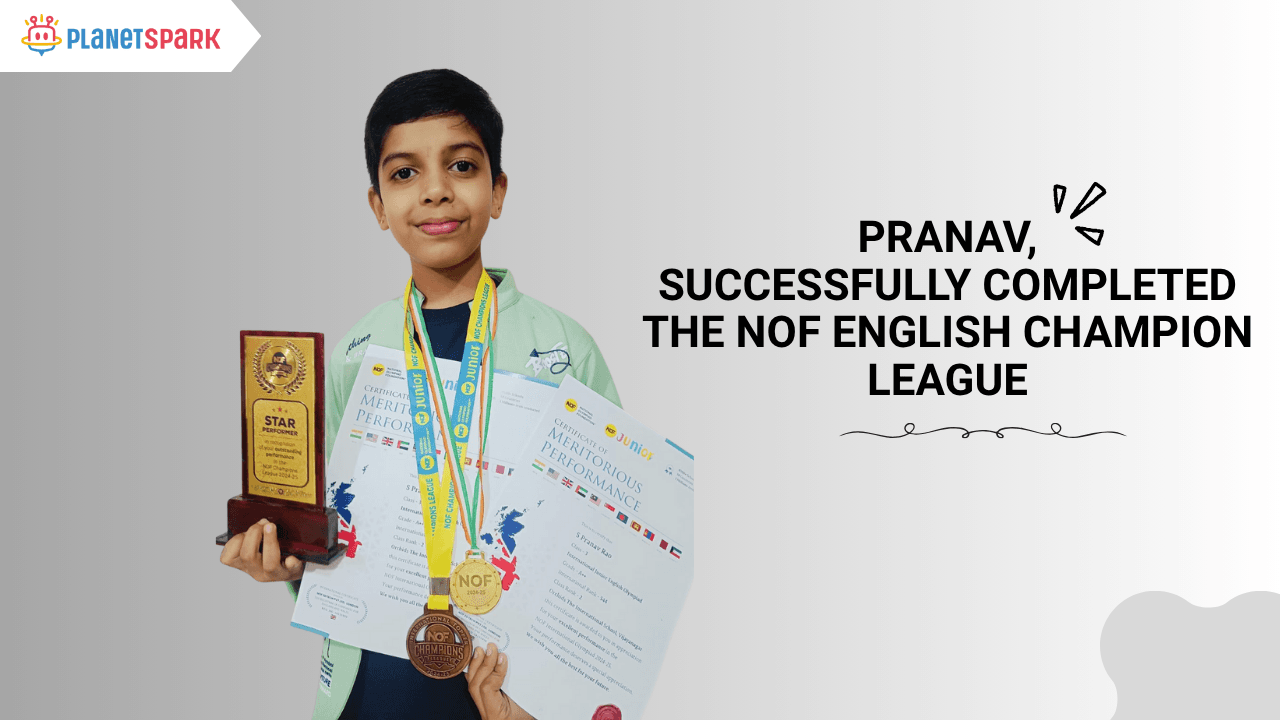
Success Story: Pranav Shines in the NOF English Champion League
Pranav, a talented Grade 3 student, successfully completed the NOF English Champion League, showcasing outstanding skills in Public Speaking and Creative Writing. His confidence, creativity, and dedication made him stand out as a young achiever.
Conclusion
Reduplication words add rhythm, emotion, and creativity to everyday language. Whether used as full repetition, partial repetition, or rhyming pairs, they make communication more engaging and memorable. Expressions like bye-bye, flip-flop, and chit-chat show how simple sound patterns can carry strong meaning.
These words are common in conversations, literature, media, and storytelling because they are easy to remember and enjoyable to use. They help speakers sound natural and help writers create vivid sentences with less effort.
By learning reduplication words examples, readers can improve vocabulary, speaking confidence, and writing style. Understanding these playful word forms is a simple way to make English more expressive, colorful, and fun.
Learn grammar today, speak better tomorrow.
Join PlanetSpark English Grammar Course for fun live classes.
You must read:
Know more about Reduplication in Creative Language with PlanetSpark
How to Avoid Avoid Wordiness and Redundancy
Frequently Asked Questions
Reduplication words are words or phrases formed by repeating a word fully or partially to create rhythm, emphasis, or meaning. Examples include bye-bye, chit-chat, and zig-zag.
They are used to make language more expressive, catchy, playful, and memorable in speech and writing.
Some common examples are flip-flop, tick-tock, mish-mash, easy-peasy, and teeny-weeny.
The main types are full reduplication, partial reduplication, and rhyming reduplication.
Most are common in informal speech and creative writing, but some may appear in literature, media, or branding.
They improve vocabulary, pronunciation, memory, and speaking confidence because they are easy to remember.