
NCERT Class 9: Areas of Parallelograms and Triangles


Table of Contents
- What Does “Area” Really Mean?
- Understanding a Parallelogram
- Area of a Parallelogram
- Same Base and Same Height – What’s the Big Deal?
- Solved Examples – Parallelograms
- Understanding Triangles
- Area of a Triangle
- Relationship Between Triangle & Parallelogram
- Important Theorems (NCERT Focus)
- Practice Questions
- Common Mistakes Students Make
- Why Choose PlanetSpark for Learning Geometry?
- Wrapping It Up: From Confusion to Clarity
Ever noticed how two completely different
shapes can actually cover the same space?
That’s exactly what this chapter helps you understand.
In this guide to Areas of Parallelograms and Triangles, you won’t just memorize formulas—you will understand why they work. Through real-life connections, clear explanations, and step-by-step examples, this blog is designed to make concepts simple and practical.
By the end, geometry will feel less confusing and far more logical and manageable.
What Does “Area” Really Mean?
Think About This First
Imagine you are covering your room floor with tiles. Each tile takes up some space, and together they fill the entire floor.
Or think about painting a wall—you need to know how much surface will be covered with paint.
In both cases, you are measuring area.
Simple Definition
- Area is the amount of space a flat surface covers.
- It tells us how big or small a shape is.
Quick Thought:
Is area about length only? Or something more?
(Answer: It involves both length and width.)
Units of Area
Area is always measured in square units because it covers a surface.
- Small objects → cm² (square centimetres)
- Larger spaces → m² (square metres)
Why “square”?
Because area = length × breadth (two dimensions)
Why Is Area Important?
- Helps compare shapes
- Used in real life (flooring, painting, construction)
- Essential for solving geometry problems
Think:
Why do architects care about area?
Mini Activity (Try It Yourself)
Take your notebook and do this:
- Measure its length
- Measure its breadth
- Multiply them
Formula:
Area = Length × Breadth
Now you’ve just calculated area in real life.
Understanding a Parallelogram
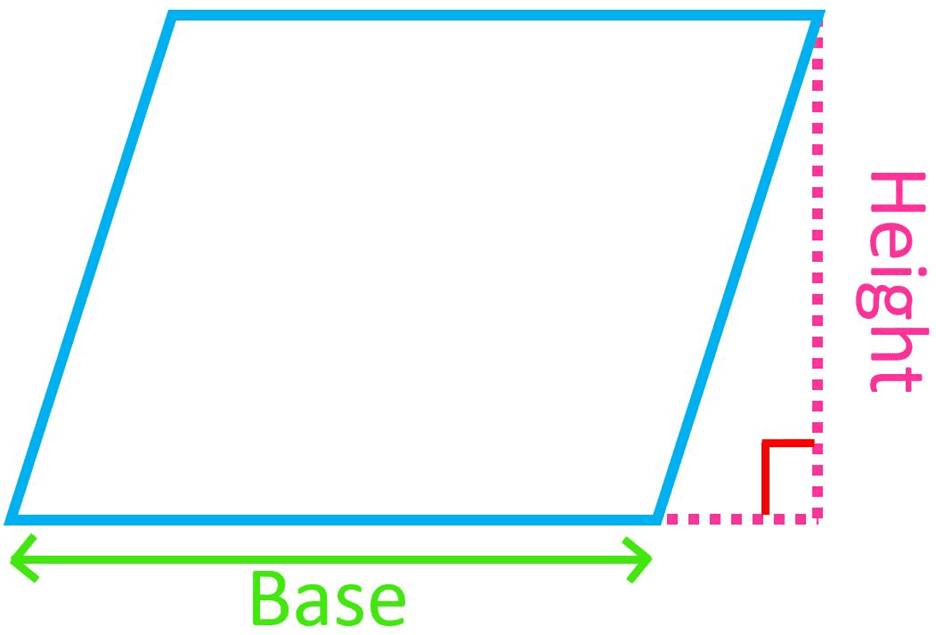
What Is a Parallelogram?
A parallelogram is a four-sided shape where:
- Opposite sides are parallel
- Opposite sides are equal in length
It may look like a “tilted rectangle,” but it follows specific rules.
Key Properties You Must Know
- Opposite sides are equal
- Opposite angles are equal
- Opposite sides are parallel
Quick Check:
If one angle is 70°, what will be the opposite angle?
(Answer: 70°)

Real-Life Examples
Look around you:
- Slanted floor tile patterns
- Window grills with tilted designs
These are real-life parallelograms.
Visual Thinking
Imagine pushing the top of a rectangle sideways.
- Shape changes
- But sides remain parallel
That new shape is a parallelogram.
Quick Check (Important Concept)
Is a rectangle a parallelogram?
Yes, because:
- Opposite sides are parallel
- Opposite sides are equal
Difference:
- Rectangle → all angles are 90°
- Parallelogram → angles can vary
Try This
Look at any rectangular object near you.
Now imagine tilting it slightly.
Question:
Will it still be a parallelogram?
(Answer: Yes, as long as opposite sides remain parallel.)
This format keeps the reader engaged, thinking, and interacting continuously—perfect for concept clarity + retention.
Area of a Parallelogram
Start with What You Already Know
Before jumping into parallelograms, think about a rectangle.
You already know:
- Area of a rectangle = Length × Breadth
- It is easy to measure because all sides are straight and upright
Now here’s the interesting part:
A parallelogram is just a tilted version of a rectangle.
Rectangle → Parallelogram Transformation
Imagine this step-by-step:
- Take a rectangle made of paper
- Cut a triangular piece from one side
- Slide it to the other side
What do you get?
A parallelogram
Important observation:
- Shape changes
- But area does NOT change
Why?
Because no part is added or removed—just rearranged.
What Actually Determines the Area?
Even after tilting:
- The base remains the same
- The height (vertical distance) remains the same
So the space covered stays unchanged.
The Formula (Now It Makes Sense)

Notice:
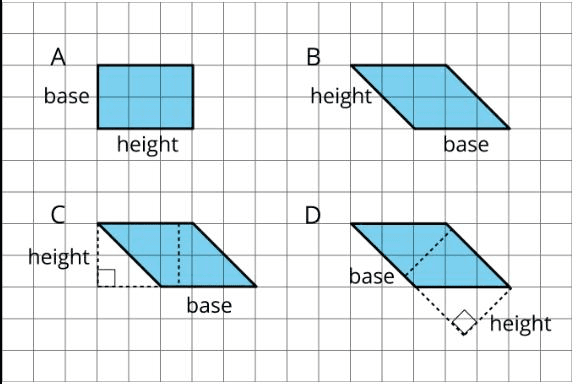
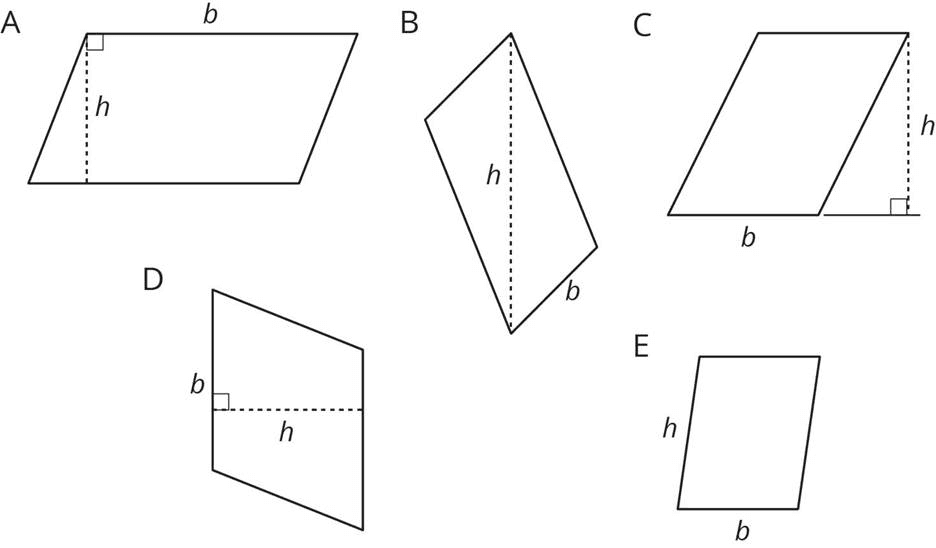
- We do NOT use the slanted side
- Only the perpendicular height matters
Book a Free Demo Class Today.
Why Must Height Be Perpendicular?
This is where many students get confused.
- The slanted side looks like the height—but it is NOT
- Height is always the shortest distance between the base and the opposite side
That shortest distance is always perpendicular (90°)
Think of it like this:
- If you drop a straight line from the top to the base → that’s height
- If you measure along the slanted side → that’s NOT height
Common Confusion Alert
Question:
If the slanted side is longer, shouldn’t area be bigger?
Answer: No
Because area depends only on:
- Base
- Perpendicular height
Not on how “tilted” the shape looks.
Interactive Thought
What happens if you tilt the shape but keep base and height the same?
- Does the area increase?
- Decrease?
- Stay the same?
Correct Answer: It stays the same
Quick Try
A parallelogram has:
- Base = 10 cm
- Height = 6 cm
Find the area.
(Solution: 10 × 6 = 60 cm²)
Key Takeaway
- A parallelogram is just a rearranged rectangle
- Area depends only on base and perpendicular height
- Tilting the shape does not change its area
Same Base and Same Height – What’s the Big Deal?
The Core Idea
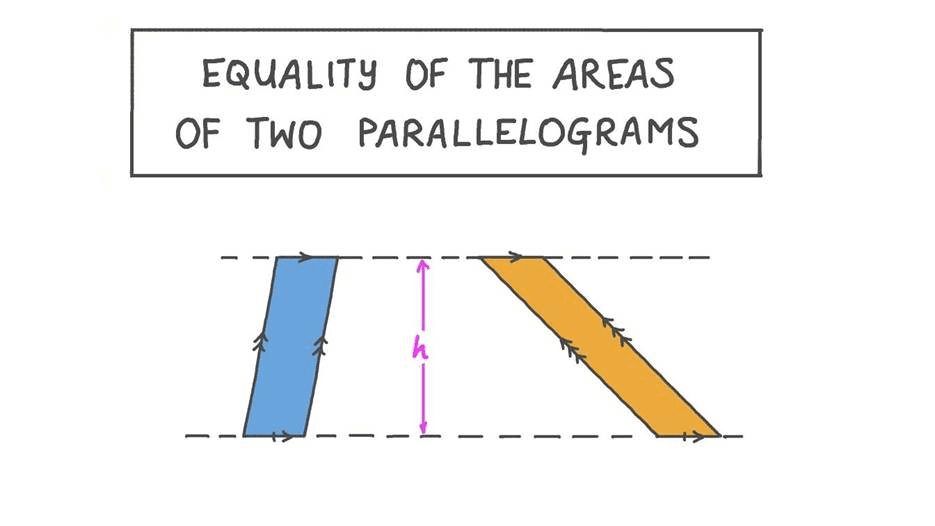
If two parallelograms are on the same base and have the same height, then:
Their areas are equal
Even if they look different.
What Does “Same Base and Same Height” Mean?
- Same base → Both shapes sit on the same line
- Same height → The perpendicular distance is equal
Important:
Height is always measured at 90° to the base

Visual Understanding
Imagine two parallelograms:
- One is straight
- One is more tilted
They may look different in shape, but:
- Base = same
- Height = same
So the space they cover is exactly equal
Why Does This Happen?
Because area depends only on:
- Base
- Height
Not on:
- Shape appearance
- Angle tilt
- Side length
So even if the shape “leans,” the area stays unchanged.
Why Is This Important?
This concept is the foundation of many theorems in NCERT.
- Helps prove shapes have equal areas
- Used in triangle comparisons
- Makes solving problems faster
Instead of calculating again, you can directly say:
“Areas are equal”
Think & Answer
If two shapes look different but share the same base and height:
- Will their areas differ?
- Or remain the same?
Answer: They remain the same
Quick Takeaway
- Same base + same height = same area
- Shape may change, area does not
- Focus on perpendicular height, not slanted sides
Solved Examples – Parallelograms
Example 1 (Basic)
Given:
- Base = 8 cm
- Height = 5 cm
Formula:
Solution:
Area = 8 × 5 = 40 cm²
Example 2 (Finding Missing Height)
Given:
- Area = 72 cm²
- Base = 9 cm
Find height
Formula Used:
Height = Area ÷ Base
Solution:
Height = 72 ÷ 9 = 8 cm
Example 3 (Word Problem)
A field is shaped like a parallelogram.
- Base = 20 m
- Height = 15 m
Find the area of the field
Formula:
Area = Base × Height
Solution:
Area = 20 × 15 = 300 m²
Concept Check
Question:
If you tilt this field without changing base or height, will the area change?
Answer: No, it remains the same.
Plan a Free Demo Class with Experts.
Challenge Question
A parallelogram has:
- Base = 10 cm
- Area = 80 cm²
Find the height
(Hint: Rearrange the formula)
Key Takeaways
- Always use perpendicular height
- Formula remains the same in all cases
- Rearranging formulas helps find missing values
Understanding Triangles
What Is a Triangle?
A triangle is a three-sided polygon. It is one of the simplest shapes in geometry and forms the foundation for understanding many area-related concepts.
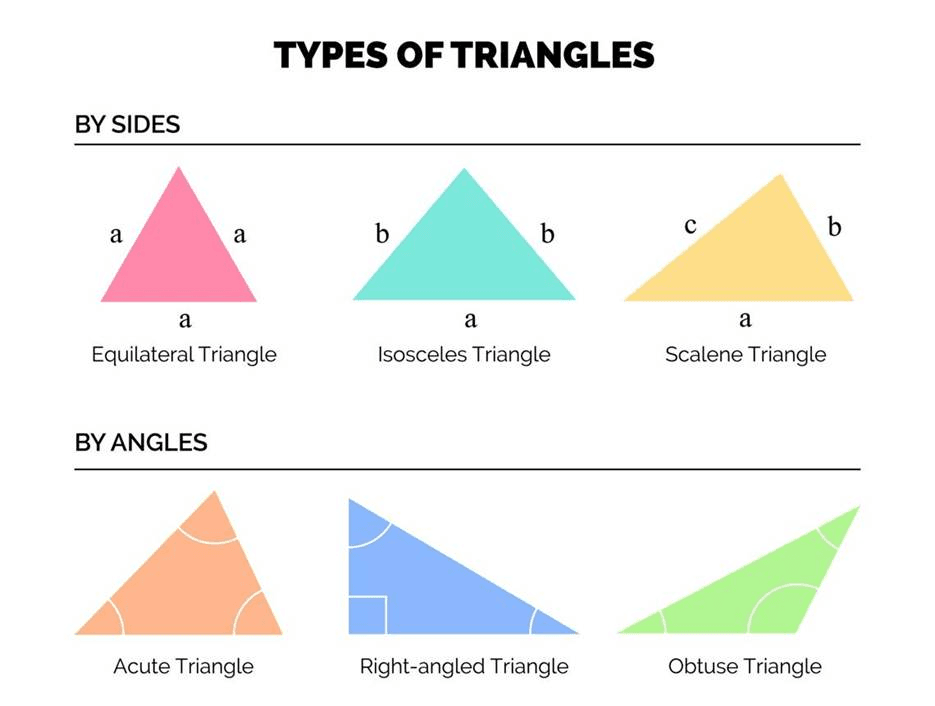
Types of Triangles
Triangles are classified based on their sides:
- Equilateral Triangle → All sides are equal
- Isosceles Triangle → Two sides are equal
- Scalene Triangle → All sides are different
Quick Check:
If all sides are equal, what can you say about the angles?
(Answer: All angles are equal.)
Understanding Base and Height
Every triangle has:
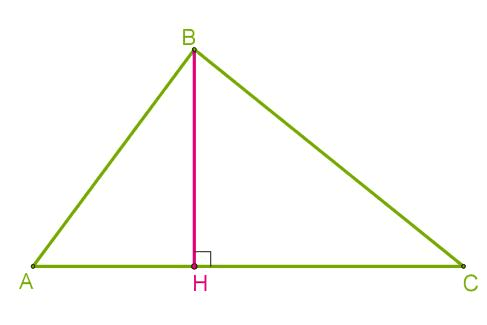
- A base → any one side of the triangle
- A height (altitude) → the perpendicular distance from the opposite vertex to the base
Important:
The height is always drawn at a 90-degree angle to the base.
Why Is Altitude Important?
- It gives the true vertical height of the triangle
- It is necessary to calculate the area accurately
Common confusion:
Students often mistake a slanted side for height, which leads to incorrect answers.
Real-Life Example
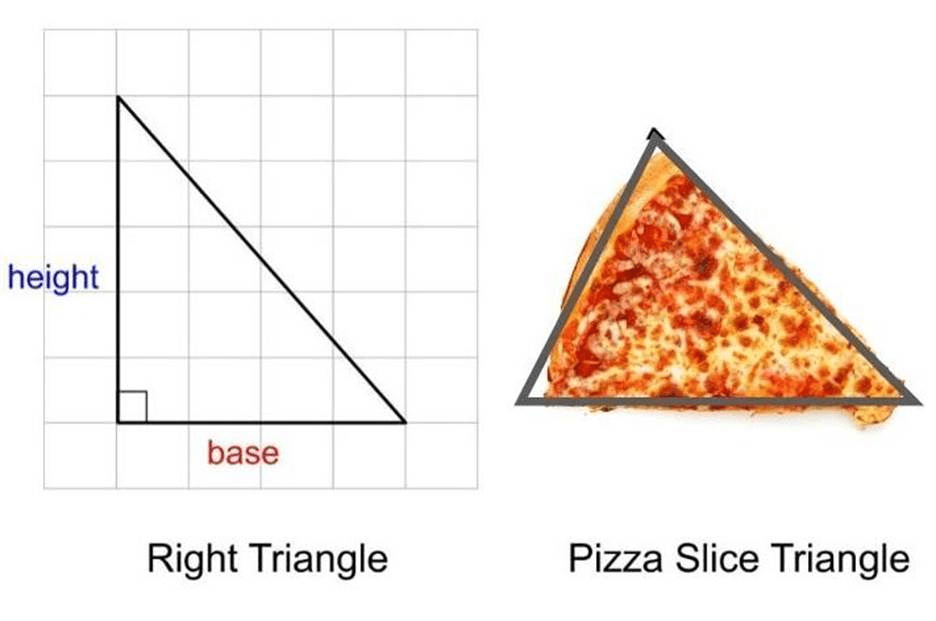
Think of a pizza slice:
- The crust can act as the base
- The tip forms the top vertex
- The straight perpendicular line from the tip to the base represents the height
This helps in visualizing how triangles exist in real life.
Try This
Choose any triangle and pick a different side as the base.
Question:
Will the height remain the same?
Answer: No, the height changes depending on the chosen base, but the area remains the same.
Try a Free Demo Class Today.
Area of a Triangle
Connecting Triangle to Parallelogram
You already know:
- Area of a parallelogram = Base × Height
Now consider this idea:
A triangle can be formed from a parallelogram and represents exactly half of it.
Visual Understanding
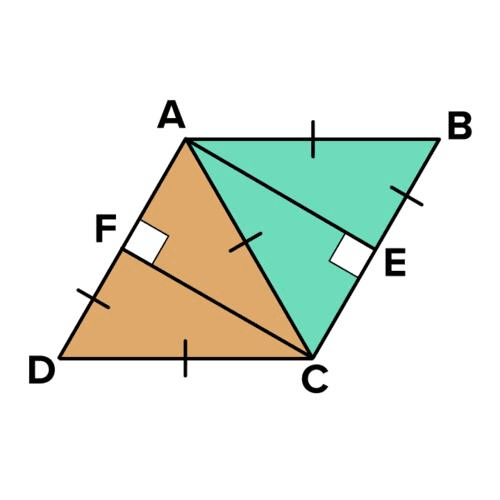
Imagine the following:
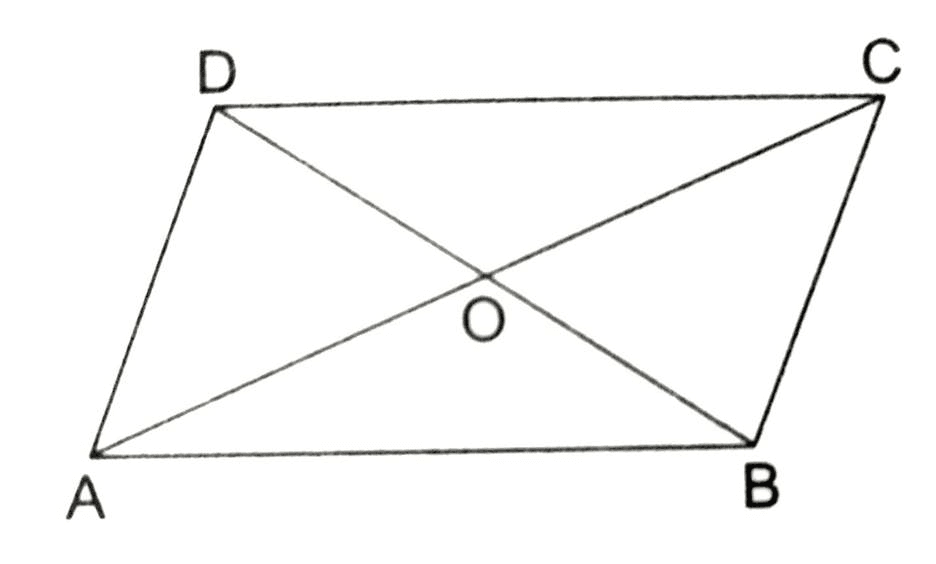
- Draw a parallelogram
- Draw a diagonal across it
This divides the shape into two equal triangles.
Each triangle occupies half of the total area.
The Formula

Why Do We Multiply by 1/2?
Because:
- The parallelogram’s area = Base × Height
- A triangle is exactly half of that shape
So, we multiply by 1/2 to get the correct area.
Important Points to Remember
- The base can be any side of the triangle
- The height must always be perpendicular to the chosen base
- The slanted side is not the height
Common Mistakes
- Using the slanted side instead of perpendicular height
- Forgetting to multiply by 1/2
- Mixing up base and height
Avoiding these mistakes will improve accuracy.
Mini Visualization Activity
Try this on paper:
- Draw a parallelogram
- Divide it into two triangles
Observe:
- Both triangles are equal in size
- Each one covers half the area
This confirms the formula logically.
Quick Practice
A triangle has:
- Base = 12 cm
- Height = 6 cm
Find the area.
Solution:
1/2 × 12 × 6 = 36 cm²
Key Takeaways
- A triangle is half of a parallelogram
- Area depends on base and perpendicular height
- The formula works because of this relationship
Book a Free Demo Class Today.
Relationship Between Triangle & Parallelogram
The Key Insight
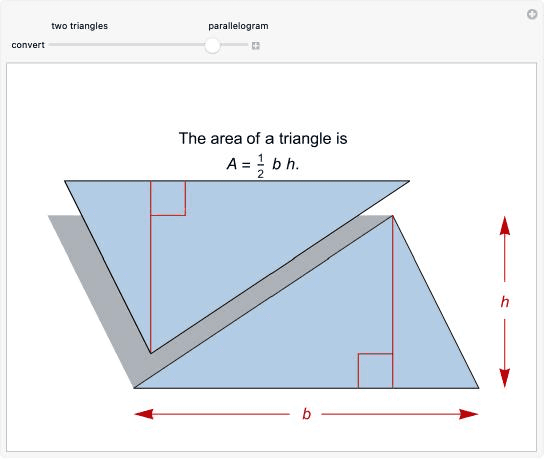
The most important relationship to understand is:
- A triangle is exactly half of a parallelogram
- Both must share the same base and the same height
This means:
- If you know the area of a parallelogram
- You can easily find the area of a triangle formed from it
Why Does This Relationship Work?
Think about this:
- A parallelogram can be divided into two equal triangles
- Each triangle gets half the area
So,
- Triangle area = Half of parallelogram area
- Parallelogram area = Double of triangle area
This connection makes problem-solving faster and more logical.
Visual Understanding
If you draw a diagonal inside a parallelogram:
- It splits into two triangles
- Both triangles have:
- Same base
- Same height
- Equal area
This proves the relationship visually.
Application in Problems
This concept is often used in questions where:
- You are given the area of a parallelogram
- You need to find the area of a triangle inside it
Or vice versa.
Instead of using formulas again and again, you can directly apply the relationship.
Quick Question
If the area of a parallelogram = 40 cm²
What will be the area of the triangle formed using the same base and height?
Answer:
Triangle area = 1/2 × 40 = 20 cm²
Try This
If a triangle has an area of 25 cm², what is the area of the parallelogram formed on the same base and height?
Answer: 50 cm²
Key Takeaway
- Triangle = Half of parallelogram
- Same base and height is the condition
- This relationship simplifies many geometry problems
Schedule a Free Demo Class Today.
Important Theorems (NCERT Focus)
Theorem 1 – Parallelograms on the Same Base and Same Height
Statement
Parallelograms on the same base and between the same parallels have equal areas.
Diagram Understanding
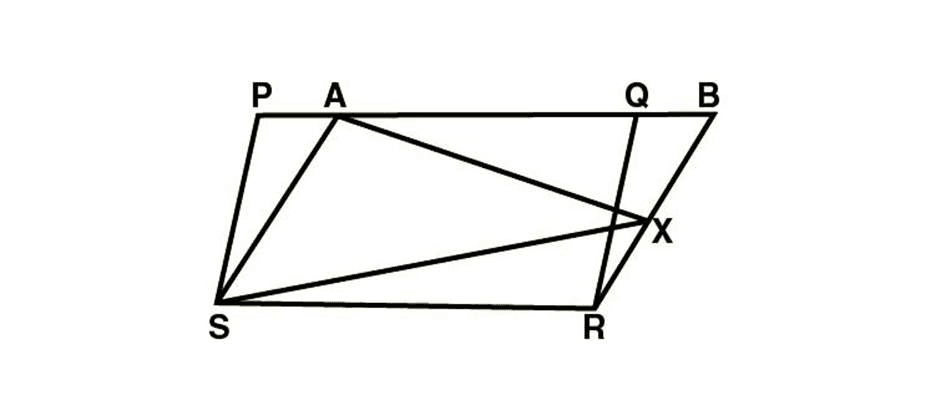
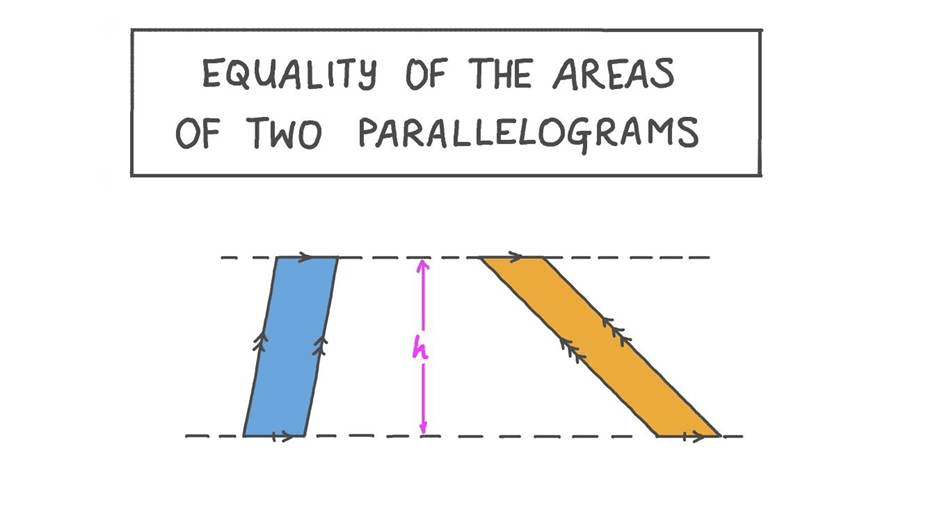
Imagine two parallelograms:
- Both share the same base
- Both lie between the same parallel lines
Even if they look different in shape, their heights are equal.
Logic (Simple Explanation)
- Area = Base × Height
- Base is same
- Height is same
So, area must be equal.
Theorem 2 – Triangles on the Same Base and Same Height
Statement
Triangles on the same base and between the same parallels have equal areas.
Diagram Understanding
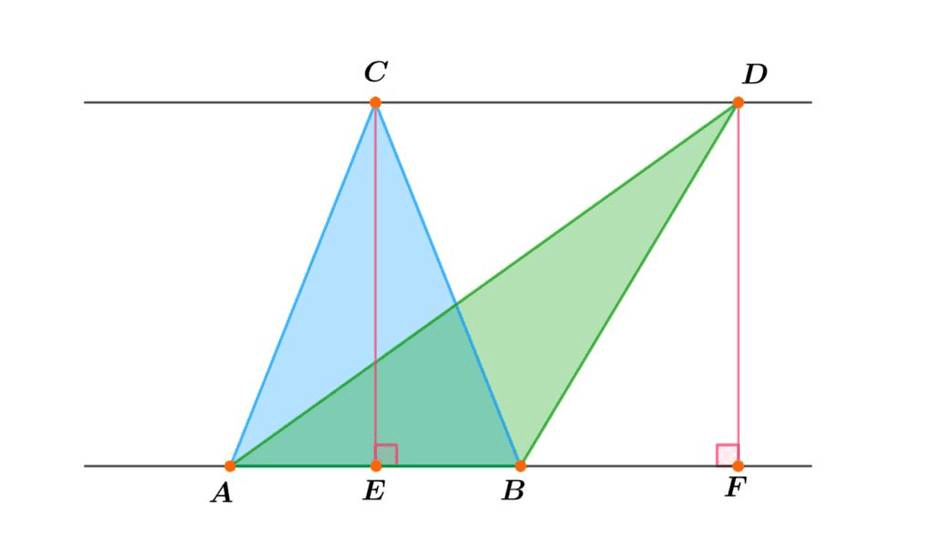
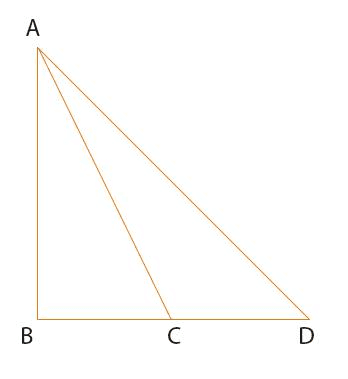
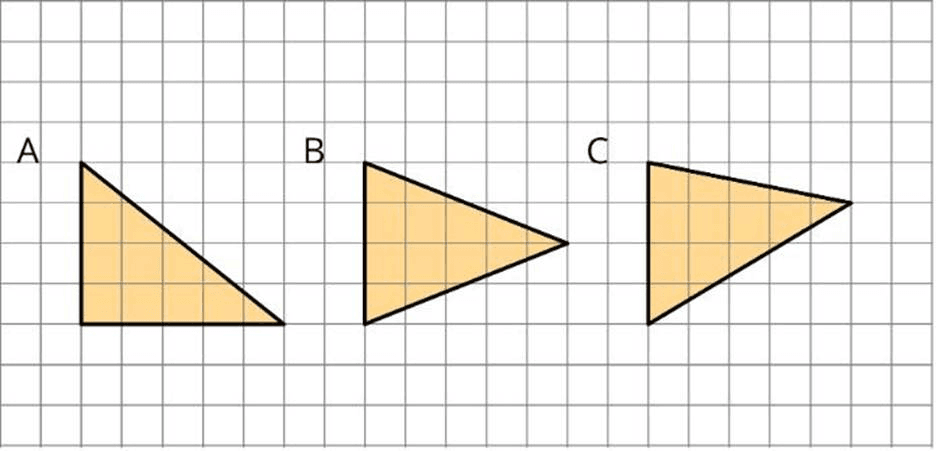
Imagine two triangles:
- Same base
- Same height
Even if their shapes look different, the area remains equal.
Logic (Simple Explanation)
- Area of triangle = 1/2 × Base × Height
- Base is same
- Height is same
So, area is equal.
Plan Your Free Demo Class Now.
Why These Theorems Matter
- Help compare shapes quickly
- Reduce calculation time
- Frequently asked in exams
Checkpoint (True or False)
- Two parallelograms with the same base always have equal area.
- Two triangles with the same height always have equal area.
- Same base and same height guarantee equal area.
- Shape appearance affects area if base and height are same.
Answers:
- False
- False
- True
- False
Key Takeaways
- Same base + same height = equal area
- Applies to both triangles and parallelograms
- Focus on base and perpendicular height, not shape
You May Also Read
Practice Questions
Level 1 – Basic
Solve using direct formulas:
- Find the area of a parallelogram with base = 7 cm and height = 5 cm.
- Find the area of a triangle with base = 12 cm and height = 4 cm.
- A parallelogram has base = 15 cm and height = 6 cm. Find its area.
- Find the area of a triangle with base = 9 cm and height = 8 cm.
- Base = 10 cm, height = 3 cm (parallelogram). Find area.
- Base = 14 cm, height = 5 cm (triangle). Find area.
- Base = 20 m, height = 7 m (parallelogram). Find area.
- Base = 11 cm, height = 2 cm (triangle). Find area.
- Base = 6 cm, height = 6 cm (parallelogram). Find area.
- Base = 18 cm, height = 10 cm (triangle). Find area.
Level 2 – Moderate
- Area of a parallelogram = 72 cm², base = 8 cm. Find height.
- Area of a triangle = 45 cm², base = 9 cm. Find height.
- A parallelogram has area 100 cm² and height 10 cm. Find base.
- A triangle has area 60 cm² and height 12 cm. Find base.
- A field is in the shape of a parallelogram: base = 30 m, height = 15 m. Find area.
- A triangular garden has base 20 m and height 10 m. Find its area.
- Area of a parallelogram is 84 cm², base = 12 cm. Find height.
- Area of a triangle is 36 cm², height = 6 cm. Find base.
- A parallelogram has base 25 cm and area 200 cm². Find height.
- A triangle has base 16 cm and area 64 cm². Find height.
Level 3 – Advanced
- Two parallelograms are on the same base and between the same parallels. One has area 50 cm². Find the area of the other.
- Two triangles have the same base and height. One has area 40 cm². Find the area of the other.
- A triangle and parallelogram share the same base and height. Triangle area = 35 cm². Find parallelogram area.
- If a parallelogram is tilted but base and height remain same, what happens to its area? Explain.
- Two parallelograms have equal heights but different bases. Are their areas equal? Explain.
- Two triangles have equal areas but different bases. What can you say about their heights?
- A parallelogram is divided into two triangles. If total area = 80 cm², find area of each triangle.
- If two triangles are on the same base but different heights, will their areas be equal? Explain.
- A triangle is half of a parallelogram. If triangle area = 25 cm², verify the parallelogram area.
- Can two parallelograms have equal area but different shapes? Justify your answer.
Bonus Challenge
- A rectangle is converted into a parallelogram by shifting one side. Does the area change? Why?
- A parallelogram is cut into two equal triangles. Without using the formula, explain why both triangles have equal area.
- If you double the base of a parallelogram but keep height same, what happens to area?
- If height is doubled and base remains same, what happens to area?
- A triangle is rearranged into a parallelogram shape. What happens to its area?
Try a Free Demo Class Now.
Common Mistakes Students Make
Mistake 1 – Using Slanted Side as Height
Many students use the slanted side instead of the perpendicular height.
This gives incorrect answers because the height must always be at 90° to the base.
Mistake 2 – Forgetting 1/2 in Triangle
While finding the triangle area, students often write:
Base × Height
The correct formula includes:
1/2 × Base × Height
Mistake 3 – Confusing Base and Side
Students assume any side is automatically the base.
While any side can be a base, the corresponding height must match it.
Mistake 4 – Ignoring Units
Writing answers without square units (cm², m²) is a common error.
Pro Tip Box
- Always draw the perpendicular height before solving
- Identify base and height clearly
- Double-check formulas before calculating
Golden Rule:
If height is not perpendicular, it is not the correct height.
Why Choose PlanetSpark for Learning Geometry?
Learning That Goes Beyond Formulas
At PlanetSpark, students don’t just memorize formulas—they understand the logic behind them. Concepts like areas of parallelograms and triangles are taught through real-life examples, visual explanations, and guided problem-solving.
Interactive and Engaging Classes
- Live 1:1 classes with expert teachers
- Visual learning using diagrams and activities
- Continuous interaction to clear doubts instantly
This makes abstract topics like geometry easier and more relatable.
Focus on Concept Clarity
Instead of rote learning, PlanetSpark focuses on:
- Step-by-step concept building
- Application-based questions
- Regular practice with feedback
Students learn why a formula works, not just how to use it.
Practice That Builds Confidence
- Structured worksheets (basic to advanced)
- Real exam-level questions
- Personalized feedback after every session
This helps students become confident in solving even tricky geometry problems.
Skill Development Along with Academics
PlanetSpark also improves:
- Logical thinking
- Problem-solving ability
- Communication skills
So students don’t just perform better in exams—they become better thinkers.
Parent-Friendly Learning Approach
- Regular progress updates
- Clear performance tracking
- Visible improvement in understanding
Parents can easily track how well their child is improving.
Final Thought
If you want your child to truly understand topics like areas of parallelograms and triangles instead of just memorizing them, PlanetSpark offers a structured and engaging learning experience that builds strong foundations for the future.

Wrapping It Up: From Confusion to Clarity
Understanding Areas of Parallelograms and Triangles isn’t about memorizing formulas—it’s about seeing the connection between shapes. Once you grasp how base and height control everything, geometry becomes logical, not scary.
Keep practicing, visualize every problem, and challenge yourself with different types of questions.
Because in math, clarity doesn’t come from reading more—it comes from understanding better.
Also Read
Frequently Asked Questions
PlanetSpark helps students understand areas of parallelograms and triangles through interactive classes, real-life examples, and guided practice.
PlanetSpark focuses on concept clarity, visual learning, and personalized attention, making geometry topics easier to understand.
Yes, PlanetSpark offers structured worksheets, quizzes, and exam-level questions to strengthen problem-solving skills.
Absolutely. PlanetSpark uses simple explanations and interactive teaching methods to make difficult concepts easy.
PlanetSpark uses visuals, activities, and real-life examples to make learning areas of shapes interesting and practical.
Yes, PlanetSpark is designed to support Class 9 students with curriculum-based learning and strong concept building.
PlanetSpark focuses on complete understanding, ensuring students know both the concept and application of formulas.