
Basics of Algebra Explained: Help Your Child Master Formulas and Logical Thinking

Table of Contents
- What Is Algebra? A Simple Explanation for Kids and Parents
- Why Learning the Basics of Algebra Improves Logical Thinking
- Core Concepts in the Basics of Algebra Every Child Must Unde
- How Algebra Formulas Work (Made Simple for Kids)
- Why Letters Are Used Instead of Numbers
- Connecting Algebra to Real Life
- Why Strong Algebra Basics Matter Before Moving Ahead
- Important Algebra Rules Explained in a Simple Way
- Step-by-Step Method to Teach Algebra at Home
- Fun Activities to Practice Algebra Concepts
- Common Challenges Kids Face While Learning Algebra
- Mistakes Parents Should Avoid While Teaching Algebra
- How PlanetSpark Helps in Mastering the Basics of Algebra for
- Conclusion
For many children, algebra feels like a sudden jump in math difficulty. Numbers are replaced with letters, problems look unfamiliar, and rules seem confusing at first. This confusion often comes not from algebra itself, but from how it is introduced. When children are not guided step by step, algebra can feel abstract and intimidating.
Learning the basics of algebra in a clear and gradual way helps children understand that algebra is simply a smarter way of thinking about numbers. At its core, algebra teaches children to find unknown values and recognise patterns. When children understand what is algebra is and why letters are used, they begin to approach problems logically instead of memorising steps. This strong foundation supports problem-solving, reasoning, and confidence in higher math.
What Is Algebra? A Simple Explanation for Kids and Parents
What is algebra?
Algebra is a part of math where we use letters to represent numbers. These letters stand for values we don’t know yet. Instead of working only with fixed numbers, algebra helps us find missing information.
For example:
- In arithmetic: 3 + 5 = 8
- In algebra: x + 5 = 8
Here, the letter x stands for the unknown number. Children learn that algebra is not about guessing—it’s about figuring out the value logically.
This idea helps children realize that algebra is like a puzzle. Understanding what is algebra early removes fear and builds curiosity, making math more interesting rather than stressful.
Why Learning the Basics of Algebra Improves Logical Thinking
The basics of algebra are not just about solving equations—they teach children how to think clearly and logically.
When children solve algebra problems, they learn to:
- Analyze information
- Follow steps in the correct order
- Understand cause and effect
- Check whether an answer makes sense
For example, solving
x + 4 = 10
teaches a child to ask:
“What number added to 4 gives 10?”
This kind of structured thinking helps not only in math, but also in science, coding, and everyday decision-making. Algebra trains the brain to look for patterns and relationships instead of relying on memorization.
Algebra doesn’t have to feel confusing.
Book a PlanetSpark demo class to see how expert teachers simplify variables, formulas, and logical thinking for young learners.
Core Concepts in the Basics of Algebra Every Child Must Understand
Before solving equations or learning rules, children need clarity on a few core ideas.
Numbers and Letters Working Together
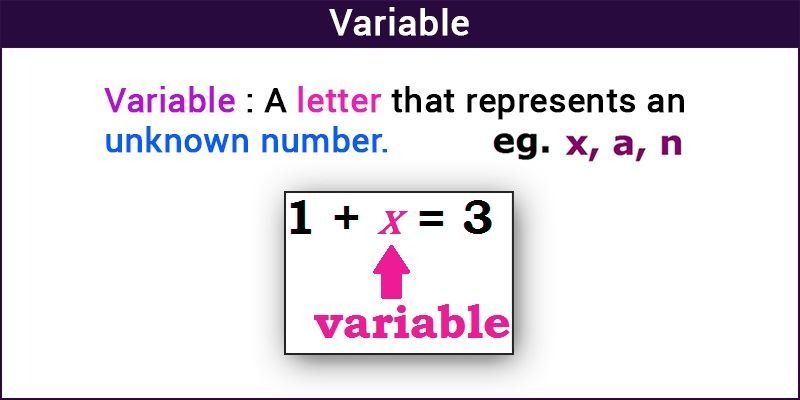
In algebra, letters are used to represent numbers that can change. These letters are called variables.
Example:
- x = 3
- x can also become 5 or 10 depending on the problem
Children often struggle here because letters feel unfamiliar in math. Explaining that letters are “number holders” makes this idea easier.
Understanding Variables Through Simple Examples
Variables help children generalize rules.
Example:
- 5 + 3 = 8
- 6 + 3 = 9
- a + 3 = ?
Here, a can be any number. This teaches children that algebra works for all numbers, not just one example.
This understanding is central to the basics of algebra and prepares children for more complex problems later.
Simple Algebra Expressions
An algebra expression combines numbers, letters, and operations.
Examples:
- x + 2
- 3y
- a − 5
At this stage, children are not expected to solve everything—only to read and understand what the expression means.
How Algebra Formulas Work (Made Simple for Kids)
An algebra formula is a rule that shows how different quantities are related. Formulas help children solve problems faster and more accurately.
Understanding Formulas Step by Step
Example:
- Formula: a + b = c
This means:
If you know the values of a and b, you can find c.
Another example:
- Formula: x = y + 2
If y = 5, then:
x = 5 + 2 = 7
When explained slowly, children see that algebra formula rules are logical, not mysterious.
Why Letters Are Used Instead of Numbers
One common question children ask is:
“Why can’t we just use numbers?”
Explain it like this:
- Numbers tell us answers
- Letters help us find unknowns
Algebra allows us to solve many similar problems using one method. This is why understanding what is algebra is more important than rushing into solving many equations.
Connecting Algebra to Real Life
Children understand algebra much better when they can see how it connects to everyday situations. When algebra feels useful and familiar, it no longer seems like an abstract school subject but a natural part of daily thinking.
For example, consider shopping situations. If one notebook costs x rupees, then buying two notebooks costs 2x rupees, and buying five notebooks costs 5x rupees. Children quickly understand that the letter x simply represents the price of one notebook, and algebra helps calculate the total cost without knowing the exact price.
Another common example is sharing or eating food. If a child has x chocolates and eats 3 chocolates, the number of chocolates left can be written as x − 3. This helps children see that subtraction with variables works the same way as subtraction with numbers.
Time and age examples also make algebra clearer. If Riya is x years old now, she will be x + 2 years old after two years. These everyday examples show children that the basics of algebra are used in regular decision-making and problem-solving, not just in textbooks.
Help your child move from numbers to thinking logically.
Experience a PlanetSpark demo class designed to build strong algebra fundamentals step by step.
Why Strong Algebra Basics Matter Before Moving Ahead
If children move ahead without fully understanding variables, algebra can quickly feel confusing. When kids know that variables are simply placeholders for unknown numbers—not new values to memorize—they are better able to follow equations and logical steps in more complex problems.
Knowing How Expressions Work
Expressions combine numbers, variables, and operations. Without clarity here, children often misread problems or apply incorrect operations. A strong understanding of expressions helps children break problems into steps instead of guessing answers.
Grasping Simple Algebra Formula Logic
Simple algebra formulas teach children how values are related. If this logic is unclear, solving equations and word problems becomes difficult later on. Understanding why a formula works builds confidence and accuracy.
Solving Problems with Confidence
With strong algebra basics, children approach problems calmly and logically. They are more willing to try challenging questions and trust their own thinking.
Building Long-Term Mathematical Thinking
Clear fundamentals help children avoid memorization-based learning. Instead, they develop reasoning skills that support advanced math topics and strengthen problem-solving abilities over the long term.
Important Algebra Rules Explained in a Simple Way
Once children are comfortable with variables and expressions, they can begin applying basic rules. These rules are not meant to be memorized blindly—they help children stay organized and logical while solving problems.
The Balance Rule
One of the most important ideas in the basics of algebra is balance. An equation is like a weighing scale—whatever you do on one side must also be done on the other.
Example:
x + 3 = 8
To find x:
- Subtract 3 from both sides
x = 8 − 3
x = 5
This rule helps children understand why steps work, not just what to do.
Order of Operations (Introduced Gently)
Children don’t need full formulas immediately, but they should know that multiplication happens before addition.
Example:
2 + 3x
Explain that:
- First solve 3x
- Then add 2
This prepares them for more structured use of an algebra formula later on.
Step-by-Step Method to Teach Algebra at Home
Teaching algebra at home works best when learning progresses in small, confident steps.
Step 1: Start With Familiar Numbers
Begin by turning arithmetic problems into algebra problems.
Example:
- 7 + 5 = 12
- x + 5 = 12
This helps children see that what is algebra is simply a new way of writing familiar math.
Step 2: Use Simple Word Problems
Word problems help children connect algebra to real situations.
Example:
“Riya has some chocolates. She eats 4 and has 6 left. How many chocolates did she have at first?”
Write it as:
x − 4 = 6
This reinforces understanding of variables and equations.
Step 3: Introduce One Algebra Formula at a Time
Avoid overwhelming children with many formulas. Start with simple ones like:
- x + a = b
- x − a = b
Practice these until your child feels confident.
Step 4: Encourage Explanation
Ask children to explain their steps out loud. When they verbalize their thinking, their understanding of the basics of algebra becomes stronger and clearer.
Fun Activities to Practice Algebra Concepts
Fun Activities to Practice Algebra Concepts
Algebra practice does not have to feel like worksheets and long problem sets. When learning is playful and interactive, children are more willing to participate, think deeply, and explore solutions without fear of making mistakes. These activities help children apply algebra concepts naturally while strengthening their logical thinking skills.
Number Mystery Game:
This game turns algebra into a fun guessing challenge. Think of a number and give children simple clues such as, “I’m thinking of a number. When I add 3, I get 10.” Children then translate the clue into an equation:
x + 3 = 10
They solve it step by step to find the mystery number. This activity encourages children to connect real-life statements with algebraic expressions and helps them understand how equations represent situations.
Match the Equation:
Create two sets of cards—one with simple algebra equations and another with their solutions. Children solve each equation and match it with the correct answer card. This activity improves problem-solving accuracy and helps children practice algebra rules in a low-pressure, game-like format.
Create-Your-Own Formula:
Ask children to invent their own math rules, such as “Take a number, multiply it by 2, then add 5.” They can write this rule as an algebraic expression:
y = 2x + 5
This activity builds creativity and confidence by showing children that they can form and understand algebra formulas on their own, reinforcing both understanding and independence in learning.
Strong algebra skills shape confident problem-solvers.
Join a PlanetSpark demo class and see how structured guidance helps children understand algebra without memorization.
Common Challenges Kids Face While Learning Algebra
Even when algebra is taught patiently and clearly, some difficulties are completely normal. Understanding these challenges helps parents and teachers respond with the right support instead of pressure.
Fear of letters in math:
Many children feel nervous when numbers are replaced with letters. Letters look unfamiliar, and children often assume algebra is “harder” because of this. Gently explain that letters are simply placeholders for unknown numbers, not new values to memorize. Using simple examples like x = 5 helps children see that letters behave just like numbers.
Confusing operations:
At the beginning, children may mix up addition and subtraction or apply the wrong operation when solving equations. This usually happens when they rush or try to memorize steps. Slowing down, revisiting earlier examples, and clearly explaining why an operation is used helps reduce these mistakes over time.
Skipping steps:
Children may try to jump straight to the answer, especially if they think algebra is about speed. Skipping steps often leads to errors and confusion. Encourage them to write each step clearly, as this builds stronger understanding and helps them track their own thinking.
Mistakes Parents Should Avoid While Teaching Algebra
Even with good intentions, certain teaching habits can unintentionally make algebra feel difficult or stressful for children.
Pushing speed too early:
Algebra focuses on logical thinking, not fast answers. When children are rushed, they may apply rules incorrectly or lose confidence. Emphasizing accuracy and clarity first allows speed to develop naturally.
Teaching too many rules at once:
Introducing multiple rules together can overwhelm children and cause confusion. It is better to focus on one concept at a time and practice it until the child feels comfortable before moving on.
Correcting without explanation:
Simply telling a child that an answer is wrong can create fear or self-doubt. Instead, asking gentle questions like, “What happened in this step?” helps children reflect, understand their mistake, and learn more effectively.
How PlanetSpark Helps in Mastering the Basics of Algebra for Logical Thinking
PlanetSpark helps students build a strong foundation in algebra by focusing on reasoning, patterns, and relationships between numbers. Instead of introducing formulas without context, the platform ensures learners understand the logic behind variables, expressions, and equations.
- With personalised guidance, expert mentors at PlanetSpark help students grasp what variables represent and how algebra connects to real-life problem-solving. Learners practise forming and solving simple equations through step-by-step explanations and guided examples.
- Understanding patterns and variables → learning algebraic expressions → practising equations → strengthening logical reasoning. This structured progression helps students transition smoothly from arithmetic to algebra.
- Students engage in activities such as pattern identification, equation-building exercises, real-world word problems, and guided practice sessions. These activities reduce confusion and help learners see algebra as a thinking tool rather than a difficult subject.
- With regular feedback, interactive lessons, and concept-driven instruction, PlanetSpark enables students to master algebra basics effectively—building confidence and readiness for advanced math topics.
Conclusion
Algebra is not just another math topic—it is a way of thinking. When children clearly understand the basics of algebra, they learn to approach problems calmly and logically. By explaining what is algebra in simple terms, introducing each algebra formula gradually, and encouraging reasoning over memorization, parents and teachers can help children build strong analytical skills. With patience and structured practice, algebra becomes a confidence-building tool that supports success far beyond the classroom.
Frequently Asked Questions
Children can begin learning the basics of algebra around ages 8–9, once they are comfortable with basic arithmetic and problem-solving.
No. While algebra formula rules are important, algebra mainly teaches logical thinking, pattern recognition, and structured problem-solving.
Confusion usually comes from a lack of clear introduction. Once children understand what is algebra—finding unknown numbers using logic—they become more confident.
Yes. When taught properly, algebra is understood through reasoning rather than memorization, making learning long-lasting.
Around 10–15 minutes, 3–4 times a week is enough for steady progress, provided concepts are well explained.