
Cardinal Numbers: Build Strong Number Foundations with PlanetSpark
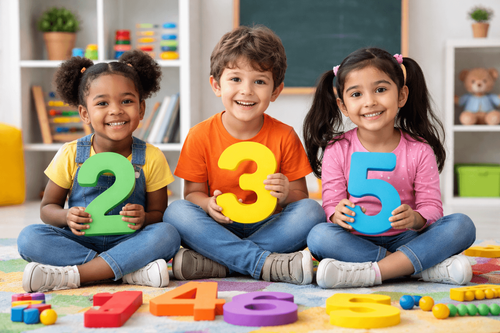

Numbers are an important part of everyday life. Children use numbers to count toys, books, friends, and many other things around them. One of the first number concepts kids learn is cardinal numbers.
So, what is a cardinal number? A cardinal number tells us how many items are in a group. For example, if a child has three apples, the number three shows the total quantity.
Understanding cardinal numbers helps children build strong counting skills and develop a solid foundation for learning mathematics.
What Is a Cardinal Number?
A cardinal number is a number that tells us the exact quantity of objects in a group.
For example:
- 1 apple
- 4 pencils
- 7 students
- 10 books
In each example, the number tells us how many items are present.
So if someone asks, which one is a cardinal number, the answer is simple: any number that shows how many things there are.
Children use cardinal numbers in everyday situations such as:
- Counting toys
- Counting classmates in school
- Counting candies or chocolates
- Counting steps while walking
Learning cardinal numbers helps kids understand numbers in a simple and practical way.
Key Characteristics
Cardinal numbers have some important features that make them easy to understand.
1.They Show Quantity
Cardinal numbers always tell us how many objects are present.
Example:
- 5 cookies
- 8 balloons
2.Comparison with Other Number Types
Cardinal numbers are different from other types of numbers used in mathematics and language.
Here is a simple comparison:
Cardinal Numbers
- Show how many objects are present
- Used for counting
- Examples: 1, 2, 3, 10
Example:
There are five apples on the table.
Ordinal Numbers
- Show position or order
- Examples: first, second, third
Example:
She finished first in the race.
Nominal Numbers
- Used as labels or identifiers
- Examples: phone numbers, jersey numbers
Example:
Player 7 scored the goal.
Understanding the difference between these number types helps children use numbers correctly in both math and language.
3.They Are Used in Counting
Children use cardinal numbers when they count objects one by one.
Example counting:
1, 2, 3, 4, 5
4.They Answer the Question “How Many?”
Whenever someone asks how many, the answer will usually be a cardinal number.
Example:
How many pencils are on the table?
Six pencils
5.They Are Used in Daily Life
Kids use cardinal numbers every day while:
- Playing games
- Counting toys
- Sharing snacks
- Learning math in school
Cardinal Number List (1–10)
One of the best ways for kids to understand cardinal numbers is by learning the basic counting numbers.
Here is the cardinal number list from 1 to 10:
1 – One
2 – Two
3 – Three
4 – Four
5 – Five
6 – Six
7 – Seven
8 – Eight
9 – Nine
10 – Ten
Children usually learn these numbers first because they are the foundation of counting.
Once kids understand numbers from 1 to 10, they can easily learn larger numbers.
Help your child master cardinal numbers and counting with fun, interactive learning at PlanetSpark. Book a free class today!
How Children Memorize Cardinal Numbers Easily
Young learners remember numbers better when they practice them regularly. Parents and teachers can use simple techniques to help children memorize the cardinal number list.
Some effective methods include:
Visual Learning
Children can look at number charts that show numbers with pictures. For example:
- 1 apple
- 2 balloons
- 3 stars
This helps kids connect numbers with real objects.
Songs and Rhymes
Counting songs make learning fun and memorable. Many children remember numbers quickly through music and repetition.
Counting Objects
Children can count items such as:
- Toys
- Books
- Fruits
- Steps on the stairs
These simple activities make learning numbers enjoyable and practical.
Which One Is a Cardinal Number?
A cardinal number is any number that tells us how many objects are present in a group. These numbers are used for counting and showing quantity.
For example, if someone asks, which one is a cardinal number, the answer would be any number that shows the total amount of something.
Examples of cardinal numbers include:
1 apple
3 pencils
5 books
8 balloons
10 students
In each example, the number tells us how many items are present.
Children use cardinal numbers in everyday situations such as:
• Counting toys while playing
• Counting friends in a classroom
• Counting candies or chocolates
• Counting steps while walking
When a number answers the question “How many?”, it is called a cardinal number.
Examples of Cardinal Numbers in Everyday Life
Kids understand numbers better when they see real-life examples.
Here are some simple examples of cardinal numbers:
- 2 shoes on your feet
- 3 crayons in a pencil box
- 4 legs on a table
- 5 fingers on a hand
- 7 days in a week
Parents and teachers often use everyday objects to help children practice counting.
Fun activities include:
- Counting toys
- Counting fruits
- Counting books on a shelf
- Counting steps while walking
These activities make learning cardinal numbers fun and interactive.
Make learning cardinal numbers exciting for your child with engaging activities and expert guidance at PlanetSpark. Book a free class now!
Usage of Cardinal Numbers in Mathematics
Cardinal numbers are widely used in mathematics because they represent quantity.
In math, cardinal numbers help children:
- Count objects
- Compare quantities
- Perform addition and subtraction
- Understand number patterns
For example:
If a child has 3 pencils and receives 2 more, the total becomes 5 pencils.
This simple example shows how cardinal numbers are used in basic arithmetic.
Learning cardinal numbers helps children understand more advanced mathematical concepts later in school.
Fun Activities to Help Kids Learn Cardinal Numbers
Learning numbers becomes much easier when children practice them through fun and interactive activities. Instead of only memorizing numbers, kids understand better when they see, touch, and use numbers in real life.
Here are some engaging ways to teach cardinal numbers effectively:
1. Counting Games
Counting games are one of the simplest and most effective ways to teach cardinal numbers.
You can ask children to count objects around them such as:
Toys
Pencils
Books
Fruits
Example:
“Can you count how many pencils are on the table?”
You can also turn it into a fun challenge:
Who can count faster?
Who finds 10 objects first?
This builds both number recognition and confidence.
2. Number Flashcards
Flashcards make learning visual and interesting for kids.
Use colorful cards that show:
A number
Matching objects
Example:
3 → 🍎🍎🍎 (three apples)
Tips for better learning:
Use bright colors
Add pictures kids love (animals, fruits, toys)
Practice daily for 5–10 minutes
Flashcards help children connect numbers with quantities, which is key for understanding cardinal numbers.
3. Story-Based Learning
Children love stories, and storytelling makes numbers more memorable.
You can teach numbers using simple stories like:
Five little ducks
Three little pigs
Ten monkeys jumping on the bed
Example:
“As the story goes on, children count how many ducks are left.”
Stories improve:
Memory
Listening skills
Number understanding
You can explore storytelling activities in this guide on Storytelling Skills for Kids.
4. Everyday Practice
The best way to teach cardinal numbers is by including them in daily life.
Encourage children to count things during routines like:
Counting stairs while climbing
Counting snacks before eating
Counting books while arranging
Counting steps while walking
Example:
“Let’s count how many biscuits you have!”
This helps kids understand that numbers are useful in real life, not just in books.
5. Use of Songs and Rhymes
Songs and rhymes make learning numbers fun and rhythmic.
Popular number rhymes include:
One, Two, Buckle My Shoe
Five Little Monkeys
Ten in the Bed
Why it works:
Kids remember music easily
Repetition improves learning
It makes learning enjoyable
6. Hands-On Activities
Children learn best when they use their hands.
Try activities like:
Counting beads
Arranging blocks
Sorting objects
Using fingers to count
Example:
“Show me 5 fingers” or “Give me 3 blocks.”
This improves practical understanding of numbers.
7. Digital Learning Tools
Interactive apps and videos can also support learning.
Animated counting videos
Educational games
Interactive quizzes
These tools make learning engaging and modern, especially for digital-age learners.
Why These Activities Work
These activities help children:
Understand numbers clearly
Build strong counting skills
Improve memory and focus
Enjoy the learning process
When learning is fun, children stay more engaged and learn faster.
By combining games, stories, and daily practice, children can easily master cardinal numbers in a natural and enjoyable way.

Difference Between Cardinal and Ordinal Numbers
Children often confuse cardinal numbers with ordinal numbers, but they have different purposes.
Cardinal numbers tell us the quantity of objects.
Example:
There are five apples in the basket.
Ordinal numbers tell us the position or order of something.
Example:
She finished first in the race.
Here is a simple comparison:
| Cardinal Numbers | Ordinal Numbers |
|---|---|
| Show quantity | Show position |
| Used for counting | Used for ranking |
| Examples: 1, 2, 3, 4 | Examples: first, second, third |
Understanding this difference helps children use numbers correctly in both mathematics and everyday communication.
Why Cardinal Numbers Are Important for Early Learning
Cardinal numbers are one of the most important concepts children learn during their early education. They form the foundation of basic counting skills and help children understand how numbers represent quantity.
When children learn cardinal numbers, they begin to understand how to count objects correctly and recognize the relationship between numbers and real-life items. This understanding helps them develop confidence in solving simple math problems.
For example, when a child counts three apples or five pencils, they are using cardinal numbers to describe the exact number of objects present. This ability to count and identify quantities is essential for learning other mathematical concepts later.
Cardinal numbers also support the development of logical thinking skills. When children compare quantities, share objects, or solve simple problems, they are actively using cardinal numbers in their reasoning.
Parents and teachers can support this learning by encouraging children to count objects during daily activities. Simple tasks like counting toys, snacks, or steps can help children practice using numbers in a natural and enjoyable way.
Frequently Asked Questions
The numbers 1, 2, 3, 4, 5, 6, 7, and 8 are all cardinal numbers because they represent the quantity of objects. For example, three apples means there are three items in total. Cardinal numbers help children learn counting and understand quantities in everyday life.
The cardinal number of 7 represents the quantity of seven items. For example, if there are seven pencils on a table, the number seven tells us how many pencils are present. Cardinal numbers always answer the question “how many?”
The cardinal numbers from 1 to 100 include all counting numbers starting from one and continuing up to one hundred. These numbers help children count objects, compare quantities, and build a strong foundation for learning mathematics.
Cardinal numbers show the quantity of objects, such as one, two, or five. Ordinal numbers, on the other hand, describe the position or order of something, such as first, second, or third. Both types of numbers help children understand counting and sequences.
PlanetSpark helps children understand cardinal numbers and counting concepts through engaging and interactive learning activities. Students learn to recognize numbers, count objects, and apply numbers in real-life situations. This approach helps children develop a stronger understanding of basic math concepts.
PlanetSpark offers structured learning programs designed to build strong numeracy and problem-solving skills in children. With interactive lessons, personalized guidance, and engaging activities, students develop confidence while learning foundational math concepts like cardinal numbers.