
Factorisation Class 8 Guide with Methods, Examples and Tips

Table of Contents
- Understanding Factorisation Class 8
- Key Concepts You Must Know Before Learning Factorisation Cla
- Difference Between Factors and Factorisation
- Important Algebraic Identities for Factorisation Class 8
- Types of Expressions Used in Factorisation Class 8
- Methods of Factorisation Class 8
- Tips and Tricks to Make Factorisation Class 8 Easier
- Step-by-Step Approach to Begin Any Factorisation Class 8 Pro
- Build Strong Maths Foundations with PlanetSpark Maths Course
- A Confident Start to Mastering Factorisation Class 8
Struggling with algebraic expressions often makes many Class 8 learners nervous, especially when factorisation begins to feel confusing. The good news is that factorisation is actually simple once the right method and clarity fall into place.
This blog explains factorisation class 8 in a detailed, easy and structured way so learners gain confidence in the topic. Every section covers concepts, methods, examples and revision notes aligned with Class 8 Maths Chapter 12. By the end, learning becomes more manageable and systematic. A short recommendation about PlanetSpark is included later to help learners build strong maths foundations through expert-led sessions.
Understanding Factorisation Class 8
Factorisation class 8 focuses on breaking an algebraic expression into simpler components that can be multiplied to obtain the original expression. This method helps in solving algebraic equations, simplifying expressions and understanding patterns in algebra. Class 8 factorisation also acts as the foundation for higher classes where expressions and equations become more complex. The process involves identifying common factors, applying algebraic identities, regrouping terms and recognising patterns. These skills make algebra easier to handle in later chapters.
Key Concepts You Must Know Before Learning Factorisation Class 8
Understanding factorisation becomes easier when the basic terms of algebra are clear. Class 8 Maths factorisation relies on a few important definitions that help students read, analyse and simplify expressions correctly.
Here are the essential terms explained in a structured and simple manner.
Term 1: Algebraic Expression
An algebraic expression contains numbers, variables and mathematical operations. Examples include 5x, 3a + 2b or x² + 4x + 3. These expressions are factorised in Class 8.
Term 2: Variable
A variable is a letter that represents an unknown value. Examples include x, y and a. Variables help form expressions that change based on conditions.
Term 3: Constant
A constant is a fixed number that does not change. Examples include 2, 7 and 15. Constants combine with variables to create algebraic terms.
Term 4: Coefficient
A coefficient is the numerical part of a term. In 7x, the coefficient is 7. In 3xy, the coefficient is 3. Coefficients help identify common factors.
Term 5: Term
Each separate part of an expression is called a term.
Examples
In 5x + 3, there are two terms
In x² + 5x + 6, there are three terms
Build Strong Maths Foundations with PlanetSpark’s Personalised Coaching
Term 6: Factors
Factors are quantities that multiply to give the original number or expression. For example
Factors of 12 are 3 and 4
Factors of 6x are 2, 3 and x
Term 7: Factorisation
Factorisation is the process of breaking an expression into factors.
Example:
6x + 12 becomes 6 multiplied by (x + 2).
This process simplifies algebraic expressions in a systematic manner.
Term 8: Types of Expressions
Before factorising, recognise the type of expression
Monomial: 1 term
Binomial: 2 terms
Trinomial: 3 terms
Knowing the type helps decide which factorisation method to use.
Difference Between Factors and Factorisation
Point of Comparison | Factors | Factorisation |
|---|---|---|
Meaning | Factors are the numbers or algebraic expressions that multiply to form a given expression. | Factorisation is the process of breaking an expression into its factors. |
Role | They act as the building blocks of a number or expression. | It is the method used to find those building blocks. |
Example | In 6x, the factors can be 2, 3 and x. | 6x + 12 becomes 6(x + 2) after factorisation. |
Type | They are fixed answers depending on the expression. | It is a procedure involving steps and methods. |
Use in Algebra | Helps understand the components of expressions. | Helps simplify expressions and solve algebraic questions. |
Chapter Relevance | Understanding factors makes it easier to identify patterns. | Factorisation is the main concept of Class 8 Maths Chapter 12. |
Student Objective | Identify what divides an expression exactly. | Break expressions correctly using methods like common factor, identities or regrouping. |
Encourage consistent learning with PlanetSpark Maths Course
Important Algebraic Identities for Factorisation Class 8
Table of Useful Identities
Algebraic Identity | Clean Expanded Form |
|---|---|
(x + a)(x + b) | x² + (a + b)x + ab |
(x – a)(x – b) | x² – (a + b)x + ab |
(x + a)(x – b) | x² + (a – b)x – ab |
(a + b + c)² | a² + b² + c² + 2ab + 2bc + 2ca |
(a + b)³ | a³ + b³ + 3a²b + 3ab² |
(a – b)³ | a³ – b³ – 3a²b + 3ab² |
a³ + b³ | (a + b)(a² – ab + b²) |
a³ – b³ | (a – b)(a² + ab + b²) |
a³ + b³ + c³ – 3abc | (a + b + c)(a² + b² + c² – ab – bc – ca) |
If a + b + c = 0 then a³ + b³ + c³ | 3abc |
Clean Checklist Version for Quick Revision
Students looking for Class 8 Maths Chapter 12 can revise factorisation faster using this short list.
Formula for products of two binomials
(x + a)(x + b)Formula for products of two negative binomials
(x – a)(x – b)Mixed signs in binomials
(x + a)(x – b)Square of a trinomial
(a + b + c)²Cube of a binomial
(a + b)³Cube of a negative binomial
(a – b)³Sum of cubes
a³ + b³Difference of cubes
a³ – b³Sum of three cubes minus triple product
a³ + b³ + c³ – 3abcSpecial identity when a + b + c = 0
a³ + b³ + c³ = 3abc
Enable children to understand maths concept smoothly through guided sessions of PlanetSpark
Types of Expressions Used in Factorisation Class 8
Understanding the different types of expressions helps students recognise patterns and choose the correct method for factorisation. Class 8 factorisation mainly deals with monomials, binomials, trinomials and simple algebraic expressions formed by variables and numbers. Each type follows predictable rules, making the process of factorisation class 8 much easier.
1. Monomials
A monomial is an expression with only one term.
It may contain constants, variables or both.
Examples
5x
7xy
–3a²b
How they are used in factorisation
Monomials often appear as common factors.
For example, in 12x²y + 16xy, the common monomial factor is 4xy.
2. Binomials
A binomial has two unlike terms.
They are separated by addition or subtraction.
Examples
x + 5
a – b
3p + 2q
How they are used in factorisation
Binomials frequently become factors during regrouping or identity-based factorisation.
For example, (x + 5)(x + 2) is a product of two binomials.
Boost mathematical clarity with PlanetSpark’s personalised maths programme.
3. Trinomials
A trinomial has three unlike terms.
Most expressions in Class 8 factorisation problems are trinomials.
Examples
x² + 5x + 6
a² – 3a + 2
How they are used in factorisation
Trinomials are usually factorised using
splitting the middle term, or
applying algebraic identities.
For example
x² + 5x + 6 becomes (x + 3)(x + 2).
4. Polynomials with More Than Three Terms
These expressions contain four or more terms.
They are not monomials, binomials or trinomials.
Examples
x³ + x² + x + 1
a² + ab + b² + c²
How they are used in factorisation
Such expressions are factorised using regrouping.
Terms are arranged in pairs or groups to identify common factors.
For example
x³ + x² + x + 1 can be regrouped as
x²(x + 1) + 1(x + 1)
Which becomes
(x² + 1)(x + 1).
5. Algebraic Expressions with Products and Powers
These are expressions involving powers or multiple variables.
Examples
4x²y³
9a²b
How they are used in factorisation
Students find the highest common power of each variable.
For example, in 12x³y² and 18x²y³, the common factor is 6x²y².
Methods of Factorisation Class 8
Factorisation in Class 8 helps simplify algebraic expressions and solve equations efficiently. There are several methods, and understanding each step by step makes learning fun and manageable. Let’s explore all key methods with examples.
Improve exam preparation withPlanetSpark class designed for Class 8 students.
1. Factorisation by Taking Out Common Factors
This is the simplest and most commonly used method in Class 8.
Steps:
Identify the greatest common factor (GCF) from all terms in the expression.
Take the GCF outside the bracket.
Example:
Expression: 6x + 12
GCF: 6
Factorised Form: 6(x + 2)
Why it’s fun: Spotting the common factor is like finding a hidden treasure in your expression!
2. Factorisation Using Algebraic Identities
Algebraic identities make factorisation faster when expressions match certain patterns.
Important Identities for Class 8:
(a + b)² = a² + 2ab + b²
(a - b)² = a² - 2ab + b²
a² - b² = (a - b)(a + b)
Example:
Expression: x² - 9
Matches a² - b² (x² - 3²)
Factorised Form: (x - 3)(x + 3)
Pro Tip: Learn to recognise patterns – it makes factorisation feel like solving a puzzle!
3. Factorisation by Regrouping Terms
This method is useful when there is no obvious common factor or identity.
Steps:
Split the expression into two groups.
Factor out the GCF from each group.
Take the common factor outside the bracket.
Example:
Expression: x² + 5x + 6
Split: (x² + 2x) + (3x + 6)
Factor each: x(x + 2) + 3(x + 2)
Factor the common term: (x + 2)(x + 3)
Why it works: It helps tackle tricky expressions that don’t fit patterns directly.
Help learners build long term confidence with PlanetSpark’s structured maths support.
4. Factorisation of Trinomials
Trinomials have three terms and often appear in Class 8 algebra questions.
Steps:
Identify a trinomial in the form x² + bx + c.
Find two numbers that multiply to c and add to b.
Split the middle term using these numbers.
Apply regrouping to factorise completely.
Example:
Expression: x² + 7x + 12
Numbers that multiply to 12 and add to 7: 3 and 4
Split middle term: x² + 3x + 4x + 12
Regroup: (x² + 3x) + (4x + 12)
Factor: x(x + 3) + 4(x + 3)
Final Factorised Form: (x + 3)(x + 4)
5. Factorisation of Quadratic Expressions
Quadratic expressions are a key part of Class 8 factorisation.
Steps:
Write the expression in standard quadratic form ax² + bx + c.
Look for factors of a × c that sum to b.
Split the middle term and factorise using common factors or regrouping.
Example:
Expression: 2x² + 7x + 3
Multiply a × c: 2 × 3 = 6
Numbers that sum to 7: 6 and 1
Split middle term: 2x² + 6x + x + 3
Regroup: (2x² + 6x) + (x + 3)
Factor: 2x(x + 3) + 1(x + 3)
Final Factorised Form: (2x + 1)(x + 3)
6. Factorisation of Special Cases
Some expressions are slightly different and have special methods:
Difference of Squares: a² - b² = (a - b)(a + b)
Perfect Square Trinomial: a² + 2ab + b² = (a + b)² or a² - 2ab + b² = (a - b)²
Sum or Difference of Cubes (Optional Advanced Intro for Class 8):
a³ + b³ = (a + b)(a² - ab + b²)
a³ - b³ = (a - b)(a² + ab + b²)
Example:
x² - 25 → x² - 5² → (x - 5)(x + 5)
Join a guided learning session and build confidence in maths with PlanetSpark
Tips and Tricks to Make Factorisation Class 8 Easier
Factorisation can feel tricky at first, but with a few practical tips, Class 8 learners can master it faster. These tricks not only save time during exams but also improve accuracy.
1. Always Look for the Greatest Common Factor (GCF) First
Before applying any method, check if all terms share a common factor. Taking out the GCF simplifies the expression immediately and often makes other methods easier.
Example:
Expression: 12x² + 18x → GCF is 6x → Factorised form: 6x(2x + 3)
2. Memorise Key Algebraic Identities
Algebraic identities are your shortcuts. Perfect square trinomials, difference of squares, and sum/difference of cubes help in quick factorisation.
Example:
x² - 9 → Recognise as a² - b² → Factorised form: (x - 3)(x + 3)
3. Break Complex Expressions into Smaller Parts
For expressions with many terms, divide them into smaller, manageable groups. This makes spotting patterns and factors easier.
Example:
x² + 5x + 6 → Split as (x² + 2x) + (3x + 6) → Factor by grouping
4. Practice Middle-Term Splitting for Trinomials
For ax² + bx + c, find two numbers that multiply to a×c and sum to b. Splitting the middle term simplifies factorisation.
Example:
2x² + 7x + 3 → Numbers 6 & 1 → Split: 2x² + 6x + x + 3 → Factor: (2x + 1)(x + 3)
5. Check Your Work by Multiplying Factors
After factorising, multiply the factors back to see if the original expression is obtained. This prevents small mistakes and builds confidence.
6. Use Patterns to Your Advantage
Some expressions repeat across different problems. Identifying these patterns saves time and reduces errors.
Tip: Practice regularly and try different types of problems to recognise patterns quickly.
Motivational Note: Factorisation becomes easy when approached systematically. Each problem is a mini puzzle – solving it step by step builds confidence and speed.
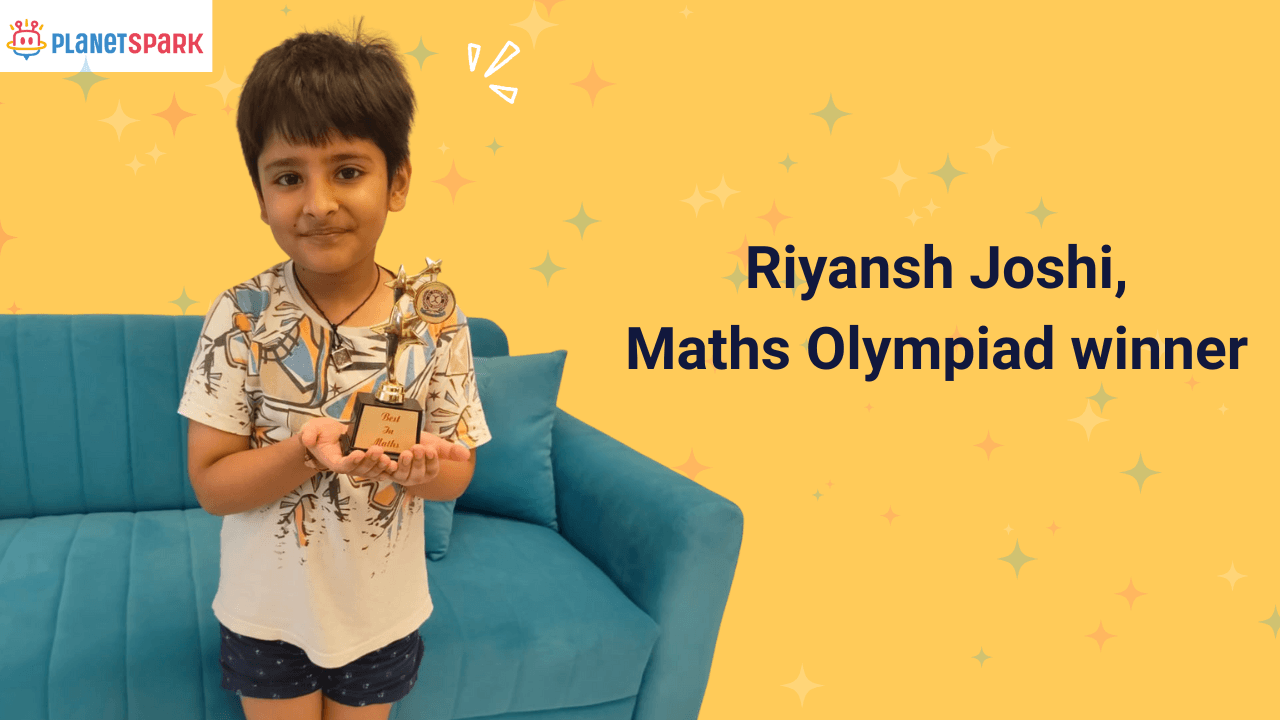
Riyansh Joshi, a proud Maths Olympiad winner, stands out for his clarity of thought, strong reasoning skills, and confident communication.
Join thousands of young achievers like Riyansh and unlock your child’s full potential in maths with PlanetSpark’s personalised online classes.
Book a free trial today and start the journey to success!
Step-by-Step Approach to Begin Any Factorisation Class 8 Problem
Having a structured approach prevents confusion and helps solve problems accurately. Here’s a stepwise guide tailored for Class 8 learners:
Step 1: Examine the Expression
Look carefully at the expression. Count the number of terms and identify whether it’s a monomial, binomial, or trinomial.
Step 2: Identify the Greatest Common Factor (GCF)
Check if all terms share a common factor, either numerical or variable. If yes, factor it out first.
Example:
6x² + 9x → GCF: 3x → 3x(2x + 3)
Step 3: Check for Algebraic Identities
Ask yourself: Does this match (a + b)², (a - b)², or a² - b²? Recognising identities simplifies factorisation immediately.
Example:
x² - 16 → Recognise as a² - b² → Factorised: (x - 4)(x + 4)
Step 4: Apply Regrouping (If Needed)
If there’s no GCF or identity, split the expression into smaller groups to find common factors within each group.
Example:
x² + 5x + 6 → Split as (x² + 2x) + (3x + 6) → Factor → (x + 2)(x + 3)
Step 5: Factor Trinomials
For ax² + bx + c, find two numbers that multiply to a×c and add to b. Then split the middle term and factor by grouping.
Step 6: Verify Your Answer
Always multiply the factors back to ensure the original expression is obtained. This confirms accuracy and builds confidence.
Step 7: Practice Regularly
Consistency is key. Daily practice helps spot GCFs, identities, and patterns faster, making factorisation simpler over time.
Pro Tip for Students: Think of factorisation like a math detective game each step uncovers clues, leading to the final solution. Following these steps transforms complex problems into manageable tasks.

Build Strong Maths Foundations with PlanetSpark Maths Course
PlanetSpark offers a structured and engaging maths learning experience designed specifically for school learners. The course focuses on understanding concepts, building problem-solving skills and improving accuracy. Factorisation class 8 becomes easier when guided by expert trainers who simplify each method step by step. The course includes interactive activities that strengthen algebraic thinking.
Major USPs of the PlanetSpark Maths Course
Personalised one to one learning for deeper concept clarity
Step based teaching methods that simplify complex algebra topics
Regular practice sheets aligned with school curriculum
Experienced maths trainers who guide through every method
Simplified explanations for Class 8 factorisation and other algebra topics
Learning sessions that build both accuracy and confidence
PlanetSpark creates a supportive learning environment for students who want to improve their understanding of Class 8 Maths Chapter 12 and other maths chapters.
A Confident Start to Mastering Factorisation Class 8
Factorisation class 8 becomes easier when concepts are broken down into simple methods and examples. With practice, every learner can understand how expressions work and how factors combine to create patterns in algebra. A strong base now leads to better performance in later classes where algebra becomes more advanced. Daily fifteen minute practice can make a big difference. A little consistency shapes a confident mathematical mindset. Learning becomes more enjoyable when supported with clarity, patience and the right guidance. This guide helps students approach factorisation with confidence and build academic strength for future topics.
Frequently Asked Questions
Factorisation in Class 8 Maths means breaking an algebraic expression into simpler expressions that multiply to give the original expression. It helps simplify equations, understand patterns and prepare for higher-level algebra. The process includes methods like common factor, identities and regrouping. Factorisation class 8 forms a strong foundation for future learning.
Factorisation class 8 is important because it builds essential algebraic skills. It teaches how expressions are formed and how they can be simplified. These skills appear in equations, identities and calculations in later classes. Strong command over this topic improves accuracy and logical thinking in mathematics.
The main methods include taking out common factors, using algebraic identities, regrouping terms and factorising trinomials. Each method applies to different types of expressions. Recognising which method fits a particular expression makes solving easier.
PlanetSpark provides personalised learning with expert guidance to simplify Class 8 factorisation. The course breaks concepts into easy steps, offers structured practice and builds strong problem-solving skills. The platform ensures students gain clarity and confidence in topics of factorisation.
Speed improves with regular practice. Starting with common factor questions builds confidence. Moving towards identities and regrouping helps strengthen pattern recognition. Following a fixed step-by-step approach reduces confusion and boosts accuracy.
Identity-based factorisation becomes easy once the basic identities are memorised and recognised. Pattern spotting plays an important role. Regular practice makes the process smooth, and learners quickly identify which identity fits a given expression.
PlanetSpark offers structured learning for all major Class 8 Maths topics including algebra, geometry, number systems and data handling. The course includes guided explanations, activities and personalised feedback to help students strengthen their maths foundation.