
Mental Maths for Class 1: Build Strong Early Math Skills
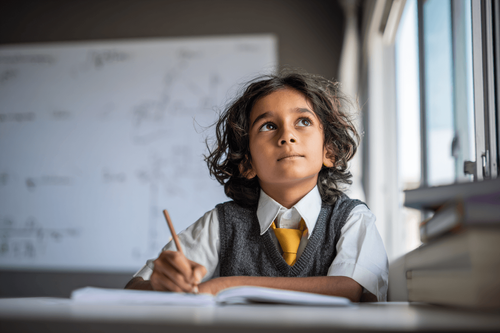

Mental maths is one of the most important early skills for young learners, helping them solve problems quickly without relying on pen, paper, or physical objects. This blog explains what mental mathematics is, how mental maths for Class 1 students strengthens number sense, and the best strategies to develop fast, confident, and sharp mental calculation skills in children right from the start.
What Is Mental Maths?
Mental maths refers to solving mathematical problems in your head without using written steps or counting aids. For Class 1 students, mental mathematics is not about speed or complexity; it is about understanding numbers deeply enough that simple answers come naturally. When children practise mental maths regularly, they become comfortable thinking about numbers, recognising patterns, and solving problems through reasoning rather than memorisation.
Mental maths builds number sense. Children begin understanding that adding means combining, subtracting means reducing, and numbers have relationships that make them predictable. The more they practise, the more their brain develops powerful calculation pathways that support future maths learning.
Why Mental Maths Should Start in Class 1
The Class 1 age group is the perfect stage to introduce mental maths because children are curious, quick learners, and highly responsive to visual and playful methods. Early exposure helps them develop a natural relationship with numbers. Instead of fearing maths, they start seeing it as a fun challenge.
Mental maths for Class 1 builds:
Confidence in answering quickly
Strong thinking and reasoning abilities
Better memory and attention
Early problem-solving skills
These skills support their entire academic journey and prepare them for addition, subtraction, multiplication, division, and more advanced topics later.
How Mental Maths Grows Brain Development
Mental mathematics activates parts of the brain responsible for memory, logic, creativity, and focus. When children solve problems mentally, they work through multiple steps in their heads, improving their cognitive strength. This type of brain training enhances:
Visualization skills
Logical sequencing
Critical thinking
Conceptual understanding
Mental calculation also boosts recall, as children learn to remember number patterns, simple sums, and frequently used combinations like doubles, neighbours, and number bonds.
Making Mental Maths Fun and Easy to Understand
Young kids learn best when they have fun. So mental maths methods must include playful elements. Teachers and parents often use coloured counters, finger cues, stories, flashcards, and quick games to introduce concepts. Visual cues help make mental images stronger, which later turn into mental strategies children use automatically.
Interactive methods make mental mathematics enjoyable, allowing children to practise without feeling pressured. The more engaging the method, the faster the child learns.
Developing Number Sense for Mental Calculation
Number sense is the heart of mental maths. It refers to understanding how numbers behave, relate, and change. Children with strong number sense can quickly tell which number is larger, how close two numbers are, or how many steps lie between them. This understanding helps students solve problems mentally because they start recognising number patterns rather than counting objects repeatedly.
Number sense grows when children practise counting forward, counting backward, identifying number sequences, and guessing the next number in a pattern. These activities encourage flexible thinking, a key requirement for mental maths class 1 learning.
Teaching Mental Maths Through Simple Visual Images
Class 1 children rely heavily on visuals. Introducing mental maths through pictures, dots, colours, and simple diagrams helps form clear mental images. For example, showing 5 as a group of two dots and three dots teaches the child that 5 can be broken into different combinations. These visual patterns soon become internalised, so children can imagine them without looking at actual objects.
Using everyday items, fruits, buttons, and toys, also helps them connect mental maths to real life. This connection makes remembering patterns easier and reduces fear around numbers.
Help your child build strong maths skills with fun mental maths techniques.
Using Number Bonds for Quick Mental Calculations
Number bonds are one of the most powerful mental maths tools. They teach children how numbers split and combine. For example:
5 = 2 + 3
7 = 5 + 2
10 = 8 + 2
When children master number bonds, they can solve simple problems instantly because they begin to “see” the relationships. Number bonds also help with addition, subtraction, and later multiplication. For Class 1, learning number bonds to 10 is the best start for mental mathematics.
Finger Maths and Quick Count Methods
Finger maths is not a sign of weakness, it is the first step toward mental calculation. Children naturally start imagining finger positions in their minds as they grow, which becomes an excellent mental maths technique. Finger-based counting helps young kids follow sequences, check place value, and verify answers.
Teachers often combine finger maths with rhythmic counting, clapping patterns, or chants to make learning more engaging. This builds auditory and physical memory, which supports mental recall.
Encouraging Estimation Skills Early
Estimation is a key part of mental maths because it teaches children to form approximate answers quickly. Class 1 students can begin estimating:
Which group has more objects
Which number is close to 10
Which set looks larger
Estimation skills teach children to make quick decisions and refine their judgment, strengthening their intuition about numbers.
Using Daily Activities to Build Quick Thinking
Mental mathematics grows naturally when children practise numbers in everyday situations. Class 1 children can learn mental maths without even realising it when they count snacks, share toys, compare heights, or check how many steps it takes to reach the door. Parents can use small moments during the day to ask fun questions like, “If you have 3 chocolates and I give you 2 more, how many will you have?” These simple conversations help reinforce how mental maths works in real life.
Such daily practice encourages children to think quickly and apply mental strategies. They realise that numbers aren’t just in textbooks, they are everywhere. This builds confidence and comfort with numbers from a young age.
Turning Games Into Mental Maths Lessons
Games are one of the most effective ways to teach mental maths for Class 1. Dice games, flashcard races, dominoes, dot-card matching, and quick-fire number questions all strengthen instant recall. These activities keep the brain active, improve memory, and teach children to think under light pressure. When learning feels like play, children stay engaged longer and practice becomes effortless.
These games also develop attention span and listening skills. A child playing a number race must listen carefully, react quickly, and make decisions based on mental mathematics strategies. The combination of fun + challenge is exactly what boosts their mental agility.
Using Storytelling as a Mental Maths Tool
Story-based problems help children think creatively while practising mental maths. Teachers often tell small stories like, “A puppy had 4 biscuits. He ate 1. How many are left?” Story questions trigger imagination while strengthening number manipulation in the child’s mind. This teaches them to apply mental maths to real-world scenarios and understand why maths matters.
Help your child sharpen mental maths skills with fun, structured sessions.
Learning Doubles and Near-Doubles
Doubles (like 3 + 3 or 4 + 4) are essential for mental maths because they help children recall answers instantly. Once children memorise doubles, they also learn near-doubles easily:
If they know 4 + 4 = 8, they quickly see that 4 + 5 = 9.
This pattern recognition builds speed and accuracy, key components of mental maths for Class 1.
Understanding Skip Counting for Quick Answers
Skip counting is one of the best ways to improve mental calculation because it teaches children to move in number steps instead of counting one by one. Counting by 2s, 5s, or 10s helps them answer questions like “What comes after adding 5?” without needing physical objects. Skip counting strengthens multiplication readiness as well.
Introducing Visualisation Techniques
Visualization is a core part of mental mathematics. When children imagine numbers, dots, or groups in their minds, they create mental pictures that make problem-solving natural. For example, imagining five dots arranged as two and three helps them recall 5 quickly. Visualization is what eventually replaces fingers and objects.
Teachers often encourage children to "see" answers in their heads by practising mental snapshots. Over time, these images become part of their automatic thinking.
Practising Reverse Thinking
Reverse thinking helps children understand that addition and subtraction are connected. If a child knows 6 + 3 = 9, then they instantly know 9 – 3 = 6. This strengthens prediction, quick reasoning, and awareness of number relationships, major components of mental maths for Class 1.
Training the Brain With Quick Questions
Rapid-fire questions, short timed quizzes, and one-minute warm-ups help build speed without pressure. Teachers often use simple prompts like:
“What comes after 7?”
“What is 5 plus 2?”
“How many more do you need to make 10?”
These questions improve recall and strengthen neural pathways that support long-term mental maths fluency.
Building a Strong Foundation for Future Maths Concepts
Mental maths lays the foundation for all future problem-solving. Children who develop strong mental maths skills early find it easier to learn multiplication, division, fractions, measurement, and problem-based reasoning. Mental maths makes these concepts feel natural rather than intimidating. The Class 1 stage is where children form their earliest mathematical impressions, so building these skills early ensures smoother progress in every later class.
Improving Focus, Memory, and Concentration
Mental mathematics strengthens memory because children must remember number combinations, patterns, and simple sums. It also improves focus, since mental maths requires attention and active thinking. As they practise regularly, they become more disciplined in how they approach problems, which supports academic success in other subjects as well.
Boosting Confidence and Reducing Maths Anxiety
Maths anxiety often begins early when children feel pressured or confused. Mental maths removes fear by helping them see numbers clearly and logically. When a child answers quickly without counting objects or writing steps, they feel powerful. This confidence motivates them to participate more in class, try challenging questions, and enjoy learning.
Why Choose PlanetSpark for Maths?
PlanetSpark’s maths program is designed to make mental maths easy, fun, and deeply engaging for Class 1 learners. Through interactive activities, visual tools, personalised guidance, and brain-boosting exercises, PlanetSpark helps children build strong mental maths foundations while enjoying every lesson.
What Makes PlanetSpark the Best for Early Maths Learning
Children learn through fun activities, games, and visual strategies
Mental maths techniques are taught step-by-step
Teachers personalize sessions based on each child’s learning style
Students develop quick thinking, problem-solving, and number sense
Real-life examples make maths meaningful and relatable
Confidence grows as children answer faster and more accurately
A structured curriculum strengthens both speed and understanding
Boost your child’s confidence with powerful mental maths training.
Mental Maths: The Superpower Every Young Learner Can Master
Mental maths helps children think faster, solve problems confidently, and enjoy numbers from an early age. When Class 1 children learn mental mathematics through clear strategies, number patterns, and everyday practice, they develop skills that last a lifetime. With the right support and engaging, expert-led sessions like those at PlanetSpark, young learners grow into confident thinkers ready for every challenge ahead.
Frequently Asked Questions
Mental maths for Class 1 involves solving simple sums in the child’s mind without using paper, fingers, or objects. It helps children understand numbers instead of memorising answers. This skill builds early confidence and sharper thinking. Through regular practice, students learn to calculate naturally and quickly. It becomes the base for future logical and analytical skills.
Mental maths improves overall brain development by strengthening memory, concentration, and reasoning. It helps children think faster and make decisions confidently. Young learners become more comfortable with numbers and less dependent on counting tools. This boosts their confidence in school. Over time, it makes advanced maths concepts easier to understand.
Parents can use small daily moments like counting steps, sharing snacks, or solving simple questions during playtime. These natural activities help children practise mental mathematics effortlessly. Using dice games, flashcards, or quick number questions adds fun and builds recall skills. Consistent practice helps children think faster about numbers. Real-life examples make learning meaningful.
Class 1 students benefit from strategies such as number bonds, skip counting, doubles, and visualising number patterns. These methods help them answer faster without relying on counting objects. They also learn to recognise relationships between numbers. These early techniques strengthen number sense and boost confidence. Over time, children become more fluent in mental mathematics.
Mental maths forms the foundation for multiplication, division, fractions, measurement, and problem-solving. Children who master early mental strategies transition smoothly into advanced topics. Strong mental calculation skills also reduce fear and hesitation in maths. This leads to faster understanding and better performance in higher classes. It supports lifelong critical thinking.