
Number Bonds Made Easy: Build Strong Math Foundations and Faster Calculations for Kids
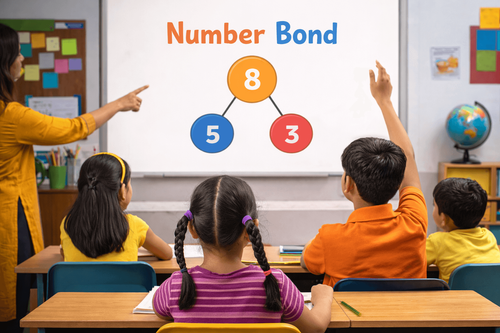

Table of Contents
- What Are Number Bonds? A Simple Explanation for Parents and
- Why Number Bonds Are Important for Strong Math Foundations
- Age-Wise Guide to Teaching Number Bonds to Kids
- How Number Bonds Help Children Calculate Faster
- Step-by-Step Method to Teach Number Bonds Effectively
- Fun Activities and Games to Practice Number Bonds
- Common Challenges Kids Face While Learning Number Bonds
- How Number Bonds Prepare Children for Advanced Math Skills
- Number Bonds at School vs Learning at Home
- Practical Tips for Parents to Teach Number Bonds Stress-Free
- How PlanetSpark Helps in Mastering Number Bonds for Strong M
- Conclusion
Learning math should feel meaningful, not confusing—especially for young children who are just beginning their journey with numbers. This is where number bonds play a powerful role. Instead of asking children to memorise sums, number bonds help them understand how numbers work together. When kids grasp number relationships early, they develop confidence, speed, and accuracy in calculations.
In today’s classrooms and home-learning environments, number bonds are widely used to strengthen early numeracy skills. From counting objects to solving basic addition and subtraction problems, number bonds help children think flexibly about numbers. Whether you are introducing number bonds for kindergarten learners or practising with Number Bonds to 10 worksheets, this concept builds a strong foundation that supports all future math learning. This blog will explain the concept step by step, using examples and visuals that make learning easy and engaging for kids.
What Are Number Bonds? A Simple Explanation for Parents and Kids
Number bonds show the relationship between
numbers by breaking a whole number into two or more parts. Simply put, they teach children that numbers can be split and recombined in different ways.
For example:
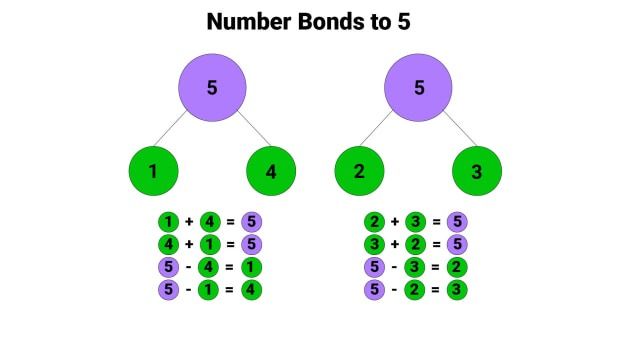
- 5 can be made using 2 and 3
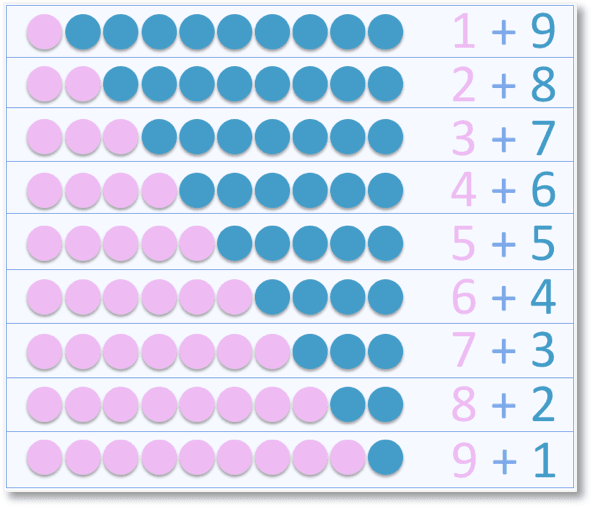
- 10 can be made using 6 and 4 or 7 and 3
These relationships help children understand that numbers are flexible, not fixed.
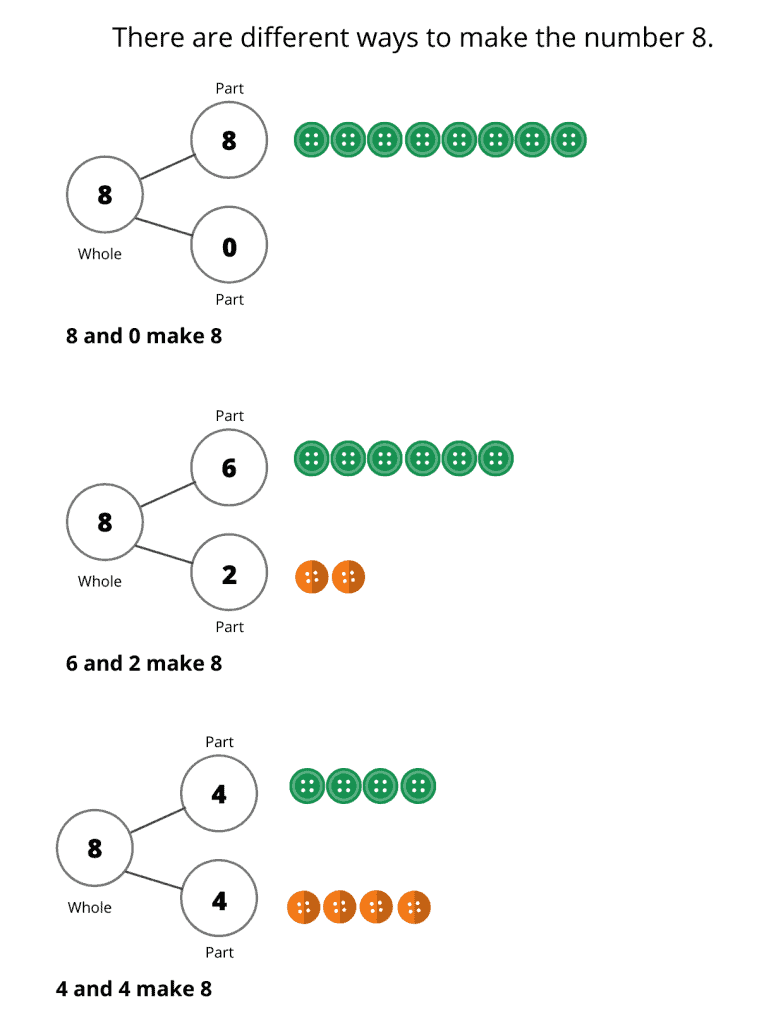
The Part–Part–Whole Model
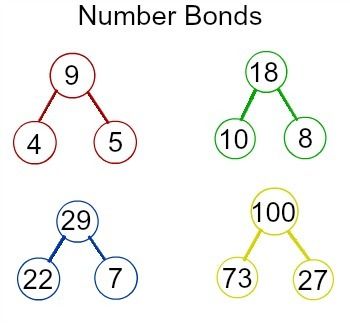
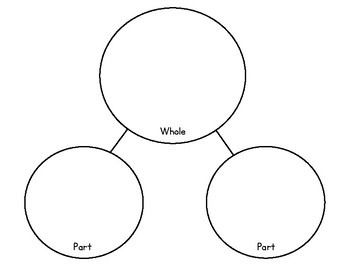
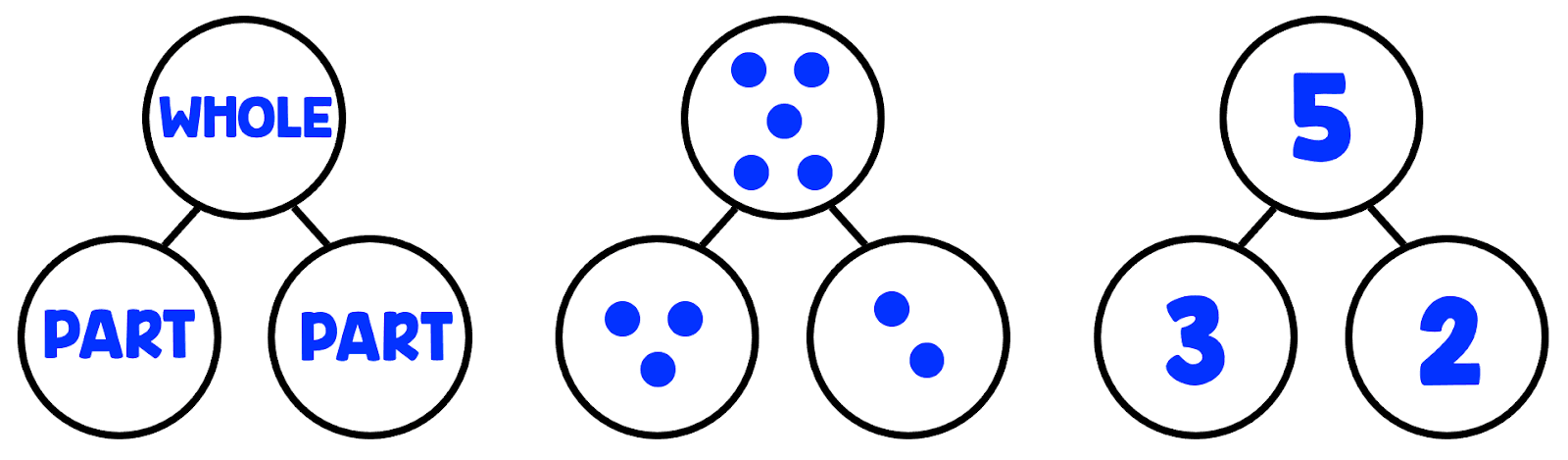
Number bonds are often shown using a part–part–whole diagram:
- The whole number is shown at the top
- The parts are shown below it
This visual approach is especially effective for young learners because it turns abstract numbers into something they can see and understand. Children stop counting on fingers and start recognizing number patterns, which is essential for mental math.
Number bonds also reduce math anxiety. Instead of feeling overwhelmed by numbers, kids learn that every number has friendly parts that work together.
Help your child build strong foundational skills with expert-guided learning.
Book a free PlanetSpark demo class to see how structured, engaging lessons can make learning enjoyable and effective.
Why Number Bonds Are Important for Strong Math Foundations
Number bonds are more than an early math activity—they are a core learning strategy used worldwide to build strong mathematical thinking.
Develop Number Sense
Number sense means understanding how numbers relate to each other. When children work with number bonds regularly, they stop seeing math as random calculations and start recognizing patterns. This makes learning addition and subtraction far more intuitive.
Improve Mental Math
Children who understand number bonds can solve problems faster without counting one by one. For example, if a child knows 8 + 2 = 10, solving 8 + 3 becomes easier by adding one more.
Support Addition and Subtraction
Number bonds help children see subtraction as “breaking apart” numbers instead of a completely new operation. This is why Number Bonds to 10 worksheets are often used before formal subtraction lessons.
Prepare Kids for Advanced Topics
A strong understanding of number bonds later supports multiplication, division, fractions, and even algebra. This early concept lays the groundwork for long-term success in math.
Age-Wise Guide to Teaching Number Bonds to Kids
Teaching number bonds works best when it matches a child’s developmental stage. Let’s look at how the approach changes with age.
Number Bonds for Preschool (Ages 3–4)
At this stage, children learn best through play and visuals. The goal is simple awareness of numbers, not formal problem-solving.
- Use toys, blocks, fruits, or crayons
- Ask simple questions like:
“You have 3 apples. If I add 2 more, how many are there?” - Focus on number bonds up to 5
This hands-on experience helps children understand quantity before symbols.
Number Bonds for Kindergarten (Ages 4–6)
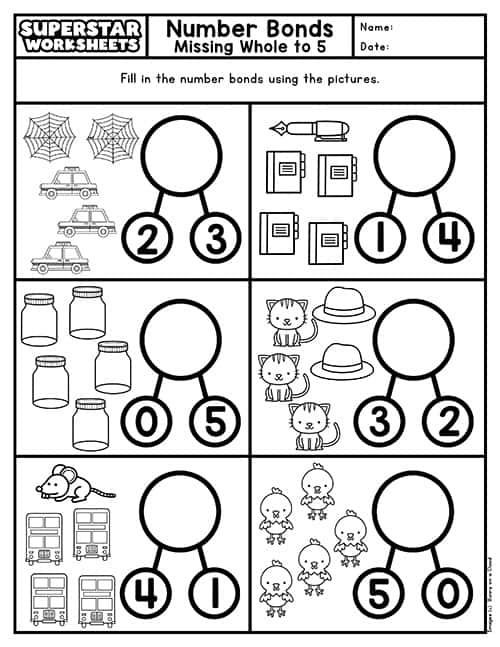
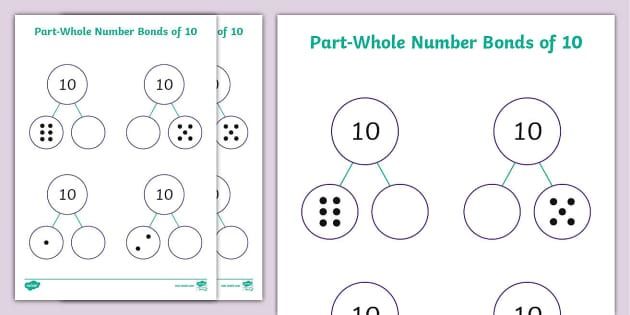
This is the most important stage for structured number bond learning. Number Bonds for kindergarten usually focus on numbers up to 10.
At this level:
- Children use drawings, number circles, and charts
- Teachers introduce Number Bonds to 10 worksheets
- Kids learn multiple ways to make the same number (10 = 6 + 4, 5 + 5, 7 + 3)
This builds flexibility and confidence. Children start explaining their thinking, which strengthens logical reasoning.
Number Bonds for Grade 1 and Grade 2 (Ages 6–7)
Now, children move beyond counting and into problem-solving.
- Number bonds extend to 20
- Used for both addition and subtraction
- Introduced in word problems and mental math
For example:
“If the whole is 15 and one part is 9, what is the other part?”
Children use number bonds to solve this without guesswork.
How Number Bonds Help Children Calculate Faster
One of the biggest benefits of number bonds is speed with understanding. Children don’t rush—they think smarter.
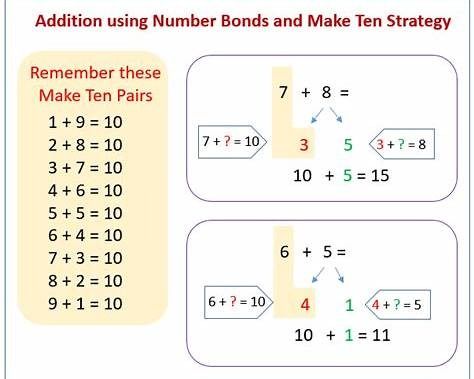
Breaking Bigger Numbers Into Smaller Parts
When faced with a problem like 9 + 6, a child who understands number bonds might think:
- 9 needs 1 more to make 10
- Take 1 from 6 → remaining 5
- 10 + 5 = 15
This mental shortcut is faster and more reliable than counting.
Building Confidence
As children practice, they stop fearing numbers. Math becomes less about guessing and more about logic, which improves classroom performance and reduces frustration.
Step-by-Step Method to Teach Number Bonds Effectively
Teaching number bonds becomes much easier when learning progresses from concrete experiences to abstract thinking. Children understand math best when they can see, touch, and practice before moving to numbers on paper.
Step 1: Start with Real Objects
Before worksheets, let children explore numbers using everyday items:
- Toys, buttons, fruits, coins, beads
- Ask questions like: “You have 6 blocks. Can you split them into two groups?”
This stage answers the basic question: what are number bonds—they show how one whole number can be broken into parts.
Step 2: Introduce Visual Models
Once children are comfortable with objects, use drawings and diagrams:
- Circles for parts and whole
- Bar models
- Number bond charts
Visual models help children organize their thinking and see relationships clearly.
Step 3: Practice with Worksheets
Now children are ready for structured practice.
- Begin with Number Bonds to 10 worksheets
- Include both addition and missing-part questions
- Keep sessions short and focused
Worksheets reinforce accuracy and help identify gaps in understanding, especially for Number Bonds for kindergarten learners.
Step 4: Reinforce Through Play
Learning sticks when it feels fun. This is where Number Bonds interactive games become extremely valuable. Games encourage repetition without boredom and strengthen mental math skills.
Give your child a confident start in learning through personalized guidance.
Experience PlanetSpark’s teaching approach with a free demo class designed to strengthen thinking and communication skills from an early age.
Fun Activities and Games to Practice Number Bonds
Children learn faster when they enjoy the process. A mix of hands-on activities, worksheets, and digital tools keeps engagement high.
Hands-On Number Bond Activities
1. Split-the-Group Game
Give children 10 objects and ask them to split them in different ways:
- 10 = 5 + 5
- 10 = 6 + 4
- 10 = 7 + 3
This supports early number flexibility.
2. Snack-Time Math
Use fruits or snacks to explore number bonds naturally
- “You have 8 grapes. If you eat 3, how many are left?”
This connects math to daily life.
Worksheets for Structured Practice
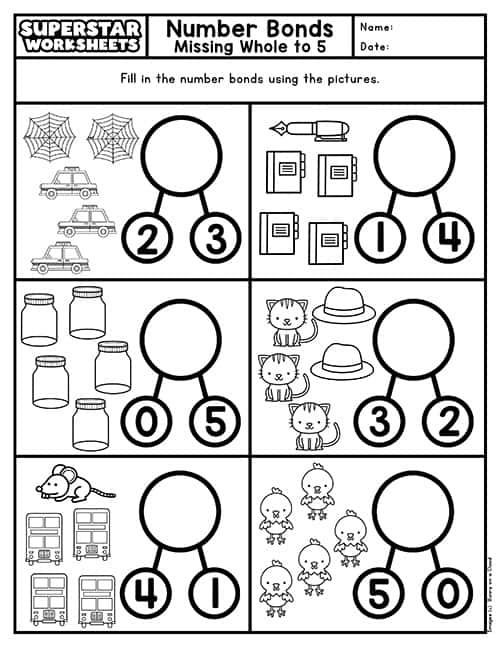
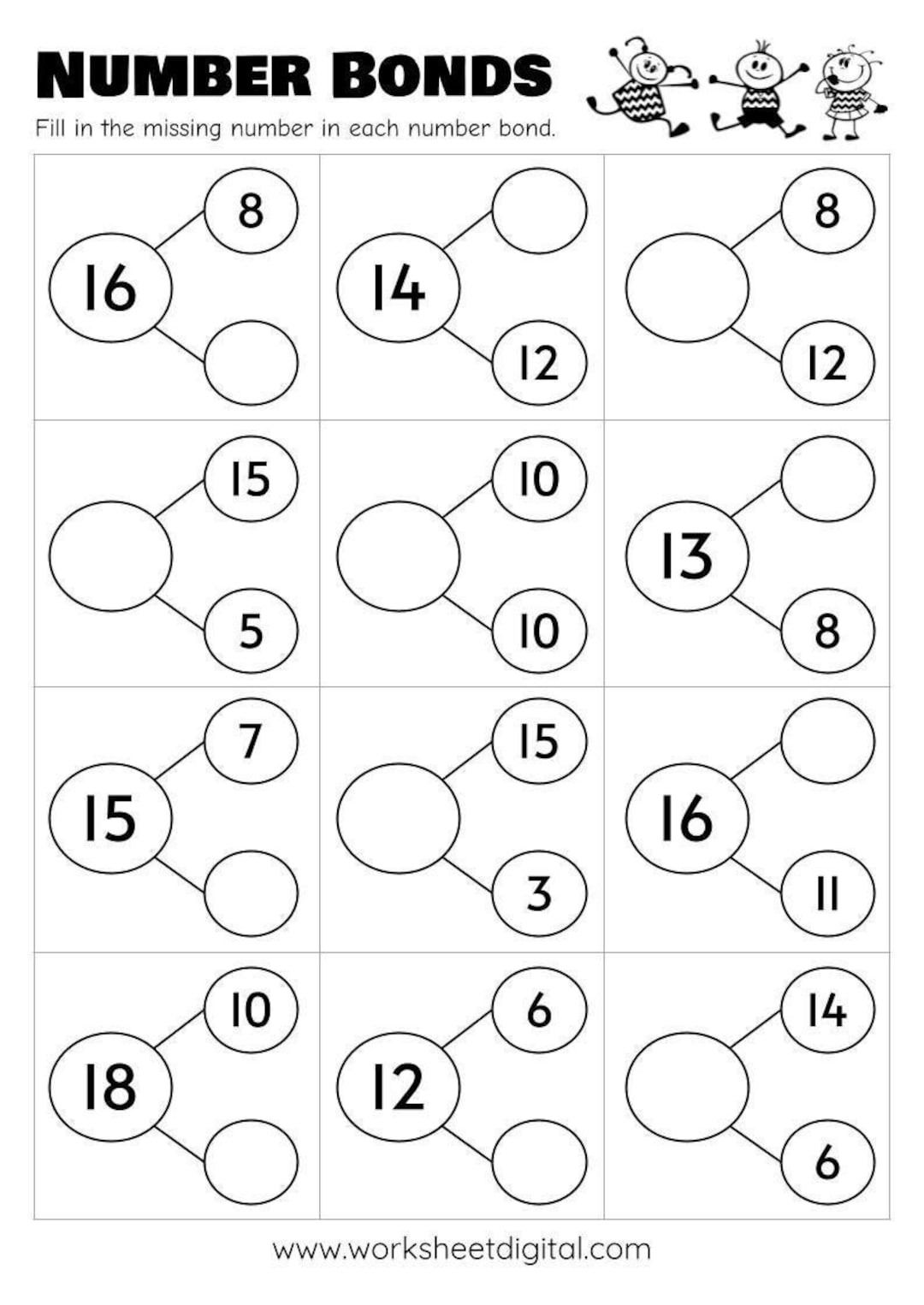
Using Number Bonds to 10 worksheets regularly:
- Reinforces concepts taught through play
- Helps children transition from visuals to numbers
- Builds confidence with independent problem-solving
For best results:
- Use worksheets 3–4 times a week
- Mix coloring, circling, and fill-in-the-blank tasks
Number Bonds Interactive Games
Digital learning has made Number Bonds interactive games extremely popular among parents and teachers.
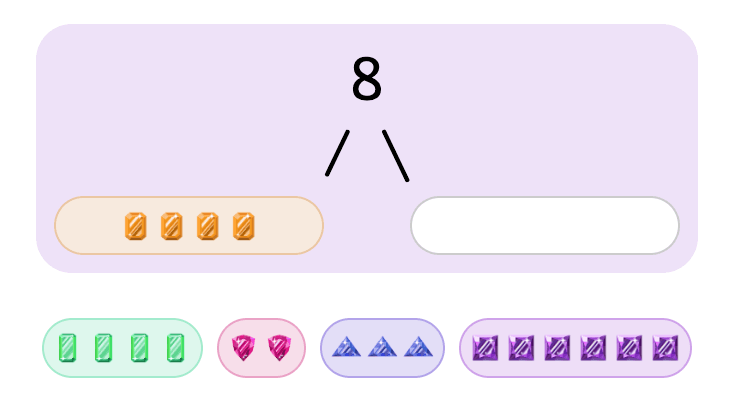
Benefits of interactive games:
- Instant feedback helps children self-correct
- Encourages repeated practice without frustration
- Ideal for home learning and revision
Games often include:
- Drag-and-drop number parts
- Timed challenges
- Visual puzzles based on number bonds
Common Challenges Kids Face While Learning Number Bonds
Even when the right teaching tools are used, children can face certain challenges while learning number bonds. These difficulties are a natural part of early math learning and can be overcome with patience, clear explanations, and the right strategies.
Confusing the parts and the whole:
Many children struggle to identify which number represents the whole and which numbers are the parts. This usually happens when learning moves too quickly from objects to numbers on paper. Revisiting visual models such as part–part–whole diagrams, using toys or drawings, helps children clearly see how smaller numbers combine to form the whole.
Over-reliance on memorization:
Some children try to memorize answers instead of understanding number relationships. While this may work for small sums, it creates confusion later. Parents and teachers should reinforce what are number bonds—they show how numbers relate to each other, not just answers to remember.
Difficulty with subtraction:
Subtraction often feels harder than addition because children see it as a new concept. Teaching subtraction as “finding the missing part” in a number bond makes it more logical and less intimidating, helping children solve problems with greater confidence.
How Number Bonds Prepare Children for Advanced Math Skills
A strong grasp of number bonds supports learning far beyond kindergarten math.
Addition and Subtraction Mastery
Children use number bonds to:
- Break numbers efficiently
- Solve multi-step problems
- Avoid finger counting
Foundation for Multiplication and Division
Understanding how numbers split and combine prepares children for grouping concepts used in multiplication.
Improved Problem-Solving Skills
Word problems become easier when children visualize relationships instead of guessing operations.
Wondering how expert mentors make learning easier for young minds?
Join a PlanetSpark demo class and discover how interactive sessions can support your child’s academic growth in a stress-free way.
Number Bonds at School vs Learning at Home
At school, teachers use structured lessons, group activities, and assessments to teach Number Bonds for kindergarten students. At home, parents reinforce learning through:
- Simple conversations
- Games
- Short worksheet practice
Consistency between home and school greatly improves retention and confidence.
Practical Tips for Parents to Teach Number Bonds Stress-Free
Teaching number bonds at home does not require long study hours or formal classroom setups. The key is to keep learning light, consistent, and positive so children feel comfortable exploring numbers.
Keep lessons short (10–15 minutes):
Young children have limited attention spans. Short, focused sessions help them stay engaged without feeling overwhelmed. A quick activity using toys or a short worksheet is far more effective than long practice sessions.
Use praise and encouragement:
Appreciate your child’s effort rather than just correct answers. Positive reinforcement builds confidence and helps children develop a healthy attitude toward math, making them more willing to try and learn.
Avoid comparisons with other children:
Every child learns at their own pace. Comparing progress can create anxiety and resistance toward learning. Focus instead on gradual improvement and understanding.
Repeat concepts using different tools:
Children learn best through variety. Reinforce number bonds using real objects, simple drawings, worksheets, and Number Bonds interactive games. Repetition through different methods strengthens understanding and makes learning enjoyable rather than stressful.
How PlanetSpark Helps in Mastering Number Bonds for Strong Math Foundations
PlanetSpark helps students build a strong understanding of number bonds by focusing on concept clarity, number sense, and logical thinking. Instead of teaching number bonds as simple memorisation facts, the platform helps learners understand how numbers break apart and combine in meaningful ways.
- Through personalised guidance, expert mentors at PlanetSpark help students see the relationships between numbers and understand why certain combinations work. Learners practise forming number bonds through visual models, hands-on activities, and guided problem-solving, making learning intuitive and engaging.
- Understanding number relationships → learning number bond patterns → practising number combinations → strengthening mental math skills. This structured learning journey helps students move from basic number recognition to confident calculation.
- Students engage in activities such as number splitting exercises, visual representations using objects or drawings, mental math challenges, and real-life problem scenarios. These activities improve speed, accuracy, and confidence while reducing math anxiety.
- With continuous feedback, interactive lessons, and age-appropriate practice, PlanetSpark enables students to master number bonds effectively—helping them build a strong foundation for addition, subtraction, and overall mathematical fluency.
Conclusion
Learning number bonds is one of the most effective ways to build strong math foundations for children. By understanding what are number bonds, practicing with Number Bonds to 10 worksheets, using engaging Number Bonds interactive games, and supporting Number Bonds for kindergarten learners with patience and creativity, parents and teachers can turn math into a positive experience. These early skills not only improve calculation speed but also shape confident, capable learners for years to come
Frequently Asked Questions
Children can begin exploring number bonds as early as age 3 using objects and play-based learning.
Worksheets help, but they should be combined with visuals and games for better understanding.
They build number sense, improve mental math, and reduce math anxiety at an early stage.
Short and regular practice works best for number bonds. Around 10–15 minutes, 3–4 times a week is enough for young children. Mixing worksheets, spoken questions, and Number Bonds interactive games keeps practice balanced and prevents boredom.
If a child finds number bonds difficult, move away from worksheets temporarily and return to concrete learning. Use objects like toys, fruits, or blocks to show how numbers split and combine.