
Understanding Modular Arithmetic & Remainder Theorems


Table of Contents
- Understanding Modular Arithmetic Step by Step
- What Are the Key Rules of Modular Arithmetic?
- The Main Remainder Theorems Behind Modular Arithmetic
- What is the Main Difference Between Regular and Modular Arit
- Applications of Modular Arithmetic
- Why PlanetSpark is the Best Place to Learn Modular Arithmeti
- Conclusion
Numbers shape how we understand patterns, logic, and problem-solving, and modular arithmetic plays a vital role in making sense of them. From clock calculations to coding logic, it explains how numbers repeat and cycle using remainders. By introducing ideas connected to remainder theorems, students begin to see how mathematics works beyond basic operations.
Learning modular arithmetic step by step allows children to break complex calculations into smaller, manageable parts. Concepts like congruence, divisibility, and remainder become clearer when taught through structured explanations and real-life examples. This process strengthens logical reasoning, numerical accuracy, and confidence, especially for learners transitioning to higher-level math.
Understanding modular arithmetic also builds a strong foundation for algebra, number theory, and problem-solving skills used in competitive exams and technology. With PlanetSpark’s interactive approach and guided learning, students develop clarity, confidence, and curiosity, making modular arithmetic an engaging and empowering mathematical skill.

Understanding Modular Arithmetic Step by Step
Understanding modular arithmetic step by step allows students to see numbers in a completely new way. Instead of focusing only on division results, children learn to observe patterns in remainders and apply them logically. Questions like what is the remainder theorem naturally arise when students explore how numbers behave under division.
Modular arithmetic simplifies complex calculations, strengthens mental math, and builds a bridge between basic arithmetic and higher-level algebra. When students grasp these ideas early, they find it easier to understand polynomials, equations, and even real-world applications like time, calendars, and coding. With clear explanations and guided practice, modular arithmetic becomes an empowering math tool rather than a confusing topic.
What Are the Key Rules of Modular Arithmetic?
Modular arithmetic helps students understand how numbers behave when divided by a fixed number, called a modulus. Instead of focusing on quotients, children observe remainders and patterns. This approach simplifies large calculations, builds logical thinking, and prepares learners for algebraic concepts connected to remainders, cycles, and number systems used in higher mathematics.
Addition Rule in Modular Arithmetic
In modular addition, numbers can be added normally and then reduced to their remainder. For example, 17 + 9 mod 5 equals 26 mod 5, which is 1. This rule reflects ideas from Remainder theorems, showing that only the remainder matters, not the entire number itself.
Subtraction Rule in Modular Arithmetic
Subtraction follows a similar logic. Students subtract numbers first and then find the remainder or subtract remainders directly. For instance, 23 − 8 mod 5 equals 15 mod 5, which is 0. This approach reinforces understanding of what is the remainder theorem and builds confidence in simplifying calculations.
Multiplication Rule in Modular Arithmetic
In modular multiplication, numbers are multiplied and then reduced to a remainder. For example, 7 × 6 mod 4 equals 42 mod 4, which is 2. This rule helps learners manage large numbers easily and introduces algebraic thinking linked to patterns and repeated operations.
Help your child understand numbers better with step-by-step modular arithmetic lessons. Interactive examples and guided practice make concepts like remainder theorems easy to grasp and apply confidently. Begin your child’s modular arithmetic learning journey today!
Congruence Rule in Modular Arithmetic
Two numbers are congruent if they leave the same remainder when divided by a modulus. For example, 14 ≡ 4 (mod 5). This idea explains repeating cycles and prepares students for polynomial concepts connected to the Polynomial remainder theorem, strengthening their foundation for advanced algebra and problem-solving.
The Main Remainder Theorems Behind Modular Arithmetic
Modular arithmetic is powered by several important ideas known as remainder theorems, which explain how numbers behave after division. These theorems help students simplify calculations, identify patterns, and solve complex problems efficiently by focusing only on remainders instead of large numbers.
Rermat’s Little Theorem
Fermat’s Little Theorem states that if p is a prime number and a is not divisible by p, then aᵖ⁻¹ ≡ 1 (mod p). For example, let p = 5 and a = 2. Then 2⁴ = 16, and 16 mod 5 = 1. This theorem helps students understand fast calculations with large exponents. Instead of computing huge powers, learners can reduce them using remainders. It also answers questions like what the remainder theorem in number-based problems by is showing predictable remainder patterns.
Wilson’s Theorem
Wilson’s Theorem states that a number p is prime if and only if (p − 1)! ≡ −1 (mod p). For example, if p = 5, then (5 − 1)! = 24, and 24 mod 5 = 4, which equals −1 mod 5. This theorem provides a unique way to test prime numbers using remainders. It strengthens number sense and shows how factorials behave in modular arithmetic, helping students recognize deeper numerical relationships beyond basic division.
Taylor’s Theorem
Taylor’s Theorem states that any smooth function  can be expressed as a polynomial around a point
  , plus a remainder that estimates the difference between the actual function and the polynomial. For example, consider
  around
  . Its Taylor polynomial up to the second degree is
 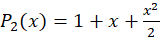 . The remainder theorem Taylor gives the error term
  , showing how close
  is to
is to  . If
. If  , the polynomial approximates
 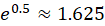 , while the actual value is 1.6487, with the remainder accounting for the 0.0237 difference.
Euler’s Theorem
Euler’s Theorem is a generalization of Fermat’s Theorem. It states that if two numbers are coprime, then a^φ(n) ≡ 1 (mod n), where φ(n) is Euler’s totient function. For example, if n = 10, then φ(10) = 4. Taking a = 3, we get 3⁴ = 81, and 81 mod 10 = 1. This theorem helps students work with non-prime moduli and understand cyclic patterns in modular arithmetic.
Chinese Remainder Theorem
The Chinese remainder theorem explains how to find a number that satisfies multiple remainder conditions at the same time. For example, a number that leaves a remainder 1 when divided by 2 and a remainder of 2 when divided by 3 is 5. This theorem is widely used in coding, cryptography, and problem-solving. It teaches students how multiple modular equations can work together, building strong logical reasoning and real-world mathematical thinking.

What is the Main Difference Between Regular and Modular Arithmetic?
Regular arithmetic and modular arithmetic may look similar at first, but they work very differently. While regular arithmetic focuses on exact values, modular arithmetic focuses on remainders. Understanding this difference helps students grasp advanced number concepts and ideas explained by remainder theorems more clearly.
Focus of Calculation
In regular arithmetic, calculations continue endlessly using exact numbers, such as 27 ÷ 5 = 5.4. In modular arithmetic, the focus is only on the remainder. For example, 27 mod 5 = 2. This shift helps simplify large calculations and builds pattern recognition skills.
Number System Behavior
Regular arithmetic follows a linear number system where values keep increasing. Modular arithmetic works in cycles, wrapping numbers back to zero after reaching a fixed value. This cyclic nature explains clock math and helps students understand concepts like what is the remainder theorem through repeated numerical patterns.
Problem-Solving Approach
Regular arithmetic is ideal for measurements and precise answers, while modular arithmetic is powerful for problem-solving efficiency. It reduces large numbers into smaller, manageable forms, making it easier to solve puzzles, coding problems, and logic-based questions using remainder-based reasoning.
Watch your child excel in number sense, reasoning, and advanced math topics. PlanetSpark’s AI-powered feedback and live sessions simplify even complex ideas like the Chinese remainder theorem in a child-friendly way. Enrol for a free trial today!
Applications of Modular Arithmetic
Modular arithmetic is not just a classroom concept—it plays a vital role in many real-world applications. Working with remainders instead of large numbers simplifies complex calculations. Many advanced ideas, including remainder theorems, are built on these practical and powerful applications.
Computer Science
In computer science, modular arithmetic helps manage memory, data storage, and algorithms efficiently. Hash functions, loop counters, and error detection systems rely on modulo operations to keep values within limits. This makes programs faster, more reliable, and easier to manage, especially with large datasets.
Cryptography
Cryptography uses modular arithmetic to secure digital communication. Encryption techniques depend on modular calculations to encode and decode messages safely. Concepts like the Chinese remainder theorem help break complex encryption problems into smaller parts, making secure data transmission possible in banking, messaging, and online security systems.
Number Theory
In number theory, modular arithmetic is essential for studying patterns, divisibility, and prime numbers. It helps mathematicians understand how numbers behave under division. The polynomial remainder theorem also connects algebra with modular ideas, strengthening problem-solving skills and deeper mathematical reasoning.
Clock Arithmetic
Clock arithmetic is a simple, everyday example of modular arithmetic. When hours go beyond 12, they wrap back to 1. This cyclic counting system helps children visualize modulo concepts easily and understand how numbers repeat within fixed limits.
Digital Signal Processing
In digital signal processing, modular arithmetic helps manage repeating signals and data compression. It ensures accurate signal interpretation by controlling overflow and maintaining consistency. These techniques are essential in audio processing, image compression, and communication technologies used daily.
Why PlanetSpark is the Best Place to Learn Modular Arithmetic?
Understanding modular arithmetic can be challenging for young learners due to its abstract concepts like remainder theorems and number patterns. At PlanetSpark, we transform this learning into a clear, engaging, and interactive experience. Every child receives personalized attention, step-by-step guidance, and practical examples that make abstract ideas relatable.
Our 1:1 trainer adapt lessons to a child’s pace and learning style, ensuring they grasp fundamental principles like modular operations, remainders, and patterns confidently. Through AI-enabled tools, gamified exercises, and structured practice, children develop logical reasoning, problem-solving skills, and confidence while exploring modular arithmetic. With PlanetSpark, learners gain a strong foundation, mastery of concepts, and the enthusiasm to explore mathematics beyond the classroom.
Personalized 1:1 Coaching
Every child is paired with a certified trainer who provides customized guidance, immediate feedback, and focuses on building core skills. This one-on-one interaction ensures that each student receives attention, encouragement, and strategies that suit their learning pace and style. It helps them tackle modular arithmetic and remainder theorem polynomials with confidence.
Step-by-Step Learning Roadmap
PlanetSpark designs a structured curriculum after assessing your child’s current understanding. Lessons progress gradually from simple modular operations to advanced remainder theorem applications, ensuring mastery at each stage while filling learning gaps effectively.
Interactive and Gamified Modules
Hands-on exercises, quizzes, and AI-driven challenges make learning modular arithmetic fun and engaging. Students can practice modular operations, solve remainder problems, and explore patterns in numbers using interactive modules that reinforce understanding through play.
AI-Enabled Progress Tracking
Children use tools to track their performance in solving polynomial remainder theorem problems, modular operations, and practice exercises. AI-driven analysis highlights strengths, areas for improvement, and provides personalized recommendations for continuous growth.
Conclusion
Mastering modular arithmetic and remainder theorems provides students with vital problem-solving and logical reasoning skills. By breaking down concepts like patterns, number properties, and theorems step by step, students gain a deeper understanding of how numbers interact. PlanetSpark’s personalized 1:1 coaching, interactive lessons, and engaging exercises make learning these concepts enjoyable and effective.
Transform math learning with interactive lessons, gamified practice, and confidence-building activities. From understanding remainders to applying logic smartly, learning becomes enjoyable and meaningful. Kickstart your child’s math success with PlanetSpark now!
With clear explanations and plenty of practice, students build confidence and the ability to apply modular arithmetic in real-world problems. Join PlanetSpark today to strengthen your child’s academic performance and enhance their analytical thinking with modular arithmetic mastery.
Frequently Asked Questions
Modular arithmetic is a system of working with numbers where we focus on remainders after division. Instead of growing infinitely, numbers “wrap around” within a fixed range, like hours on a clock, making calculations simpler and more practical.
It helps students understand number patterns, divisibility, and logical reasoning. Modular arithmetic forms the base for advanced topics in algebra and number theory, helping learners solve problems faster and develop strong analytical thinking skills.
Many rules of modular arithmetic are explained using what is the remainder theorem, which tells us how to find remainders efficiently. These ideas help simplify polynomial divisions and connect algebraic expressions with modular concepts.
PlanetSpark uses visual explanations, real-life examples, and step-by-step guidance to make abstract math concepts easy. Personalized sessions ensure students build confidence while mastering topics like modular arithmetic and problem-solving techniques.
The Chinese remainder theorem is widely used in cryptography, coding theory, and computer algorithms. It helps solve multiple equations at once by breaking them into simpler parts, making complex systems more manageable.
PlanetSpark combines expert teachers, interactive tools, and structured learning paths. By simplifying concepts such as the polynomial remainder theorem, PlanetSpark helps children develop clarity, confidence, and a long-lasting interest in mathematics.