
What are Prime Numbers? Learn Clearly With PlanetSpark Math Class

Table of Contents
- What Are Prime Numbers? Fun Learning Time!
- Why Should Class 1 Kids Learn Prime Numbers?
- Is 1 a Prime Number? Let’s Clear the Confusion
- List of Prime Numbers: Easy Learning for Kids
- Meet the Smallest Prime Number
- Understanding Prime Numbers Using Objects
- What Are the Prime Numbers Between 1 to 100?
- Mastering Prime Numbers Made Simple With PlanetSpark Expert
- From Learning to Winning Big with Confidence
- Prime Numbers 1 to 1000: Learn Step by Step
- How to Find Prime Numbers Easily (Step-by-Step)
- Why PlanetSpark Is the Ultimate Destination for Maths Master
- Building Bright Math Minds for the Future
Ever wondered why some numbers can’t be divided evenly except by 1 and themselves?
What are Prime Numbers? Prime numbers are special numbers greater than 1 that have only two factors: 1 and the number itself. Understanding prime numbers is an essential part of building a strong math foundation. This guide clearly explains the concept with simple examples and easy explanations. With PlanetSpark Math Class, students learn prime numbers through engaging lessons, interactive practice, and expert guidance that make learning math confident and fun.
What Are Prime Numbers? Fun Learning Time!
What are prime numbers? Prime numbers are special numbers that have only two factors: 1 and the number itself. This means they cannot be divided equally into many groups. For Class 1 kids, prime numbers are numbers that like to stay simple and whole. They do not like to be shared into many equal parts. Learning prime numbers helps children understand numbers easily and enjoy math.
Easy Examples:
2 → Can be divided by 1 and 2 (Prime)
3 → Can be divided by 1 and 3 (Prime)
4 → Can be divided by 1, 2, and 4 (Not Prime)
5 → Can be divided by 1 and 5 (Prime)
Some Prime Numbers:
2, 3, 5, 7, 11
Remember:
Prime numbers are like special candies.
They do not like to be shared with many people.
Why Should Class 1 Kids Learn Prime Numbers?
Learning prime numbers at an early age helps children understand numbers better and think more clearly.
Understand division easily: Prime numbers help kids learn which numbers can be divided equally and which cannot be shared fairly.
Improve logical thinking: Identifying prime numbers trains children to observe patterns and think carefully before answering.
Build strong math foundations: Early exposure to prime numbers helps develop the basic math skills necessary for higher-level classes.
Prepare for multiplication and factors: Knowing prime numbers makes it easier to understand factors, multiples, and multiplication later.
Gain confidence in numbers: When kids understand prime numbers, they feel more confident while solving math problems.
At PlanetSpark, math learning is fun, interactive, and stress-free. Kids enjoy learning prime numbers through engaging games and exciting activities.
Is 1 a Prime Number? Let’s Clear the Confusion
Many kids wonder if 1 is a prime number. The simple answer is no. A prime number must have two factors. These factors are 1 and the number itself.
The number 1 is different. It has only one factor, which is 1. Because of this, it does not follow the rule needed to be a prime number.
Keeping 1 out of prime numbers makes math easier to understand. It helps children learn division, factors, and number patterns without confusion. When students understand why 1 is not prime, they can better comprehend how numbers interact. This small rule plays a big role in building clear and strong math concepts for young learners.
List of Prime Numbers: Easy Learning for Kids
Prime numbers are numbers greater than 1 that have only two factors. Learning the list of prime numbers helps children quickly identify special numbers and build strong math basics. The table below makes learning simple and clear for young students.
Using tables like this helps Class 1 kids spot patterns easily. Practicing the list of prime numbers regularly builds confidence and makes learning math enjoyable.
Support your child with PlanetSpark’s advanced maths tools and teaching methods!
Meet the Smallest Prime Number
The smallest prime number is 2.
It is the first number that follows the rules of prime numbers.
Why 2 is a prime number:
It can be divided only by 1 and 2
It has exactly two factors
It is the only even number that is prime
All other even numbers can be divided by 2, so they have more than two factors. That is why they are not prime. The number 2 is special and important because it helps children understand prime numbers simply and clearly from the very beginning.
Understanding Prime Numbers Using Objects
PlanetSpark Math Class helps children learn prime numbers by using simple, real-life objects they see every day.
Give a child 5 toys to hold and count.
Ask the child to divide the toys equally.
Try making 2 equal groups, and notice it is not possible.
Try making 3 equal groups and see if it still does not work.
The toys can be divided into only 1 group or 5 groups.
This shows the number has only two factors.
Numbers with only two factors are called prime numbers.
Using toys makes learning easy and enjoyable.
Children understand by doing, not just listening.
This method builds strong number understanding.
Kids remember concepts better with hands-on learning.
Learning feels like play, not study.
This activity-based approach helps Class 1 kids understand prime numbers naturally and confidently, making math simple, clear, and fun.
Let your child experience fun, engaging, and result-oriented maths learning!
What Are the Prime Numbers Between 1 to 100?
Prime numbers 1 and 100 are numbers greater than 1 that can be divided only by 1 and themselves. These numbers cannot be shared equally among more than two groups. Learning prime numbers in this range helps Class 1 kids understand how division works. It also improves number sense and builds strong math basics.
The table below shows all the prime numbers from 1 to 100 in an easy and clear format.
Practicing these numbers regularly helps children recognize prime numbers quickly. This prepares them for future topics like factors, multiplication, and problem-solving with confidence.
Mastering Prime Numbers Made Simple With PlanetSpark Expert
PlanetSpark helps students learn prime numbers through fun activities, clear explanations, and guided practice that build strong number skills and confidence from an early age.
Uses child-friendly explanations that make difficult ideas easy to understand.
Teaches prime numbers with real-life examples that children can relate to.
Encourages learning through games, activities, and number challenges.
Breaks concepts into small, simple steps for better understanding.
Uses charts and tables to help students spot patterns quickly.
Builds logical thinking and problem-solving skills naturally.
Offers guided practice to strengthen number confidence.
Makes math learning enjoyable, stress-free, and effective.
From Learning to Winning Big with Confidence
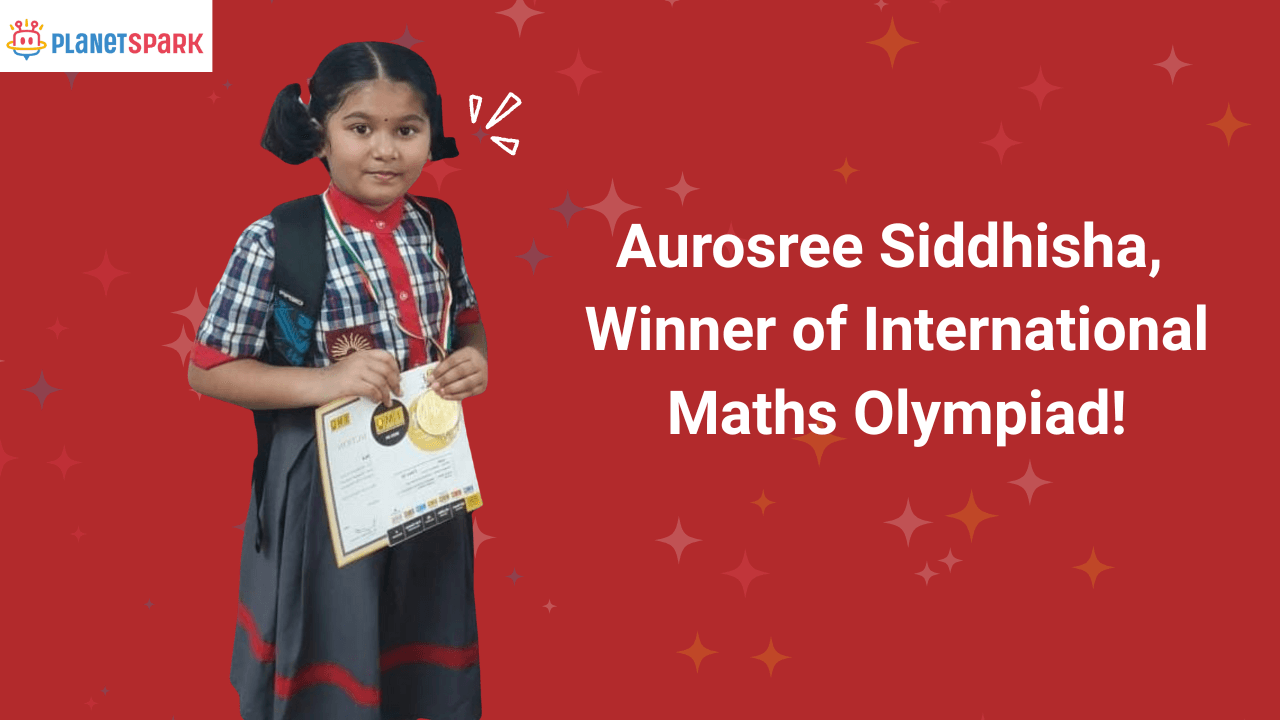
Achieved a remarkable win at the International Maths Olympiad - Aurosree Siddhisha
Inspired by this success? Help your child build strong math skills, confidence, and a love for learning. Join PlanetSpark today and turn potential into achievement.
Prime Numbers 1 to 1000: Learn Step by Step
Prime numbers from 1 to 1000 are numbers greater than 1 that can be divided only by 1 and themselves. Because the list is long, using a table helps students learn in an organized way instead of memorizing everything at once.
Using tables like this helps students learn prime numbers in smaller parts, spot patterns easily, and build strong math confidence step by step.
How to Find Prime Numbers Easily (Step-by-Step)
This simple method helps young learners check numbers easily using clear steps, hands-on practice, and visual learning techniques used by PlanetSpark teachers.
Step 1: Look at the number
Ask if the number can be shared equally into groups without breaking or leaving anything extra behind.
Step 2: Try dividing
Divide the number using small numbers like 2, 3, 4, and check if equal groups are possible.
Step 3: Decide
If only 1 and the number itself work, it is prime; more divisors mean it is not prime.
Teachers at PlanetSpark use blocks, beads, and visuals to make this process simple, clear, and fun for kids.
Why PlanetSpark Is the Ultimate Destination for Maths Mastery
PlanetSpark delivers a complete learning experience that strengthens every aspect of a child’s mathematical understanding, accuracy, and confidence. With personalised one-on-one guidance, interactive practice, and real-world learning, students don’t just learn math—they master it.
Services That Build Strong Mathematical Skills
Personal Math Trainers for concept correction, problem-solving support, and skill enhancement
Customised Learning Roadmaps tailored to each child’s strengths and learning gaps
SparkX AI Analysis to assess accuracy, speed, and conceptual clarity
AI Guided Practice Sessions for computation, reasoning, and application-based learning
Spark Diary for daily maths practice and real-life number application
Gamified Learning Tools, including Speed Maths, Number Ninja, Logic Lab, and Fraction Quest
SparkBee Daily Quizzes to strengthen calculations, logic, and numerical fluency
SparkShop eBooks covering arithmetic, geometry, data handling, and reasoning
Progress Reports and PTMs offering clear, actionable insights
With PlanetSpark, your child builds mathematical confidence, logical thinking, and a future-ready foundation that lasts a lifetime.
Building Bright Math Minds for the Future
Learning numbers becomes meaningful when children understand concepts clearly and enjoy the process. With the right guidance, young learners develop confidence, curiosity, and a strong love for math. Step-by-step learning, real-life examples, and interactive practice help students think better and solve problems with ease.
PlanetSpark creates a joyful learning environment where children feel supported and motivated. Through engaging lessons, expert teachers, and fun activities, students build strong math foundations that last a lifetime. When learning feels exciting and stress-free, children grow into confident thinkers ready to succeed both in school and beyond.
Also Read:
What Are The Best Math Activities For Preschoolers | PlanetSpark Guide
Number Comparison: Build Strong Maths Foundation With PlanetSpark
Frequently Asked Questions
A prime number is a number greater than one that has exactly two factors, one and itself, making it special and different from other numbers.
Learning prime numbers early helps children understand division, build logical thinking, and create a strong base for advanced math topics in higher classes.
No, one is not a prime number because it has only one factor, while prime numbers must have exactly two factors.
Kids can identify prime numbers by checking if the number divides equally only by one and itself, using simple division and practice activities.
PlanetSpark teaches prime numbers through interactive games, visual tools, and guided lessons that make math enjoyable, simple, and stress-free for young learners.
PlanetSpark provides expert teachers, fun activities, and structured learning that helps children build confidence, understand concepts clearly, and enjoy math every day.