
Breaking Down the Concept of Time for Kids to Improve Personality Traits
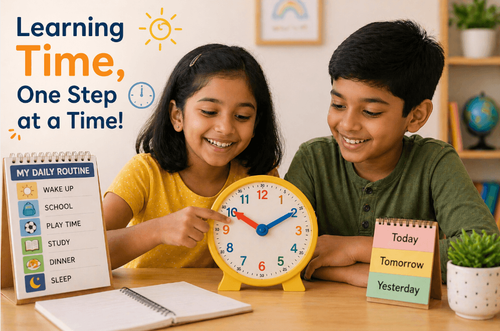

Table of Contents
- What is the Concept of Time for Kids?
- Daily Routine and Temporal Words (The Basics)
- Understanding Duration (Long vs. Short)
- Introducing the Clock (5–7 Years Old)
- Larger Units of Time
- Simple Activities to Teach Time
- Common Challenges Kids Face While Learning Time
- Tips for Parents to Teach Time Effectively
- How PlanetSpark Helps Kids Understand the Concept of Time
- Build Time Awareness with Confidence
What if your child keeps asking, “When will we go?” or “How long will it take?” and struggles to understand the answer? Many children find the concept of time confusing because it is something they cannot see or touch. Unlike objects or actions, time is abstract, which makes it harder for young minds to grasp.
But here’s the good news: children can learn time easily when it is taught in a fun, structured, and relatable way. Instead of memorizing clocks or calendars, they need to experience time through daily routines, activities, and simple explanations.
In this guide, you will discover practical ways to teach the concept of time to kids using real-life examples, engaging activities, and step-by-step strategies. With the right support and guidance from PlanetSpark, children can build strong understanding, improve routine habits, and develop essential life skills with confidence.
What is the Concept of Time for Kids?

Understanding the concept of time begins with helping children recognize how events happen in order and how long things take. For young learners, time is not just about reading a clock but about making sense of their everyday experiences. It is closely connected to routines, habits, and daily activities.
The concept of time refers to understanding how events happen in sequence, how long something takes, and how we measure it. For children, time is not just about clocks and calendars. It is about recognizing patterns like morning, afternoon, and night.
What does learning time include?
- Understanding past, present, and future
- Recognizing daily routines
- Learning about durations
- Reading clocks and calendars
- Using time-related words correctly
Why it is difficult for kids
Time is abstract. Children cannot see or hold it. This makes it harder compared to learning shapes or colors. They need real-life connections to understand it.
How kids begin to understand time
Children first understand time through routines. For example, waking up, eating breakfast, going to school, and sleeping. These repeated patterns help them build a basic sense of time.
👉 PlanetSpark helps children understand abstract concepts like time through interactive learning and real-life communication practice.
Daily Routine and Temporal Words (The Basics)
The foundation of learning the concept of time lies in daily routines. When children follow a predictable schedule, they begin to understand the sequence of events naturally. This helps them connect actions with specific times of the day.
Children learn best when they see patterns repeated every day. For example, waking up in the morning, eating meals at certain times, and going to bed at night creates a sense of structure. This structure makes it easier for them to understand time-related words and concepts.
Why routines matter
Routines create predictability. When children follow a consistent schedule, they begin to understand the sequence of events and what comes next.
Important temporal words to teach
- Morning, afternoon, evening, night
- Before and after
- Today, yesterday, tomorrow
Each of these words should be explained with real-life examples. For instance, you can say, “We eat breakfast in the morning” or “We will play after lunch.” This helps children connect words with actions.
How to teach these words
- Use real-life examples like “We brush our teeth in the morning.”
- Ask simple questions like “What did you do yesterday?”
- Repeat words regularly in conversations
Practical application
Parents can talk about daily activities and connect them with time words. This makes learning natural instead of forced.
Building strong basics
When children understand basic time words, they start forming a mental timeline. This becomes the base for learning more complex time concepts later.
Understanding Duration (Long vs. Short)
Once children understand routines, the next step in learning the concept of time is understanding duration. Duration helps children compare how long different activities take.
This concept is important because it teaches children patience and expectation. For example, they learn that watching a movie takes longer than eating a snack. This understanding helps them manage time better.
What is duration
Duration means the length of time an activity takes. It allows children to compare different tasks and understand which ones are longer or shorter.
How to explain long and short
- Watching a movie takes longer than brushing teeth
- Sleeping takes longer than playing a quick game
These comparisons help children relate time to real-life experiences.
Activities to teach duration
- Ask children which activity takes longer
- Use timers to show time differences
- Compare daily activities
Each activity should be explained clearly so children can observe and learn actively.
Why this is important
Understanding duration helps children develop patience. They learn that some things take time and cannot happen instantly.
Real-life connection
Children begin to understand waiting, planning, and time management through duration concepts.
Introducing the Clock (5–7 Years Old)
After children understand routines and duration, they are ready to learn how to read a clock. This is an important step in mastering the concept of time.
Learning the clock should be gradual. Starting with simple concepts helps children build confidence without feeling overwhelmed.
Start with basics
- Teach numbers on the clock
- Explain hour and minute hands
- Focus on full hours first
Children should first understand what each number represents before moving to more complex ideas.
Step-by-step learning
- Teach hours like 1 o’clock, 2 o’clock
- Introduce half past
- Gradually move to minutes
Each step should be practiced regularly to ensure clarity.
Make it interactive
- Use toy clocks
- Practice setting time
- Ask questions like “What time is it?”
Interactive learning helps children stay engaged and understand better.
Why gradual learning works
Breaking down the process into smaller steps prevents confusion and builds confidence.
👉 PlanetSpark uses interactive techniques to simplify time learning and improve understanding.
Larger Units of Time
Once children understand hours and minutes, they can move on to larger units of time. This expands their understanding of the concept of time beyond daily activities.
Learning about days, weeks, and months helps children understand long-term planning and events.
What to teach
- Days of the week
- Months of the year
- Seasons
Each concept should be introduced slowly and connected to real-life examples.
How to explain
- Use calendars to show dates
- Talk about birthdays and festivals
- Relate months to weather changes
Why this matters
Understanding larger units helps children plan and anticipate events. It also improves their awareness of time over longer periods.
Practical learning
Children remember better when they associate time with events like holidays or school activities.

Simple Activities to Teach Time
Teaching the concept of time becomes much easier when children learn through activities. Hands-on experiences help them understand abstract ideas more clearly.
Activities make learning interactive and enjoyable, which increases interest and retention.
Fun activities
📚 Create a daily schedule chart
🎮 Use timers for tasks
✍️ Practice with clocks
🧩 Solve time-related puzzles
Each activity should be explained and practiced regularly.
Why activities work
Children learn best when they are actively involved. Activities turn learning into an experience rather than a lesson.
Make learning enjoyable
- Use colorful charts
- Turn lessons into games
- Reward progress
👉 PlanetSpark integrates fun and structured learning methods to make time concepts easy and engaging.
"Make learning time fun and engaging for your child. Try a free PlanetSpark session today."
Common Challenges Kids Face While Learning Time
Learning the concept of time can be challenging for many children because it requires abstract thinking and patience.
Children may struggle with understanding sequences, durations, and clock reading.
Common challenges
- Confusing past and future
- Difficulty reading clocks
- Not understanding duration
- Mixing up time-related words
How to overcome these challenges
- Use simple language
- Repeat concepts regularly
- Practice daily
- Be patient and encouraging
Why patience is key
Learning time takes consistent effort. With regular practice, children gradually improve and gain confidence.
Tips for Parents to Teach Time Effectively
Parents play a major role in helping children understand the concept of time. Everyday interactions can become learning opportunities.
Teaching time does not require formal lessons. It can be done through daily conversations and activities.
Practical tips
- Use daily routines as teaching tools
- Ask time-related questions regularly
- Use visual aids like clocks and calendars
- Encourage children to think and answer
Additional strategies
- Read time-related stories
- Play educational games
- Practice regularly
Why involvement matters
When parents actively participate, children feel more confident and learn faster.
How PlanetSpark Helps Kids Understand the Concept of Time
PlanetSpark focuses on overall personality development, helping children understand important life concepts like time through communication and structured learning.
Personalized learning approach
Each child receives individual attention, ensuring that learning is tailored to their needs.
Focus on communication skills
Children learn to express time-related ideas clearly, improving both speaking and writing.
Interactive teaching methods
Activities, storytelling, and real-life examples make learning engaging and effective.
Confidence building
Children gain confidence in understanding and explaining concepts.
Practical life skills
Learning time helps children develop discipline, planning, and responsibility.
Continuous feedback
Regular feedback ensures consistent improvement and progress.
PlanetSpark goes beyond academics by helping children develop essential life skills that prepare them for the future.

Build Time Awareness with Confidence
Understanding the concept of time is an essential life skill that helps children organize their day, plan activities, and develop discipline. It plays a key role in both academic success and personal growth.
With the right approach, patience, and consistent practice, children can easily learn time concepts. The key is to make learning interactive, relatable, and enjoyable.
With expert guidance from PlanetSpark, kids can build strong understanding, improve communication, and grow into confident individuals. Start early, stay consistent, and help your child master time with ease.
Frequently Asked Questions
The concept of time helps children understand sequences, durations, and how events are organized. It includes learning about past, present, and future.
Children can start learning basic time concepts as early as 3–4 years through routines and simple words.
Time is abstract and cannot be seen or touched, which makes it harder for children to understand.
Parents can use routines, activities, and visual aids to make learning time easier and more engaging.
Games, storytelling, and hands-on activities make learning time enjoyable and effective.
It improves planning, discipline, and communication skills while helping children manage daily activities.
PlanetSpark uses interactive learning and communication-based methods to help children understand and apply time concepts effectively.