
Conceptual Learning vs. Memorization: The Gap Parents Overlook
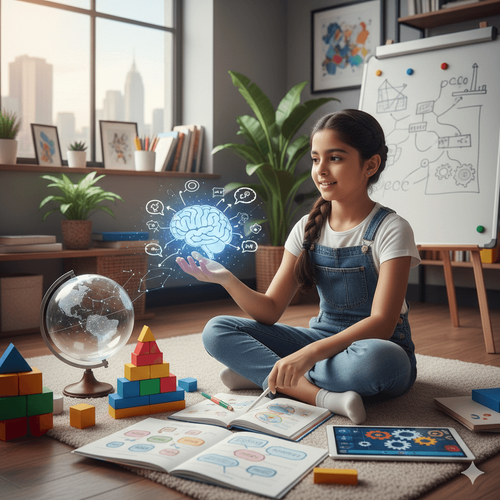

Table of Contents
- What is Conceptual Learning?
- Conceptual Learning vs. Rote Learning: The Critical Differen
- Examples of Conceptual Learning Across Subjects
- The Remarkable Benefits of Conceptual Learning
- Implementing Conceptual Learning: Practical Strategies for P
- Overcoming Challenges in Conceptual Learning
- Making the Shift: From Memorization to Understanding
- The Future Belongs to Conceptual Learners
- The PlanetSpark Approach: Communication Meets Conceptual Lea
- Bridging the Gap Starts Today with PlanetSpark
Every parent wants their child to succeed academically and thrive in the real world. Yet, many children spend countless hours memorizing facts, formulas, and dates, only to forget them shortly after exams. The truth is, traditional rote learning creates a fragile foundation that crumbles under pressure. What kids truly need is conceptual learning, an approach that transforms them from passive memorizers into active thinkers who understand the "why" behind every concept.
At PlanetSpark, we believe that true education goes beyond textbooks and test scores. Our live 1:1 communication and critical thinking programs help children develop not just academic skills, but the ability to connect ideas, solve problems creatively, and express themselves confidently. This holistic approach mirrors the principles of conceptual learning, where understanding takes precedence over memorization.
In this comprehensive guide, we'll explore what conceptual learning means, how it differs from traditional memorization, and why it's the educational approach every parent should understand. Let's unlock the secret to making learning stick for life.
What is Conceptual Learning?
At its core, conceptual learning is an educational methodology that prioritizes deep understanding of core principles and ideas rather than superficial memorization of isolated facts. This approach encourages students to grasp the "how" and "why" behind concepts, enabling them to make meaningful connections between different topics and apply knowledge to new, unfamiliar situations.
Conceptual learning organizes concept-relevant knowledge, skills, and attitudes to form logical cognitive connections. This results in better assimilation, storage, retrieval, and transfer of concepts to applicable situations, both familiar and unfamiliar. Unlike memorization, which focuses on recalling specific information, conceptual learning builds a web of interconnected understanding that grows stronger with each new concept learned.
The Science Behind Conceptual Understanding
Research consistently demonstrates that conceptual learning leads to superior long-term retention compared to rote memorization. When students understand the underlying principles of a subject, they create stronger neural pathways in their brains. These connections make information easier to remember and reconstruct, even years after initial learning.
For instance, a child who understands the concept of "multiplication as repeated addition" can solve multiplication problems without memorizing tables. They recognize that 4 × 5 means adding 4 five times (4+4+4+4+4), which naturally equals 20. This understanding transfers seamlessly to more complex concepts like area, volume, and even algebra.
Transform rote learners into confident thinkers!
Conceptual Learning vs. Rote Learning: The Critical Differences
Examples of Conceptual Learning Across Subjects
Understanding conceptual learning becomes clearer when we see it in action across different subjects. Here are powerful examples of conceptual learning that demonstrate its transformative impact:
Mathematics: Beyond Formulas
Traditional Approach: Students memorize that the area of a rectangle is length × width without understanding why.
Conceptual Approach: Students use physical objects like tiles to cover rectangular surfaces, discovering that multiplying length by width counts the total tiles needed. This understanding extends naturally to more complex shapes and three-dimensional volume calculations.
Example Activities:
- Using pizza slices to understand fractions visually
- Building geometric shapes with straws to understand properties
- Creating patterns to discover multiplication relationships
Science: Making Abstract Concepts Tangible
Traditional Approach: Students memorize "photosynthesis converts sunlight to energy" and move on.
Conceptual Approach: Students examine actual plants, conduct experiments with light and darkness, observe growth patterns, and understand the interconnected ecosystem where photosynthesis provides oxygen for animals while plants use carbon dioxide from animal respiration.
Example Activities:
- Exploring ecosystems through local flora and fauna observations
- Understanding energy conversion by examining household appliances
- Conducting simple experiments to see cause-and-effect relationships
Language Arts: From Words to Meaning
Traditional Approach: Students memorize vocabulary words, grammar rules, and plot summaries.
Conceptual Approach: Students analyze themes, explore narrative techniques, understand symbolism, and examine how authors use literary devices to convey deeper messages about society, identity, and human experiences.
Example Activities:
- Rewriting stories from different characters' perspectives
- Creating concept maps connecting themes across multiple texts
- Debating character motivations and authorial intent
Watch your child's confidence soar as they master the art of expression! PlanetSpark combines conceptual learning with communication skills.
Early Childhood Education: Building Foundations
For younger children, conceptual learning lays the groundwork for lifelong curiosity and understanding:
Counting and Numbers:
- Traditional: Memorizing "1, 2, 3, 4, 5"
- Conceptual: Using blocks, toys, and everyday objects to understand quantity, sequencing, and one-to-one correspondence
Social Concepts:
- Traditional: Being told "sharing is good"
- Conceptual: Through storytelling and play, understanding empathy, fairness, and how actions affect others' feelings
The Remarkable Benefits of Conceptual Learning
The advantages of conceptual learning extend far beyond academic performance. Children who learn conceptually develop skills that serve them throughout life:
1. Enhanced Critical Thinking and Problem-Solving
Conceptual learning nurtures analytical minds. Students learn to question assumptions, analyze information from multiple angles, and synthesize knowledge to form solutions. Rather than asking "What's the answer?" they ask "Why does this work?" and "How can I apply this differently?"
2. Superior Long-Term Retention
Information understood conceptually sticks because it's connected to a larger framework of understanding. Students don't need to re-memorize concepts before every exam—they genuinely remember because they comprehend the underlying logic.
3. Real-World Application Skills
Perhaps most importantly, conceptual learning bridges the gap between classroom theory and practical life. Students can take principles learned in one context and apply them to completely different situations, demonstrating true mastery.
4. Increased Academic Confidence
When students understand concepts deeply, they approach challenges with confidence rather than anxiety. They know that even if they forget a specific detail, they can reconstruct it through logical reasoning.
5. Development of Transferable Skills
Conceptual learning teaches students how to learn, a skill that transcends any individual subject. They develop pattern recognition, connection-making abilities, and adaptive thinking that serve them in every academic discipline and career path.
6. Holistic Personality Development
Beyond academics, conceptual learning fosters curiosity, creativity, empathy, and resilience. These traits contribute to well-rounded individuals prepared for life's complexities.
From hesitant to confident, from confused to clear, see the transformation! Join thousands of parents who trust PlanetSpark.
Implementing Conceptual Learning: Practical Strategies for Parents
As a parent, you play a crucial role in fostering conceptual understanding. Here are actionable strategies to support your child's learning journey:
Ask "Why" and "How" Questions: Instead of asking "What's the answer?" try "Why do you think that works?" or "How did you figure that out?" These questions encourage deeper thinking and help children articulate their understanding.
Connect Learning to Real Life: Constantly bridge school concepts with everyday experiences. Discuss percentages while shopping, explore geometry in architecture, or analyze story themes in movies you watch together.
Encourage Hands-On Exploration: Provide manipulatives, building materials, art supplies, and science experiment kits. Physical interaction with concepts creates a stronger understanding than abstract instruction alone.
Value Process Over Product: Praise effort, reasoning, and creative approaches rather than just correct answers. This mindset shift encourages risk-taking and deeper exploration.
Create Thinking Time: Don't rush to provide answers. When your child struggles with a problem, give them time to wrestle with concepts. Productive struggle builds neural connections that easy answers cannot.
Model Conceptual Thinking: Share your own thought processes aloud. When solving problems, narrate your reasoning: "I'm thinking about this because..." This demonstrates how experts approach challenges.
Use Multiple Representations: Present concepts through different modalities, visual diagrams, verbal explanations, physical models, and digital simulations. Different approaches reinforce understanding from various angles.
Your child deserves more than memorization; they deserve mastery! Experience PlanetSpark's concept-driven communication programs.
Overcoming Challenges in Conceptual Learning
While conceptual learning offers tremendous benefits, parents and educators should be aware of potential challenges:
Time Investment: Conceptual learning often takes longer initially than memorization. However, this upfront investment pays dividends through superior retention and reduced need for review.
Curriculum Coverage Concerns: Teachers may feel pressure to "cover" extensive curricula, leaving little time for deep exploration. Parents can supplement school learning with conceptual discussions at home.
Assessment Limitations: Traditional tests often reward memorization over understanding. Encourage teachers to include open-ended questions, projects, and real-world application tasks that better measure conceptual grasp.
Abstract Concept Challenges: Some concepts lack obvious real-world parallels, making them harder to teach conceptually. In these cases, use analogies, thought experiments, and visual representations to build understanding bridges.
Individual Learning Pace: Every child develops conceptual understanding at their own speed. Patience and personalized attention like that offered in PlanetSpark's 1:1 sessions ensure no child falls behind or feels rushed.
Bridge the gap between school and real understanding! PlanetSpark's expert trainers make complex concepts simple and engaging.
Making the Shift: From Memorization to Understanding
Transitioning from memorization-focused education to conceptual learning requires intentional effort from parents, teachers, and students:
Start Small: Choose one subject or topic and consciously apply conceptual approaches. Celebrate small wins as understanding deepens.
Embrace Questions: Create a home environment where questions are celebrated, not dismissed. "I don't know, let's figure it out together" becomes a powerful learning mantra.
Reduce Pressure: Ease the anxiety around grades and performance. Focus conversations on what your child learned and understood rather than test scores alone.
Seek Quality Educational Partners: Look for schools, tutors, and programs that prioritize understanding over rote learning. PlanetSpark's communication programs exemplify this approach, building skills through conceptual engagement rather than mechanical practice.
Be Patient: The shift from memorization to conceptual learning doesn't happen overnight. Trust the process and celebrate progress, however gradual.
Don't let your child just memorize their way through school! Give them the gift of true understanding with PlanetSpark.
The Future Belongs to Conceptual Learners
In our rapidly evolving world, information is everywhere and constantly changing. The ability to memorize facts holds little value when Google can answer any question instantly. What matters now, and will matter even more in the future, is the ability to think critically, connect ideas creatively, solve novel problems, and communicate solutions effectively.
Conceptual learning prepares children for this future. It develops flexible thinkers who can adapt to new situations, lifelong learners who remain curious and engaged, and confident communicators who can articulate complex ideas clearly.
As parents, the educational choices we make today shape our children's tomorrow. By prioritizing conceptual understanding over shallow memorization, we give them tools that serve them throughout their lives in school, in careers, and in navigating life's countless challenges.
Stop the struggle with homework battles! PlanetSpark's expert coaches help children understand concepts deeply so learning becomes joyful.
The PlanetSpark Approach: Communication Meets Conceptual Learning
At PlanetSpark, we recognize that conceptual learning and effective communication are inseparable. When children understand concepts deeply, they can explain them clearly. When they practice articulating ideas, their understanding deepens.
Our comprehensive programs integrate:
- 1:1 Live Interactive Coaching: Personalized attention ensures each child's unique learning style is honored
- Critical Thinking Development: Through debates, storytelling, and creative writing, children learn to analyze, synthesize, and evaluate information
- Real-World Application: Students practice applying communication skills in simulated real-life scenarios
- Confidence Building: As understanding grows, so does the courage to express ideas boldly
- Comprehensive Skill Framework: Covering verbal, non-verbal, and interpersonal communication alongside conceptual clarity
Children enrolled in PlanetSpark programs don't just learn to speak; they learn to think, connect ideas, and express complex concepts with clarity and confidence. This alignment between conceptual understanding and communication skills prepares them not just for academic success but for leadership roles in their future careers.

Bridging the Gap Starts Today with PlanetSpark
The gap between memorization and conceptual learning is real, and its consequences are profound. Children who spend years memorizing without understanding develop math anxiety, lose natural curiosity, and struggle to apply knowledge in real situations. In contrast, conceptual learners approach challenges with confidence, retain information naturally, and develop the critical thinking skills that define success in the 21st century.
This transformation begins with awareness, recognizing that not all learning is equal, and continues with intentional choices about how we support our children's education. Whether through thoughtful questions at the dinner table, hands-on exploration on weekends, or enrollment in programs like PlanetSpark that integrate conceptual understanding with communication excellence, every parent can make a difference.
The question isn't whether your child can memorize information; it's whether they can understand, apply, and articulate ideas with confidence and clarity. That's the promise of conceptual learning, and that's the future PlanetSpark helps build, one child at a time.
Frequently Asked Questions
Conceptual learning means understanding the “why” and “how” behind ideas instead of just memorizing facts. Children learn core principles, see connections between topics, and can apply what they know to new situations. It turns them from passive memorizers into active thinkers.
Rote memorization focuses on repeating and recalling information exactly as it was taught, often for short-term use in tests. Conceptual learning helps children understand underlying ideas so they can remember longer, adapt knowledge, solve problems, and use what they learn in real life.
When children learn conceptually, they create strong mental connections that make information easier to recall and reuse. This leads to better problem-solving, deeper understanding, and more confidence. These skills are crucial not just for exams, but for careers and everyday decision making.
Parents can ask “why” and “how” questions, relate school topics to daily life, use hands-on activities, and value effort over just correct answers. Discuss movies, books, or news in terms of themes and reasons. This helps children build a deeper understanding rather than just cramming.
PlanetSpark blends conceptual learning with communication skills through 1:1 live sessions. Children don’t just learn concepts; they explain them in speeches, stories, debates, and discussions. This strengthens understanding, critical thinking, and clarity of expression, making learning more meaningful and memorable.