
Fast Learning Skills: Techniques to Learn Quickly and Effectively
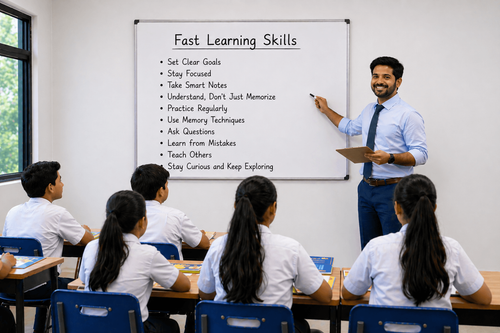

Table of Contents
- Why Fast Learning Skills Matter Today
- How the Brain Learns Faster
- How to Learn Faster: Proven Techniques
- Active Learning Beats Passive Reading
- Use the Feynman Technique
- Spaced Repetition for Long-Term Memory
- Speed Learning Techniques That Actually Work
- Chunking Information
- Pomodoro Method
- Dual Coding Method
- Effective Learning Methods for Students
- Smart Note-Making
- Practice Testing
- Interleaving Subjects
- Smart Study Techniques for Exams
- Reverse Planning
- Priority Matrix
- Error Log Method
- Fast Learning Skills for Adults and Professionals
- Learn with Immediate Application
- Use Microlearning
- Build a Learning System
- Improve Focus to Learn Quickly
- Remove Distractions
- Train Deep Focus
- Use Focus Triggers
- Memory Hacks for Faster Learning
- Mnemonics
- Story Method
- Location Method
- Read Better to Learn Faster
- Preview Before Reading
- Ask Questions While Reading
- Summarise After Reading
- Habits That Support Fast Learning
- Sleep
- Exercise
- Nutrition
- Positive Mindset
- Consistency
- Common Mistakes That Slow Learning
- Multitasking
- Highlighting Everything
- Long Passive Sessions
- No Revision Plan
- Comparing with Others
- 7-Day Fast Learning Action Plan
- Day 1, Set Goals
- Day 2, Use Active Recall
- Day 3, Create Visual Notes
- Day 4, Apply the Skill
- Day 5, Teach Someone
- Day 6, Review Mistakes
- Day 7, Reflect and Adjust
- PlanetSpark Personality Development Course
- Learn Faster, Grow Smarter
In a world where information changes daily, learning quickly is a valuable skill for students, professionals, and lifelong learners. Fast learning skills help you absorb concepts faster, remember them longer, and apply them confidently in real situations. This blog covers practical strategies, speed learning techniques, effective learning methods, and smart study techniques that improve focus, memory, and productivity. Whether you want better grades, career growth, or personal development, these proven methods will help you learn smarter, not harder.
Why Fast Learning Skills Matter Today
Learning speed is no longer just about exams. It affects career growth, adaptability, and confidence. People who learn quickly can adjust to new tools, industries, and challenges with ease.
Key Benefits of Fast Learning Skills
- Saves time and effort
- Improves academic performance
- Builds confidence
- Helps in competitive exams
- Enhances career opportunities
- Strengthens memory and focus
- Encourages lifelong learning
Real-Life Examples
A student who learns math formulas faster has more time for revision.
A working professional who quickly understands new software becomes more valuable at work.
A public speaker who learns communication techniques rapidly performs better in presentations.
How the Brain Learns Faster
To improve learning speed, it helps to know how the brain processes information.
The Learning Cycle
- Attention, Focusing on the material
- Understanding, Making sense of it
- Encoding, Storing it in memory
- Retrieval, Recalling it later
- Application, Using it practically
If one step is weak, learning slows down. For example, poor attention leads to weak memory.
Factors That Influence Learning Speed
- Sleep quality
- Nutrition
- Stress levels
- Motivation
- Study environment
- Practice frequency
- Teaching method
How to Learn Faster: Proven Techniques
Active Learning Beats Passive Reading
Reading notes repeatedly feels productive, but active learning works better.
What is Active Learning?
It means engaging with the topic instead of just consuming information.
Examples
- Solve questions
- Explain the concept aloud
- Create mind maps
- Teach someone else
- Use flashcards
When your brain works with information, memory becomes stronger.
Use the Feynman Technique
One of the best answers to how to learn faster is the Feynman Technique.
Steps
- Pick a topic
- Explain it in simple words
- Identify gaps in understanding
- Relearn weak parts
- Simplify again
Why It Works
If you cannot explain a topic simply, you may not fully understand it.
Spaced Repetition for Long-Term Memory
Many people forget what they study because they revise too late or too little.
What is Spaced Repetition?
Reviewing information at increasing intervals:
- Day 1
- Day 3
- Day 7
- Day 15
- Day 30
This strengthens memory pathways.
Best Uses
- Vocabulary
- Formulas
- Dates
- Definitions
- Concepts
Want expert guidance to learn faster and communicate better? Join PlanetSpark Personality Development Course and build lifelong skills with personalised coaching.
Speed Learning Techniques That Actually Work
Chunking Information
Your brain remembers grouped information better than random data.
Example
Instead of remembering:
4 7 1 9 2 6 8 5
Use chunks:
4719 - 2685
Where to Use Chunking
- Phone numbers
- Historical dates
- Formulas
- Speech points
- Presentations
Pomodoro Method
Studying for hours without breaks reduces efficiency.
How It Works
- Study for 25 minutes
- Break for 5 minutes
- Repeat 4 times
- Take a longer break
Benefits
- Better focus
- Less burnout
- Higher productivity
- Easier task management
Dual Coding Method
This means combining words with visuals.
Examples
- Diagrams
- Charts
- Infographics
- Mind maps
- Flowcharts
Visual learning improves understanding and recall.
Effective Learning Methods for Students
Smart Note-Making
Good notes save revision time.
Best Note Styles
Cornell Notes
Divide page into:
- Notes
- Cues
- Summary
Mind Maps
Ideal for topics with connected ideas.
Flow Notes
Write ideas naturally with arrows and examples.
Tips
- Use keywords, not full paragraphs
- Highlight only essentials
- Add examples
- Revise notes weekly
Practice Testing
Instead of rereading chapters, test yourself.
Methods
- Mock tests
- Quiz apps
- Previous papers
- Oral questioning
- Flashcards
Why It Works
Retrieval practice strengthens memory better than passive review.
Interleaving Subjects
Study related topics in rotation instead of one subject for too long.
Example
- 30 min Math
- 30 min Science
- 30 min English
This improves adaptability and problem-solving.
Smart Study Techniques for Exams
Reverse Planning
Start from the exam date and plan backward.
Example
If exam is in 30 days:
- Days 1-15: Learn concepts
- Days 16-22: Practice questions
- Days 23-27: Revision
- Days 28-30: Mock tests
Priority Matrix
Study topics based on:
- Important + Difficult
- Important + Easy
- Less Important + Difficult
- Less Important + Easy
Do difficult and important topics first.
Error Log Method
Keep a notebook of mistakes.
Write Down
- Wrong answers
- Why you got them wrong
- Correct method
- Revision date
This prevents repeating errors.
Fast learners use the right mentor. Build speaking, confidence, creativity, and study discipline with PlanetSpark Personality Development Course for children and adults.
Fast Learning Skills for Adults and Professionals
Learning quickly is equally important for adults.
Learn with Immediate Application
Adults learn better when they apply concepts instantly.
Example
If learning Excel:
- Create sheets immediately
- Practice formulas
- Solve real tasks
If learning communication:
- Use techniques in meetings
- Practice presentations
- Record your speaking
Use Microlearning
Learn in small focused sessions.
Examples
- 10-minute lesson daily
- One concept during lunch break
- Short podcast during commute
Consistency beats occasional long sessions.
Build a Learning System
Use this weekly framework:
- Learn new skill, 3 days
- Practice, 2 days
- Review, 1 day
- Reflect, 1 day
Improve Focus to Learn Quickly
Even the best methods fail without concentration.
Remove Distractions
- Keep phone away
- Use website blockers
- Clear desk space
- Study in a quiet place
Train Deep Focus
Start with 15 minutes of full attention. Increase gradually.
Use Focus Triggers
- Same study place
- Same time daily
- Specific playlist
- Water bottle nearby
- Task list ready
Your brain learns habits through repetition.
Memory Hacks for Faster Learning
Mnemonics
Use patterns or phrases.
Example
For planets:
My Very Educated Mother Just Served Us Noodles
Story Method
Turn facts into a story.
Stories are easier to remember than isolated facts.
Location Method
Associate ideas with places in a room or route.
Useful for speeches and presentations.
Read Better to Learn Faster
Reading speed matters when comprehension stays strong.
Preview Before Reading
Scan headings, bold text, summaries, and visuals first.
Ask Questions While Reading
- What is the main idea?
- Why does it matter?
- How can I use it?
Summarise After Reading
Write 3 key takeaways in your own words.
This boosts retention immediately.
Habits That Support Fast Learning
Sleep
Memory consolidates during sleep. Aim for quality rest.
Exercise
Physical activity improves blood flow to the brain.
Nutrition
Eat balanced meals and stay hydrated.
Positive Mindset
Believing you can improve increases learning speed.
Consistency
Small daily progress creates big results over time.
Common Mistakes That Slow Learning
Multitasking
Switching tasks reduces quality and speed.
Highlighting Everything
Too much highlighting creates confusion.
Long Passive Sessions
Hours of reading without testing recall is inefficient.
No Revision Plan
Without revision, forgetting is natural.
Comparing with Others
Focus on your own growth pace.
7-Day Fast Learning Action Plan
Day 1, Set Goals
Choose one skill or subject.
Day 2, Use Active Recall
Test yourself after learning.
Day 3, Create Visual Notes
Mind map or chart.
Day 4, Apply the Skill
Practice in real life.
Day 5, Teach Someone
Explain clearly.
Day 6, Review Mistakes
Use error log.
Day 7, Reflect and Adjust
What worked best? Improve your system.
PlanetSpark Personality Development Course
Fast learning becomes easier when learners have the right mentor, structure, and motivation. PlanetSpark Personality Development Course is designed for kids and adults who want to improve communication, confidence, creativity, and overall growth. Every learner gets 1:1 personal trainers who understand individual pace, strengths, and challenges. The personalised curriculum creates a roadmap for grammar, fluency, speaking, and writing progress.
With SparkX AI video analysis, learners receive insights on voice clarity, body language, grammar, confidence, and structure. AI-led practice sessions help students rehearse speeches, storytelling, and communication tasks independently with instant feedback.
The platform also builds writing habits through Spark Diary, while gamified learning tools make revision fun through quizzes, vocabulary games, spelling tasks, and grammar challenges. Regular PTMs and progress reports keep parents informed with measurable growth data and action plans.
Beyond classes, learners join debate clubs, storytelling groups, podcasting communities, writers guilds, and speaking circles for real-world confidence. Through Sparkline, children can safely share their work, gain recognition, and learn from peers. Frequent contests and showcases motivate learners to perform and grow consistently.
Whether your goal is better speaking, stronger confidence, leadership, or faster skill development, PlanetSpark offers a structured path to success.
Start your growth journey today with PlanetSpark Personality Development Course and unlock confident communication for life.
Learn Faster, Grow Smarter
Fast learning skills are not about shortcuts or cramming. They are about using science-backed strategies that improve focus, memory, and application. Techniques like active recall, spaced repetition, chunking, smart notes, and consistent practice can dramatically change how you learn. Whether you are a student preparing for exams, a professional building new skills, or someone seeking personal growth, faster learning creates long-term advantages. Start with one technique today, stay consistent, and improve step by step. Over time, you will notice better results, stronger confidence, and greater success in every area of life.
You can also read:
Frequently Asked Questions
Fast learning skills are strategies that help people understand, remember, and apply information more quickly. They include active recall, spaced repetition, chunking, focused practice, and smart note-making. These methods reduce wasted effort and improve long-term retention.
To learn faster for exams:
Use active recall instead of rereading
Solve mock tests
Revise with spaced repetition
Create short notes
Focus on weak topics first
Sleep properly before exams
This combination improves speed and accuracy.
The most effective speed learning techniques include:
Feynman Technique
Pomodoro Method
Chunking
Dual Coding
Practice Testing
Interleaving
These methods are proven to improve understanding and memory.
Yes, adults can absolutely improve learning speed. In fact, adults often learn faster when they connect lessons to real goals. Microlearning, practical application, consistent practice, and reflection are especially useful for professionals and lifelong learners.
A structured course that combines communication, confidence, speaking, writing, and personalised mentoring can help significantly. PlanetSpark Personality Development Course is a strong option because it offers 1:1 trainers, AI-powered feedback, gamified learning, progress tracking, and practical activities for both kids and adults.