
Learn Goal Setting Activities for Students at PlanetSpark

Table of Contents
- What Are Goal Setting?
- Why Goal Setting Activities for Students Are Important
- The Goal Setting Process Explained Simply
- How to Set Goals Effectively as a Student
- 15 Powerful Goal Setting Activities for Students
- Goal Setting Activities for Holistic Student Growth
- Confidence and Creativity Shine: Shreesh’s Inspiring Growth
- How PlanetSpark Makes Goal Setting Practical
- Why PlanetSpark Is the Perfect Learning Partner for Your Kid
- Your Goals Define Your Direction
Are you looking for a powerful way to help students dream big and achieve bigger?
Learn goal setting activities for students at PlanetSpark introduces practical strategies that turn aspirations into clear action plans. This guide walks you through engaging Goal Setting Activities for Students designed to build clarity, discipline, and self-confidence. You’ll explore structured exercises, reflection methods, and progress-tracking techniques that make goal setting simple and effective. At PlanetSpark, expert mentors guide students step-by-step, helping them develop focus, communication skills, and the confidence to achieve measurable success.
What Are Goal Setting?
Students often ask, what are goal setting? In simple words, goal setting refers to defining clear objectives and working toward them with focus and consistency.
There are different types of goals students can set:
- Academic goals
- Personal development goals
- Skill-based goals
- Communication goals
- Health and habit goals
- Leadership goals
Each type shapes different aspects of growth.
Why Goal Setting Activities for Students Are Important
Students who practice goal setting activities regularly:
- Improve academic performance
- Build self-confidence
- Manage time effectively
- Develop leadership skills
- Stay motivated during challenges
- Reduce procrastination
Goal setting gives clarity. Clarity reduces confusion. Reduced confusion increases action. Action leads to results.
That’s the cycle of success.
The Goal Setting Process Explained Simply
Understanding the goal setting process helps students move from confusion to clarity. Here’s a simple, student-friendly explanation with examples for each step:
1. Self-Reflection
Students must honestly evaluate strengths, weaknesses, interests, and challenges before setting goals. This builds clarity and direction.
Example 1: Realizing difficulty in mathematics.
Example 2: Noticing excitement about public speaking activities.
2. Define a Clear Goal
A specific goal provides focus and eliminates confusion about what to achieve. Clear wording makes the target easier to understand and follow.
Example 1: “Score 85% in math.”
Example 2: “Join the school debate team.”
3. Make It Measurable
Measurable goals include numbers or timelines to track improvement. They help students monitor performance and stay motivated through visible progress.
Example 1: “Read 15 pages daily.”
Example 2: “Practice for 30 minutes each day.”
4. Break It into Steps
Dividing large goals into smaller tasks prevents overwhelm and increases consistency. Small achievements build confidence and momentum over time.
Example 1: Solve five problems daily.
Example 2: Prepare one speech paragraph weekly.
5. Take Action
Consistent daily effort turns plans into real outcomes. Action builds discipline and habit, which matter more than occasional bursts of motivation.
Example 1: Study every evening at 7 PM.
Example 2: Practice speaking in front of friends.
Give Your Child the Power to Speak with Confidence!
6. Review and Adjust
Regular evaluation helps students understand progress and improve strategies. Adjustments ensure goals remain achievable and realistic.
Example 1: Check weekly test results.
Example 2: Change study method if needed.
This structured goal setting process prevents overwhelm and builds discipline.
How to Set Goals Effectively as a Student
If you’re wondering how to set goals, follow this formula:
Use the SMART Method
Goals should be:
- Specific
- Measurable
- Achievable
- Relevant
- Time-bound
Example:
Weak goal:
“I want to improve my English.”
SMART goal:
“I will improve my English speaking confidence by practicing 20 minutes daily and participating in one class presentation every month for the next three months.”
Now that we understand the basics, let’s explore powerful goal setting activities for students.
15 Powerful Goal Setting Activities for Students
Setting goals early builds confidence, clarity, and direction in students’ lives. The right activities can spark motivation, strengthen focus, and help young learners turn ambitions into meaningful, achievable outcomes.
1. Vision Board Creation
Students create a visual board with images, quotes, and words representing their goals.
Why it works:
- Activates visual motivation
- Keeps goals visible daily
- Encourages long-term thinking
2. Future Self Letter
Students write a letter to themselves dated one year ahead.
They describe:
- Achievements
- Skills developed
- Confidence level
- Habits built
This activity improves clarity and emotional connection with goals.
3. 30-Day Micro Goal Challenge
Students choose one small habit:
- Reading 10 pages daily
- Practicing math problems
- Learning 5 new words daily
Small wins build discipline.
Help Your Child Grow into a Smart and Confident Communicator!
4. Goal Breakdown Worksheet
Students take one big goal and break it into:
- Monthly tasks
- Weekly targets
- Daily actions
This prevents overwhelm.
5. Accountability Partner System
Students pair up and:
- Share weekly goals
- Track each other’s progress
- Encourage consistency
Peer accountability increases commitment.
6. Progress Tracking Chart
Visual progress bars motivate students.
Example:
- Chapters completed
- Practice tests attempted
- Speaking sessions completed
Seeing progress builds confidence.
7. Reflection Journal
Weekly prompts:
- What did I achieve?
- What distracted me?
- What will I improve next week?
Reflection strengthens self-awareness.
8. Skill Development Roadmap
Students choose one skill:
- Public speaking
- Coding
- Writing
- Debate
Then map out:
- Beginner level
- Intermediate level
- Advanced level
This structured approach makes growth measurable.
9. Time Audit Activity
Students track how they spend 24 hours.
They identify:
- Time wasted
- Productive hours
- Improvement areas
This activity connects goal setting with time management.
10. Presentation Goal Activity
Students set a communication goal:
“I will confidently present in front of class without reading from paper in two months.”
They practice:
- Voice modulation
- Body language
- Structured speaking
Communication goals are powerful for long-term success.
11. Habit Tracker Calendar
Students mark each day they complete a task.
Streak psychology boosts consistency.
12. Monthly Review Meeting
Students conduct a personal review:
- What worked?
- What failed?
- What needs adjustment?
Self-review builds maturity.
Boost Your Child’s Personality with Expert-Guided Learning!
13. “Why” Analysis Exercise
Students ask:
Why is this goal important?
If the reason is strong, motivation becomes automatic.
14. Goal Prioritization Matrix
Students list goals and categorize:
- Urgent & important
- Important but not urgent
- Not important
This sharpens decision-making skills.
15. Public Commitment Activity
Students declare a goal in front of peers or mentors.
Public commitment increases responsibility.
Goal Setting Activities for Holistic Student Growth
Structured goal setting helps students grow academically, personally, and socially. With the right activities and guided systems, students build clarity, confidence, discipline, and measurable progress across every important area of development.
Academic Goal Setting Activities for Students
Academic growth needs structure.
Examples:
- Improving subject grades
- Completing assignments on time
- Preparing for competitive exams
- Increasing reading speed
Activity example:
Create a 90-day academic improvement plan:
- Month 1: Concept clarity
- Month 2: Practice tests
- Month 3: Revision and analysis
Structured planning boosts performance.
Personal Development Goal Setting Activities
Beyond marks, students should focus on:
- Confidence building
- Emotional intelligence
- Leadership skills
- Communication skills
Activities include:
- Weekly speaking challenge
- Group leadership rotation
- Debate participation
- Daily gratitude journal
Personal growth fuels academic growth.
Communication-Focused Goal Setting at PlanetSpark
One of the most powerful skills for students today is communication.
At PlanetSpark, students engage in structured goal setting activities for students that focus on:
- Public speaking confidence
- Creative writing improvement
- Leadership communication
- Structured thinking
Students don’t just learn theory. They apply the goal setting process in live sessions.
They learn:
- How to set goals clearly
- How to break goals into milestones
- How to track progress
- How to stay accountable
This guided system builds consistency and measurable improvement.
Confidence and Creativity Shine: Shreesh’s Inspiring Growth Journey
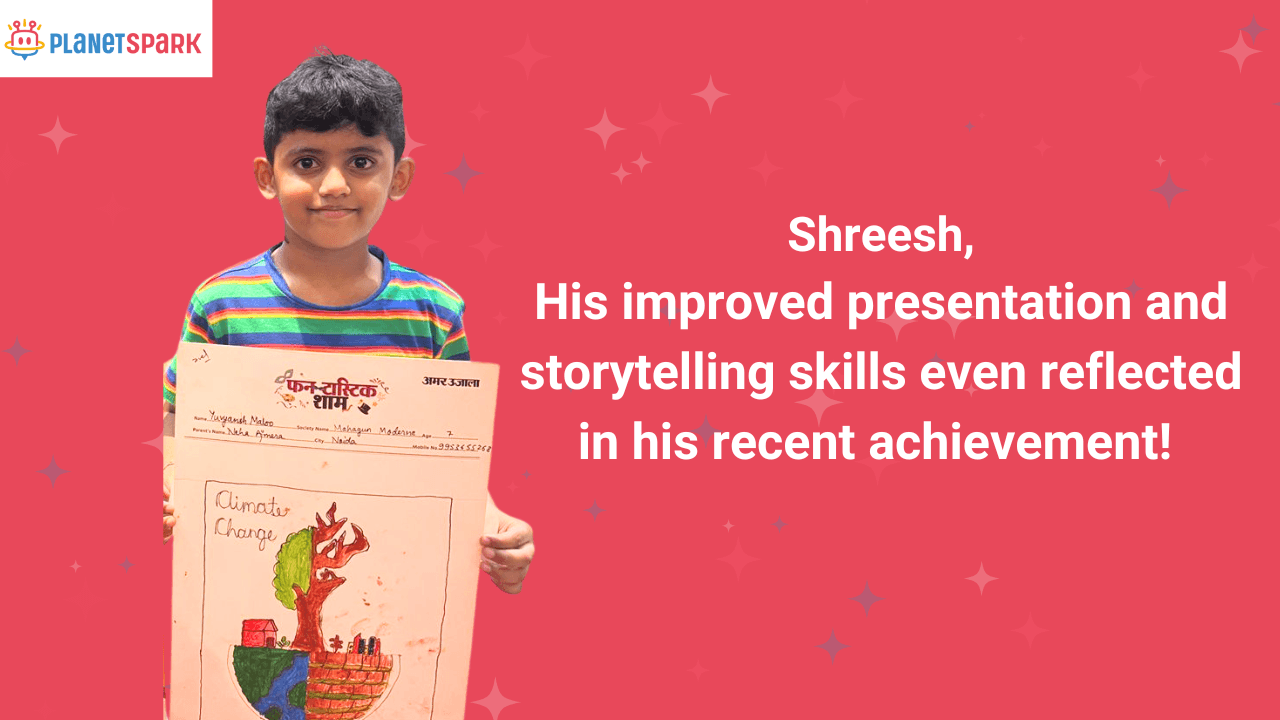
PlanetSpark has helped Shreesh express his ideas creatively and confidently. His improved presentation and storytelling skills even reflected in his recent achievement — winning second place in the Junior Category of a drawing competition on ‘Climate Change’ organized by the Amar Ujala team.
Goal setting activities for students build confidence and creativity. Join PlanetSpark to strengthen communication skills, express ideas boldly, and achieve milestones that make you proud. Start your success journey today.
How PlanetSpark Makes Goal Setting Practical
PlanetSpark integrates goal setting activities for students inside skill-building programs.
1. Students set communication goals
Students define specific communication targets to improve clarity, confidence, and expression. Clear goals provide direction and measurable outcomes.
Example 1: Deliver a two-minute speech without hesitation.
Example 2: Use five new vocabulary words in conversations weekly.
2. Students track weekly performance
Regular performance tracking helps students monitor growth and identify improvement areas. Weekly reviews encourage discipline and consistency in effort.
Example 1: Record speaking practice and evaluate fluency.
Example 2: Maintain a weekly progress journal for communication tasks.
3. Students get mentor feedback
Expert mentors provide constructive feedback to refine skills and correct mistakes early. Personalized guidance accelerates improvement and builds confidence.
Example 1: Feedback on voice modulation during speeches.
Example 2: Suggestions to improve structure in creative writing tasks.
4. Students participate in live speaking sessions
Live sessions allow students to apply learning practically in real-time environments. Active participation builds confidence and reduces stage fear.
Example 1: Present opinions during group discussions.
Example 2: Deliver prepared speeches in virtual classrooms.
5. Students measure improvement through structured assessments
Structured assessments evaluate progress using clear benchmarks and performance criteria. Measurable results help students understand strengths and areas needing improvement.
Example 1: Comparing initial and final speech recordings.
Example 2: Scoring improvement in fluency and content organization tests.
Why PlanetSpark Is the Perfect Learning Partner for Your Kid
PlanetSpark creates confident, well-spoken, and future-ready kids through personalised training, engaging digital tools, and activity-based learning. With expert coaching and structured practice, students develop communication strength, emotional intelligence, and strong personality traits that help them thrive in school and beyond.
Personality Development Services at PlanetSpark:
- Builds confidence through guided speaking and real-time practice.
- Strengthens leadership and teamwork with interactive tasks.
- Enhances emotional intelligence using SEL-based modules.
- Improves social etiquette and polite communication skills.
- Teaches body language, eye contact, and effective posture.
- Encourages clarity of thought through journaling and reflections.
- Boosts decision-making and problem-solving abilities.
- Develops assertiveness and respectful expression.
- Supports goal setting and personal growth habits.
- Offers regular parent consultations for steady progress.
Your Goals Define Your Direction
A goal gives you direction.
Direction gives you focus.
Focus gives you results.
When students learn what are goal setting, understand the goal setting process, and practice how to set goals properly, they build habits that last a lifetime.Goal setting activities for students are not just classroom exercises. They are life-building tools.
If you start today with even one small goal — and stay consistent — your future self will thank you.
Success doesn’t begin with talent.
It begins with a clear goal and the courage to pursue it.
And when structured guidance, accountability, and skill-building combine — growth becomes unstoppable.
Start setting your goals.
Start tracking your progress.
Start building your future.
Also Read:
Frequently Asked Questions
Goal setting is the process of identifying clear objectives and planning steps to achieve them. It helps students stay focused, motivated, organized, and confident while improving academic performance and personal growth.
Students should follow the SMART method—Specific, Measurable, Achievable, Relevant, and Time-bound. Breaking big goals into smaller daily tasks and reviewing progress weekly makes goals practical and achievable.
The goal setting process includes self-reflection, defining a clear objective, creating an action plan, taking consistent action, tracking progress, and reviewing results regularly to improve performance and stay motivated.
PlanetSpark helps students set structured communication and confidence-building goals through live sessions, mentor feedback, performance tracking, and measurable milestones that improve public speaking, writing skills, and overall personality development.
PlanetSpark combines expert mentorship, structured learning plans, and progress monitoring to ensure students achieve communication and leadership goals effectively while building confidence and real-world skills step by step.