
How to Teach Kids Critical Thinking Skills Effectively with PlanetSpark


Table of Contents
- What Are Critical Thinking Skills?
- How to teach critical thinking to kids: Core Principles
- Simple Ways to Build Critical Thinking Daily
- Teaching Critical Thinking Through Play and Activities
- Fun Critical Thinking Exercises Kids Love
- How PlanetSpark Helps Kids Master Thinking Skills
- From Classroom Learning to Confident News Star
- How to Teach Critical Thinking in Academics
- Why PlanetSpark Is the Perfect Learning Partner for Your Chi
- Building Thinkers, Not Just Learners
In a world full of questions, helping kids think independently matters more than ever.
Learning how to teach kids critical thinking skills empowers children to analyze, question, and make smart decisions instead of memorizing answers. This guide explains the concept in a simple, practical way, sharing effective strategies parents and educators can use daily. It also highlights how PlanetSpark nurtures critical thinking through interactive discussions, real-life problem-solving activities, debates, and guided communication exercises that build confident, logical, and creative young minds.
What Are Critical Thinking Skills?
Critical thinking skills help children process information thoughtfully, question ideas, and make smart decisions. These abilities support independent learning, effective communication, and confident problem-solving from an early age.
Critical thinking skills refer to a child’s ability to:
- Analyze information instead of memorizing it.
- Ask meaningful questions.
- Evaluate different viewpoints.
- Solve problems logically.
- Make reasoned decisions.
- Express thoughts clearly and confidently.
When children think critically, they don’t just accept information at face value. They learn to ask why, how, and what if. Teaching these skills early helps children become independent learners and confident communicators.

How to teach critical thinking to kids: Core Principles
Strong critical thinking develops when children are guided thoughtfully. These core principles help adults create meaningful learning experiences that encourage curiosity, reasoning, and confident decision-making in everyday situations.
1. Encourage Curiosity
Allow children to ask questions without fear or judgment. Curiosity drives deeper thinking and helps kids explore ideas beyond surface-level understanding, building a strong foundation for lifelong learning.
Examples:
- Let children ask “why” during stories or lessons.
- Encourage questions while watching the news or cartoons.
- Ask them to predict outcomes before activities.
- Welcome repeated questions with patience.
2. Focus on the Thinking Process
Instead of only checking right or wrong answers, guide children to explain their thinking. Understanding how they concluded strengthens reasoning skills and helps identify gaps in understanding.
Examples:
- Ask “How did you solve this?” after homework.
- Discuss the steps used in math problems.
- Let children explain choices in games.
- Encourage verbal reasoning during puzzles.
3. Create a Safe Learning Environment
Children learn best when mistakes are treated as learning opportunities. A supportive environment builds confidence, reduces fear of failure, and encourages kids to try new ideas freely.
Examples:
- Praise effort, not just results.
- Share stories of learning from mistakes.
- Avoid harsh criticism for wrong answers.
- Encourage retrying after failure.
4. Use Real-Life Situations
Every day experiences help children apply thinking skills practically. Real-life contexts make learning relatable, meaningful, and effective for teaching decision-making and problem-solving.
Examples:
- Involve kids in planning trips.
- Let them compare prices while shopping.
- Discuss solutions to small conflicts.
- Ask them to plan daily schedules.
Give Your Child the Power to Speak with Confidence!
Simple Ways to Build Critical Thinking Daily
Critical thinking grows when children question ideas, explore solutions, and reflect on choices. These practical methods help kids analyze information, reason logically, and express thoughts confidently through everyday conversations and activities.
Ask Better Questions
- Use open-ended questions instead of yes/no ones.
- Apply the 5 Ws & H to deepen understanding.
- Ask children to explain opinions and ideas.
- Encourage predicting outcomes and alternative views.
Encourage Problem-Solving & Decision-Making
- Let children struggle productively before stepping in.
- Discuss reasons behind rules and decisions.
- Use the SODAS method to compare options.
- Help children evaluate advantages and disadvantages.
Model & Discuss Thinking
- Think aloud to show how decisions are made.
- Explain your reasoning during daily tasks.
- Discuss how others might view the same situation.
- Talk about information sources and possible biases.
Foster Curiosity & Exploration
- Encourage questions without judgment.
- Admit when you don’t know and explore together.
- Expose kids to books, videos, and experiences.
- Use hands-on activities to connect ideas practically.
By consistently practicing these strategies, parents and educators can nurture analytical thinking, better decision-making, and confident communication skills in children from an early age.
Teaching Critical Thinking Through Play and Activities
Play-based learning makes thinking fun and meaningful for children. Through games and activities, kids learn to analyze situations, plan, solve problems, and make decisions naturally without feeling pressured or judged.
Help Your Child Grow into a Smart and Confident Communicator!
Puzzles and Brain Games
Puzzles challenge children to observe patterns, test possibilities, and think logically before acting. These games improve concentration, patience, and reasoning while helping kids understand that problems can have multiple solutions.
Examples:
- Logic puzzles
- Sudoku
- Jigsaw puzzles
- Pattern-matching games
Role-Playing Activities
Role-play allows children to step into real-life situations and explore consequences safely. By acting out scenarios, kids learn empathy, decision-making, communication, and how different choices lead to different outcomes.
Examples:
- Solving a classroom conflict
- Choosing how to share toys
- Acting as a team leader
- Handling peer disagreements
Strategy Games
Strategy games teach children to plan, predict outcomes, and adapt their thinking. These games develop foresight, patience, and problem-solving skills while encouraging children to think several steps ahead.
Examples:
- Chess
- Ludo
- Monopoly
- Card-based strategy games
Fun Critical Thinking Exercises Kids Love
Structured exercises help children practice reasoning, creativity, and decision-making regularly. These activities encourage kids to explore ideas, justify opinions, and think beyond obvious answers in a guided, enjoyable way.
1. The “What If” Game
This exercise sparks imagination while building analytical skills. Hypothetical questions push children to explore consequences, make connections, and think creatively about alternative possibilities and outcomes.
Examples:
- What if school started at night?
- What if animals could talk?
- What if cars could fly?
- What if there were no rules?
Boost Your Child’s Personality with Expert Guided Learning
2. Sorting and Classifying
Sorting activities help children identify patterns and relationships. Asking them to explain their choices strengthens logical thinking and teaches them to justify decisions using clear reasoning.
Examples:
- Group toys by size or color
- Sort objects by use or material
- Classify animals by habitat
- Organize books by genre
3. Problem-Solving Challenges
Real-life challenges encourage children to think practically and consider multiple solutions. This builds flexibility, creativity, and confidence in handling everyday situations.
Examples:
- Resolving a playground conflict
- Managing time for homework
- Saving pocket money wisely
- Planning a group activity
4. Opinion Building
Opinion-building activities teach children to think independently. Defending viewpoints with reasons improves logical reasoning, communication skills, and respectful discussion habits.
Examples:
- Choosing a favorite book
- Deciding school rules
- Picking a class activity
- Debating screen time limits
How PlanetSpark Helps Kids Master Thinking Skills
PlanetSpark supports children in practicing thinking skills through structured lessons, interactive discussions, and guided activities that turn everyday learning into meaningful experiences and measurable progress.
- Guided Live Sessions
Expert trainers guide students through discussions, debates, and reflections that strengthen reasoning, clarity of thought, and logical expression skills. - Interactive Learning Modules
Engaging modules use stories, scenarios, and challenges to apply critical thinking exercises in fun, age-appropriate ways. - Real-Life Problem Scenarios
Children work on relatable situations, helping them analyze options, evaluate outcomes, and make thoughtful decisions confidently. - Communication-Focused Activities
PlanetSpark links thinking with speaking, encouraging students to explain ideas clearly, justify opinions, and defend viewpoints respectfully. - Personalized Feedback
Trainers provide constructive feedback that helps children refine reasoning, improve responses, and grow more confident in expressing ideas. - Safe, Encouraging Environment
Students feel comfortable questioning, making mistakes, and learning through exploration, fostering curiosity and independent thinking.
From Classroom Learning to Confident News Star

Ritvika has achieved a milestone in News Presentation! From the PlanetSpark classroom to the spotlight at the News Presentation Competition.
Want your child to think critically, express ideas confidently, and shine on real platforms like Ritvika? Join PlanetSpark and help your child build strong critical thinking and communication skills that lead to real achievements.
How to Teach Critical Thinking in Academics
Teaching how to teach critical thinking within academic subjects helps children understand concepts deeply rather than memorizing facts. Integrating thinking skills into daily lessons makes learning more meaningful and effective across subjects.
In Reading
Encourage children to go beyond the text by thinking actively while reading. Ask them to predict story endings based on clues, analyze character motivations, and compare different viewpoints. This builds comprehension, interpretation, and reasoning skills.
In Math
Shift the focus from memorizing formulas to understanding logic. Encourage children to explain how they reached an answer and explore multiple ways to solve the same problem. This strengthens problem-solving and analytical thinking.
In Science
Promote curiosity by asking children to form hypotheses before experiments. Discuss cause-and-effect relationships and encourage them to explain results. This approach helps children think scientifically, analyze outcomes, and understand concepts through reasoning rather than rote learning.
By embedding critical thinking into academics, children become confident learners who can question, analyze, and apply knowledge effectively in real-life situations.
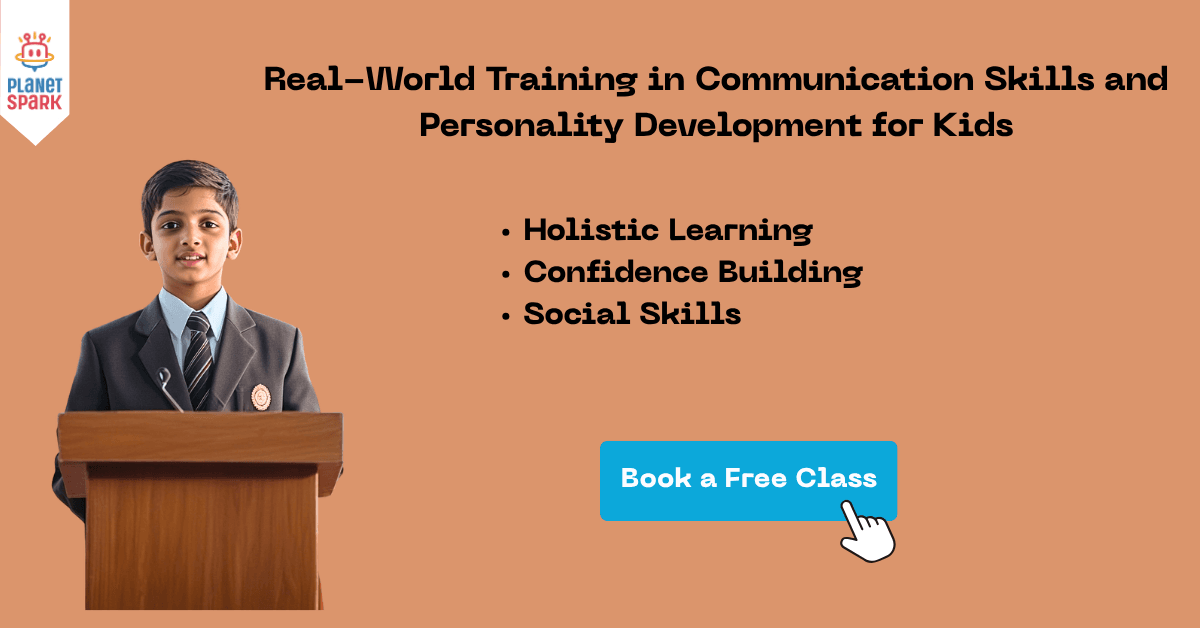
Why PlanetSpark Is the Perfect Learning Partner for Your Child
PlanetSpark creates confident, well-spoken, and future-ready children through personalised training, engaging digital tools, and activity-based learning. With expert coaching and structured practice, kids develop communication strength, emotional intelligence, and strong personality traits that help them thrive in school and beyond.
Personality Development Services at PlanetSpark:
- Builds confidence through guided speaking and real-time practice.
- Strengthens leadership and teamwork with interactive tasks.
- Enhances emotional intelligence using SEL-based modules.
- Improves social etiquette and polite communication skills.
- Teaches body language, eye contact, and effective posture.
- Encourages clarity of thought through journaling and reflections.
- Boosts decision-making and problem-solving abilities.
- Develops assertiveness and respectful expression.
- Supports goal setting and personal growth habits.
- Offers regular parent consultations for steady progress.
Building Thinkers, Not Just Learners
Teaching critical thinking is not about adding extra pressure on children. It’s about nurturing curiosity, reasoning, and confidence. With the right guidance, engaging activities, and supportive platforms, children can develop these skills naturally.
PlanetSpark bridges the gap between thinking and expression by helping children analyze ideas and communicate them effectively. If you’re looking for a structured, engaging, and proven way to develop your child’s critical thinking skills, PlanetSpark offers the right environment to help them grow into confident thinkers and communicators.
By understanding how to teach kids critical thinking skills today, you prepare them for a smarter, more confident tomorrow.
Also Read
How to Study for Long Hours Successfully with PlanetSpark 10 Smart Tips
Help Your Child Develop Social Skills and Healthy Socialization
Frequently Asked Questions
You can teach critical thinking to kids by encouraging questions, discussing real-life situations, using open-ended conversations, and engaging them in problem-solving activities that require reasoning instead of memorization.
Critical thinking can be introduced as early as preschool through simple questioning, storytelling, and play-based activities. As children grow, these skills can be developed further through discussions, debates, and structured problem-solving tasks.
Simple critical thinking exercises include puzzles, “what if” questions, sorting objects by logic, role-playing scenarios, and asking children to explain their choices. These activities strengthen reasoning, creativity, and decision-making skills naturally.
Critical thinking helps children analyze information, solve problems independently, communicate ideas clearly, and make informed decisions. These skills are essential for academic success, leadership development, and adapting confidently to real-world challenges.
PlanetSpark builds critical thinking through interactive live classes, debates, storytelling, and creative writing. Children learn to analyze ideas, form opinions, and express logical arguments confidently, making learning engaging and practical.
Yes, PlanetSpark’s expert-led programs combine communication, reasoning, and creativity. Through structured activities and personalized feedback, children practice critical thinking regularly while improving public speaking, writing, and problem-solving skills.