
Talent Development: What It Is and How to Develop Your Talent

Table of Contents
- Understanding Talent Development
- Types of Talent That Can Be Developed
- The Science Behind Talent Development
- How to Develop Your Talent
- Common Barriers to Talent Development
- Talent Development for Children and Students
- Talent Development for Professionals
- PlanetSpark Personality Development Course
- Building a Lifelong Talent Development Mindset
- Turning Talent Into True Potential
Talent is often viewed as a natural gift, but in reality, it grows through consistent learning, practice, and the right guidance. This is where talent development becomes essential. People today are actively searching for ways to identify their abilities, strengthen them, and turn them into real-world skills that improve personal and professional growth.
In this blog, you will learn what is talent development, why it matters, and how to develop your talent through practical strategies. Whether you are a student, a professional, or a parent supporting a child’s growth, this guide explains proven ways to nurture abilities and transform potential into measurable success.
Understanding Talent Development
What is Talent Development?
Talent development refers to the structured process of identifying, nurturing, and improving a person’s natural abilities so they can achieve higher levels of performance and personal growth.
It is not limited to workplace training. Instead, it applies to:
Students improving communication and academic skills
Professionals enhancing leadership and career abilities
Individuals building creative and intellectual talents
In simple terms, talent development transforms potential into real capability.
Organizations, schools, and learning platforms invest heavily in talent development because it leads to:
Higher productivity
Better confidence and self expression
Strong leadership skills
Continuous learning and innovation
Without deliberate development, even the most promising talent can remain underutilized.

Why Talent Development Matters in Today’s World
The modern world is highly competitive and constantly evolving. Skills that were valuable ten years ago may no longer be sufficient today.
Talent development helps individuals stay relevant by:
Improving adaptability
Strengthening communication and problem solving skills
Enhancing creativity and critical thinking
Preparing individuals for leadership roles
Research by global learning organizations shows that people who consistently develop their talents are more likely to achieve career success, stronger confidence, and higher productivity.
Talent vs Skill - Understanding the Difference
Many people confuse talent with skill, but they are different concepts.
Talent
Natural ability or aptitude
Often discovered early in life
Examples include storytelling ability, logical thinking, creativity, or public speaking.
Skill
Learned ability developed through practice
Can be improved with training and experience
Examples include writing techniques, presentation skills, or negotiation.
Talent development bridges this gap by converting natural talent into strong, practical skills.
Types of Talent That Can Be Developed
Talent is not limited to artistic or athletic ability. In fact, modern talent development focuses on multiple domains.
Communication Talent
Communication is one of the most valuable talents today.
It includes:
Public speaking
Storytelling
Debate and persuasion
Effective conversation skills
Writing and expression
Strong communicators often become influential leaders, educators, and entrepreneurs.
Creative Talent
Creative talent involves the ability to think innovatively and produce original ideas.
Examples include:
Writing and storytelling
Content creation
Design thinking
Innovation and ideation
Creative talent is increasingly valuable in industries such as marketing, media, technology, and entertainment.
Analytical Talent
Analytical ability refers to strong reasoning and logical thinking.
This includes:
Problem solving
Critical thinking
Decision making
Data interpretation
Analytical talent is essential in fields like business, science, and technology.
Leadership Talent
Leadership talent allows individuals to inspire and guide others.
Leadership development focuses on:
Confidence and presence
Strategic thinking
Communication and persuasion
Emotional intelligence
Leadership talent development begins early and grows through practice and mentorship.
The Science Behind Talent Development
How the Brain Develops Talent
Neuroscience research shows that the brain continuously forms new neural connections when we practice a skill.
This process is called neuroplasticity.
When someone repeatedly practices a talent:
Neural pathways strengthen
Performance improves
Learning becomes faster
This explains why consistent practice and training are critical for talent development.
The Role of Deliberate Practice
Psychologist Anders Ericsson introduced the concept of deliberate practice, which emphasizes focused and structured learning.
Deliberate practice includes:
Practicing specific skills repeatedly
Receiving feedback
Improving weaknesses systematically
For example, someone developing communication talent may practice speeches, receive feedback, and refine delivery techniques.
Environment and Mentorship
Talent does not grow in isolation.
It requires:
Supportive mentors
Constructive feedback
Learning communities
Opportunities to perform or apply skills
This is why structured learning environments significantly accelerate talent development.
How to Develop Your Talent
Many people ask, how to develop your talent effectively. The answer involves a combination of self awareness, practice, and learning resources.
Step 1: Identify Your Natural Strengths
Talent development begins with self discovery.
Ask yourself:
What activities excite me the most?
What skills come naturally to me?
What do people often appreciate about my abilities?
You can also identify talents through:
Personality assessments
Skill tests
Feedback from teachers or mentors
Step 2: Set Clear Development Goals
Once talent is identified, the next step is to define goals.
Examples include:
Improve public speaking confidence within 3 months
Write and publish creative stories
Strengthen leadership and presentation skills
Clear goals create direction and measurable progress.
Step 3: Build Consistent Learning Habits
Talent grows through repetition and discipline.
Some effective learning habits include:
Daily practice sessions
Reading and skill improvement exercises
Participating in discussions or competitions
Recording and reviewing performance
Consistency is the key factor that separates average performers from exceptional ones.
Step 4: Seek Feedback and Mentorship
Constructive feedback helps identify weaknesses and improve performance.
Sources of feedback include:
Trainers and teachers
Coaches and mentors
Peer groups and communities
Mentorship provides guidance, motivation, and strategic improvement.
Step 5: Practice in Real Life Situations
Talent becomes powerful only when applied in real scenarios.
Examples include:
Public speaking events
Debate competitions
Storytelling sessions
Presentations or leadership activities
Real life exposure strengthens confidence and experience.
Step 6: Track Progress and Improve
Talent development is a continuous journey.
Tracking progress helps identify:
Areas of improvement
Skill growth
Confidence levels
Tools such as journals, performance reports, and recorded practice sessions are useful for measuring progress.
Common Barriers to Talent Development
Even motivated individuals face challenges while developing talent.
Understanding these barriers helps overcome them.
Fear of Failure
Many people avoid developing talents because they fear mistakes.
However, mistakes are essential for learning.
Every successful performer improves through trial and error.
Lack of Structured Learning
Without a clear roadmap, talent development becomes inconsistent.
Structured learning programs help:
Organize learning goals
Provide expert guidance
Ensure consistent practice
Low Confidence
Confidence often limits talent expression.
Even highly talented individuals may struggle to perform publicly.
Confidence building exercises, communication training, and public speaking practice can overcome this barrier.
Lack of Practice Opportunities
Talent cannot grow without real-world application.
Participating in competitions, clubs, or learning communities creates regular opportunities to practice.
Talent Development for Children and Students
Developing talent at an early age significantly improves long term success.
Children who receive structured talent development experience:
Strong communication skills
Higher creativity
Better academic performance
Greater confidence
Parents can support children by:
Encouraging curiosity
Providing learning resources
Supporting creative expression
Enrolling them in structured skill development programs
Early development builds lifelong abilities.
Talent Development for Professionals
Talent development is equally important for adults and working professionals.
In modern careers, professionals must constantly upgrade skills such as:
Leadership communication
Strategic thinking
Presentation skills
Emotional intelligence
Professionals who actively develop their talents often experience:
Faster career growth
Higher leadership opportunities
Greater influence within organizations
Continuous learning ensures long term career sustainability.
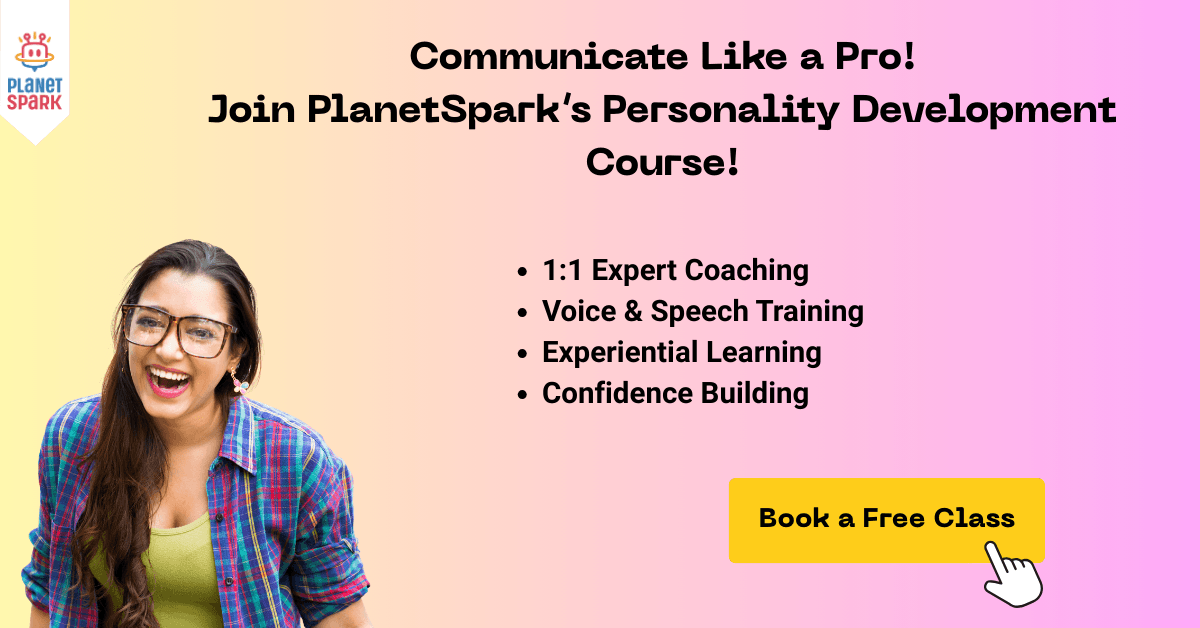
PlanetSpark Personality Development Course
Developing talent requires the right environment, mentorship, and consistent practice. PlanetSpark’s Personality Development Course is designed to help learners transform their potential into powerful communication and confidence skills.
One of the biggest advantages of the program is 1:1 personal trainers. Every student is matched with a certified communication expert who understands the learner’s pace, personality, and goals. These trainers provide immediate feedback while helping learners build fluency, storytelling ability, grammar, and public speaking confidence.
PlanetSpark also follows a personalised curriculum and learning roadmap. Each learner undergoes a detailed assessment that identifies gaps in grammar, vocabulary, confidence, and content structure. Based on this evaluation, a customised learning journey is created to gradually build strong communication abilities.
Technology plays a major role through SparkX, an AI enabled video analysis tool. Learners record speeches or storytelling sessions and receive detailed feedback on voice clarity, body language, grammar, and overall delivery. This allows measurable improvement over time.
Students also benefit from AI led practice sessions where a virtual coach simulates speaking activities and provides instant feedback. Meanwhile, Spark Diary encourages daily writing habits through journaling, storytelling, and creative expression.
Learning is made engaging through gamified activities such as vocabulary quizzes, grammar challenges, and spelling competitions. Regular progress reports and parent teacher meetings ensure transparent development tracking.
PlanetSpark also offers learning clubs such as Debate Club, Story Writing Club, Podcasting Club, and Comedy Club, giving learners real platforms to practice and showcase their talents.
Building a Lifelong Talent Development Mindset
Talent development should not be viewed as a short term goal. Instead, it is a lifelong process of continuous improvement.
Individuals who adopt a growth mindset consistently look for opportunities to learn, experiment, and improve.
Key habits of lifelong learners include:
Curiosity and exploration
Continuous skill improvement
Learning from feedback
Practicing regularly
Over time, these habits transform small talents into exceptional abilities.
Turning Talent Into True Potential
Talent exists within every individual, but it only becomes valuable when nurtured with the right guidance and consistent effort. Understanding what is talent development and how to develop your talent helps individuals unlock their full potential and achieve meaningful growth.
Whether you are a student exploring your abilities, a parent supporting your child, or a professional improving career skills, talent development provides a clear path toward confidence, creativity, and success.
The key lies in identifying your strengths, practicing consistently, learning from mentors, and applying skills in real world situations. When supported by structured learning environments and modern tools, talent can grow faster and produce lasting results.
Investing in talent development is ultimately an investment in lifelong success. With the right mindset, training, and opportunities, anyone can transform their natural abilities into powerful skills that shape their future.
You can also read:
Frequently Asked Questions
Talent development is the process of identifying, nurturing, and enhancing a person’s natural abilities through structured learning, training, and consistent practice. It involves strengthening existing strengths and converting them into practical skills that can be applied in real life situations. Talent development is widely used in education, corporate training, and personal growth programs to help individuals reach their full potential.
Talent development helps individuals unlock their hidden abilities and transform them into measurable skills. It improves confidence, creativity, and communication while also preparing individuals for professional success. People who actively develop their talents often perform better academically, achieve stronger career growth, and build leadership qualities.
To develop your talent effectively, you should follow a structured approach:
Identify your natural strengths
Set clear improvement goals
Practice consistently
Seek mentorship and feedback
Apply skills in real world situations
This systematic approach ensures continuous progress and measurable skill improvement.
While talent may originate from natural ability, it can absolutely be developed through learning and practice. Neuroscience research shows that repeated practice strengthens neural pathways in the brain, improving performance. With proper guidance and training, individuals can significantly enhance their natural talents and build advanced skills over time.
PlanetSpark supports talent development by helping learners build strong communication, confidence, and creative expression skills. Through 1:1 expert trainers, personalised learning paths, AI powered feedback tools like SparkX, and engaging practice environments, students receive structured guidance that accelerates talent growth. Programs like the PlanetSpark Personality Development Course give learners opportunities to practise speaking, storytelling, writing, and leadership skills in a supportive environment designed for long term personal growth.