
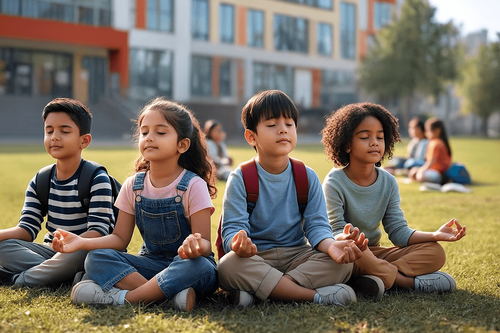

Stress, frustration, disappointment, and pressure are
a natural part of growing up. But when children do not know how to manage these emotions, even simple situations can feel overwhelming. Many parents say things like,
“Why does my child panic during exams?”
“Why does my child freeze when faced with a problem?”
“Why does the smallest issue make them upset?”
If this sounds familiar, you are not alone. Teaching kids emotional regulation is one of the biggest challenges parents face today. Children are growing up in fast paced environments, and their ability to stay calm during challenges affects everything from academics to friendships, confidence, and long term mental well being.
Why Kids Struggle To Stay Calm During Challenges
Children get overwhelmed easily because their emotional brain develops much earlier than their logical brain. When they face an unexpected challenge, they act on feelings instead of reason. This is why staying calm under pressure for kids is harder than it is for adults.
Some common causes include:
Limited vocabulary to express big emotions
Fear of failure or disappointing parents
Academic pressure or comparison with siblings or friends
Low frustration tolerance
Lack of problem solving experience
Difficulty understanding what they are feeling
Overstimulation from screens or fast paced routines
Teaching kids emotional regulation begins with helping them understand why they feel what they feel. When they have clarity, calmness becomes easier.
The Importance of Calmness in a Child’s Growth
Calmness builds more than emotional balance. It strengthens skills that benefit children for life.
Calm children are more likely to:
Focus better and complete tasks
Think logically instead of reacting emotionally
Make stronger friendships
Perform better in academics
Communicate with clarity
Feel confident in stressful situations
Bounce back from failures faster
This is why emotional control strategies for kids should be taught early. It gives them the tools to navigate life with resilience.
Understanding Emotional Regulation In Simple Terms
Emotional regulation means teaching children how to notice their emotions, understand them, and respond in healthy ways. It is not about suppressing feelings. It is about managing them.
To teach emotional regulation effectively:
Acknowledge the child’s feelings
Give them the words to express those feelings
Teach them calming tools they can use anywhere
Model calmness yourself
Children learn more from what they see than what they hear. When parents handle challenges calmly, kids naturally develop the same habits.
Identifying Stress Triggers in Children
Before parents can begin teaching kids emotional regulation, it is essential to understand what triggers stress or overwhelm in the first place. Children often struggle to articulate what they feel, so their stress responses come out through behaviour like irritability, withdrawal, frustration, or emotional outbursts. These behaviours are not misbehaviour. They are communication. Every child has specific situations that unsettle them. These may include academic pressure, social discomfort, unexpected changes, sibling conflicts, or fear of being judged.
Understanding these triggers helps parents guide children in staying calm under pressure. When children recognise what makes them uncomfortable, they feel less overwhelmed and more in control. This awareness also improves communication between parent and child, strengthening trust and emotional connection. Over time, kids learn to identify stressful situations and respond with clarity instead of panic.
One effective method is helping children name their emotions. Research shows that when kids label their feelings, it becomes easier for them to process and regulate them. A simple check-in question like “What are you feeling right now?” can help children pause, think, and express their emotion. This small step forms the foundation of emotional control strategies for kids who struggle during challenging moments.
Help your child gain emotional clarity and calm.
Discover PlanetSpark’s expert-led communication and emotional skills programs.
Techniques to Help Kids Stay Calm Under Pressure
Once children understand their triggers, they can begin learning calmness techniques for children that are practical, simple, and effective. The goal is not to eliminate uncomfortable feelings. It is to help children respond thoughtfully rather than react impulsively. These techniques also strengthen resilience and self-awareness.
One powerful technique is teaching children to pause. A pause allows the mind and body to reset. It helps break the instant emotional reaction that leads to frustration, anger, or tears. You can teach this through playful activities such as “freeze and breathe.” When a child feels upset, they stop, take three deep breaths, and continue only when they feel calmer. It works for toddlers, school-aged children, and even teenagers.
Another technique is progressive relaxation. Children learn to tighten and relax different parts of their bodies, which reduces built-up tension. Along with this, grounding techniques such as focusing on the senses help kids stay present. For example, asking them to name five things they can see or three things they can hear shifts their attention away from stress.
Helping children manage stress becomes easier when calmness is practised daily. Short mindfulness activities, breathing exercises, gratitude journaling, or evening reflection time help maintain emotional balance. With consistency, your child builds automatic mental habits that help them stay calm even in stressful situations.
Using Storytelling to Teach Emotional Regulation
Children learn best through stories. Storytelling helps them understand emotions, relate to characters, and apply lessons in their daily lives. When teaching kids emotional regulation, stories provide examples of how characters face challenges and respond calmly. Parents can use bedtime stories, real-life examples, or simple roleplay.
For example, a story about a child feeling nervous before a school performance can explore how they breathed deeply, prepared carefully, and stayed calm despite the pressure. When children see relatable emotions in stories, they internalise emotional control strategies for kids without feeling lectured. This builds empathy and normalises emotional expression.
Roleplay also enhances understanding. Parents can create small challenge scenarios and guide children to practise staying calm under pressure. This allows kids to repeat healthy responses in a safe space before applying them to real situations. Over time, these practices shape long-term emotional maturity and self-control.
Give your child the tools to communicate calmly and confidently.
PlanetSpark’s live classes build emotional strength through communication activities and guided learning.
Helping Kids Build Stress-Management Habits
Teaching emotional regulation is not a one-time lesson. It is a long-term skill that grows with consistency. When helping children manage stress, parents should focus on daily habits that support emotional balance. These may include healthy sleep, outdoor play, reading time, or quiet breaks in between busy routines.
Physical movement helps release tension and improves mood. Activities like cycling, dancing, or yoga support emotional well-being. Nature time also reduces stress and improves focus. When children experience calmness in their environment, they learn to carry that calmness into challenging moments.
Children also benefit from journaling. Writing down daily experiences helps them process emotions, reflect on their behaviour, and recognise progress. A simple “What made me happy today?” or “What was challenging today?” builds emotional intelligence naturally.
Over time, these habits make children more confident, emotionally aware, and capable of handling challenges calmly and responsibly. They learn that staying calm under pressure for kids is not just about one technique. It is about lifestyle choices that strengthen their emotional foundation.
How PlanetSpark Helps Kids Stay Calm, Think Clearly, and Respond Confidently
Parents often ask:
“Can emotional calmness actually be taught?”
“Is it possible for my child to respond peacefully instead of reacting impulsively?”
Yes, with the right guidance, children can learn emotional control strategies. PlanetSpark’s training is designed specifically to support teaching kids emotional regulation through structured, practical, and child-friendly methods.
Activities to Practise at Home: Strengthening Calmness and Emotional Balance
Below are some simple home-friendly activities parents can try to support helping children manage stress and improving their resilience during everyday challenges.
1. The Freeze–Breathe–Respond Routine
Teach your child this three-step emotional control habit:
Freeze for a moment
Take two slow breaths
Respond calmly
Children who follow this pattern learn how to keep kids calm in stressful situations without feeling pressured or judged.
2. “Feelings Jar” Reflection Activity
Ask your child to write or draw their biggest challenge of the day and place it in a jar.
This helps them:
label emotions
release stress
reflect instead of reacting
Support your child’s communication and emotional growth with expert guidance.
Explore PlanetSpark’s personality and communication skill-building programs today.
3. Visualization for Confidence
Guide your child to imagine themselves:
finishing a tough assignment
presenting clearly in class
handling mistakes calmly
Visualization is a powerful method for teaching kids emotional regulation because it rewires their brain to anticipate success rather than fear.
4. The “Helpful vs Unhelpful Thoughts” Game
Children get better at staying calm under pressure when they learn to identify thoughts that stress them vs thoughts that support them.
Give them examples like:
“I’m bad at this” → unhelpful
“I can try again” → helpful
5. Calm-Corner Setup at Home
Create a small space with:
soft cushions
colouring sheets
sensory objects
calming music
This teaches children that calmness is a choice they can return to anytime.
How PlanetSpark Helps Kids Build Calmness, Emotional Clarity, and Strong Coping Skills
PlanetSpark’s communication and personality development programs include targeted modules that teach children how to recognise emotions, stay calm under pressure, and respond confidently instead of reacting impulsively. The approach combines structured training, live guidance, and scientifically backed calmness techniques for children.
Key features of the program:
Personalised emotional growth plans
Every child receives personalised support based on their unique temperament and emotional patterns. This helps in teaching kids emotional regulation in a way that feels natural and non-stressful.
Calming tools and AI-guided feedback
PlanetSpark uses AI-powered tools to help children identify emotional triggers, track reactions, and practise calm responses with corrective guidance.
Gamified learning for emotional control
Children use interactive games to practise staying calm under pressure. These activities simulate real situations and make learning enjoyable while improving emotional control strategies for kids.
Stress-management and calmness exercises
Live mentors help children learn breathing routines, grounding exercises, and simple calmness techniques for children that they can use anytime, anywhere.
Real-life scenario-based training
Students practise speaking, responding to questions, and handling challenges through structured tasks that strengthen emotional balance and clarity.
Outcome
The goal is simple:
To help your child develop control, clarity, and calmness; even in stressful situations, so they grow into emotionally strong, confident, and self-aware individuals.
Calmness Is a Skill: And Every Child Can Learn It
Calmness is not an inborn trait; it is a learnable and powerful life skill. With the right strategies, consistent practice, and an emotionally safe environment, every child can develop the ability to handle challenges with clarity, patience, and confidence. When parents and teachers work together to model emotional strength, children naturally learn better emotional control strategies and develop healthier responses to stress.
PlanetSpark’s structured curriculum makes teaching kids emotional regulation easier, practical, and enjoyable. By offering personalised learning, interactive activities, and a supportive atmosphere, we help children grow into emotionally resilient individuals who can navigate challenges without fear or panic.