
Fear of Judgement in Kids: Causes, Impact & How to Overcome It
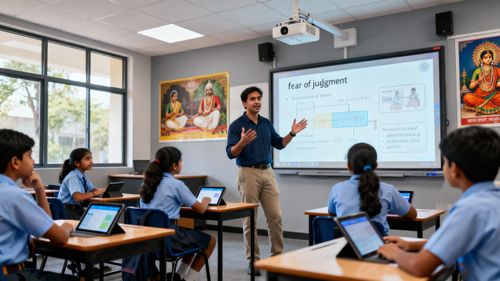

Table of Contents
- Understanding the Fear of Judgement in Kids
- What Causes Fear of Judgement in Children?
- Signs Your Child Has Fear of Judgement
- How Fear of Judgement Affects a Child’s Future
- How to Help Children Overcome the Fear of Judgement
- PlanetSpark Spoken English & Public Speaking Course: A Confi
- Rise Above Fear: Helping Your Child Step Into a Confident Fu
Children today experience pressure in more ways than we imagine,school expectations, peer comparison, performance anxiety, social media influence, and the constant fear of being misunderstood or laughed at. Among all these challenges, one emotional struggle silently affects millions of children worldwide: the Fear of Judgement.
This fear often shows up as hesitation to speak, reluctance to participate in class, avoiding group activities, unwillingness to ask questions, or feeling nervous when meeting new people. Many parents mistake this for “shyness,” but in reality, it can be a deeper emotional barrier that impacts learning, self-esteem, social life, and future communication skills.
The search intent behind “Fear of Judgement” is clear,parents want to understand why children feel this way, how it affects their emotional development, and most importantly, what they can do to help their child overcome it.
This blog will explore the causes, signs, and long-term impact of fear of judgement in children. You will learn evidence-based strategies, insights from communication psychology, and real-life applications to help your child grow into a confident speaker. Most importantly, we’ll explain how PlanetSpark’s globally trusted Public Speaking and Spoken English Program helps children defeat this fear through structured skill-building, confidence training, and real-time speaking practice with peers worldwide.
Understanding the Fear of Judgement in Kids
Children fear judgement when they believe others are constantly evaluating their actions, appearance, speech, or performance. This emotional response is much stronger in childhood because kids are still developing self-identity, emotional regulation, and communication skills. When a child feels judged,or thinks they will be judged,they withdraw, stay silent, or avoid participating altogether.
This fear is not just “shyness.” It can be a growing internal pressure where a child constantly questions:
“What if I say something wrong?”
“What if other kids laugh at me?”
“What if my answer is stupid?”
“What if I make a mistake on stage?”
These thoughts create a loop of self-doubt that impacts academic performance, classroom participation, friendships, and their willingness to explore new experiences.
Many parents search for Fear of Judgement, Overcoming Fear of Judgement, Fear of Judgement Phobia, Child Confidence Building, Overcoming Social Anxiety in Kids, and How to Build Confidence in Children because they sense their child’s potential is blocked by these invisible emotional walls.
Below, we explore the “why,” the “how,” and the “what now” , so parents understand the complete picture and can take actionable steps to help their child thrive.
What Causes Fear of Judgement in Children?
Understanding the root causes helps parents provide the right support. Fear of judgement doesn’t develop overnight , it evolves through experiences, interactions, and the child's interpretation of the world.
1. Early Negative Experiences
Kids remember embarrassment far more vividly than praise. If a child was once laughed at for mispronouncing a word, forgetting lines on stage, or giving a wrong answer, that memory may stick with them.
This eventually transforms into Fear of Judgement Phobia, where even neutral situations feel threatening.
2. High Expectations from Parents or Teachers
Children naturally want to impress adults. When expectations are extremely high, kids begin fearing mistakes, failure, or disappointing their parents.
This psychological pressure often results in:
Overthinking before speaking
Avoiding participation
Hesitation even in informal conversations
This is one of the major triggers of Overcoming Social Anxiety in Kids becoming a challenge.
3. Comparison Culture
Comparisons,whether academic, social, or extracurricular,make children doubt their abilities. Even indirect comparisons such as:
“Look how confident she is.”
“He always gets full marks.”
“Your cousin speaks so well.”
can deeply affect a child’s sense of worth.
4. Perfectionism
Some children develop perfectionist tendencies early on. They feel the need to perform flawlessly, and when they can’t, they choose silence over risk. This blocks Child Confidence Building and prevents healthy self-expression.
5. Lack of Real Speaking Practice
If a child is not exposed to real communication scenarios,debates, storytelling, discussions,they do not build the resilience needed to handle judgement.
Confidence is a muscle; without practice, it weakens.
Signs Your Child Has Fear of Judgement
Parents often overlook the signals. Here are the most common indicators:
1. Avoiding Classroom Participation
Even when they know the answer, they refuse to raise their hand.
2. Not Speaking in Groups
Kids with judgement anxiety stay quiet in birthday parties, family gatherings, and playdates.
3. Extreme Sensitivity to Feedback
They take even gentle criticism personally and become upset easily.
4. Overthinking Before Speaking
You’ll notice phrases like:
“What if people don’t like it?”
“What if I sound weird?”
“Can you say it for me?”
5. Anxiety Before Presentations or Exams
This includes stomach aches, sweating, trembling, or last-minute refusal to participate.
6. Fear of Public Speaking in Kids
Public speaking is the number one fear worldwide,even adults struggle with it. Kids with judgement fear find it even harder, which blocks How to Build Confidence in Children naturally.
How Fear of Judgement Affects a Child’s Future
The Fear of Judgement is not a temporary childhood phase,it is an emotional barrier that can shape a child’s long-term personality, confidence, communication skills, and overall growth. When this fear persists, it silently influences how a child thinks, interacts, learns, and expresses themselves. Below is a deeper look at how this fear leaves lasting imprints on a child’s future.
1. Academic Impact
Children who fear being judged often avoid any situation where they might be wrong or evaluated. This results in:
Lower classroom participation: even when they know the right answer, they stay quiet.
Reduced curiosity: they hesitate to ask questions and suppress natural curiosity.
Avoiding group activities: they fear being noticed, corrected, or laughed at.
Underperformance: their true potential remains hidden because they don’t take academic risks.
Over time, this leads to gaps in knowledge, reduced teacher interaction, and decreased overall engagement in learning. Their academic growth slows down,not because of ability, but because of anxiety-driven silence.
2. Social Limitations
Social development depends heavily on expression and interaction. Fear of judgement weakens both.
Children may struggle with:
Making new friends
Participating in conversations
Speaking in groups
Voicing thoughts or opinions
Joining team activities
They begin observing more and speaking less. This creates a cycle where peers assume the child is shy or uninterested, causing the child to withdraw even further.
As they grow older, these limitations can turn into Overcoming Social Anxiety in Kids becoming far more difficult, affecting confidence, relationships, and emotional wellbeing.
3. Leadership Challenges
Leadership isn’t just about being in charge,it’s about communicating clearly, taking initiative, and being confident in your ideas. Children who constantly fear being judged tend to:
Avoid taking responsibility
Hesitate to volunteer for roles
Fear making mistakes publicly
Hold back ideas even when they are good
Prefer being invisible instead of stepping into leadership
This means the child does not develop decision-making, teamwork, or public speaking abilities,skills that become essential in higher education and future careers.
4. Emotional Stress
Fear of judgement leads to a continuous internal battle where the child questions every action, reaction, and word. This emotional overload gradually impacts mental health.
Common results include:
Anxiety:
Persistent worry about how others perceive them.
Nervousness:
Frequent physical symptoms before speaking,shaking hands, dry throat, sweating.
Self-doubt:
The belief that they are “not good enough,” even in simple situations.
Fear-based decision-making:
Choosing silence, avoidance, or safe choices instead of growth opportunities.
Over years, these patterns can evolve into chronic social anxiety or even emotional shutdown, affecting teenage and adult life.
5. Blocked Communication Development
Communication skills develop through speaking, listening, expressing, and receiving feedback. When a child avoids speaking due to fear, skill development is restricted.
This affects:
Vocabulary growth (the child speaks less, so learns fewer expressive words)
Fluency (lack of practice leads to hesitation and broken speech)
Articulation (they may struggle with clear pronunciation)
Voice control (no experience with volume, tone, or confidence)
Presentation ability (fear blocks performance opportunities)
Without early intervention, they reach adolescence with a communication skill gap that becomes harder to overcome.
How to Help Children Overcome the Fear of Judgement
Here are proven strategies backed by child psychology and communication science.
1. Normalize Mistakes
Teach your child that mistakes are not failures,they are natural steps in learning.
2. Encourage Expression in Simple Ways
Allow them to:
Order food themselves
Speak to relatives
Ask questions in class
Participate in small group tasks
These everyday opportunities slowly build confidence.
3. Practice at Home in a Safe Space
Family debates, storytelling sessions, nightly reflections, or “speech of the day” activities help reduce anxiety.
4. Celebrate Effort, Not Perfection
Praising confidence-building efforts encourages growth and lowers performance pressure.
5. Enroll in a Skill-Building Program
A structured approach is essential.
This is where PlanetSpark becomes powerful,because children learn:
Body language
Storytelling
Debate
Voice modulation
Confidence techniques
Real audience interaction
These are the exact skills needed to beat the Fear of Judgement permanently.
PlanetSpark Spoken English & Public Speaking Course: A Confidence-Building System for Kids
PlanetSpark’s program is designed to eliminate hesitation, boost fluency, and permanently overcome the Fear of Judgement in children through structured, science-backed communication training. Below is a clear, point-to-point breakdown of how the course transforms kids into confident speakers.
1. 1:1 Personal Coaching by Certified Experts
Every child gets an individual trainer
Trainers specialize in communication + child psychology
Immediate feedback, personalized corrections, confidence mentoring
2. Step-by-Step Skill Building
Body language, eye contact, gestures
Voice modulation and intonation
Storytelling and speech structure
Persuasive speaking + debating
Extempore and logical reasoning
3. TED-Style Speaking Framework
Hook
Message
Story
Call-to-action
Kids learn to deliver powerful, structured speeches like professional speakers.
4. Real-Time Global Speaking Practice
Debates with kids from 13+ countries
Group discussions, panel talks, storytelling circles
Exposure reduces social anxiety and fear of judgement
5. Video Feedback Loop & AI-Coaching
Every speech recorded and analyzed
AI detects pauses, clarity, emphasis, posture
Parents receive performance reports after each activity
6. Gamified Learning Tools
Vocabulary games
Grammar challenges
Listening & speaking quizzes
Learning stays fun, motivating, and habit-forming.
7. Parent–Teacher Collaboration
Regular PTMs
Progress reports
Action plans for confidence building
8. Skill-Building Clubs
Debate Club
Story Writing Club
Speech & Poetry Circles
Podcasting & Comedy Clubs
Kids practise freely in a safe, encouraging environment.
Rise Above Fear: Helping Your Child Step Into a Confident Future
Fear of judgement may feel invisible, but its impact on a child’s confidence, communication, and future is very real. The good news? No child is born confident,confidence is built, shaped, and strengthened through the right guidance, encouragement, and practice. When children learn to express themselves without fear, they unlock a world of possibilities: better academics, stronger friendships, leadership qualities, and emotional resilience.
Your child deserves to speak freely, think boldly, and shine without hesitation. And with the right support, they absolutely can.
PlanetSpark’s Spoken English & Public Speaking Program gives children a safe, structured space to grow,step-by-step,into clear, confident, expressive speakers who are no longer held back by self-doubt or anxiety.
You may also read :
Frequently Asked Questions
The Fear of Judgement in kids refers to a child’s worry about being evaluated, criticized, or laughed at by others. This fear makes them avoid speaking up, participating in activities, or expressing their thoughts openly. It often develops from early negative experiences, comparison, perfectionism, or pressure to perform well. If not addressed, it can grow into social anxiety and long-term communication challenges. Helping children build confidence early is essential so they can interact freely and learn without emotional barriers.
Parents can support children by normalizing mistakes, encouraging open conversations, creating a safe environment at home, praising effort instead of perfection, and giving them small opportunities to speak in real-life situations. Daily activities like storytelling, ordering food, or asking questions in class can help build confidence. Most importantly, parents should avoid comparisons or overly critical feedback. Professional guidance, like structured public speaking practice, can accelerate confidence-building significantly.
A child with Fear of Judgement Phobia may:
Avoid answering questions in class even when they know the answer
Fear social interactions
Overthink before speaking
Stay silent in groups
Show physical signs of anxiety (sweating, trembling, stomach ache)
Avoid competitions, stage activities, or challenging tasks
These signs indicate that the child is not simply “shy” but emotionally overwhelmed and needs support in building communication and confidence skills.
Yes. Communication training is one of the most effective ways to build confidence in kids. When children learn to speak with clarity, structure, and expression, they naturally feel more secure about their abilities. Consistent practice through storytelling, debates, discussions, and presentations helps them overcome hesitation and social anxiety. Over time, this reduces self-doubt, boosts fluency, and helps them interact comfortably in school and social settings. A structured program accelerates this growth by offering expert guidance and constructive feedback.
PlanetSpark combines 1:1 coaching, live practice sessions, AI-powered feedback, and global peer interactions to help children overcome Fear of Judgement effectively. Kids practice speeches, debates, storytelling, and conversations in a safe, supportive environment that builds confidence step-by-step. Every session strengthens body language, voice modulation, fluency, and expressive skills. The program helps children face real audiences, receive guided feedback, and gradually erase the fear of being judged. PlanetSpark is designed not just to teach English—but to create confident communicators for life.