
How Reading Aloud Helps Kids Be Better Speakers
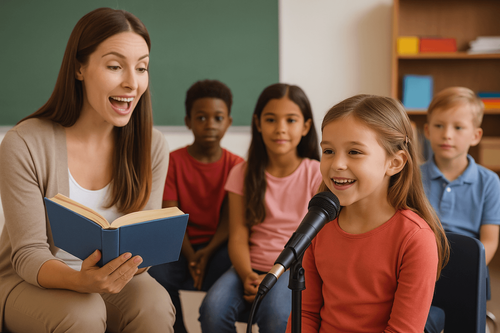

Table of Contents
- The Science Behind Reading Aloud
- Why Reading Aloud Is the First Step Toward Confident Speakin
- The Connection Between Reading and Oral Fluency
- How Reading Aloud Improves Tone and Expression
- Reading Aloud Techniques for Children
- From Reading to Speaking: Building Stage Confidence
- Classroom Reading Activities for Fluency
- Why Reading Aloud Works Better Than Memorization
- Bringing It Home: Reading Aloud at Home
- The PlanetSpark Advantage
- Final Thoughts
Every confident speaker begins with a clear, expressive voice, and that journey often starts not on a stage, but in front of a storybook. Reading aloud may seem like a simple activity, yet it’s one of the most powerful public speaking activities for kids.
When children read aloud, they train their brains to connect words, rhythm, and expression, turning silent reading into a spoken art. It’s not just about pronunciation; it’s about learning how to breathe, pause, and project thoughts with confidence.
The Science Behind Reading Aloud
Reading aloud activates multiple areas of a child’s brain simultaneously, including comprehension, auditory processing, and speech production. Unlike silent reading, where understanding is internal, reading aloud forces children to translate thought into voice.
This process strengthens neural pathways associated with speech rhythm, tone, and pacing. Over time, children become more aware of how words sound together, when to pause, and how to vary pitch; skills essential to public speaking.
When practised regularly, reading aloud sharpens articulation, improves vocabulary recall, and helps children communicate with clarity and purpose.
Why Reading Aloud Is the First Step Toward Confident Speaking
For many young learners, speaking in public feels intimidating. The fear of “getting words wrong” or “forgetting what to say” can make them hesitant. Reading aloud, however, acts as a safe, structured bridge.
It lets children practise tone, emotion, and clarity in a non-judgmental setting, without the pressure of performance. Over time, they internalize how to pace themselves, use expression, and build vocal control.
That’s why experts often describe reading aloud as the foundation of public speaking activities for kids. It’s where stage confidence begins, with small, repeated acts of vocal courage.
Don’t wait to build your child’s speaking confidence; book a free demo with PlanetSpark today and see how guided reading transforms expression into impact.
The Connection Between Reading and Oral Fluency
Oral fluency refers to the smooth, expressive delivery of spoken language. It’s not just about speed or accuracy; it’s about rhythm, coherence, and emotion.
When children read aloud, they subconsciously learn how to group words into meaningful phrases and use pauses to reflect punctuation. This enhances both their reading comprehension and spoken fluency.
Over time, children who practise reading aloud show measurable improvement in:
- Speech clarity; they articulate better and avoid mumbling.
- Listening comprehension: they develop awareness of how tone affects meaning.
- Emotional expression; they learn to convey feelings through voice, not just words.
Essentially, reading aloud turns language from a visual skill into a performative one, making it one of the most effective public speaking activities for kids available to parents and educators.
How Reading Aloud Improves Tone and Expression
Every story offers an opportunity to practise modulation; the ability to vary pitch, tone, and volume. As children read dialogues, describe emotions, or narrate events, they naturally start experimenting with how their voice sounds.
This experimentation forms the basis of voice control, a key part of speech development through reading.
Parents can support this by encouraging expressive reading. Ask your child to “sound surprised,” “speak softly,” or “read like a hero.” These prompts help them connect emotion with intonation, a skill vital for storytelling, debating, and stage performance.
Reading Aloud Techniques for Children
Here are some practical reading aloud techniques for children that make practice engaging and effective:
- Model expressive reading: Begin by reading a paragraph aloud yourself. Exaggerate tone and pauses so your child understands the rhythm.
- Use short daily sessions: Fifteen minutes a day is enough to see progress within weeks.
- Pause for punctuation: Teach children to treat commas, full stops, and question marks as signals for breathing or tone change.
- Vary pace: Let them try fast and slow reading to understand control.
- Ask comprehension questions: After reading, discuss what happened; this strengthens both expression and understanding.
When children learn to perform the text instead of merely reading it, they take the first step toward effective public communication.
From Reading to Speaking: Building Stage Confidence
Reading aloud doesn’t just enhance vocal control; it builds confidence, one sentence at a time. Every time a child reads aloud to an audience (even if it’s just a parent or classmate), they experience a micro version of public speaking.
This repetition normalizes being heard, developing both fluency and courage. Over time, these experiences translate directly into real-world speaking scenarios, like presentations, recitations, or storytelling.
This is what we call building confidence through reading aloud. It turns quiet learners into comfortable communicators.
Help your child build a strong foundation in confidence and communication.
Join PlanetSpark’s Public Speaking Program; where reading, speaking, and storytelling come together in one interactive learning experience.
Classroom Reading Activities for Fluency
In school, teachers can use classroom reading activities for fluency to reinforce voice modulation and collaborative expression. A few tried-and-tested ideas include:
- Round-Robin Reading: Each student reads a paragraph, keeping rhythm consistent.
- Echo Reading: The teacher reads a line expressively, and students repeat it, mirroring tone and pace.
- Paired Reading: Students read in pairs, switching lines to practise listening and coordination.
- Performance Reading: Turning story segments into short performances enhances fluency and audience awareness.
Such classroom activities don’t just build literacy; they shape self-assured communicators ready for stage and life.
Why Reading Aloud Works Better Than Memorization
Unlike rote recitation, reading aloud focuses on understanding before speaking. Children engage with meaning, emotion, and phrasing, which makes their delivery authentic.
This distinction is crucial. Memorized lines sound robotic, but expressive reading trains spontaneity and adaptability, the same qualities that define good public speakers.
That’s why educators often list reading aloud among the top five public speaking activities for kids. It’s accessible, repeatable, and instantly rewarding.
Bringing It Home: Reading Aloud at Home
You don’t need a classroom to get started. A few minutes of structured reading at home can make a lasting difference.
Try these fun parent-led ideas:
- Family Story Hour: Take turns reading aloud; discuss tone and meaning.
- Character Switch: Each reader voices a character differently to practise modulation.
- Pause and Predict: Stop mid-sentence and let your child guess what comes next.
- Expressive Replay: Record your child reading, then replay to discuss pauses, tone, and speed.
When children start enjoying their own voice, they gain the courage to use it confidently everywhere else.
The PlanetSpark Advantage
At PlanetSpark, reading isn’t just about words; it’s about expression and connection.
Our courses integrate public speaking activities for kids with guided reading, storytelling, and live feedback. This ensures holistic skill development across clarity, tone, and stage confidence.
What makes PlanetSpark different:
- Voice and Modulation Workshops – Kids learn tone control and fluency through interactive challenges.
- Reading-to-Speaking Pipeline – Every reading activity transitions into a speaking opportunity.
- Confidence-Building Environment – Children get personalized feedback to improve pronunciation and expression.
- Engaging Gamified Learning – Fun speech drills and storytelling games turn practice into excitement.
By blending reading aloud techniques for children with structured speaking sessions, PlanetSpark helps kids transform from hesitant readers into confident communicators.
Final Thoughts
Reading aloud might seem old-fashioned in a world of digital learning, but it remains one of the most powerful public speaking activities for kids. It builds fluency, deepens comprehension, and transforms words into confidence.
Through tone, rhythm, and emotion, children learn to communicate with authenticity and impact; essential traits for success in school, on stage, and beyond.
Whether it’s bedtime stories or classroom discussions, every moment spent reading aloud is an investment in your child’s voice.
Give your child the gift of confident communication.
Enroll in PlanetSpark’s Public Speaking Program today and see how a simple story can turn into a lifelong skill.
Frequently Asked Questions
Public speaking activities for kids help them practice voice control, pacing, and tone in safe, engaging settings. Over time, they learn to express ideas clearly and overcome stage fear.
Reading aloud strengthens speech muscles, improves pronunciation, and builds rhythm awareness. It bridges the gap between reading and speaking, boosting a child’s confidence in verbal expression.
Start with short, expressive readings. Encourage pauses, tone variation, and dialogue delivery. Recording their voice for feedback also helps children hear and refine their pronunciation naturally.
Classroom reading activities for fluency allow children to read aloud in groups, practice tone modulation, and build listening skills. These sessions improve teamwork, comprehension, and vocal clarity.
When kids read aloud regularly, they learn to project their voice and manage attention. It helps them feel comfortable being heard — a vital step toward becoming confident public speakers.