
How to Deliver an Entertainment Speech That Engages Audiences
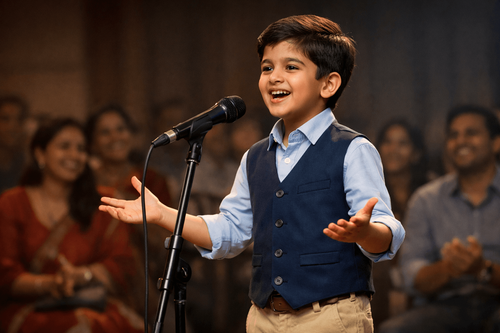

Table of Contents
- What Is an Entertainment Speech?
- Why Entertainment Speech Is Important for Children
- Role of Audience in Entertainment Speech
- Understanding How to Write an Entertainment Speech
- Sample Entertainment Speech Outline
- Understanding the Importance of Delivery
- What Is Stage Fear and Why Does It Happen?
- Importance of Body Language in Entertainment Speech
- Practicing Entertainment Speech in Real-Life Situations
- About PlanetSpark : Public Speaking
Speaking isn’t always about facts sometimes it’s about fun, laughter, and making people smile. An entertainment speech helps children share funny stories, playful ideas, and joyful moments while speaking confidently and fearlessly.
Children can start by reading short stories, jokes, or imaginative tales and turning them into lively speeches. At PlanetSpark, 1:1 expert-led sessions use storytelling, role-play, and creative activities to help kids speak fluently, express emotions, and enjoy public speaking all in a fun, stress-free way
What Is an Entertainment Speech?
An entertainment speech is a type of speech that is given mainly to entertain the audience. Its main aim is to make people feel happy, relaxed, or amused.
In simple words for children :
An entertainment speech is a speech that makes people smile, laugh, or enjoy listening.
Unlike other speeches, an entertainment speech does not focus on teaching lessons or convincing others. Instead, it focuses on fun, humour, and emotions. The speaker shares stories, jokes, or experiences in a lively way.
Help your child speak confidently — Book a Free Demo Class today
Purpose of an Entertainment Speech
The primary purpose of an entertainment speech is enjoyment. However, it also helps children learn many important skills.
The main purposes include:
Making the audience laugh or smile
Creating a positive and cheerful environment
Helping the speaker feel confident
Improving speaking and storytelling skills
Building a strong connection with listeners
For children, entertainment speeches make public speaking less scary. When children enjoy speaking, they speak more naturally and confidently.
Why Entertainment Speech Is Important for Children
Entertainment speech plays an important role in a child’s overall development. It allows children to express their personality, creativity, and emotions.
Key benefits for children include:
Builds confidence in speaking
Encourages imagination and creativity
Improves storytelling ability
Develops voice control and expressions
Reduces fear of speaking in public
Children who regularly practice entertainment speeches often become better communicators because they learn how to hold attention and engage others.
Entertainment Speech Compared to Other Speeches
Children learn different types of speeches in school. Understanding the difference helps them choose the right speaking style.
| Type of Speech | Purpose | Example |
|---|---|---|
| Informative Speech | To give information | Speech on animals |
| Persuasive Speech | To convince | Speech on saving trees |
| Entertainment Speech | To entertain | Funny school incident |
Entertainment speeches focus more on emotions and enjoyment than facts or opinions.
Common Topics for Entertainment Speech
Choosing the right topic makes an entertainment speech more effective. Children should choose topics they enjoy and understand.
Popular topics include:
A funny day at school
My most embarrassing moment
Life before exams
My naughty pet
A day without homework
If toys could talk
My funniest holiday memory
When children talk about familiar experiences, their speech sounds natural and engaging.
Basic Structure of an Entertainment Speech
Even though entertainment speeches are fun, they need a clear structure.
A simple structure includes:
Beginning: A fun or surprising opening
Middle: Funny stories or events
Ending: A cheerful or memorable conclusion
This structure helps children stay organised while speaking.
How Long Should an Entertainment Speech Be?
For children in Classes 5 and 6, the speech should be short and engaging.
Recommended length:
2 to 4 minutes
Around 300–500 spoken words
Short speeches help children stay confident and avoid forgetting what to say.
Role of Audience in Entertainment Speech
An entertainment speech depends greatly on the audience. Children should always think about who they are speaking to.
Good audience awareness means:
Using clean and kind humour
Speaking clearly and loudly
Watching audience reactions
When children connect with the audience, the speech becomes more enjoyable.
Checkpoint for Parents and Children
At this stage, children should be able to:
Explain what an entertainment speech is
Understand its purpose
Identify suitable topics
Describe the basic structure
If these points are clear, the child is ready to move to writing and practising the speech.
Fun Activity: Identify Entertainment Speech Ideas
Ask the child to decide which idea suits an entertainment speech:
“I slipped on a banana peel during recess and everyone laughed.”
This is a good entertainment speech idea because it is funny and personal.
Tips for Parents to Support Children
Parents can support children by:
Listening patiently
Encouraging creativity
Avoiding criticism
Praising effort over perfection
Positive support helps children enjoy speaking.
Understanding How to Write an Entertainment Speech
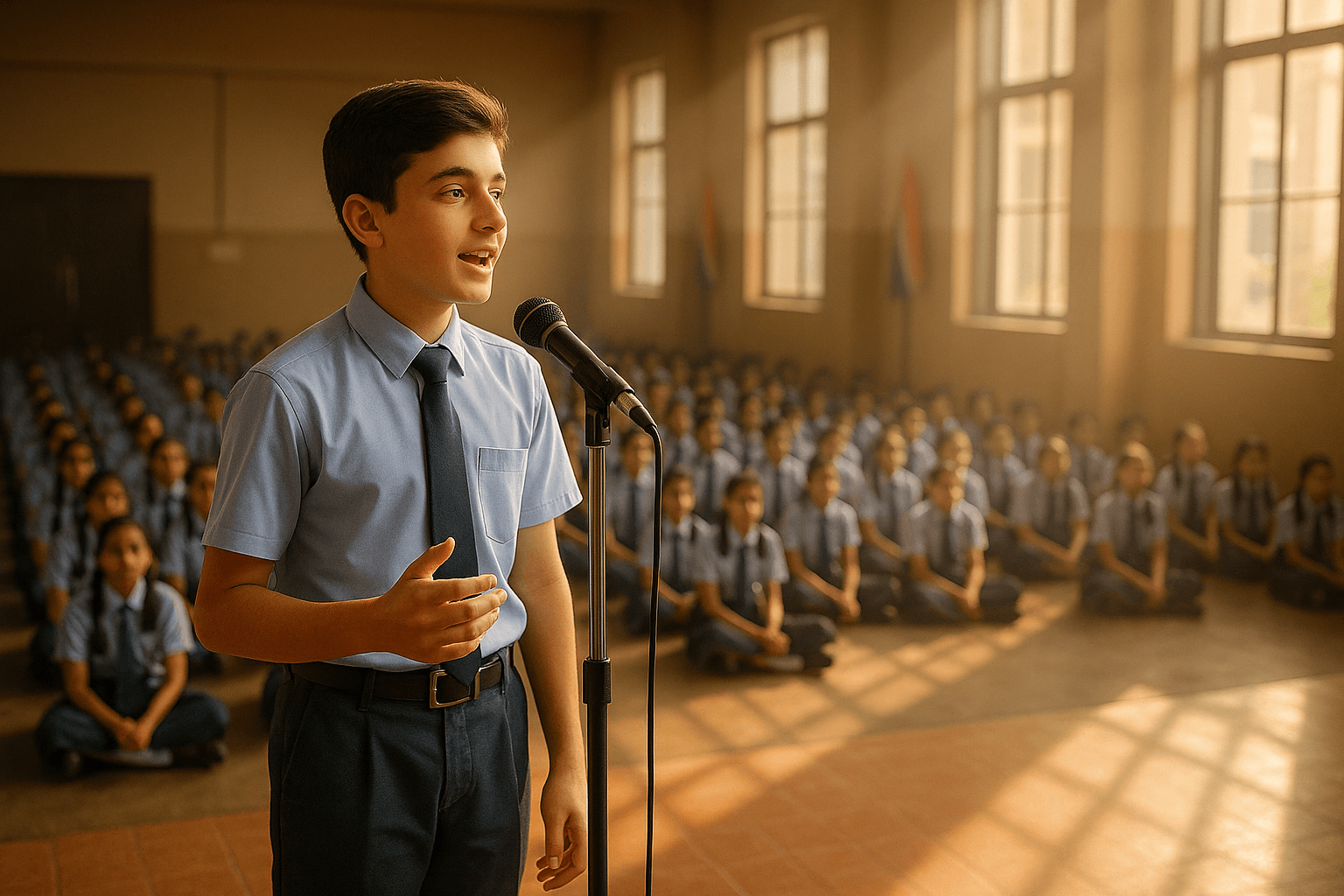
Writing an entertainment speech is different from writing a normal paragraph or essay. The goal is not just to write correct sentences, but to create a speech that sounds natural, fun, and interesting when spoken aloud. Children should imagine that they are talking to friends, not reading from a book.
An entertainment speech should sound like a conversation filled with excitement, humour, and emotions. While writing, children should focus on how the speech will sound, not just how it looks on paper.
Choosing the Right Topic for Writing
The first step in writing an entertainment speech is choosing the right topic. A good topic makes writing easier and more enjoyable.
A good entertainment speech topic should be:
Easy to understand
Based on personal experience or imagination
Funny or interesting
Suitable for the audience
Children should avoid topics they do not fully understand. Talking about familiar situations helps the speech sound natural and confident.
Brainstorming Ideas Before Writing
Before writing the speech, children should spend time thinking about ideas. This step is called brainstorming.
Simple brainstorming questions include:
What funny thing happened to me recently?
Have I ever made a silly mistake?
What makes my friends laugh?
What imaginary situation can I create?
Writing down ideas helps children organise their thoughts before starting the speech.
Planning the Speech Using an Outline
Once the topic is chosen, children should create a simple outline. An outline helps organise ideas and prevents confusion while speaking.
Basic outline for an entertainment speech:
Opening: A funny or surprising start
Body: One or two funny events or stories
Ending: A happy or memorable finish
Planning the speech makes writing easier and keeps the speech focused.
Build life skills through engaging speech practice
Join PlanetSpark and watch your child shine
Writing a Strong Opening
The opening of an entertainment speech should grab attention immediately. If the beginning is boring, the audience may lose interest.
Good opening ideas include:
Asking a funny question
Making a surprising statement
Describing an amusing situation
Example opening:
“Have you ever tried to act smart and ended up doing something really silly?”
A strong opening sets the mood for the entire speech.
Developing the Body of the Speech
The body is the main part of the entertainment speech. This is where the story or funny incident is explained.
While writing the body, children should:
Describe events clearly
Use simple sentences
Add small details to make it interesting
Keep the story moving
Children should avoid adding too many ideas. One or two strong events are enough.
Using Humour Effectively
Humour is the heart of an entertainment speech. However, it should be used carefully.
Good humour for children includes:
Funny mistakes
Exaggeration
Silly comparisons
Playful imagination
Example:
“I was so scared during the test that my pen refused to write.”
Humour should always be kind and respectful. Making fun of others should be avoided.

Writing in a Natural Speaking Style
Entertainment speeches should sound like spoken language, not written essays.
Tips for a natural speaking style:
Use short sentences
Use simple words
Write the way you talk
Avoid long descriptions
Children can read their speech aloud while writing to check if it sounds natural.
Adding Emotions and Expressions in Writing
Even while writing, children should think about emotions. Words should reflect feelings such as excitement, surprise, or happiness.
Example:
“I was shocked, scared, and then suddenly everyone started laughing.”
Adding emotions makes the speech lively and enjoyable.
Creating a Memorable Ending
The ending of an entertainment speech should leave the audience smiling.
Good ending ideas include:
A funny conclusion
A cheerful lesson
A surprising final line
Example ending:
“And that is how I learned to never run in the corridor again.”
A strong ending makes the speech memorable.
Sample Entertainment Speech Outline
Topic: A Funny Day at School
Opening:
A question about unexpected school days.
Body:
A funny incident during recess and class.
Ending:
A light-hearted lesson learned.
This outline shows how ideas are organised.
Make speaking fun, fearless, and effective
Start your child’s learning journey with PlanetSpark
Common Writing Mistakes to Avoid
Children often make small mistakes while writing entertainment speeches.
Common mistakes include:
Writing very long sentences
Adding too many jokes
Forgetting the main story
Copying jokes from the internet
Encourage children to keep their speech original and simple.
Checkpoint for Parents and Children
By the end of this part, children should be able to:
Choose a suitable topic
Create a simple outline
Write a fun opening and ending
Use humour in a respectful way
If these skills are clear, children are ready to focus on delivery and confidence.
Fun Writing Activity
Ask the child to write three different openings for the same topic. Then choose the funniest one.
This activity improves creativity and writing confidence.
Understanding the Importance of Delivery
Writing a good entertainment speech is only half the work. How the speech is delivered is equally important. Delivery means the way a child speaks, stands, moves, and connects with the audience while giving the speech.
Even a simple and funny speech can become boring if it is delivered in a dull way. On the other hand, a well-delivered speech can make even a small story enjoyable. For children, learning good delivery skills helps them feel confident and expressive while speaking.
What Is Stage Fear and Why Does It Happen?
Stage fear is the nervous feeling children experience before or during speaking in front of others. It is very common and completely normal.
Children may feel stage fear because:
They are afraid of making mistakes
They worry about forgetting their speech
They feel shy speaking in front of many people
They fear being judged or laughed at
Parents should understand that stage fear does not mean a child is weak. It simply means the child is stepping out of their comfort zone.
Simple Ways to Overcome Stage Fear
Children can manage stage fear with practice and simple techniques.
Helpful strategies include:
Taking slow, deep breaths before speaking
Practicing the speech aloud several times
Starting with a smile to relax the body
Thinking of the audience as friendly listeners
Children should also be reminded that small mistakes are okay and often unnoticed by others.
Turn stage fear into stage confidence
Enroll your child in PlanetSpark’s communication programs
Building Confidence Before Speaking
Confidence grows with preparation and encouragement. Children who feel prepared usually feel more confident.
Ways to build confidence include:
Practicing in front of a mirror
Speaking in front of family members
Recording and listening to the speech
Getting positive feedback
Confidence does not mean being perfect. It means being comfortable and enjoying the speech.
Importance of Body Language in Entertainment Speech
Body language is a powerful tool in an entertainment speech. It includes posture, hand movements, facial expressions, and overall presence.
Good body language helps children:
Look confident
Express emotions clearly
Keep the audience interested
Children should stand straight but relaxed, avoid folding arms, and face the audience while speaking.
Using Facial Expressions Effectively
Facial expressions show emotions and bring life to the speech.
Examples of expressions to practice:
Smiling during funny moments
Showing surprise during unexpected events
Looking confused when describing mistakes
Practicing expressions in front of a mirror helps children become comfortable using them naturally.
Help your child speak confidently and creatively
Book a free demo class with PlanetSpark today
Role of Hand Gestures in Entertainment Speech
Hand gestures help explain ideas and add energy to the speech.
Useful gesture tips:
Use hands to show size or movement
Avoid overusing gestures
Keep movements natural and relaxed
Too many gestures can distract the audience, while no gestures can make the speech dull.
Importance of Eye Contact
Eye contact helps the speaker connect with the audience. It shows confidence and interest.
Simple eye contact tips:
Look at different people while speaking
Avoid staring at one spot
Do not look at the floor or ceiling
Children can imagine they are talking to friends sitting in different places.
Voice Modulation and Tone
Voice modulation means changing the voice to match the message.
Children should practice:
Speaking louder for excitement
Speaking softly for suspense
Changing tone for different emotions
Example:
Lowering the voice before a punchline can make the funny moment stronger.
Using Pauses Effectively
Pauses are short breaks while speaking. They help the audience understand and react.
Good times to pause:
Before a funny line
After an important moment
When changing ideas
Pauses make the speech more dramatic and enjoyable.
Speaking Speed and Clarity
Children often speak too fast when nervous. Speaking slowly and clearly helps the audience understand better.
Tips for clarity:
Pronounce words clearly
Avoid rushing
Take small pauses
Clear speech makes the speaker sound confident and calm.
Practicing Entertainment Speech in Real-Life Situations
Practice helps children improve naturally.
Good practice opportunities include:
Family gatherings
Class presentations
School assemblies
Storytelling sessions
Each practice session helps children feel more comfortable speaking.
Success Story: Muskaan Shines
Muskaan, 7, has amazed everyone with her exceptional spelling skills! Thanks to PlanetSpark, she developed strong language foundations, built confidence, and honed her focus. Her dedication and practice paid off when she brilliantly showcased her talent at the SpellBee International Programme.
We are beyond proud of Muskaan for this remarkable achievement, proving that the right guidance can turn young learners into shining stars!

Common Delivery Mistakes to Avoid
Children should be aware of common mistakes.
These include:
Speaking too fast
Standing stiffly
Avoiding eye contact
Memorising the speech word for word
Encourage children to speak naturally instead of trying to be perfect.
Fun Practice Activity: The Expression Game
Ask the child to say the same sentence in different ways:
Happy
Surprised
Confused
This game helps children practice expressions and voice modulation.
Checkpoint for Parents and Children
By the end of this part, children should be able to:
Speak with confidence
Use body language and expressions
Control voice and pauses
Handle stage fear better
If these skills are developing, the child is ready to complete the learning with final guidance.
Parent Support Tips
Parents can support by:
Giving positive feedback
Avoiding criticism
Encouraging regular practice
Celebrating effort
Supportive environments help children enjoy public speaking.
About PlanetSpark : Public Speaking
PlanetSpark helps children become confident, impactful, and persuasive speakers through engaging 1:1 live classes. Our Public Speaking Program strengthens voice modulation, body language, content structure, and stage confidence empowering kids to speak clearly and confidently in any setting.
1. 1:1 Expert Public Speaking Coaching
Every child learns with a certified public speaking trainer who personalises sessions based on the child’s confidence level, personality, and goals ensuring focused guidance and visible improvement.
2. Structured Speaking Learning Path
A customised curriculum builds skills like speech writing, storytelling, debate, and presentation techniques guiding learners from basic speaking to confident stage performance.
3. AI-Powered Speech Feedback
With SparkX video analysis and AI-led practice sessions, students receive instant feedback on voice clarity, tone, posture, gestures, and delivery making improvement measurable and effective.
4. Interactive & Performance-Based Learning
Speech drills, roleplays, open-mic sessions, and storytelling challenges make learning engaging while encouraging regular practice and performance readiness.
5. Confidence for Stage and Life
Through real-world speaking opportunities, showcases, and guided feedback, children gain the confidence to express ideas boldly on stage, in classrooms, and in everyday conversations.
Frequently Asked Questions
An entertainment speech is a speech given to make people happy, laugh, or enjoy listening. Its main purpose is fun, not teaching or convincing.
Yes. Entertainment speeches are suitable for school assemblies, storytelling sessions, competitions, and class presentations.
A good length is 2 to 4 minutes so the audience stays interested and the child feels confident.
Yes. Practice helps children improve confidence, expressions, voice control, and body language.
Humour helps, but the speech can also entertain through interesting stories, emotions, or imagination.